
The sudden, violent 17% plunge in IBM stock this morning has left retail investors reeling, effectively shattering the optimistic narrative that dominated headlines just twenty-four hours ago. While pundits were busy labeling the company as an “undervalued” AI leader, the cold reality of a disappointing Q2 revenue forecast—dragged down by the cannibalization of legacy infrastructure—has forced a reality check. This is not merely a quarterly earnings miss; it is a structural pivot where IBM is intentionally sacrificing its traditional profit pillars to chase the elusive, high-stakes promise of Artificial Intelligence.
For many, this reversal feels like a betrayal of market analysis, but the discrepancy between expectations and corporate performance is a classic hallmark of the current tech transition. Investors are now caught in the crossfire of a massive information gap: is this the birth of a leaner, AI-dominant IBM, or a fundamental erosion of the firm’s competitive moat? Understanding this volatility requires more than just listening to the loudest voice in the room; it demands a clear, dispassionate analysis of the company’s operational trajectory amidst a chaotic and rapidly shifting market landscape.
IBM Market Reversal: Decoding the July 2026 Profit Warning
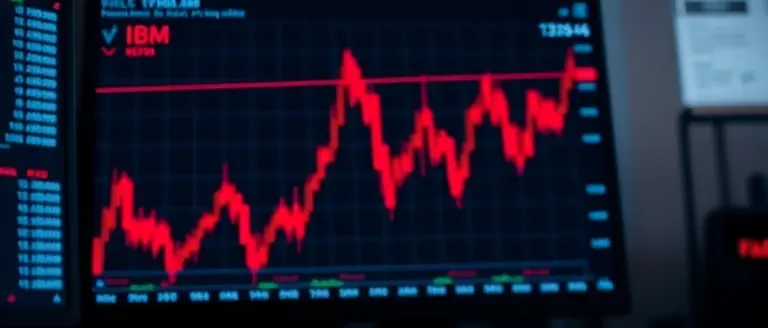
The financial landscape for IBM stock shifted dramatically on July 14, 2026, as the company issued a preliminary Q2 financial report that triggered a massive sell-off. Shares plummeted more than 17% in premarket trading, erasing investor confidence almost overnight. This sharp reversal stems from an unexpected revenue miss, with IBM reporting approximately $17.2 billion—a figure that fell notably short of Wall Street’s consensus estimates. The catalyst for this decline is what leadership describes as a fundamental shift in client capital allocation, where enterprise customers are aggressively reallocating budgets from traditional software and legacy infrastructure toward direct investments in Artificial Intelligence (AI) projects.
From ‘Undervalued’ to Downgrade: The Pundit Disconnect
The current volatility exposes a stark gap between analyst sentiment and operational reality. Just 24 hours prior to the warning, market optimism was high, with prominent voices such as Jim Cramer highlighting the stock as “undervalued” based on strong Q1 performance data. This rapid transition from bullish outlooks to a defensive posture illustrates the fragility of relying on backward-looking metrics in a period of intense technological transition. In response to the revenue miss and the CEO’s candid assessment of the “AI cannibalization” phenomenon, analysts at HSBC issued an immediate downgrade, signaling a shift in institutional outlook.
Key Factors Behind the Sell-Off:
- Revenue Shortfall: The reported $17.2 billion for Q2 represents a critical miss, underscoring the immediate financial impact of slowing demand for legacy tech stacks.
- Budget Cannibalization: Clients are not necessarily cutting IT spend entirely, but are prioritizing AI-driven initiatives at the expense of established IBM software and infrastructure revenue.
- Analyst Volatility: The abrupt pivot from “Buy” ratings to downgrades highlights the risks investors face when corporate pivots are not fully accounted for in short-term valuation models.
Investors are now left to weigh whether this decline reflects a temporary transition phase or a deeper, structural challenge for the firm. While AI represents a massive long-term opportunity, the immediate cost of shifting resources is weighing heavily on the IBM stock price, creating a complex environment for those expecting a smooth evolution.
The AI Cannibalization Thesis: Why Legacy Revenue is Softening

The sharp downturn in IBM stock on July 14, 2026, serves as a stark case study in what analysts are calling “AI Cannibalization.” While investors were recently encouraged by strong Q1 performance and pundit-driven optimism, the reality of corporate IT spending has shifted rapidly. IBM’s preliminary Q2 revenue of $17.2 billion—which missed Wall Street estimates—highlights a structural challenge: clients are aggressively reallocating capital. Instead of renewing traditional software and infrastructure maintenance contracts, businesses are redirecting those precise budget dollars toward high-stakes, experimental Artificial Intelligence (AI) projects.
Navigating the Revenue Valley
This transition creates a significant “revenue valley” for IBM. Legacy infrastructure services, which have historically provided reliable, predictable cash flow, are being de-prioritized as clients seek immediate integration of generative AI tools. While this pivot is essential for IBM’s long-term relevance, it creates a painful short-term gap where the decline in legacy software revenue outpaces the growth of new AI-driven service contracts. Key factors contributing to this volatile transition include:
- Budget Consolidation: Enterprises face finite IT budgets, forcing a choice between maintaining legacy systems and funding transformative AI pilot programs.
- Deceleration of Renewal Cycles: Customers are delaying traditional infrastructure service renewals as they assess the ROI of AI-ready architectures.
- The Transition Lag: IBM is moving from high-margin legacy service models to more complex, resource-intensive AI integration deployments, which currently carry different cost structures.
The market reaction, leading to an HSBC downgrade and a 17% premarket slide, reflects investor frustration with this lack of immediate visibility. While CEO Arvind Krishna aims to secure IBM’s position as an AI leader, the current IBM stock price is struggling to reconcile the loss of stable, recurring legacy income with the speculative, long-term potential of its AI software suite. For retail investors, the takeaway is clear: the company is currently sacrificing short-term performance to survive a broader industry shift, making the path to recovery dependent on the successful monetization of these AI bets.
Bridging the Gap: Market Sentiment vs. Corporate Reality

The sharp 17% plunge in IBM stock on July 14, 2026, serves as a sobering case study on the dangers of relying on short-term sentiment over structural corporate realities. Only 24 hours prior, retail investors were bolstered by bullish endorsements, including high-profile commentary labeling the company “undervalued” based on strong Q1 performance. However, this optimism failed to account for the velocity at which corporate IT budgets are pivoting. The disconnect between yesterday’s praise and today’s sell-off highlights how quickly historical performance data can become obsolete when businesses aggressively shift capital toward emerging technologies.
The Dangers of Analyst Echo Chambers
The sudden reversal underscores the risks of “analyst echo chambers,” where favorable quarterly results are extrapolated into long-term growth trends without considering operational headwinds. Investors were effectively blindsided because the narrative focused on legacy software strength rather than the internal cannibalization caused by the AI transition.
Key factors contributing to this market confusion include:
- Lagging Indicators: Previous reports relied on Q1 data that failed to capture the accelerating June-July shift in enterprise spending.
- AI Cannibalization: Clients are not just adding AI to their stack; they are actively diverting funds away from traditional infrastructure and legacy software to finance these high-stakes projects.
- Pundit Volatility: High-profile endorsements often lack the granular visibility into corporate mid-quarter adjustments that lead to official profit warnings.
Ultimately, the current IBM stock price volatility is not necessarily a reflection of a failing company, but rather the market’s painful reaction to a fundamental pivot. While the move toward AI is essential for long-term survival, the “transition cost”—manifested in the disappointing $17.2 billion revenue projection—reveals that the road to an AI-native business model involves significant short-term pain. Investors must now look past the noise of pundit-driven hype and focus on whether IBM’s operational adjustments can successfully stabilize as the company navigates this structural shift in client spending.
Investor Outlook: Navigating the Volatility of IBM’s Transition

The sharp correction in IBM stock following the company’s preliminary Q2 2026 revenue miss serves as a sobering reminder of the risks associated with high-stakes corporate pivots. For retail investors, the rapid shift from yesterday’s optimism to today’s reality check underscores the danger of relying on pundit-driven sentiment rather than fundamental operational data. As IBM faces a significant decline in traditional software and infrastructure revenue, the market is currently grappling with “AI cannibalization”—a phenomenon where clients are reallocating budgets away from legacy systems to prioritize newer, unproven Artificial Intelligence deployments.
Key Metrics to Monitor
To navigate this period of heightened volatility, investors should look beyond headlines and focus on specific operational indicators over the next two fiscal quarters. Monitoring these metrics will provide a clearer picture of whether IBM can successfully balance its legacy obligations with its future growth targets:
- Legacy Product Attrition Rate: Track the deceleration in traditional software and infrastructure segments. If the decline exceeds projected limits, it suggests that the “AI shift” is eroding the company’s core cash-cow business faster than anticipated.
- AI Service Contract Velocity: Look for concrete data on the conversion of AI pilot projects into long-term, high-margin service contracts. Revenue growth must eventually outpace the losses in legacy divisions to justify the current valuation.
- Structural Margin Impact: Analyze how the costs associated with reorganizing the workforce and R&D toward AI impact overall profitability. Compressed margins during this transition could signal that the cost of entry into the AI market is higher than current IBM stock price models initially accounted for.
Investors should maintain a cautious, data-centric approach. While the long-term potential for AI is immense, the transition phase for a legacy giant like IBM is rarely linear. Prioritizing objective performance reporting over reactive sell-offs—or speculative buys—will remain the most prudent strategy until the company provides more granular evidence of a stabilized revenue base.
Navigating the Cognitive Chaos of Market Volatility
The sudden collapse in IBM stock serves as a stark reminder that in modern finance, yesterday’s “undervalued” opportunity can rapidly transform into today’s structural warning. This divergence highlights a critical reality: as Big Blue pivots toward AI, it is actively cannibalizing its legacy revenue streams. For the astute investor, this is not a moment for reactive panic, but for deep, analytical discernment. The shift in IT spending is a complex structural transition, and those who can look past the noise of pundit-driven cycles will find the most clarity.
In an environment where market sentiment changes at lightning speed, maintaining the cognitive clarity to cut through the noise is your greatest competitive advantage. When the financial data becomes overwhelming, your decision-making capacity often suffers from the very “brain fog” that leads to emotional, rather than logical, trading choices. To effectively analyze the nuances of corporate pivots—like IBM’s high-stakes AI gamble—you need an intellectual edge that keeps you calm and focused while the rest of the market reacts blindly.
The Brain Song is engineered for exactly this purpose: to sharpen your mental focus and provide the cognitive endurance required for rigorous financial deep dives. By integrating this daily audio routine, you transcend the cycle of reactive stress and move into a state of high-level analytical performance. Don’t let market volatility dictate your clarity; take control of your cognitive toolkit to evaluate long-term trends with precision.
 Achieve the mental edge required to navigate complex market volatility—try The Brain Song daily audio routine to sharpen your analytical focus today.Transform My Analytical Focus Now!