
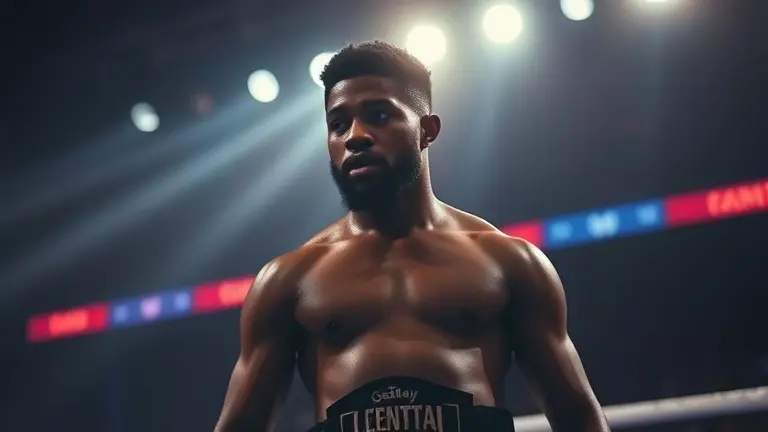
The boxing world is currently caught in a cycle of anticipation regarding the next move of Gervonta “Tank” Davis. As of mid-2026, the silence surrounding his next bout has ignited widespread speculation, with fans and pundits alike parsing every social media post and training clip for clues. This investigative landscape, fueled by a broader curiosity about whether boxing’s biggest stars will compete before the year concludes, highlights the immense gravitational pull Davis maintains even during long periods of inactivity. Rather than settling for recycled rumors, we must look at the reality of the sport’s ecosystem to understand the delay.
The truth is that for a fighter of Davis’s caliber, inactivity is rarely idle time; it is a calculated period of body maintenance and strategic positioning. The path to a championship return is paved with rigorous physiological demands and the necessity of sustaining peak performance levels that only the elite can maintain. To understand why Tank hasn’t stepped back into the ring, we must look beyond the promotional headlines and examine the grueling metabolic discipline required to remain ‘fight-ready’ in an era where body composition and energy efficiency often dictate the outcome of a legacy-defining clash.
The 2026 Fact Check: Separating Gervonta Davis Speculation from Reality

As of July 2026, the boxing landscape is currently saturated with viral conjecture regarding the return of the sport’s biggest names. Much of this digital chatter has erroneously conflated the status of retired legends like Floyd Mayweather Jr. and Manny Pacquiao with the career trajectory of active superstars like Gervonta “Tank” Davis. While search interest in a potential fight remains at a fever pitch, it is vital to distinguish between fan-driven rumor mills and verified promotional timelines. Currently, there is no official fight announcement, date, or opponent confirmed for Davis for the remainder of the 2026 calendar year.
Understanding the Disconnect
The current cycle of speculation often stems from a lack of clarity regarding the different stages of a fighter’s career. While legends occasionally engage in high-profile exhibition bouts, Davis remains an active, elite-level contender operating within a highly competitive division. The silence from his camp should not be interpreted as a step toward retirement or a sign of decline; rather, it reflects the deliberate, high-stakes nature of modern boxing matchmaking.
To clear the air, consider these key realities of the current situation:
- Promotional Strategy: Davis is a premier draw, and his team typically orchestrates fight announcements to maximize pay-per-view impact rather than responding to organic social media rumors.
- Training Cycles: While Davis maintains his physical conditioning, the absence of a “fight camp” announcement indicates that his team is likely evaluating the landscape of the 135-to-140-pound divisions before committing to an opponent.
- Market Dynamics: The tendency to group Davis with names like Mayweather is a testament to his marketability, yet it creates a misleading “fact check” narrative that ignores the logistical differences between an exhibition-based career and an active world championship pursuit.
Ultimately, investors, media outlets, and fans should remain patient. The lack of a confirmed bout is not evidence of a hiatus, but a standard period of tactical negotiation. Until an official announcement arrives from his promotional team, all claims suggesting a return date in 2026 remain purely speculative.
The Strategic Silence: Understanding the Business Behind the Delay

In the modern landscape of professional combat sports, inactivity is often misread by fans as a loss of momentum. However, for an elite pay-per-view (PPV) star like Gervonta Davis, the silence surrounding his 2026 schedule is a calculated business maneuver rather than a career roadblock. The current promotional landscape, heavily influenced by the Premier Boxing Champions (PBC) model, prioritizes high-stakes, marquee events that require extensive lead times for broadcasting negotiations, venue logistics, and marketing saturation. In a fragmented sports media market, rushing a fight can result in diminishing returns; therefore, maintaining “Tank” as an elusive, high-demand entity is essential to maximizing his financial leverage.
Factors Influencing the 2026 Timeline
Several structural components dictate why a fighter of Davis’s stature faces extended layoffs between bouts. Unlike entry-level prospects who must remain active to climb rankings, established superstars operate on a distinct fiscal calendar:
- Broadcasting and Revenue Maximization: Negotiations for distribution platforms involve complex revenue-sharing models. Securing the right date on a major streaming service or linear network often necessitates a months-long buildup to ensure optimal subscriber conversion.
- The “Event” Economy: Davis is a premier draw capable of anchoring massive events. The business of boxing now mandates that his fights are not just athletic contests but major pop-culture spectacles. Orchestrating these productions requires significant overhead and alignment with celebrity, sponsor, and media calendars.
- Divisional Evolution: With shifting landscapes in the lightweight and super-lightweight divisions, Gervonta Davis remains in a position to dictate the terms of his next appearance. By staying patient, his team can evaluate the trajectory of potential rivals, ensuring that his return generates maximum buzz and pay-per-view buys.
Ultimately, the delay in announcing his next opponent is a byproduct of the modern “superfight” era. By operating with strategic patience, the Davis camp ensures that when he does step back into the ring, the stakes—and the payouts—reflect his status as one of boxing’s most bankable icons.
The Lightweight and Super Lightweight Landscape: Who is Left for Tank?

As of mid-2026, the 135-pound and 140-pound divisions remain the most competitive arenas in professional boxing, yet Gervonta “Tank” Davis occupies a unique position of leverage. While the lightweight division continues to evolve with a new wave of hungry, undefeated contenders, the super lightweight class offers the marquee names necessary to cement a legacy. Despite high public demand for a definitive return, the landscape is currently defined by complex promotional politics and a strategic “wait-and-see” approach regarding unification opportunities.
Tactical Match-Ups and Divisional Challenges
For Davis, the challenge lies in balancing reward against risk. While the 135lb division hosts technical marvels who rely on speed and volume, the 140lb landscape is increasingly populated by physically imposing champions who present distinct tactical hurdles. Potential opponents have gained significant traction over the last 18 months, yet logistical barriers—including mandatory title defenses and cross-promotional negotiations—have kept high-stakes bouts in a holding pattern.
Key factors influencing the current delay include:
- Weight Class Transition: A potential permanent move to 140lbs requires Davis to manage his power output against larger, more durable frames, a factor that requires rigorous, specialized training camps.
- The “Legacy” Factor: Fans and analysts alike are pushing for fights that carry historical significance. Opponents who have cleaned up the division or secured upset victories in the last year are now at the top of the shortlist.
- Promotional Synchronization: Matching elite fighters often requires months of negotiation regarding revenue splits and venue selection, which contributes to the current observational phase in Davis’s career.
While the exact trajectory remains unconfirmed, evidence suggests that the focus is shifting toward matchups that offer both financial dominance and a clear path to undisputed status. Whether Davis remains at lightweight to clear out remaining contenders or ventures further into the super lightweight ranks, his next move will inevitably dictate the momentum of the division for the remainder of 2026.
Physicality and Longevity: The Reality of Recovery Cycles

The explosive fighting style that has made Gervonta “Tank” Davis a generational superstar is also a primary driver behind his strategic approach to career management. Davis relies on unparalleled hand speed, reactive agility, and high-impact power, all of which place significant structural stress on the musculoskeletal system. Unlike fighters who rely on attrition, Davis’s “seek and destroy” methodology requires peak neuromuscular output. Modern sports science emphasizes that for an elite athlete in their late 20s and early 30s, the “silent periods” between major bouts are not merely hiatuses; they are critical phases of biological recalibration.
The Science of the “Tank” Maintenance
In the professional boxing landscape, the recovery cycle is as vital as the training camp itself. Evidence suggests that sustained high-intensity combat leads to cumulative micro-trauma, particularly in the hands, wrists, and kinetic chain of the lower body. By pacing his appearances, Davis is prioritizing long-term durability over short-term market saturation. Key components of this recovery-first philosophy include:
- Periodized Training: Moving away from constant high-impact sparring to maintain physical freshness while refining technical skills.
- Preventative Medical Intervention: Using advanced monitoring to track inflammatory markers and joint health, ensuring that Davis enters every fight camp at 100% capacity.
- Strategic Load Management: Extending the gaps between high-level bouts to allow for full neurological recovery, which is essential for maintaining the lightning-fast reflexes that define his defensive and offensive transitions.
Ultimately, these extended periods of inactivity should be viewed as an intentional professional strategy rather than a lapse in competitive drive. By respecting the physiological demands of his specific, high-velocity style, Gervonta Davis is effectively extending his championship window. This calculated approach ensures that whenever the next marquee fight is announced, the audience sees a version of Davis that remains at the absolute pinnacle of his physical capabilities.
The Path to Peak Athletic Readiness
As we have explored, the current pause in Gervonta Davis’s schedule is less about a lack of opportunity and more about the extreme precision required for a championship-level return. In professional boxing, the difference between a victory and a defeat is often determined in the months of preparation leading up to the bell. Elite athletes do not just train; they optimize every facet of their physiology to ensure that when the moment arrives, they are operating at the absolute pinnacle of their potential.
This is where the principles of high-performance metabolic management become critical. Just as a fighter focuses on weight-management and sustaining explosive energy through intense training camps, everyday athletes can leverage similar insights to overcome physiological plateaus. Maintaining a consistent metabolic edge is the fundamental bridge between average performance and elite vitality, allowing the body to sustain energy levels and burn fat with the efficiency required of a world champion.
For those looking to adopt the professional-grade focus on body composition seen in elite training camps, supporting your metabolism is the definitive next step. By prioritizing natural, stimulant-free support, you can unlock a new level of physical readiness that mirrors the disciplined preparation of boxing’s best. It is time to treat your fitness with the same seriousness as a title contender, ensuring your body is always primed for its own personal victory.
 Read more about how elite athletes maintain their metabolic edge and why metabolic support is the new standard for peak physical performance.Transform My Body Now!