
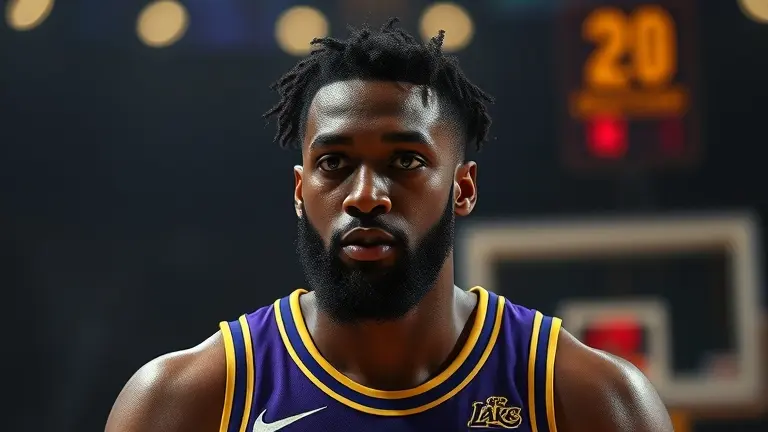
In a move that has sent ripples through the NBA landscape this July 2026, the Los Angeles Lakers have secured former No. 10 draft pick Ziaire Williams on a one-year, $3 million veteran minimum contract. While the sports media cycle is currently churning out standard news updates, the real story lies beneath the box scores. For Williams, this isn’t just another roster spot; it is a critical juncture to rehabilitate a career hampered by persistent injury challenges and inconsistent development. The Lakers’ front office is betting on his raw physical tools to bolster their wing depth, but the true test will be his capacity to assimilate into a sophisticated 2026-27 coaching scheme that demands high-level defensive versatility and instantaneous decision-making.
Success in the purple and gold requires more than just athletic capacity; it demands a psychological evolution. As Williams attempts to carve out a permanent role in a crowded rotation, his ability to read complex defensive rotations and remain locked in under the intense pressure of a championship-contending environment will define his trajectory. If he is to transition from a ‘project’ to a reliable contributor, he must master the cognitive demands of the modern NBA. The question remains: does Williams have the mental focus required to execute at the highest level when it matters most?
Breaking: Ziaire Williams Signs One-Year Deal with the Lakers
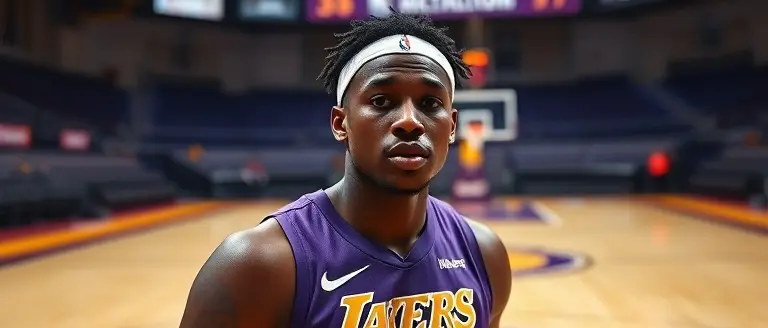
The Los Angeles Lakers have officially bolstered their roster for the 2026-27 NBA season by signing free agent Ziaire Williams to a one-year, $3 million contract. As of July 13, 2026, the deal is being categorized as a veteran minimum signing, a move that the front office hopes will provide necessary wing depth while maintaining long-term financial flexibility. For Williams, a former No. 10 NBA draft pick, this arrival in Los Angeles represents a critical opportunity to revitalize a career that has been periodically hampered by injury challenges. By securing Williams on such a team-friendly contract, the Lakers are executing a low-risk, high-reward strategy designed to add length and defensive versatility to their secondary unit.
Strategic Fit and Roster Outlook
The decision to bring in Williams reflects the Lakers’ clear intent to prioritize switchable wing defense in their revamped rotation. Despite his injury-plagued early years in the league, the 2026 season offers a fresh start for the athletic swingman. Analysts suggest that if Williams can maintain health, his physical profile fits perfectly into the team’s modern defensive schemes, which rely heavily on perimeter containment and transition scoring.
Key aspects of the deal include:
- Contract Value: A one-year, $3 million veteran minimum deal.
- Team Need: Strengthening the bench rotation with a versatile, multi-positional wing player.
- Career Milestone: A “prove-it” contract for the former top-10 selection to re-establish his value in the Western Conference.
The front office’s decision to pursue Williams aligns with their ongoing goal of balancing elite top-end talent with dependable, cost-effective rotation depth. While questions regarding his durability remain, the Lakers are banking on the potential that his raw athleticism will flourish under the team’s coaching staff. Should he succeed, Williams could easily evolve into a staple of the Lakers’ rotation, providing the specific defensive grit required to navigate a deep playoff run.
Can Ziaire Williams Rebound in LA? A Statistical Deep Dive
The arrival of Ziaire Williams in Los Angeles on a one-year, $3 million veteran minimum deal represents a classic “low-risk, high-reward” gamble for the Lakers. To revitalize his career, Williams must move beyond his injury-plagued early years and prove he can provide reliable minutes as a switchable swingman. Statistically, his trajectory has been hampered by inconsistent availability, which prevented him from developing the rhythm necessary for an efficient shooting stroke. For Williams to secure a long-term role within the Lakers’ rotation, he must focus on three core statistical markers: improving his corner three-point percentage, maintaining a defensive rating below the team average, and increasing his secondary assist rate to complement the primary playmakers.
Bench Requirements and Efficiency Targets
The Lakers’ 2026-27 bench requires wings who can defend multiple positions while spacing the floor. Williams’ physical profile—long-limbed and agile—suggests he has the tools to succeed, but efficiency is the non-negotiable metric. Evidence suggests that if Williams can stabilize his health, he offers a defensive versatility that many current bench options lack. His primary goal will be to carve out minutes in a crowded depth chart by proving he is a reliable 3-and-D contributor.
Key performance indicators for his success include:
- Catch-and-Shoot Efficiency: Raising his perimeter accuracy to the league average of 36% or higher.
- Defensive Win Shares: Increasing his impact on team defensive rebounding and perimeter containment.
- Injury Management: Proving durability to play 60+ games, effectively silencing concerns regarding his early-career health records.
If Williams can hit these targets, his athleticism will provide the Lakers with much-needed transition depth. The synergy between his raw physical potential and the Lakers’ tactical coaching scheme may finally provide the stability he needs to re-establish his standing as a viable rotation asset.
Projecting the Rotation: Where Williams Fits in the Lakers’ Depth Chart
The signing of Ziaire Williams to a one-year, $3 million veteran minimum contract provides the Los Angeles Lakers with a low-risk, high-reward injection of length and athleticism. As the coaching staff looks to solidify the 2026-27 rotation, Williams enters a competitive landscape where his primary value lies in his defensive versatility. Standing at 6’9″ with an impressive wingspan, Williams fits the profile of a “switchable swingman” capable of defending guards and wings alike, a trait essential for the Lakers’ modern, perimeter-oriented defensive scheme.
Tactical Versatility and Role Integration
In the current depth chart, Williams is expected to contend for backup minutes behind the primary wings. While established stars lead the rotation, the Lakers frequently require reliable bench units to maintain defensive intensity. Williams offers a specialized skillset that complements the team’s core:
- Positional Flexibility: Ability to slide between the shooting guard and small forward spots, allowing the coaching staff to experiment with “long” lineups.
- Secondary Perimeter Defense: Alleviating pressure from primary stars during the regular season by taking on difficult individual assignments.
- Transition Threat: Utilizing his length to run the floor, providing a vertical spacing option that the second unit previously lacked.
Projected Depth Chart and Closing Lineups
While the starting lineup remains settled, the race for rotation minutes will be highly contested. Evidence suggests that Williams will likely operate as a high-energy rotation piece, logging 15–20 minutes per game depending on health and defensive output. His presence is particularly useful in “closing lineups” against small-ball opponents where mobility is prioritized over size. By leveraging his athletic frame and improving instincts, Williams can effectively secure a consistent role, provided he remains durable throughout the grueling NBA season. His addition does not just add depth; it provides the Lakers with a tactical insurance policy for the postseason, where elite wing defense remains the gold standard for championship contenders.
The Defensive Potential: Why the Lakers Targeted Williams
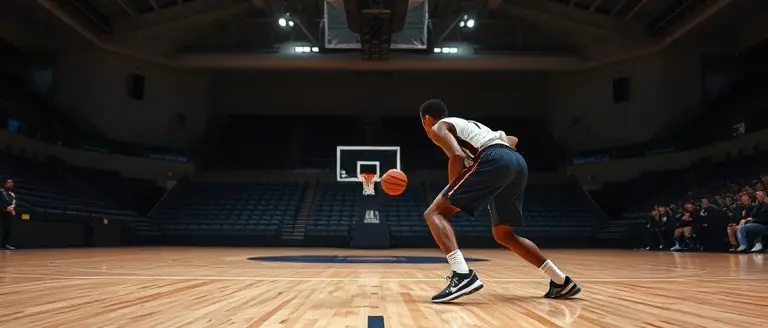
The Los Angeles Lakers’ decision to sign Ziaire Williams on a veteran minimum contract is a strategic gamble predicated almost entirely on his defensive upside. Standing at 6’9″ with a significant wingspan, Williams offers the kind of perimeter switchability that has become a prerequisite for success in the modern NBA. While his early career has been hampered by inconsistency and injury setbacks, the Lakers’ coaching staff appears focused on utilizing his natural physical tools to address their recurring issues with wing containment. By slotting Williams into a secondary unit that demands versatility, the front office is betting that his length can disrupt passing lanes and contest shots against primary scorers that smaller guards simply cannot reach.
Tactical Alignment and Positional Versatility
Williams projects as a “3-and-D” wing who can transition seamlessly between positions, a necessity for the Lakers’ defensive scheme that relies on high-level rotation speed. His defensive profile aligns with the team’s need for a switchable swingman capable of checking both dynamic guards and bruising forwards. Key areas where Williams is expected to provide an immediate impact include:
- Point-of-Attack Defense: Using his reach to bother ball-handlers and force unfavorable cross-court passes.
- Secondary Rim Protection: Utilizing his recovery speed to contest drives that have beaten the initial point-of-attack defender.
- Transition Disruption: Converting his defensive length into fast-break opportunities, a hallmark of the high-tempo Lakers style.
Evidence suggests that when Williams is healthy, his lateral mobility allows him to stay in front of elite creators, effectively shrinking the floor. For the Lakers, this move is low-risk but high-reward; if he can regain the agility he showcased during his tenure as a top draft pick, he will serve as a vital defensive anchor for a bench unit that previously struggled to contain perimeter-oriented offenses. By prioritizing his ability to guard multiple positions, the Lakers have significantly bolstered their rotation depth, providing them with the defensive flexibility required to handle the league’s most potent scoring threats during the grueling 82-game regular season.
The Path to Professional Rebound
Ziaire Williams faces a challenging path, but his tactical fit within the Lakers’ rotation is undoubtedly promising if he can maintain consistent health and focus. His defensive switchability provides the versatility that modern schemes crave, yet the primary hurdle in his development is mastering the rapid cognitive processing required to excel in professional basketball’s elite tier. Even the most physically gifted athletes can falter when their mental edge isn’t as sharp as their physical game.
This is where the intersection of sports science and cognitive performance becomes a game-changer. Just as the Lakers utilize advanced data to optimize rotation minutes, players are increasingly turning to neuro-optimization to gain a competitive advantage. Elite focus and lightning-fast decision-making are not just inherent traits; they are skills that can be sharpened with the right tools. By integrating scientifically-backed cognitive training, any athlete can improve their ability to visualize schemes and react with greater clarity during high-stakes possessions.
To truly thrive in the Lakers’ demanding system, Williams—and any athlete striving for peak performance—must commit to honing the mind as rigorously as the body. It is time to treat your cognitive development with the same importance as your physical training to ensure you are ready for every game-deciding moment.
 Unlock your elite focus and sharpen your mental game by integrating this 12-minute neuroscience-based routine into your daily regimen.Transform My Mental Game Today