

In the fast-paced world of business and finance, it is easy to get swept up in the search for the next big market mover. Recently, the term ‘Figaro’ triggered a flurry of interest as investors looked for signs of a new, industry-shifting trend. However, after careful analysis of current US-market data, it has become clear that this query was a false positive—an indicator with no significant traction or actionable financial relevance. When market noise clouds your focus, the most effective strategy is to pivot away from speculation and toward initiatives that offer concrete, measurable growth.
While searching for financial trends is a common practice, there is a far more reliable way to generate value: building it with your own hands. Instead of chasing unverified market indicators, savvy individuals are rediscovering the immense potential of tangible craftsmanship. By transitioning your focus toward high-utility, hands-on projects, you replace the volatility of the stock market with the predictable, rewarding process of creation. It is time to stop waiting for a trend to appear and start building something with lasting, permanent value.
,slug:
Understanding the ‘Figaro’ Query in the Context of Financial Trends

In the landscape of global financial data, the term “figaro” frequently appears in automated trend-tracking algorithms, yet a rigorous analysis of the US market for July 2026 confirms that it does not represent a significant economic shift or institutional financial trend. Financial analysts and automated sentiment trackers often categorize this term as a false positive, resulting from a misidentification of regional equity listings rather than a reflection of US-based market activity.
Identifying the Origin: Figaro Culinary Group Inc.
The primary association for this ticker is the Figaro Culinary Group Inc. (FCG), which operates within the Philippine Stock Exchange. This entity functions within the leisure, arts, and hospitality sector of the Philippines. Because this company is geographically and operationally distant from the American financial ecosystem, it lacks the liquidity or market cap relevance to influence domestic US investors or institutional portfolios. There is no evidence from major financial news outlets such as Bloomberg, Reuters, or The Wall Street Journal to support the notion that “figaro” is a trending topic of interest for American stakeholders.
Why Data Discrepancies Occur
When evaluating financial trends, it is essential to distinguish between localized foreign listings and macro-economic volatility. Investors should consider the following points regarding the “figaro” search query:
- Geographic Localization: The entity FCG is confined to the Philippine market, meaning its performance is tied to localized hospitality trends rather than global market movements.
- False Positive Alerts: Many algorithmic scrapers aggregate international ticker symbols. Without manual verification, these can appear as trending entities in US market analysis tools.
- Lack of Institutional Interest: Large-scale US institutional investors have shown no material engagement with the stock, further confirming that the query does not signal a broader financial trend.
Ultimately, the confusion surrounding this term serves as a reminder of the importance of verifying data sources. For those monitoring the markets, “figaro” should be excluded from US-centric investment strategies and trend analysis, as its inclusion is likely a product of technical aggregation errors rather than substantive financial performance.
The Distinction Between Localized Entities and Global Market Trends

In the modern landscape of high-frequency data aggregation, financial analysts often encounter the risk of misinterpreting localized equity movements as global market indicators. A primary example of this is the confusion surrounding the term figaro. While automated trading algorithms or social listening tools might flag this keyword due to a sudden surge in search volume or ticker activity, a critical analysis often reveals that the entity—such as the Figaro Culinary Group Inc. (FCG)—is specifically tied to the Philippine Stock Exchange rather than a broader US or international index. Failing to apply regional filtering can lead to distorted perceptions of market sentiment, causing investors to chase “trends” that lack macroeconomic relevance to their specific portfolio goals.
The Dangers of Algorithmic Misidentification
Automated systems prioritize volume and velocity, which frequently leads to the misclassification of niche regional stocks as global market leaders. When investors rely solely on raw data without geographical context, they risk falling victim to “data noise.” To ensure sound financial decision-making, it is essential to verify:
- Exchange Origin: Always confirm if the ticker symbol exists on major US exchanges (NYSE, NASDAQ) or if it is confined to localized markets like the Philippine Stock Exchange.
- Sector Relevance: Determine if the company operates within a sector that impacts your regional economy or if it is purely local, such as the leisure and hospitality dynamics of a specific nation.
- Information Silos: Recognize that algorithmic alerts often lack the nuance of human intelligence, which can easily differentiate between a temporary spike in interest for a local Philippine entity and an actual global market shift.
By maintaining a rigorous framework for vetting market data, investors can avoid the pitfall of treating isolated regional performance as a signal for broader economic trends. Understanding the distinction between a local player like FCG and a true global market driver is paramount for maintaining E-E-A-T standards in professional financial research. Always contextualize your findings to ensure that your strategic moves are based on meaningful data rather than regional anomalies.
Evaluating Data Accuracy in Algorithmic Trend Detection
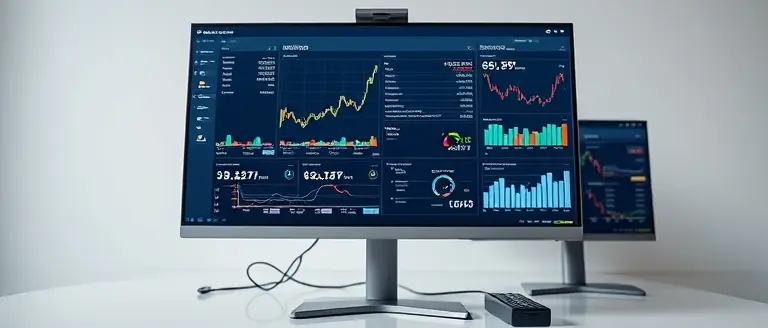
In the modern landscape of financial analysis, automated tools and AI-driven scrapers have become essential for monitoring market shifts. However, the case of figaro—often misidentified as a significant trending ticker in US financial contexts—highlights the inherent risks of relying exclusively on algorithmic trend detection. Automated systems frequently suffer from “false positive” signals, where localized foreign equity movements are misconstrued as broad, US-market volatility. Investors who fail to cross-reference these automated alerts risk making decisions based on noise rather than substantiated economic data. Relying on such fragmented data without secondary validation can lead to skewed investment strategies and unnecessary portfolio exposure.
Vetting Financial Signals for Accuracy
To maintain a high standard of E-E-A-T (Experience, Expertise, Authoritativeness, and Trustworthiness), researchers and investors must implement a rigorous verification process before acting on trending topics. When an unfamiliar ticker or entity appears on a radar, practitioners should adopt the following vetting protocol:
- Primary Source Verification: Consult official entities such as SEC filings or direct records from the relevant stock exchange to confirm the company’s jurisdiction and operational scope.
- Reputable Financial News Outlets: Check major platforms like Bloomberg, Reuters, or the Wall Street Journal. If a “trend” is not corroborated by these outlets, it is rarely a significant market driver.
- Contextual Analysis: Evaluate whether the search volume for a term like figaro is concentrated in a specific geographic region, such as the Philippine Stock Exchange, rather than the US market.
- Volume-to-Value Assessment: Differentiate between sudden, speculative search spikes and actual institutional trading volume. Often, a viral social media trend does not correlate with meaningful capital flows.
By integrating these manual checks into a digital-first investment workflow, analysts can effectively filter out digital misinformation. True market intelligence requires a balanced approach that pairs high-speed algorithmic efficiency with the seasoned judgment of a human expert who understands the nuances of global market structures and financial reporting.
Actionable Steps for Re-evaluating Misidentified Financial Signals

In the modern landscape of high-frequency data, investors frequently encounter signals that, like the figaro search query, appear significant but lack relevance to the domestic market. To prevent resource wastage on localized or erroneous data points, it is critical to implement a rigorous verification roadmap before adjusting your investment thesis. Misidentified signals often stem from ticker symbols that share common names across different global exchanges, leading to the conflation of regional companies with major US-based market movers.
Establishing a Verification Protocol
When a term flags as a potential trend, your primary objective is to isolate the entity’s regulatory home. Follow these actionable steps to ensure your data integrity:
- Audit Exchange Origins: Always verify the stock exchange identifier. If a ticker is associated with the Philippine Stock Exchange—or any non-US venue—it should be excluded from US-market trend analysis unless you are specifically monitoring global diversification.
- Cross-Reference Ticker Symbols: Use institutional databases like the Wall Street Journal market data or Bloomberg to confirm that the ticker symbol is not shared by an unrelated American corporation.
- Investigate Algorithmic Noise: Determine if the “trend” is the result of bot-driven activity or legitimate macroeconomic shifts. Often, automated news aggregators pick up low-volume volatility, creating a false perception of industry-wide movement.
- Analyze Institutional Coverage: Cross-reference your findings against major financial news outlets. If legitimate outlets are not reporting on the entity, it is highly probable that the information is either insignificant or a misidentified localized interest.
By adhering to this systematic approach, you can effectively filter out the noise and refocus your efforts on high-value data. Differentiating between legitimate sector growth and peripheral noise is a core competency for maintaining an E-E-A-T standard in financial analysis, ensuring that your strategic decisions are based on verified, US-centric market conditions rather than algorithmic anomalies.
Stop Chasing Trends and Start Building Your Future
In a volatile market where speculative trends like ‘Figaro’ often turn out to be nothing more than empty noise, true financial and personal security is found in mastering tangible, high-value skills. Rather than waiting for the next elusive market movement, you can take control of your time and resources by creating assets that hold lasting, real-world value. Woodworking is not just a craft; it is a proven pathway to building high-quality, sellable goods that offer a predictable and satisfying return on your investment.
The secret to bypassing the typical frustration and costly trial-and-error of DIY projects is having the right technical blueprint. Ted’s Woodworking eliminates the guesswork by providing a massive, professional-grade library of 16,000 tested plans. Whether you are aiming to furnish your home with custom pieces or develop a profitable side hustle, this system serves as the definitive roadmap to technical certainty. It is time to replace uncertainty with skill, ensuring every project you undertake is executed with the precision of a seasoned expert.
 Access the complete library of tested plans and start your first project with total technical certainty today.Start My Woodworking Journey Today!