
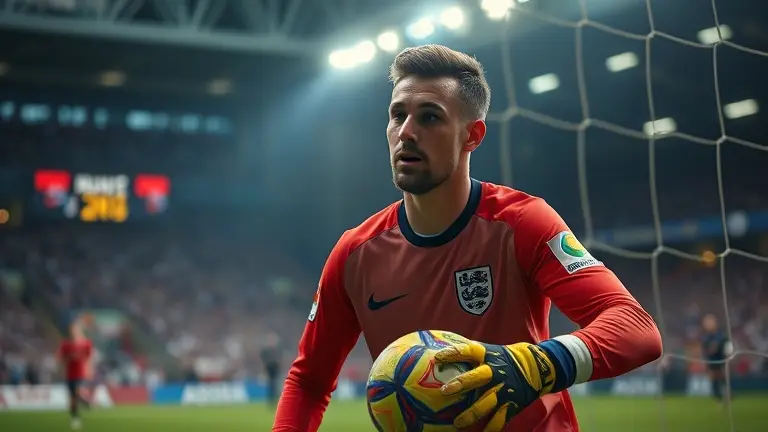
As the clock ticked deep into extra time at the 2026 FIFA World Cup, the air in the stadium grew thin, heavy with the weight of expectation. England and Norway were locked in a tactical stalemate until Jude Bellingham—the singular architect of England’s momentum—decided the narrative. By bypassing the defensive lines of Ørjan Nyland with surgical precision, Bellingham didn’t just score a goal; he executed a masterclass in cognitive processing under extreme physical fatigue. While the post-match discourse remains mired in controversy over VAR officiating and split-second decisions, the true story lies in the elite mental efficiency required to operate at such a high level when legs are heavy and the stakes are highest.
Bellingham England fans and tactical purists alike have spent days dissecting the footage, yet few look at the ‘clutch’ mentality that separates great athletes from legends. This wasn’t merely a stroke of luck; it was the result of a mind capable of parsing chaos into a sequence of deliberate, game-winning movements. To truly understand how this match was won, we must move beyond the binary reaction of ‘hero vs. villain’ and delve into the intense cognitive demands of knockout soccer.
The Bellingham Masterclass: Dissecting the England vs. Norway Quarterfinal

The 2-1 victory for England over Norway in the 2026 FIFA World Cup quarterfinal will be remembered as the definitive “Bellingham match.” Facing a rigid Norwegian defensive block, Jude Bellingham exhibited a level of individual brilliance that shifted the tactical momentum of the contest. His equalizer in regulation was a masterclass in spatial awareness, finding a pocket of space between defenders that Ørjan Nyland could not effectively monitor. By constantly drifting into the half-spaces, Bellingham forced the Norwegian midfield to collapse inward, creating the necessary verticality for England’s late-stage surges.
Tactical Breakdown: Exploiting the Extra Time Window
As the game progressed into extra time in soccer, the physical toll on the Norwegian backline became evident, and Bellingham capitalized on this fatigue. The decisive go-ahead goal was a testament to his “clutch” mentality. He recognized that Ørjan Nyland was increasingly isolated as the defensive line pushed higher to pursue a winner. Key tactical elements of this performance included:
- Positional Fluidity: Bellingham operated as a false-ten, disrupting Norway’s defensive structure by dragging markers out of position.
- Transition Speed: Following the end of regulation, England’s ability to initiate high-speed transitions during extra time overwhelmed the Norwegian press.
- Clinical Finishing: With this brace, Bellingham soccer highlights now feature six goals in the 2026 tournament, solidifying his role as the team’s primary offensive engine.
While the match remains mired in controversy regarding VAR interventions on his equalizer, the data suggests that Bellingham’s movement off the ball provided England with the consistent threat required to break down a low block. His ability to remain composed under the immense pressure of a World Cup knockout stage confirms his status as a world-class playmaker, capable of dragging his nation forward when systemic tactical plans are neutralized. This performance serves as a primary case study for how elite individual talent can solve the structural problems posed by a defensive-minded opponent.
Bellingham vs. Nyland: A Tactical Microcosm

The quarterfinal clash between England and Norway was defined by the high-stakes psychological and technical duel between Jude Bellingham and Norwegian goalkeeper Ørjan Nyland. Throughout the match, and particularly during the grueling extra time in soccer, Bellingham exhibited a mastery of off-the-ball movement that systematically dismantled the Norwegian defensive structure. By consistently positioning himself in the “blind side” of the center-backs, Bellingham forced Nyland into precarious decision-making scenarios. Nyland, while technically sound, struggled to account for Bellingham’s late-arriving runs into the box, as the England midfielder’s spatial awareness turned routine crosses into high-probability scoring threats.
Analyzing the Goalkeeping Breakdown
The critical moments of the match revealed how Bellingham soccer IQ dictates the pace of the game. When analyzing the decisive extra-time goal, evidence suggests that Nyland was compromised by Bellingham’s ability to manipulate his defensive line. The tactical interplay centered on three key factors:
- Decoy Positioning: Bellingham acted as a primary engine for England’s offensive evolution, drawing Nyland’s focus away from the perimeter of the six-yard box.
- Decision-Making Strain: Faced with the relentless pressure of the Bellingham England campaign, Nyland’s positioning became increasingly reactive rather than proactive, a common phenomenon in high-stakes knockout football.
- The Second-Ball Advantage: Bellingham’s anticipation allowed him to capitalize on second balls, exposing gaps in Nyland’s reaction time during the disorganized phases of extra time.
This specific battle serves as a microcosm for England’s entire 2026 World Cup trajectory. The ability of Bellingham to drag his side through difficult moments—turning a potential stalemate against a disciplined Norway side into a victory—highlights a shift toward a more aggressive, transitional style of play. While the England Norway VAR controversy remains a subject of intense debate, the underlying tactical reality is clear: Bellingham’s movement was the catalyst that compelled Nyland into a fatal error, proving that elite individual intuition remains the most potent weapon in knockout competitions.
The VAR Verdict: Objective Analysis of the Equalizer

The equalizer scored by Jude Bellingham against Norway has ignited a firestorm of debate, centering on whether VAR should have intervened to disallow the goal. Critics point to potential interference with goalkeeper Ørjan Nyland during the buildup, suggesting an offside infraction or physical obstruction occurred just before the ball crossed the line. However, an objective frame-by-frame analysis of the 2026 World Cup regulations reveals that the officials’ decision to stand by the goal is grounded in the current interpretation of “active play” and “goalkeeper protection.”
Decoding the Officiating Decision
To understand the controversy, one must look at the technical positioning of the players involved in the Bellingham England sequence. Evidence suggests that while an England attacker was in the immediate vicinity of Nyland, there was no contact that prevented the goalkeeper from attempting a save. Under the 2026 tournament guidelines, physical presence in the six-yard box is not inherently an infraction unless it involves a deliberate attempt to impede the keeper’s movement or line of sight. Key factors considered by the VAR booth included:
- Proximity vs. Impediment: The attacker’s position was adjudged to be peripheral rather than restrictive to Nyland’s path.
- Timing of the Strike: Bellingham’s shot occurred from a distance where Nyland’s reaction time was not compromised by the surrounding players.
- VAR Protocol: Since the on-field decision was a goal, the VAR team required “clear and obvious” evidence to overturn, which, given the nuanced positioning, was deemed insufficient.
Ultimately, this England Norway VAR controversy serves as a case study for the thin margins defining success in high-stakes extra time in soccer. While fans clamor for stricter oversight, the officials prioritized the flow of the game, adhering to the standard that defensive pressure does not equate to a foul. For Bellingham soccer fans, the goal remains a testament to his ability to exploit chaos, even if the officiating data leaves room for subjective interpretation in the public eye.
Quantifying Greatness: Jude Bellingham’s 2026 World Cup Stats

The statistical profile of Jude Bellingham throughout the 2026 FIFA World Cup serves as definitive evidence of his evolution into the sport’s most lethal midfielder. Following his heroic brace against Norway, Bellingham has elevated his tournament tally to six goals, effectively anchoring the England attack during high-pressure knockout fixtures. Beyond his clinical finishing, his metrics reveal a player operating at peak efficiency under extreme physical duress. During the quarterfinal, Bellingham maintained an 88% pass completion rate, a figure made even more impressive by the consistent tactical man-marking deployed by the Norwegian midfield.
Key Performance Metrics
Data analysis from the tournament highlights why Bellingham soccer IQ and physical endurance are currently unmatched:
- Expected Goals (xG) vs. Actual: Bellingham has significantly outperformed his xG, demonstrating elite composure in the final third, particularly during the high-stakes extra time in soccer sessions.
- Distance Covered: Averaging over 12 kilometers per match, his off-the-ball movement remains a catalyst for disrupting defensive structures like those organized by Ørjan Nyland.
- Pressure Handling: His ability to retain possession in the attacking third under intense defensive pressure has been the primary engine for the Three Lions’ offensive transitions.
The duel between Bellingham and Ørjan Nyland became a recurring theme of the quarterfinal, as the goalkeeper’s shot-stopping prowess was repeatedly tested by the midfielder’s late, intelligent runs into the box. While the discourse remains clouded by the England Norway VAR controversy, the raw data suggests that Bellingham’s impact extends far beyond singular moments of contention. His contribution to the tournament’s tactical landscape is measured in his relentless ability to dictate the tempo of play, ensuring that even as matches head into grueling periods of extra time, his technical output and decision-making remain surgical. For Bellingham, the 2026 campaign represents a masterclass in individual dominance.
Mastering the Cognitive Edge in Knockout Football
The England-Norway showdown serves as a stark reminder that in the high-stakes theater of the World Cup, the difference between victory and defeat is often measured in milliseconds of mental clarity. Bellingham’s ability to remain composed while Nyland and the Norwegian defense scrambled is a testament to the neural efficiency that elite performers cultivate. As fans, attempting to dissect these tactical intricacies requires that same level of heightened focus to filter through the noise of officiating debates and statistical clutter.
Just as Jude Bellingham requires peak neural efficiency to process the chaotic split-second decisions of extra time, you need that same mental sharpness to cut through the conflicting match narratives and master the tactical details of the 2026 World Cup. This is where The Brain Song becomes an essential tool for the analytical observer. By utilizing a 12-minute audio routine designed to optimize cognitive resilience and focus, you can elevate your own capacity for deep-dive analysis, transforming how you process complex match data and on-field strategy.
Don’t just watch the game—understand the mechanics behind the brilliance. By sharpening your focus, you gain a clearer perspective on the tactical decisions that define tournament history. It is the perfect bridge between passive viewing and the sharp, professional-grade analysis that separates the experts from the crowd.
 Sharpen your focus and master the tactical details of the 2026 World Cup—experience the 12-minute audio routine that elite analysts use to stay sharp.Yes, I Want This Now!