
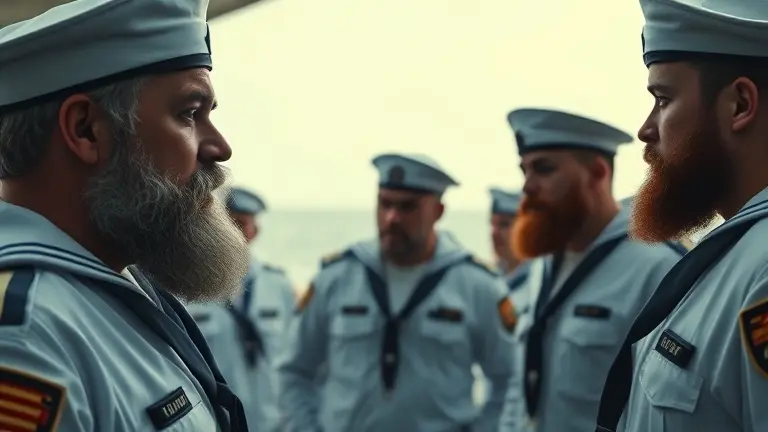
A high-profile visit by U.S. Defense Secretary Pete Hegseth to a Navy warship has ignited a firestorm within the ranks, as the Secretary reportedly observed several sailors sporting beards—a direct visual defiance of evolving military grooming standards. Hegseth, a staunch advocate for returning to traditional discipline and appearance, has seized upon these instances to reinforce a strict “clean-shaven” mandate across the fleet. With recent directives signaling that the Navy is moving to enforce these standards rigorously, the clock is ticking: service members have been granted a one-year grace period for existing medical waivers before the threat of potential separation becomes a reality for those who fail to comply.
While the administration justifies this pivot as a critical “safety risk” issue, citing the necessity of proper gas mask seals and respiratory protection, the move has triggered a complex debate regarding military retention, individual medical necessity, and the cultural identity of a modern volunteer force. As the Department of Defense pursues a broader path of “re-traditionalization,” the tension between rigid, conventional order and the realities of contemporary service life has never been more palpable. This deep dive examines the physiological arguments behind the policy, the legal implications of revoking long-standing waivers, and why personal readiness remains the cornerstone of individual and collective military success.
The Warship Incident: Hegseth’s Clean-Shaven Mandate

The recent high-profile visit by U.S. Defense Secretary Pete Hegseth to a Navy warship served as a catalyst for a significant shift in departmental priorities. During the inspection, Hegseth reportedly observed several sailors sporting facial hair, an occurrence he identified as a direct departure from traditional military grooming standards. This observation has fueled a broader initiative to tighten discipline across the fleet, as Hegseth pushes for action after sailors appear to flout his beard policy. By framing this lack of uniformity as a lapse in professional military standards, the administration is signaling a firm pivot toward the restoration of conventional order within the ranks.
Central to this administrative shift is the official directive regarding the pete hegseth military grooming policy. The Department of Defense has emphasized that the transition to a clean-shaven force is grounded in safety, particularly the necessity of maintaining airtight seals for gas masks and protective equipment. To reconcile this push for visual uniformity with existing medical needs, the Navy has implemented a formal transition timeline for personnel currently holding shaving profiles:
- One-Year Grace Period: Sailors currently possessing medical waivers for facial hair are granted a one-year window to comply with the updated standards.
- Medical Re-evaluation: During this period, personnel are expected to seek alternative dermatological treatments that align with the clean-shaven mandate.
- Separation Risk: The policy outlines that failure to achieve compliance by the end of the one-year grace period may lead to administrative separation from the service.
This firm stance on pete hegseth military grooming standards marks a departure from the recent trend of accommodation regarding skin conditions, such as pseudofolliculitis barbae. By prioritizing institutional safety and traditional discipline, the administration is effectively setting a new baseline for what constitutes a “deployment-ready” appearance in the modern Navy. As the one-year clock begins to tick, the focus remains on how the branch will balance individual health concerns against the Secretary’s rigid interpretation of combat readiness.
Safety Standards vs. Aesthetics: The Physiological Debate
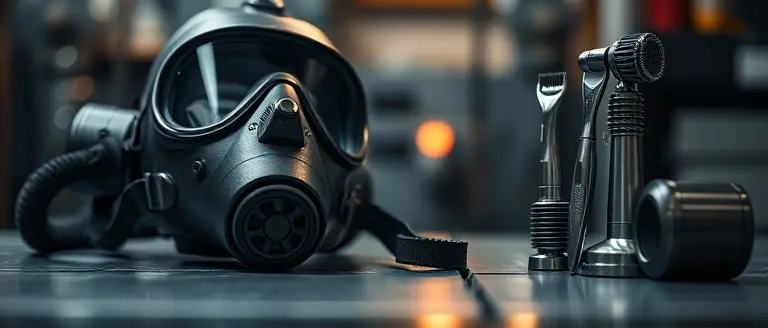
At the heart of the current hegseth pushes for action after sailors appear to flout his beard policy discourse lies a fundamental tension between long-standing safety protocols and the modern evolution of military grooming standards. The Department of Defense (DoD) maintains that the clean-shaven requirement is not merely a stylistic choice but a vital safety mandate. Central to this argument is the efficacy of the gas mask seal. According to official reports, even minor facial hair can compromise the airtight integrity of respiratory protection equipment, potentially exposing sailors to hazardous chemical, biological, radiological, or nuclear (CBRN) agents.
The Engineering Perspective on Facial Hair
While critics argue that modern protective equipment could be engineered to accommodate beards, the DoD maintains a more conservative stance. The physiological debate often centers on:
- Seal Integrity: Testing consistently shows that hair follicles interrupt the interface between mask gaskets and facial skin, increasing the risk of leakage.
- The Uniformity Doctrine: Proponents of the pete hegseth military grooming policy argue that uniformity is essential for unit cohesion and discipline.
- Medical Waiver Culture: The transition period away from long-standing medical waivers for skin conditions represents a significant shift, forcing service members to prove that current technology cannot bridge the gap between individual health needs and the universal pete hegseth military grooming standards.
Technical experts remain divided. Some suggest that specialized, tight-fitting headgear could mitigate these risks, but others argue that in high-stress combat environments, the “zero-tolerance” approach to facial hair remains the only failsafe against equipment failure. As the Navy initiates its one-year ultimatum for compliance, the focus is shifting from personal aesthetic preference to a rigorous, data-driven evaluation of whether the military can modernize its appearance without compromising the life-saving reliability of its defensive gear. The resolution of this debate will likely set the precedent for future hegseth beard policy enforcement across all service branches.
Retention in the Modern Volunteer Force

The debate surrounding the hegseth beard policy highlights a complex friction point between maintaining traditional institutional discipline and the operational necessity of retaining a highly skilled all-volunteer force. As Defense Secretary Pete Hegseth pushes for action after sailors appear to flout his beard policy, human resource experts are increasingly questioning whether rigid grooming mandates might inadvertently hamper recruitment efforts. In a competitive labor market, prospective service members often prioritize workplace autonomy and self-expression. For many younger generations, strict adherence to a “clean-shaven” mandate—particularly when contrasted with the more relaxed policies of allied nations—is viewed as an unnecessary hurdle to service.
Navigating the Balance of Uniformity and Talent
The core challenge for the Department of Defense lies in balancing military readiness with the realities of modern workforce culture. Industry analysts point to several factors regarding how these shifts impact long-term retention:
- Cultural Modernization: There is a growing sentiment that rigid standards regarding facial hair—even those framed as safety requirements—may signal a disconnect between the military hierarchy and the values of modern recruits.
- Recruitment Friction: Potential applicants who have historically relied on medical waivers for skin conditions may feel marginalized by the new, stricter enforcement, potentially shrinking the available talent pool.
- The “Safety vs. Morale” Trade-off: While the Navy characterizes this as a critical safety issue for gas mask seals, service members often argue that the lack of flexibility regarding appearance reflects a broader rigid culture that ignores individual comfort.
By implementing a strict pete hegseth military grooming policy that mandates adherence within a one-year window, the DoD is betting that traditional visual uniformity will boost discipline more than it risks alienating personnel. However, labor experts suggest that if the military is to maintain its competitive edge, leaders must carefully navigate the thin line between necessary standard-setting and outdated aesthetic expectations. The outcome of this policy shift will likely serve as a litmus test for how much the military is willing to adapt its internal culture to keep pace with an evolving, diverse, and increasingly independent civilian workforce.
Retraditionalization: A Shift in Defense Culture
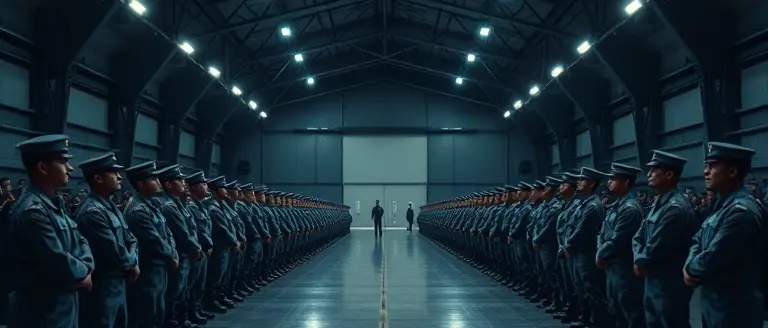
The recent directive regarding the hegseth beard policy represents far more than a simple aesthetic adjustment; it serves as a cornerstone of a broader movement toward “re-traditionalization” within the U.S. Department of Defense. By emphasizing rigid grooming standards, leadership is signaling a departure from the organizational modernizations that have defined recent years, aiming instead to re-instill a culture of traditional military discipline. Observers note that Pete Hegseth’s military grooming standards are being positioned as a return to foundational order, where visual uniformity is viewed as an essential metric of cohesion and operational readiness.
This push is effectively framing the pete hegseth military grooming policy as a restorative measure for the service branch’s core identity. As the institution grapples with the tension between individual expression and institutional standards, the focus on clean-shaven faces acts as a litmus test for command-led authority. Key implications of this policy shift include:
- Restoration of Uniformity: By curbing the rise of medical waiver culture, the DOD seeks to eliminate visual discrepancies that critics argue have diluted the singular identity of the American sailor.
- Symbolic Discipline: Grooming serves as the most immediate outward indicator of military adherence; enforcing these standards is intended to remind personnel that command hierarchy takes precedence over individual preferences.
- Operational Safety Narrative: The formal categorization of facial hair as a “safety risk”—particularly concerning the integrity of gas mask seals—provides the legal and logistical framework necessary to bypass long-standing exceptions.
As hegseth pushes for action after sailors appear to flout his beard policy, the DOD is setting a one-year ultimatum that forces a direct confrontation between long-standing medical accommodations and the new era of command-driven aesthetics. This mandate reflects a strategic effort to standardize the force, ensuring that regardless of recent cultural shifts, the military remains aligned with a traditionalist interpretation of readiness and internal rigor. The long-term impact of this cultural pivot remains to be seen, particularly as it pertains to retention in a competitive, modern labor market.
Prioritizing Readiness in an Era of Change
The push to enforce a uniform, clean-shaven standard serves as a reminder that within the military, every aspect of appearance and hygiene is viewed through the lens of operational integrity. As the debate over grooming standards continues, the underlying focus remains on ensuring that every service member is physically prepared for the rigors of combat, including the critical ability to seal protective gear effectively. This shift underscores a fundamental truth: individual health and systemic readiness are intrinsically linked to the efficacy of the entire force.
Much like the strategic necessity of ensuring clear respiratory function for safety equipment, personal hygiene and oral health serve as the frontline for maintaining peak physical readiness. While the debate over beard regulations often centers on aesthetics, the military’s argument heavily emphasizes the impact of physical health on life-saving equipment. Just as soldiers must prioritize their respiratory and oral hygiene to ensure their safety and readiness, they are now being forced to adapt to these new grooming mandates by taking ownership of their physiological well-being.
ProDentim offers a proactive approach to supporting your oral and respiratory health, acting as an essential tool for those committed to maintaining the highest standards of personal readiness. By fostering a healthy environment for your mouth and upper respiratory system, you are taking a crucial step in ensuring your body functions at its absolute best, regardless of the changing demands of your environment.
 Optimize your physical readiness and respiratory health; see how to support your body’s essential systems here.Yes, I Want This Now!