
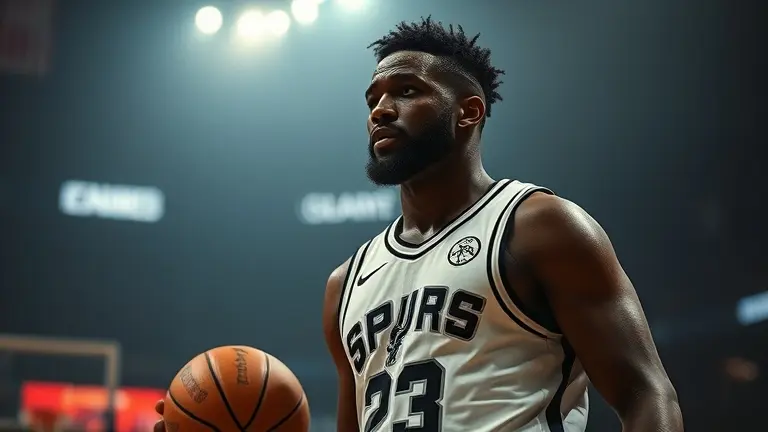
As the 2026 NBA offseason reaches a fever pitch, the narrative surrounding the San Antonio Spurs has shifted from simple rebuild mode to the high-stakes pursuit of a championship window. At the center of this gravity-shifting storm stands Victor Wembanyama. No longer just a rising prospect, Wembanyama has entered his mid-career development phase, forcing the Spurs front office to abandon standard roster construction in favor of a specialized support system. The current rumors involving veteran icons like LeBron James aren’t just about legacy; they are about finding the exact secondary playmaking and elite floor spacing required to maximize Wembanyama’s singular physical and technical footprint.
To truly grasp the ‘Wembanyama Effect,’ one must look beyond the clickbait headlines of where aging superstars might land. Instead, we must interrogate the tactical interplay between Wembanyama’s evolving skillset and the rigid requirements of modern championship-caliber basketball. This analysis demands deep focus and the ability to process complex data points, separating the myth of the ‘superteam’ from the reality of elite team-building. As the Spurs move toward global branding and roster perfection, the challenge for the modern fan is to maintain the same level of cognitive clarity required to dissect the intricate chess match happening on the front office level.
The Wembanyama Gravity: Why San Antonio is the Offseason Epicenter

As of July 2026, the San Antonio Spurs have transitioned from a rebuilding franchise into the undisputed epicenter of the NBA offseason. The primary driver of this shift is the undeniable gravitational pull of Victor Wembanyama. No longer viewed merely as a generational prospect, Wembanyama has evolved into the league’s most significant “talent attractor.” Veteran superstars, including the recent high-profile rumors surrounding LeBron James, are now evaluating the Spurs not for their historical pedigree, but for the opportunity to capitalize on the unique defensive and offensive infrastructure Wembanyama provides. The “Wembanyama Effect” has fundamentally altered how legacy players view a final championship run, shifting the focus from established super-teams to organizations anchored by a singular, transcendent talent.
The Strategic Shift Toward Global Branding
The Spurs organization is clearly operating with a long-term vision, as evidenced by recent initiatives to host home games outside of San Antonio. This move signals a deliberate attempt to leverage Wembanyama’s immense international appeal into a global brand. By positioning the franchise as a worldwide stage, the front office is providing a platform that appeals to veteran stars seeking both on-court success and off-court visibility. However, the internal calculus for potential teammates remains rooted in tactical fit:
- Complementary Playmaking: Any veteran star joining the Spurs would need to master the art of feeding Wembanyama in his evolving mid-career phase.
- Floor Spacing Requirements: To maximize Wembanyama’s interior dominance, the roster must provide elite perimeter shooting to prevent defensive double-teams.
- Shared Championship Ambition: The organization is under mounting pressure to surround their centerpiece with win-now talent, moving beyond the development-first philosophy of the past three seasons.
While media outlets like Yahoo Sports have questioned whether the Spurs are currently a “top destination,” the allure of pairing with a player who dictates defensive coverage like Wembanyama remains a powerful selling point. Whether or not high-profile veterans commit to San Antonio, the franchise is clearly being built as a hub for elite talent, signaling a new era of aggressive, star-driven roster construction.
Building the Anchor: Identifying Wembanyama’s Roster Needs

As the 2026 NBA offseason intensifies, the narrative surrounding Victor Wembanyama has shifted from mere potential to structural necessity. While the media clamors over the prospect of veteran superstars like LeBron James joining the San Antonio Spurs, the front office must prioritize basketball geometry over star power. Wembanyama’s immense gravity—his ability to alter shots defensively while commanding double-teams offensively—requires a specific ecosystem to reach championship efficiency. Relying on him as the sole engine of the offense is a tactical bottleneck; he requires elite infrastructure to maximize his unique, mid-career physical evolution.
The Essential Archetypes for Success
To capitalize on Wembanyama’s length and defensive versatility, the Spurs must acquire specific player archetypes that address his current offensive load. The goal is to reduce his cognitive burden as a primary initiator, allowing him to focus on finishing and rim protection. The following pillars are non-negotiable for the organization’s immediate strategy:
- Elite Floor Spacing: Wembanyama occupies the paint with unprecedented efficiency. To prevent clogged lanes, the Spurs need “gravity shooters”—players who can reliably hit corner threes and force defenders to abandon the paint, thereby opening lanes for his cutting and lob-catching.
- Secondary Playmaking: The system requires a high-IQ distributor capable of executing pick-and-roll sets that don’t rely solely on Wembanyama. A secondary playmaker alleviates defensive pressure, ensuring that Wembanyama is not exhausted by the time the fourth quarter arrives.
- Versatile Perimeter Defenders: Because Wembanyama acts as a help-side eraser, he needs perimeter defenders who can fight over screens and funnel attackers toward his rim protection without requiring constant recovery drills.
Ultimately, the “Wembanyama Effect” is not just about bringing in household names; it is about finding the right technical puzzle pieces. Evidence suggests that Wembanyama flourishes when his teammates provide high-level spacing and reliable secondary ball handling, rather than just occupying a secondary star role. For San Antonio, the front office mandate is clear: build a structure that complements the generational talent already in place, ensuring his transition into his prime is supported by a modern, championship-ready tactical foundation.
Statistical Blueprint: Comparing Wemby’s Spurs to Championship Models

As Victor Wembanyama enters his mid-career development phase, his statistical profile has evolved from a defensive specialist to a holistic offensive engine. When mapping his current efficiency and defensive win shares against historical championship dynasties—such as the early 2000s Spurs or the peak Golden State Warriors—a clear trend emerges: Wembanyama provides the rare “anchor” capability that historically dictates a championship floor. His ability to anchor a defense while maintaining elite scoring efficiency mirrors the trajectory of generational big men who forced defenses into impossible compromises. However, data suggests that for a championship run in the 2026-27 season, the San Antonio Spurs must address a significant output gap in perimeter gravity.
Addressing the Championship Gap
Historical models show that a dominant interior force like Wembanyama requires specific roster archetypes to maximize title potential. While his individual stats are elite, the current Spurs roster lacks the veteran-level floor spacing and secondary playmaking necessary to punish defensive double-teams consistently. To bridge the distance between a high-potential playoff team and a true contender, the front office must focus on these critical areas:
- Elite Floor Spacing: Wembanyama demands at least two high-volume, 40%+ three-point shooters to stretch the defense, creating the necessary lanes for his unique finishing ability.
- Secondary Playmaking: The reliance on Wembanyama as both a rim protector and a high-usage initiator limits his efficiency. Integrating a seasoned floor general is essential to reduce his energy expenditure.
- Defensive Versatility: To avoid late-game lapses, the supporting cast must replicate his defensive IQ, ensuring the team can switch effectively against small-ball lineups that attempt to negate Wembanyama’s interior height.
By focusing on these specific statistical requirements, the Spurs are moving beyond mere speculation about free agency. The goal is no longer just to add big names, but to acquire the precise tactical pieces that allow the Wembanyama effect to reach its full, championship-grade potential.
Global Ambition: The Spurs’ Strategic Expansion and Wembanyama’s Brand

The San Antonio Spurs are no longer just a regional powerhouse; they are evolving into a global sports entity, a shift directly tethered to the rise of Victor Wembanyama. Recent organizational initiatives, including the pursuit of hosting home games in international markets, signal a departure from traditional franchise management. This move is a calculated effort to capitalize on Wembanyama’s immense international appeal, transforming the Spurs into a brand with a footprint as expansive as the superstar’s own reach. By taking their home-court atmosphere to global stages, the franchise is effectively positioning its “product”—centered on Wembanyama’s unique physical and technical skillset—to a worldwide audience that transcends the traditional NBA media market.
Aligning Strategy with Global Identity
The decision to explore global venue opportunities reflects the front office’s recognition that Victor Wembanyama serves as the primary “talent attractor” for the organization. As the Spurs look to build a championship-caliber roster, they are leveraging this international curiosity to create a competitive culture that appeals to elite veterans and global stars alike. The organizational structure is shifting toward a model that prioritizes two distinct but interconnected goals:
- Global Branding: Increasing the franchise’s visibility in key international markets to align with Wembanyama’s status as the face of global basketball.
- Operational Agility: Designing a competitive project that balances the logistical demands of international travel with the technical requirements of developing a title-contending team.
This shift is not merely performative; it serves as a critical bridge between the franchise’s historical small-market identity and its future as a global destination. By creating a team structure that reflects the modern era of the sport, the Spurs are ensuring that Wembanyama is surrounded by an ecosystem capable of supporting his mid-career development, ensuring that his growth on the court is matched by the growth of the organization off it.
Mastering the Analytical Game
The 2026 NBA offseason is more than just a carousel of player movement; it is a masterclass in roster optimization centered around the unique requirements of a generational talent. Victor Wembanyama is not merely a player; he is an architectural force that demands specific secondary playmaking and floor-spacing archetypes to reach his full potential. Understanding these tactical shifts requires more than just casual observation; it demands a high level of cognitive precision to separate league noise from genuine strategic necessity.
Just as Wembanyama must process lightning-fast defensive reads to maintain his defensive gravity, you need sharp, undistracted mental clarity to decode the complex evolution of modern basketball. This is where The Brain Song becomes your competitive advantage. By optimizing your cognitive function, you gain the ability to parse deep-dive analysis, identify tactical patterns, and elevate your own mental game. It is the ultimate tool for those who refuse to settle for surface-level sports commentary.
You are analyzing the future of the league, so ensure your analytical engine is running at peak performance. By integrating this neuroscience-based approach into your routine, you bridge the gap between being a passive fan and a sharp-minded expert.
 Unlock your own ‘analytical gravity’ and sharpen your focus on the nuances of the NBA offseason by integrating The Brain Song into your daily routine.Transform My Mental Edge Today!