
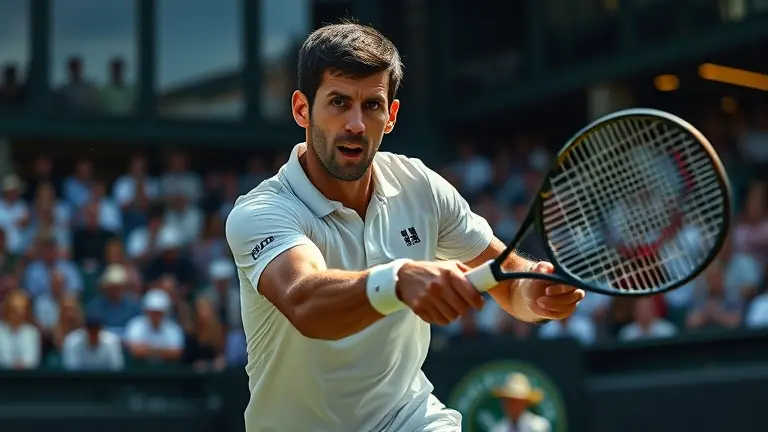
The tension at Wimbledon this July 7, 2026, has reached a fever pitch as 39-year-old Novak Djokovic battles for a record-extending 25th Grand Slam title. In a quarterfinal that is already being etched into tennis lore, the Serbian icon faced off against the explosive talent of Felix Auger-Aliassime, a match that felt less like a standard quarterfinal and more like a pivotal collision between eras. With the scoreboard locked in a grueling, 12-10 opening-set tiebreak that showcased defensive wizardry and sheer mental fortitude, the world is witnessing the outer limits of what a high-performance athlete can achieve when the body is treated with the precision of a finely tuned instrument.
Watching Djokovic navigate the court with such tactical maturity against the relentless pace of a younger challenger raises a profound question: how is this level of sustained performance possible? While the stadium gasps at every extended rally, the underlying narrative is one of extraordinary physiological management. Djokovic’s longevity offers a masterclass in overcoming the inevitable metabolic decline that challenges all of us, providing a compelling blueprint for how peak energy and physical output can be maintained long past the prime years of professional sport.
Djokovic’s Wimbledon 2026 Quarterfinal Thriller Against Auger-Aliassime

The All England Club served as the backdrop for a definitive clash of generations today, July 7, 2026, as Novak Djokovic faced off against Felix Auger-Aliassime in a high-stakes Men’s Singles Quarterfinal. At 39 years old, Djokovic entered the match with the weight of history on his shoulders, chasing a record-extending 25th Grand Slam title. This encounter represents more than just a quarterfinal spot; it is a tactical battle defining whether the elder statesman can hold off the surge of a younger, highly athletic field currently led by the likes of Jannik Sinner and other emerging contenders.
The intensity of the opening set, culminating in a grueling 12-10 tiebreak victory for the Serbian, underscored the elite level of play required to survive in the modern era of professional tennis. Despite the physical demands that come with his age, Djokovic exhibited a remarkable defensive fortitude, neutralizing Auger-Aliassime’s potent serve and aggressive baseline game.
The Stakes of a Legacy Run
The atmosphere in London remains electric, particularly following the unexpected exit of other top seeds, which has pushed this matchup into the center of global sports discourse. Several factors have defined the tension surrounding this quarterfinal:
- Generational Benchmark: For Felix Auger-Aliassime, the match serves as a crucial barometer of his ability to dismantle the tactical blueprint of a legend.
- Physical Endurance: At 39, Djokovic’s capacity to recover after long, high-intensity exchanges is being tested, with the marathon tiebreak serving as a primary point of concern for his longevity in this tournament.
- The 25th Slam Narrative: Every round Djokovic progresses through heightens the anticipation, as he moves closer to solidifying a statistical legacy that may remain untouchable for decades.
As the match continues, it remains clear that the evolution of Djokovic’s game—emphasizing efficiency and mental fortitude over raw physical pace—is the only strategy keeping him competitive against a rising generation of power hitters. This quarterfinal is not merely a contest of skill, but a compelling struggle between the endurance of a seasoned master and the relentless ambition of the future.
The Tiebreak Turning Point: Tactical Brilliance Under Pressure
The 12-10 first-set tiebreak between Novak Djokovic and Felix Auger-Aliassime will likely be remembered as the defining moment of this 2026 Wimbledon quarterfinal. At 39 years old, Djokovic demonstrated a masterclass in tactical preservation, showing that his ability to absorb pace remains the gold standard in professional tennis. Throughout the marathon tiebreak, the Serbian icon systematically dismantled the aggressive baseline game of Auger-Aliassime by forcing the younger player into “low-margin” shot-making. By consistently keeping the ball deep and finding sharp angles off the backhand wing, Djokovic minimized the opportunity for the Canadian to dictate play with his heavy forehand.
Strategic Adjustments in High-Leverage Moments
The tactical nuance during these high-leverage points showcased why Djokovic remains a primary contender for a historic 25th Grand Slam. Rather than attempting to overpower his opponent, Djokovic relied on high-percentage tennis, waiting for the inevitable lapse in concentration that high-stakes matches demand from younger competitors. Key analytical observations from the tiebreak include:
- Pace Mitigation: Djokovic intentionally slowed the tempo during extended rallies, forcing Auger-Aliassime to generate his own power, which increased the risk of unforced errors.
- Targeting the Neutral Zone: By keeping the ball central and mid-height, Djokovic disrupted the Canadian’s rhythm, effectively neutralizing the advantage of Auger-Aliassime’s wingspan and reach.
- Psychological Edge: During the crucial set points, Djokovic utilized his trademark “second-serve aggression,” effectively daring his opponent to take a high-risk return.
This narrow victory in the first set serves as a testament to the evolving veteran game. While Auger-Aliassime pushed the boundaries of modern athleticism, it was the cerebral approach of Djokovic that ultimately prevailed. The ability to pivot from defense to offense in a split second proved to be the difference-maker, setting a rigid, authoritative tone for the remainder of the match.
Chasing 25: What This Win Signals for Djokovic’s Campaign

The spectacle at Wimbledon 2026 serves as a definitive statement on the longevity of Novak Djokovic. By outlasting Felix Auger-Aliassime in a grueling, high-stakes quarterfinal, the 39-year-old tennis legend has proven that his pursuit of a historic 25th Grand Slam title is far from a sentimental farewell tour. Instead, it is a calculated, physically demanding campaign fueled by unprecedented fitness standards and tactical evolution. Surviving a marathon first-set tiebreak (12-10) against an elite younger opponent highlights a mental fortitude that remains the gold standard in modern tennis, confirming that Djokovic has successfully adapted his game to minimize energy expenditure while maximizing point-winning efficiency.
Resilience and Tactical Superiority
The intensity of today’s match underscores a crucial shift in the landscape of men’s tennis. While the next generation, represented by the likes of Felix Auger-Aliassime, possesses immense raw power and athleticism, Djokovic’s ability to remain composed under extreme pressure continues to dictate the terms of engagement. Several factors explain why he remains the favorite:
- Elite Conditioning: At 39, Djokovic’s recovery protocols and court movement remain superior to many players a decade his junior, allowing him to neutralize high-octane offensive players.
- Adaptable Strategy: Rather than engaging in pure power exchanges, Djokovic has transitioned into a “tactical surgeon,” forcing opponents into uncomfortable positions where their youth becomes a liability rather than an asset.
- Psychological Dominance: His capacity to thrive in high-pressure tiebreaks—often considered the hallmark of a champion—consistently disrupts the rhythm and confidence of his rivals.
This quarterfinal victory is not merely a statistical advancement toward the 25th Slam; it is a clear signal to the rest of the draw that Djokovic’s path to the trophy remains firmly within his control. As the tournament enters the business end, his physical maintenance and mental clarity position him as the player to beat, suggesting that despite the emergence of younger stars like Jannik Sinner, the throne at the All England Club is still his to defend.
Auger-Aliassime’s Blueprint: A Benchmark for the Next Generation

While the narrative of this Wimbledon quarterfinal often centers on the historic quest of Novak Djokovic for a 25th Grand Slam title, the performance of Felix Auger-Aliassime provides a vital blueprint for the next generation of ATP stars. Pushing a 39-year-old tennis legend to a grueling 12-10 opening set tiebreak requires more than just raw power; it demands a sophisticated blend of tactical aggression and physical resilience. Auger-Aliassime’s ability to neutralize Djokovic’s legendary defensive baseline game by shortening points and utilizing an aggressive net-charging strategy demonstrates the precise formula required to dismantle the world’s elite players in modern tennis.
The New Standard for Rising Stars
To challenge an athlete of Djokovic’s caliber, younger players can no longer rely on baseline consistency alone. Auger-Aliassime’s tactical adjustments during this high-stakes match highlight several key pillars of the “new generation” standard:
- Aggressive Neutralization: Rather than falling into a rallying trap, Auger-Aliassime consistently attacked the shorter ball, preventing Djokovic from dictating the tempo of the baseline exchanges.
- Servicing Versatility: By maintaining a high first-serve percentage and mixing up target spots, he kept the Serbian icon off-balance, proving that a dominant serve remains the greatest equalizer in the sport.
- Psychological Composure: Matching Djokovic in a 12-10 tiebreak demonstrates the mental fortitude required to compete at the quarterfinal stage of a major, setting a new benchmark for peers like Jannik Sinner.
Ultimately, this match serves as a diagnostic tool for the future of the sport. If the rising generation can replicate the tactical discipline and fearless shot-selection shown by Auger-Aliassime today, the transition of power at the top of the rankings may accelerate sooner than many analysts anticipated. Even in a narrow defeat, the Canadian has proven that the path to victory against a veteran legend like Novak Djokovic lies in unrelenting pressure and tactical fearlessness.
Fueling Your Own Championship Performance
The tactical masterclass witnessed today on Centre Court serves as a stark reminder that sustained excellence at 39 is not an accident; it is the result of relentless optimization of the human machine. Novak Djokovic’s ability to outlast and outmaneuver the likes of Felix Auger-Aliassime is a testament to a career defined by granular attention to physical recovery and metabolic discipline. Yet, you do not need to be a Grand Slam champion to apply these same principles of sustained performance to your own life as you navigate the physiological shifts that accompany aging.
As the demands of professional tennis highlight the need for elite-level maintenance, the average individual faces similar challenges in preserving metabolic efficiency and energy levels. Just as Djokovic refines his routine to bypass natural decline, you can unlock a new standard of vitality. CitrusBurn is designed to help you bridge that gap, supporting your body’s natural metabolic processes to restore that youthful, all-day stamina you remember. It is about equipping yourself with the internal tools necessary to perform at your peak, regardless of your calendar age.
By integrating the science of metabolic revitalization into your daily life, you are choosing to prioritize your longevity and vigor with the same seriousness as the world’s greatest athletes. Don’t let natural metabolic slowing dictate your output. Take control of your energy trajectory today and experience the difference that optimized cellular health can make in your personal pursuit of excellence.
 Discover the science of metabolic revitalization and regain the peak energy levels your body deserves.Yes, I Want This Now!