
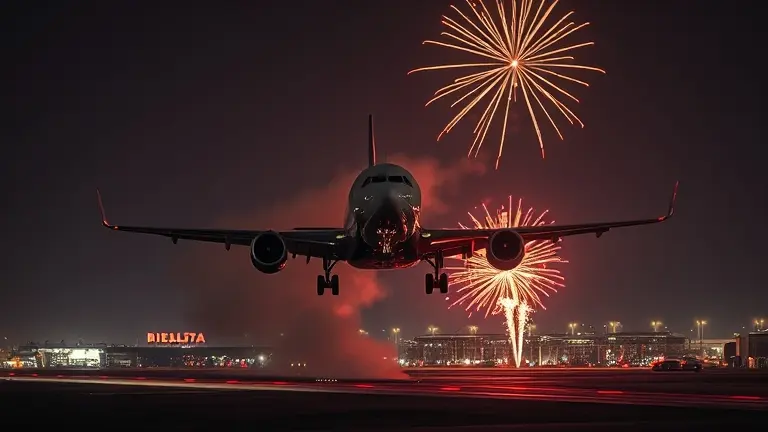
On the evening of July 4, 2026, the quiet approach of Delta Air Lines Flight 1076 into Chicago Midway International Airport was shattered by an unexpected intrusion. As the Airbus A319 descended, passengers and crew were startled by a deafening “big bang,” later confirmed to be a direct firework strike. While the 58 individuals on board landed safely, the incident serves as a stark reminder of the escalating dangers at the intersection of urban celebrations and aviation corridors.
Amidst the viral news coverage, it is easy to succumb to speculation. However, this event demands a serious, analytical look at how Chicago fireworks regulations and airspace safety protocols must evolve to protect travelers. By examining the flight path hazards and the psychological toll of such high-stress, high-decibel encounters, we can better understand the urgent need for enhanced safety measures and personal sensory resilience in our increasingly crowded skies.
Delta Flight 1076: Fact-Checking the Midway Fireworks Incident
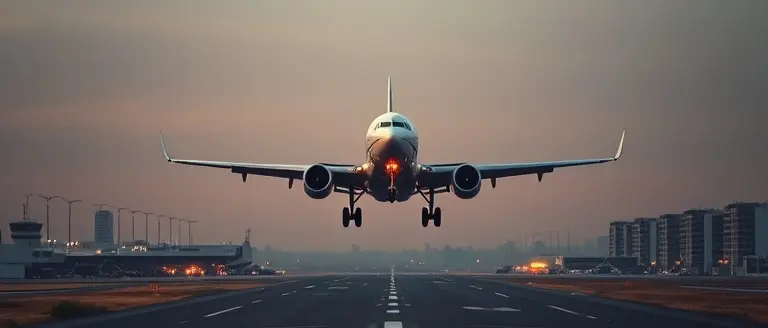
On July 4, 2026, a significant aviation safety event occurred when Delta Air Lines Flight 1076, an Airbus A319, was struck by a projectile during its descent into Chicago Midway International Airport. The flight, which originated from Hartsfield-Jackson Atlanta International Airport, was executing a standard approach when the incident took place. Contrary to speculative social media narratives suggesting catastrophic damage, official reports confirm that the firework strike—while startling—did not compromise the structural integrity of the aircraft. Passengers and crew members reported hearing a distinct “big bang” upon impact, but flight operations proceeded under normal protocols.
Official Incident Timeline and Status
To clarify the sequence of events and dispel misinformation, the following facts have been established by aviation authorities and primary news sources:
- Flight Path: The aircraft was on a routine arrival path into Midway, traversing the airspace during peak Chicago fireworks celebrations.
- Incident Details: As the aircraft descended, it encountered an unauthorized pyrotechnic device. This firework strike Delta Flight 1076 interaction prompted immediate pilot notification to air traffic control.
- Safety Outcome: Despite the mid-air collision, the crew successfully landed the plane at the scheduled gate. All 52 passengers and 6 crew members were reported safe, with zero injuries sustained.
- Regulatory Review: The incident is currently under active investigation by the FAA and local law enforcement to determine the origin of the firework and identify potential breaches of restricted flight path regulations.
It is critical for the public to rely on verified data regarding this Delta Air Lines incident rather than viral conjecture. While the event highlights the inherent risks posed by fireworks in Chicago near active flight corridors, the aircraft’s safe arrival is a testament to standard aviation safety buffers. Authorities are using this incident to re-examine the enforcement of no-fly zones for pyrotechnics during major holiday events.
The Intersection of Aviation Safety and Holiday Pyrotechnics
The recent firework strike on Delta flight 1076 near Chicago Midway International Airport highlights a critical, often overlooked vulnerability in urban aviation. While Chicago fireworks displays are a staple of Independence Day celebrations, their proximity to active flight paths creates a complex safety challenge. When an aircraft is on its final approach, it operates at low altitudes where it is uniquely susceptible to unauthorized pyrotechnics. Even small, consumer-grade fireworks reaching altitudes of several hundred feet can interact with an aircraft’s fuselage, sensors, or sensitive engine intakes, turning a festive celebration into a significant aviation hazard.
Physical Risks to Commercial Aircraft
The danger posed by aerial pyrotechnics is not merely theoretical. At the landing speeds maintained by an Airbus A319, even a relatively small object can cause structural damage or lead to catastrophic engine ingestion. Experts note that:
- Engine Ingestion: High-velocity intake fans can suck in debris, potentially leading to compressor stalls or engine failure.
- Sensor Interference: Strikes near the cockpit can disrupt pitot-static systems or navigation equipment, complicating the landing sequence for pilots.
- Structural Compromise: Impact with exterior surfaces can damage windshields or critical control surfaces, requiring costly inspections and mandatory safety groundings.
The incident involving Delta Air Lines serves as a stark reminder that the airspace surrounding major metropolitan hubs requires stricter monitoring during high-risk holiday periods. Unlike professional, permitted displays that are coordinated with the FAA, the proliferation of private, unauthorized fireworks complicates air traffic control efforts. As the aviation industry moves forward, it faces the challenge of balancing public enthusiasm for fireworks chicago events with the absolute necessity of maintaining a safe, sterile environment for incoming flights. Stricter enforcement of no-fly zones for pyrotechnics near landing paths may become a necessary evolution of municipal and federal safety policy.
Evaluating Stricter Enforcement and No-Fly Zones for Fireworks
The recent firework strike Delta flight 1076 near Chicago Midway International Airport has ignited a critical debate regarding the intersection of urban Independence Day celebrations and aviation safety. While Delta Air Lines and its passengers were fortunate that the encounter resulted in no structural damage or injuries, the incident highlights a growing conflict between traditional public festivities and the operational realities of a major metropolitan flight path. Current regulations, while strict regarding controlled pyrotechnic displays, often struggle to account for the proliferation of unauthorized, consumer-grade fireworks launched by civilians in residential areas surrounding active airports.
Challenges in Regulatory Enforcement
Aviation experts suggest that the primary challenge lies in the geographical proximity of residential neighborhoods to flight arrival corridors. Implementing effective no-fly zones for ground-based pyrotechnics during high-risk holiday windows would require a level of inter-agency cooperation between the FAA and local municipal law enforcement that currently does not exist.
To mitigate risks similar to those seen with the firework strike Delta Air Lines flight, policymakers are evaluating several potential strategies:
- Geofenced Pyrotechnic Prohibitions: Establishing mandatory buffer zones within a specific radius of active runways where all consumer fireworks are strictly prohibited during designated flight hours.
- Height-Restricted Permitting: Enhancing the screening process for municipal fireworks Chicago displays to ensure launch trajectories remain well below the minimum landing altitudes for incoming commercial aircraft.
- Public Awareness Campaigns: Increasing outreach regarding the severe federal penalties associated with interference with flight operations, reinforcing that unauthorized projectile launches near flight paths constitute a major security violation.
Balancing the cultural importance of Chicago fireworks with the necessity of keeping the skies safe requires a modernized approach to urban airspace management. Relying on voluntary compliance has proven insufficient, as evidenced by the events of July 4, 2026. Stricter enforcement, potentially backed by drone-based monitoring or localized sensors, may become the standard requirement to prevent future hazards and ensure that holiday celebrations do not compromise the integrity of commercial aviation.
Looking Ahead: Enhancing Airport Perimeter Security
The recent firework strike on Delta flight 1076 near Chicago Midway International Airport has served as a wake-up call for aviation authorities and urban planners alike. As federal agencies, including the FAA and local law enforcement, continue their investigation into the unauthorized pyrotechnic launch, the focus has shifted toward how major transit hubs in densely populated urban environments can better safeguard the national airspace. While the aircraft landed safely, the incident highlights the unpredictable nature of fireworks in Chicago during high-stakes holiday periods and the urgent need to bridge the gap between municipal festive planning and federal aviation safety protocols.
Strengthening Multi-Agency Coordination
To prevent future hazards similar to the firework strike Delta Air Lines incident, aviation security experts are calling for more robust integration between airport operations and city event management. Current frameworks often lack the granular, real-time communication necessary to ground or relocate unauthorized pyrotechnic displays occurring beneath active final approach paths. To mitigate these risks, stakeholders are proposing the following enhancements:
- Geofenced No-Fly Zones for Pyrotechnics: Establishing stricter, automatically updated prohibited launch zones that coincide with established flight corridors during major holidays.
- Enhanced Monitoring Systems: Utilizing advanced radar and thermal imaging to detect unauthorized aerial projectiles in real-time, allowing controllers to alert pilots of potential mid-air obstructions immediately.
- Stricter Municipal Permitting: Implementing a mandatory notification protocol where city-approved fireworks displays are automatically cross-referenced with airport traffic patterns to ensure sufficient vertical separation.
Ultimately, the goal is to balance the cultural necessity of Chicago fireworks with the non-negotiable safety requirements of commercial aviation. By reinforcing the perimeter security surrounding hubs like Midway, authorities can ensure that the safety of Delta Air Lines passengers remains paramount, even when the festivities of Independence Day reach their peak. Continued oversight is critical to ensure that unauthorized displays do not inadvertently threaten the integrity of our national airspace system.
Beyond the Noise: Prioritizing Sensory Resilience
The incident involving Delta Flight 1076 is more than a cautionary tale regarding aviation safety; it highlights the often-overlooked reality of sensory trauma during sudden, high-decibel events. For the passengers on that flight, the “big bang” was not merely a physical hazard but an intense auditory stressor. While authorities continue to investigate the breach of safety protocols near Midway, those who navigate high-pressure environments must also consider the long-term health of their auditory systems, which are increasingly vulnerable to such extreme acoustic shocks.
As we advocate for stricter no-fly zones and better coordination between city officials and aviation regulators, we must also focus on individual wellbeing. Protecting your auditory clarity and supporting inner ear health is a proactive step toward maintaining cognitive sharpness, especially after experiencing unexpected noise pollution. Audifort is specifically designed to support the auditory system, promoting improved blood flow and sensory resilience to help you recover from the impact of high-stress acoustic environments.
If you have ever felt the lingering effects of sensory overwhelm or simply wish to safeguard your hearing against the unpredictable noises of modern life, it is time to prioritize your wellness. Discover how to enhance your sensory defense and maintain peak auditory health with a solution tailored for your recovery.
 Learn how to support your sensory wellness and auditory health with Audifort.Transform My Auditory Health Today!