

As the dust settles on the 2026 Nathan’s Famous Hot Dog Eating Contest, Joey Chestnut stands alone—once again—with his 18th career title. Consuming 66 hot dogs in the blistering heat of a July 4th weekend, Chestnut proved that his legacy is far from over. Yet, this year’s competition was defined by something more than the scoreboard: it was a grueling battle against triple-digit heat and suffocating humidity that tested the absolute physical limits of the human body. While fans celebrate the record, the real story is found in the extreme physiological strain Chestnut endured, a testament to his unparalleled ability to manage his internal systems under conditions that would break most competitors.
Beyond the spectacle of the hot dog eating contest 2026, this event offers a rare, unfiltered look at the intersection of elite performance and biological endurance. As we analyze the Joey Chestnut record and the impact of environmental factors like humidity on caloric processing, we begin to uncover the economics and science behind competitive eating. From the evolution of training regimens to the specialized strategies required to combat thermogenic stress, Chestnut’s latest win is not just a triumph of gluttony, but a high-stakes demonstration of metabolic resilience in the face of environmental collapse.
,slug:
The 18th Milestone: Joey Chestnut’s 2026 Victory Under Extreme Conditions
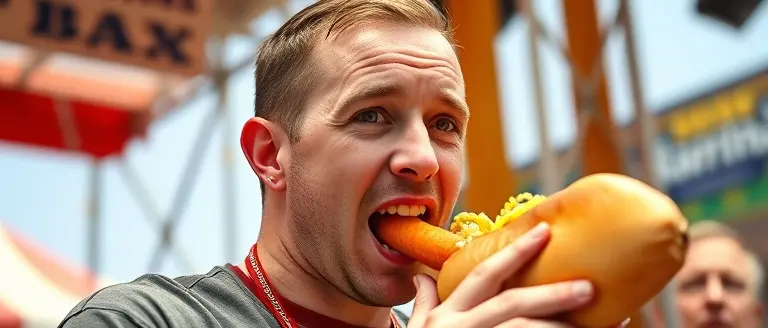
In a display of unparalleled physical resilience, Joey Chestnut secured his 18th title at the Nathan’s Famous Hot Dog Eating Contest during the 2026 Independence Day holiday. By consuming 66 hot dogs, Chestnut reaffirmed his status as the undisputed icon of competitive eating. However, this year’s victory was far from routine, as competitors faced grueling environmental conditions that pushed the human body to its absolute limits. With ambient temperatures soaring and humidity levels pushing the heat index well past 100 degrees, the event became a true test of endurance rather than just speed.
Environmental Challenges and the “Bun Factor”
The extreme weather did more than just tax the athletes; it fundamentally altered the physics of the competition. Elite eaters rely on a delicate balance of moisture and texture to maintain their rhythm. The oppressive heat and humidity had a significant impact on the integrity of the food:
- Bun Consistency: The high humidity caused the buns to become overly soft and tacky, increasing the physical effort required to swallow and navigate the “dunking” process.
- Dehydration Risks: Competitors faced elevated risks of heat exhaustion, necessitating rigorous cooling protocols between rounds.
- Metabolic Stress: The body’s natural response to extreme heat—shunting blood flow to the skin for cooling—left less blood available for the digestive processes, creating a unique physiological hurdle.
Despite these variables, Chestnut’s ability to adapt his technique remains the gold standard in the sport. His 18th win is not merely a record; it is a masterclass in professional preparation. While speculators often focus on the Joey Chestnut record in perfect weather, this performance proves that his dominance is rooted in a deep understanding of his own physiology and a mastery of the elements, solidifying his legacy as the most successful athlete in the history of the hot dog eating contest. Looking ahead to the hot dog eating contest 2026 landscape and beyond, Chestnut’s performance serves as a benchmark for the rigorous training required to compete at the sport’s highest tier.
The Science of the 18th Win: Analyzing Physical Duress

The 2026 hot dog eating contest served as a masterclass in physiological endurance, as Joey Chestnut secured his 18th victory despite extreme environmental hurdles. When temperatures exceed 100 degrees, the human body diverts significant blood flow to the skin for thermoregulation. For a competitive eater, this creates a biological paradox: the body requires oxygenated blood for digestion and gastric distension, but the heat forces a priority shift toward cooling. Chestnut’s ability to maintain a consistent cadence of 66 hot dogs under such conditions suggests a specialized metabolic threshold that differentiates him from the average athlete.
Mastering Metabolic and Environmental Stress
Evidence suggests that Chestnut’s longevity is rooted in his technical adaptation to physical duress. Unlike casual competitors who rely solely on jaw speed, Chestnut treats the Nathan’s Hot Dog Eating Contest as an endurance event, akin to a marathon. Key factors in his 2026 performance included:
- Gastric Compliance: Through years of disciplined training, Chestnut has conditioned his stomach to expand rapidly while minimizing the autonomic “gag reflex” that often triggers in high-heat scenarios.
- Environmental Buffering: High humidity alters the consistency of buns, making them denser and harder to swallow. Chestnut’s technique of “dunking”—carefully calibrating the moisture content—is a scientific workaround to bypass the mechanical difficulty of chewing in high-heat, low-oxygen environments.
- Thermoregulatory Efficiency: By managing his internal heart rate through controlled breathing, Chestnut avoids the premature fatigue that leads to heat exhaustion, a frequent pitfall for rivals attempting to match his pace.
While fans often focus on the staggering Joey Chestnut record, his success is increasingly viewed through the lens of sports science. His ability to perform under these specific atmospheric conditions highlights why he remains the undisputed champion. By prioritizing core body temperature management over pure speed, he ensures that his caloric intake remains efficient even when environmental factors turn the stage into an extreme-heat pressure cooker.
Decoding the Business of Competitive Eating: Beyond the Prize Money

While the Nathan’s hot dog eating contest remains the undisputed pinnacle of the sport, the joey chestnut net worth conversation often misses the broader economic reality of professional competitive eating. Securing his 18th title in the grueling 2026 contest environment solidified his status, but Chestnut’s financial stability is not merely tied to event prize pools. Instead, the business model for an elite athlete at this level is built on a diverse portfolio of income streams that mirror those of traditional professional athletes.
Diversified Revenue Streams
To understand how legends like Chestnut build long-term wealth, it is necessary to look beyond the trophy. Financial experts and industry analysts point to several core pillars that sustain professional eaters:
- Corporate Sponsorships: High-profile brands leverage Chestnut’s massive visibility during the July 4th window to secure long-term endorsements. These partnerships often transcend the world of food, extending into beverage, apparel, and lifestyle brands.
- Appearance Fees: Beyond the competitive circuit, athletes command significant premiums for guest appearances, private events, and corporate retreats. An appearance by an 18-time champion is a high-value commodity for marketing agencies.
- Media and Content Rights: From documentary features to exclusive digital content and social media branding, the ability to monetize an audience beyond the annual hot dog eating contest 2026 season is essential.
- Exhibition Matches: These curated, high-stakes events often offer appearance payouts that can exceed standard tournament winnings, providing a consistent flow of capital throughout the year.
The economic reality is that while the prize money for any individual tournament is significant, it serves primarily as a catalyst for brand value. By maintaining his dominant joey chestnut record, the athlete ensures his marketability remains at its peak, effectively turning physical endurance into a sustainable, multifaceted business enterprise. This strategic diversification ensures that elite competitors are protected from the volatility of single-day athletic performances.
The Power Duo: Miki Sudo and the Evolution of the Sport

The dominance of Joey Chestnut in the hot dog eating contest landscape is matched only by the parallel ascent of Miki Sudo, creating a formidable power duo that has effectively transformed competitive eating from a niche sideshow into a mainstream entertainment franchise. As Chestnut secured his 18th title during the hot dog eating contest 2026, Sudo’s concurrent success further solidified their status as the faces of Major League Eating. This partnership has significantly expanded the sport’s demographic reach, appealing to a diverse audience that values the intersection of elite athleticism, psychological grit, and sheer spectacle. By framing their careers around consistent, year-over-year record-breaking performances, they have elevated the public profile of the sport, moving it closer to the professional production levels of traditional major league sports.
Strategic Influence on the Competitive Landscape
The evolution of the sport is not merely about consumption counts; it is driven by the professionalized training regimens that both Chestnut and Sudo champion. Their influence on the sport can be observed in several key areas:
- Mainstream Visibility: Their public presence during the July 4th holiday weekend acts as a primary marketing engine for the entire industry.
- Economic Impact: As interest in the joey chestnut net worth and overall earnings grows, fans are gaining a deeper understanding of the financial viability of professional eating, which attracts younger, career-minded competitors.
- Performance Metrics: By navigating extreme environmental variables—such as the 100-degree heat and humidity experienced during the 2026 Nathan’s Famous Hot Dog Eating Contest—they have set a new benchmark for physical and mental endurance.
This synergy between Chestnut and Sudo provides a “championship culture” that defines the modern era of the sport. As the industry looks toward the 2026 circuit and beyond, the narrative remains centered on the technical mastery required to sustain high-caloric intake under duress, ensuring that the spectacle remains both commercially successful and structurally elite.
Unlocking Your Own Metabolic Resilience
Joey Chestnut’s 18th title isn’t just about the record-breaking 66 hot dogs; it is a masterclass in physiological mastery. While the public marvels at the sheer volume of his feat, the true story lies in his ability to maintain core function despite the extreme environmental pressure of the 2026 contest. This victory serves as a powerful reminder that our bodies are constantly battling internal and external resistance, whether we are professional athletes or simply navigating the daily stressors of a demanding lifestyle.
While Chestnut’s journey is elite, the biological hurdle he faced—extreme thermogenic stress—is a common barrier for anyone struggling with sluggish energy and metabolic stagnation. The heat and humidity that challenged his performance are similar to the factors that drive internal metabolic resistance, preventing your body from operating at peak efficiency. Just as a champion requires specific preparation to survive the heat, your metabolism needs the right support to overcome these invisible barriers and restore its natural power.
CitrusBurn bridges this gap by addressing thermogenic resistance directly, helping you optimize your metabolic heat and energy efficiency. By focusing on the science that allows the body to process fuel effectively under stress, you can move past the limitations that keep your energy levels inconsistent. It is the natural next step for those who want to apply the same principles of physiological optimization seen at the highest levels of competitive sport to their own daily vitality.
 Discover how to optimize your own metabolic heat and energy efficiency with the science behind CitrusBurn.Transform My Energy Today!