
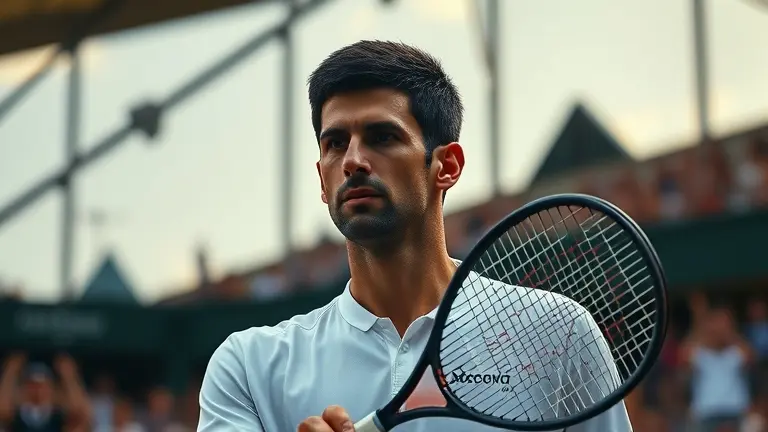
History was rewritten on the hallowed grass of the All England Club as Novak Djokovic cemented his legacy, securing his 106th match victory at the Wimbledon Championships. By overcoming a persistent Roman Safiullin in a gritty four-set battle, Djokovic didn’t just advance to the quarter-finals; he officially surpassed Roger Federer’s long-standing record for the most match wins by a man in tournament history. The scoreline of 7-6, 6-3, 3-6, 6-3 reflects a contest defined by tactical shifts and the relentless mental fortitude that has become the hallmark of the Serbian’s career.
As the dust settles, the tennis world is shifting its gaze from this monumental achievement toward the final sprint for the trophy. With Safiullin’s challenging performance now in the rearview, the focus intensifies on the Djokovic bracket and the inevitable question: who can stand in his way as he pursues an unprecedented 25th Grand Slam title? This isn’t just about the trophy anymore—it’s about witnessing the ultimate masterclass in clinical focus under the most extreme pressure of professional sports.
Beyond the Record: Djokovic’s Historic 106th Wimbledon Victory
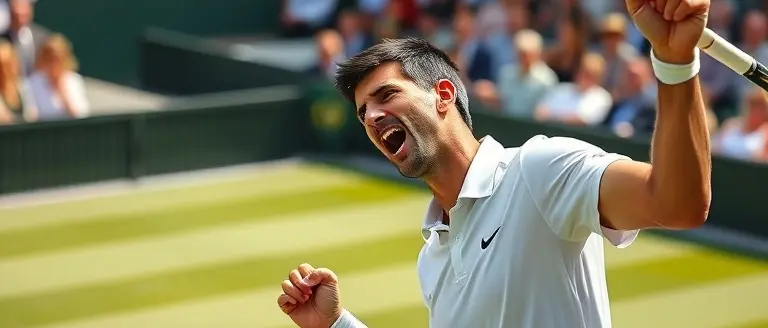
In a display of enduring dominance at the All England Club, Novak Djokovic etched his name deeper into tennis history by securing his 106th match win at the Wimbledon Championships. By defeating the tenacious Russian qualifier Roman Safiullin with a scoreline of 7-6, 6-3, 3-6, 6-3, Djokovic officially surpassed the legendary record previously held by Roger Federer. This victory, achieved in the fourth round of the 2026 tournament, marks a monumental shift in the sport’s record books, reinforcing the Serbian’s status as a perennial favorite on grass courts.
The Path to 106: Overcoming Safiullin’s Resistance
While the final result suggests a controlled performance, the match against Safiullin was anything but straightforward. The 132nd-ranked qualifier pushed the former champion to his limits, forcing extended rallies and testing his mental composure throughout the four sets. Djokovic displayed visible frustration during moments of high pressure, yet his clinical ability to capitalize on critical break points allowed him to pull away when it mattered most. This contest highlighted the physical and psychological toll of navigating the Wimbledon draw, as lower-ranked players continue to pose significant hurdles for top-seeded contenders.
Why This Milestone Matters
Securing this record is not merely a statistical achievement; it serves as a powerful psychological tailwind in Djokovic’s pursuit of a historic 25th Grand Slam title. Key takeaways from this match include:
- Record-Breaking Consistency: Reaching his ninth consecutive quarter-final demonstrates a level of sustained excellence rarely seen in professional tennis.
- Resilience Under Pressure: Despite the intensity shown by Safiullin, Djokovic’s ability to regain focus after dropping a set proves his elite recovery capacity.
- Momentum for the Title: With the Federer record now firmly behind him, the path to the trophy appears clearer, though the remaining bracket remains filled with high-caliber talent aiming to disrupt his historic campaign.
As the tournament progresses, the focus now turns to his next opponent. Fans are closely monitoring the Djokovic Wimbledon bracket to see how the intensity of this match impacts his recovery for the quarter-final showdown.
Safiullin’s Resilient Run: A Closer Look at the Fourth Round Clash
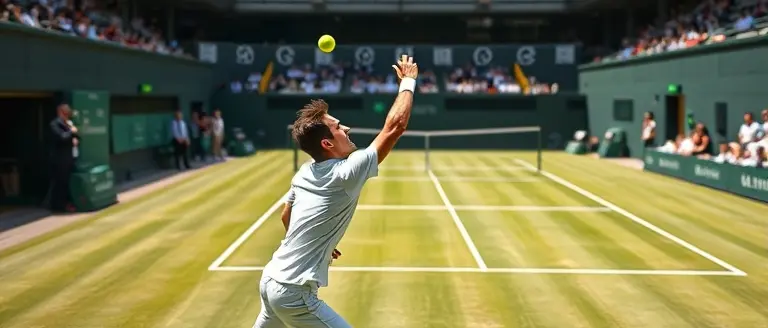
While the narrative of the 2026 Wimbledon championships was dominated by Novak Djokovic securing his historic 106th match win, the performance of Roman Safiullin provided the tactical intrigue of the fourth round. As a qualifier entering the tournament with modest expectations, Safiullin’s path to the second week was anything but conventional. Throughout the clash, the Russian underdog displayed a remarkable ability to neutralize the world number one’s baseline dominance, forcing Djokovic to deviate from his standard clinical approach. Safiullin’s game plan relied on heavy top-spin and aggressive court positioning, which effectively kept the Serbian superstar off-balance for long stretches.
Tactical Shifts and the Third-Set Surge
The match reached a critical juncture in the third set, where Safiullin managed to find a tactical rhythm that briefly disrupted the trajectory of the favorite. By shortening the points and exploiting the net, he forced errors from Djokovic, leading to visible displays of frustration from the record-breaker. This phase of the match highlighted several key elements of the qualifier’s success:
- Aggressive Service Returns: Safiullin frequently targeted the Serbian’s body, preventing clean striking opportunities.
- Neutralizing the Baseline: He successfully dragged his opponent into high-intensity, lateral rallies that tested the 25th-title hopeful’s endurance.
- Controlled Risk-Taking: Safiullin maintained a high first-serve percentage, which protected his service games against deep returns.
Although Djokovic eventually regained his composure and tactical equilibrium to close out the match 7-6, 6-3, 3-6, 6-3, the intensity of the encounter underscored the competitive depth of the current Wimbledon field. For Safiullin, the defeat marks the end of a resilient run, but the performance serves as a testament to his rising stature. Djokovic ultimately utilized his superior tactical discipline and tournament experience to stifle the late-game momentum, proving that even when challenged, his ability to adjust under pressure remains the hallmark of his legendary career.
Djokovic’s Path to the Title: Updated 2026 Wimbledon Bracket

Following his hard-fought victory over Roman Safiullin, Novak Djokovic has officially secured his spot in the 2026 Wimbledon quarter-finals. While the win was historic, establishing a new record of 106 match victories at the All England Club, the focus for the world number one now shifts entirely to the final stages of the draw. The fourth-round encounter against the resilient qualifier served as a stern test of his composure, but with that hurdle cleared, the Djokovic Wimbledon bracket is beginning to crystallize into a high-stakes gauntlet.
Quarter-Final Matchups and Road Ahead
As the tournament progresses, the level of competition intensifies. Analysts are looking closely at how Djokovic manages his recovery and tactical adjustments following the resistance shown by Safiullin. The Serbian superstar’s path to his 25th Grand Slam title now requires clinical efficiency to avoid the energy-draining battles that characterized his latest victory. Below is an overview of the projected quarter-final landscape as the top seeds prepare for the final push:
- Quarter-Final 1: Novak Djokovic vs. [Upcoming Opponent]
- Quarter-Final 2: Emerging top-tier challenger vs. Second-ranked contender
- Potential Semi-Final Scenarios: Tactical match-ups against aggressive baseliners or elite serve-and-volley players.
The psychological aspect of this run cannot be overstated. After breaking the record held by Roger Federer, Djokovic carries the momentum of history, yet the pressure to finalize his 25th major title remains his primary motivator. Supporters monitoring the Djokovic next opponent updates should keep a close watch on the bottom half of the draw, where several dark horses have demonstrated exceptional grass-court form. The ability to dictate play early in matches will be critical for the Serbian as he seeks to reach the final weekend without further mid-match struggles. With the quarter-finals set to commence, the draw remains wide open for those who can navigate the physical demands of these high-intensity matches.
The Road to 25: Who is Djokovic’s Next Opponent?

Following his historic victory over Roman Safiullin, the focus for Novak Djokovic shifts immediately to the quarter-finals of the 2026 Wimbledon Championships. By securing his 106th match win at the All England Club, Djokovic has cemented his status as the favorite, yet the path to his 25th Grand Slam title remains fraught with tactical challenges. As he moves into the tournament’s second week, the tennis world is closely monitoring his physical recovery and mental fortitude after the four-set battle against Safiullin revealed rare moments of on-court frustration. Analysts suggest that while Djokovic remains the clinical master of grass-court tennis, his recent struggles against aggressive, lower-ranked qualifiers indicate that his upcoming opponents will likely look to disrupt his rhythm with high-risk, baseline-heavy strategies.
Analyzing the Path Forward
As the Djokovic Wimbledon bracket narrows, the remaining field faces the daunting task of dismantling a player who has now officially surpassed Roger Federer for the most match wins in tournament history. The quarter-final stage typically demands a higher level of tactical adjustment, and sports pundits are already highlighting several key factors that will dictate the outcome of his next match:
- Tactical Pressure: Opponents are expected to mimic the aggressive approach displayed by Safiullin, focusing on deep, penetrating groundstrokes to force Djokovic into defensive positions.
- Mental Resilience: Despite the frustration expressed during the fourth round, Djokovic has demonstrated an unparalleled ability to reset. His ability to compartmentalize mid-match irritation remains the cornerstone of his longevity.
- Physical Conditioning: At this stage of the championships, recovery becomes as vital as technique. Observers are looking for signs of fatigue in the Djokovic camp as he balances the physical toll of 106 high-intensity victories.
With his trajectory set toward the final, Djokovic must now prepare for a challenger capable of sustaining elite intensity for three consecutive sets. Whether his next opponent utilizes a serve-and-volley strategy or prefers a grinding baseline duel, the Serbian star’s ability to dictate play from the corners will be the decisive factor in his quest to extend his legacy at Wimbledon.
Channeling the Mindset of a Grand Slam Champion
Djokovic’s ability to remain clinical despite the immense pressure of record-breaking expectations is what separates a legend from the rest of the field. While his physical prowess is undeniable, it is his legendary psychological focus that allows him to dismantle opponents like Safiullin, turning moments of intense frustration into pure, calculated execution. You don’t need to be a Grand Slam finalist to tap into that same level of heightened mental acuity in your own daily tasks.
The intense mental conditioning that defines a champion’s journey is now accessible to everyone. By integrating a proven method to eliminate mental fog and sharpen cognitive clarity, you can replicate that elite-level focus in your professional and personal life. Our specialized approach provides the mental edge required to overcome your own high-pressure hurdles, mirroring the sustained performance seen on Center Court.
Don’t let distractions prevent you from reaching your personal milestones. Elevate your performance, sharpen your concentration, and clear the path to your goals just like the world’s greatest athletes do every single day.
 Unlock your own ‘Champion’s Focus’ and clear the mental fog with a daily 12-minute audio routine.Yes, I Want My Mental Edge Now!