
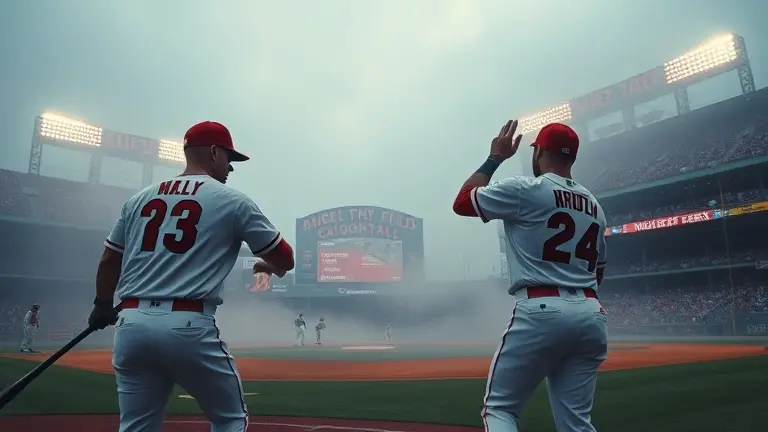
The rivalry between the St. Louis Cardinals and the Chicago Cubs has seen generations of legendary clashes, but the series that unfolded over the 2026 Fourth of July weekend at Wrigley Field will be remembered for something far more surreal than mere scorelines. As the fog rolled in, casting an eerie, historic shroud over the Friendly Confines, it served as a perfect backdrop for the breakout performance of Cardinals phenom JJ Wetherholt. While baseball traditionalists debated the bizarre atmospheric anomalies of that night, scouts and stat-heads were left stunned by a rookie who displayed the poise of a seasoned veteran, effectively turning the stadium into his own personal highlight reel.
JJ Wetherholt’s electrifying play, punctuated by a signature leadoff home run and a three-hit masterpiece, has reignited a fierce debate regarding his blatant exclusion from the 2026 All-Star roster. However, as the statistical evidence continues to mount, fans trying to reconcile this ‘All-Star snub’ with his historic rookie metrics often find themselves struggling to process the complexity of the data amidst the noise of the sport’s most storied rivalry.
The Fourth of July Spectacle: Breaking Down the Cardinals vs. Cubs Rivalry Surge
The Cardinals vs. Cubs rivalry has long been a cornerstone of National League baseball, but the series hosted at Wrigley Field over the 2026 Fourth of July weekend reached an unprecedented level of national attention. Driven by a volatile mix of high-stakes divisional competition and a series of viral, once-in-a-generation moments, the games became a focal point for sports media and social platforms alike. The historic intensity between St. Louis and Chicago provided the foundation, but it was the unique confluence of atmospheric anomalies and individual brilliance that truly set this series apart from typical mid-summer matchups.
The Fog Delay and Atmospheric Lore
At 10:03 p.m. CT on July 4th, the game took a turn into the surreal. A dense, thick fog rolled into the Friendly Confines, forcing a rare mid-game delay that brought the action to a standstill and instantly captivated a national television audience. This atmospheric event served as a modern addition to baseball’s rich history of “quirky” interruptions, drawing immediate comparisons to historic stadium anomalies. The eerie, cinematic quality of the fog—viewed under the bright stadium lights—created a viral spectacle that transcended traditional sports coverage, keeping fans glued to their screens long after typical holiday festivities had concluded.
A Star in the Making: The Impact of JJ Wetherholt
While the fog provided the drama, the performance of Cardinals rookie JJ Wetherholt provided the substance. His standout series, punctuated by a masterful three-hit performance on Saturday, solidified his position as the most exciting young talent in the game. The narrative surrounding his play was dominated by a growing consensus among analysts and fans:
- All-Star Snub: His omission from the 2026 All-Star roster has sparked widespread debate, with many pointing to his leadoff home run efficiency as proof that the league overlooked a burgeoning superstar.
- Statistical Dominance: Wetherholt’s ability to anchor the lineup in high-pressure road environments against a heated rival has provided tangible evidence of his elite status.
- Digital Engagement: The combination of a holiday marquee matchup, a bizarre weather delay, and a rookie sensation performing at an MVP-caliber level ensured that engagement metrics for this series hit record-breaking heights for the 2026 season.
Ultimately, the synergy of these factors cemented the July 2026 showdown as a defining chapter in the modern history of the Cardinals vs. Cubs rivalry, leaving fans eager for the next installment of this bitter, star-studded contest.
JJ Wetherholt: The Rookie Who Refuses to Be Ignored

The cardinals vs cubs rivalry has seen its share of legendary performances, but few rookies have commanded the spotlight quite like JJ Wetherholt during the 2026 season. His recent display at Wrigley Field was nothing short of a masterclass in hitting, proving that he is not just a bright spot for the St. Louis lineup, but a legitimate offensive engine. During the high-stakes Independence Day weekend series, Wetherholt was the undeniable catalyst, effectively silencing the home crowd with a 3-for-4 performance that included his fourth leadoff home run of the year. His ability to consistently set the tempo for the Cardinals’ offense has become a hallmark of his young career, forcing even his fiercest critics to take notice of his elite bat speed and plate discipline.
Statistical Dominance and All-Star Snub
The debate surrounding Wetherholt’s absence from the 2026 All-Star roster has reached a fever pitch, fueled by advanced metrics that suggest his production is rivaling the best in the league. While the voting process is often clouded by name recognition, the hard evidence of Wetherholt’s impact is difficult to dispute:
- Leadoff Threat: His fourth leadoff home run of the campaign showcases his immediate impact from the first pitch of the game.
- Consistency: The three-hit game at Wrigley highlighted his ability to maintain high contact rates even in high-pressure environments.
- Impact Metrics: His Wins Above Replacement (WAR) and situational hitting statistics indicate that he is performing at a level consistent with established franchise cornerstones.
Mechanical precision defines Wetherholt’s success; his compact swing allows him to stay on pitches longer, an attribute that proved vital during the unpredictable atmosphere of the recent series. As the 2026 season progresses, Wetherholt continues to build a compelling case that he is the most glaring “All-Star snub” in recent baseball memory. By maintaining this level of explosive play, he is quickly moving from a “rookie sensation” to a bona fide superstar capable of defining the future of the Cardinals organization.
All-Star Snub or Hidden Gem? The Statistical Case for Wetherholt

The national debate surrounding the 2026 MLB All-Star selections has centered on one primary point of contention: the glaring omission of JJ Wetherholt. While the Cardinals vs Cubs rivalry is storied for its intensity, Wetherholt’s recent masterclass at Wrigley Field—culminating in a dominant 3-for-4 performance and his fourth leadoff home run—has forced analysts to reconsider his rookie credentials against current roster inclusions. By almost any modern metric, Wetherholt is not just performing as a top-tier rookie; he is playing at an elite, All-Star caliber level that exceeds many players currently penciled into the midsummer classic.
Analytical Breakdown: Why the Numbers Point to an All-Star
When comparing Wetherholt’s advanced metrics to the league average and current All-Star infielders, the evidence suggests a historic level of production. His On-Base Percentage (OBP) remains among the highest for leadoff hitters, providing the Cardinals with consistent offensive momentum. Furthermore, his slugging percentage has evolved throughout the season, transforming him from a contact-first specialist into a legitimate power-speed threat.
- Defensive Efficiency: Wetherholt’s range and conversion rate on routine and difficult plays rank within the top 10% of the league, providing defensive value that many offensive-heavy All-Star selections lack.
- Situational Hitting: His ability to thrive during high-pressure games, specifically the emotionally charged series against the Cubs, demonstrates a level of poise rarely seen in first-year players.
- Consistency: Unlike many rookies who experience mid-season fatigue, Wetherholt has maintained a high-floor statistical output that stabilizes the Cardinals’ lineup.
The “snub” narrative is gaining significant traction because Wetherholt’s contributions transcend simple box-score scouting. Whether measured by weighted runs created (wRC+) or defensive runs saved, his impact on the 2026 season has been undeniable. As the intensity of the Cardinals vs Cubs matchups continues to draw massive viewership, it is becoming increasingly difficult for the league to justify leaving one of the game’s most dynamic young stars off the All-Star roster. The sentiment among fans and experts alike is clear: Wetherholt is not just a hidden gem; he is the brightest future star in the National League.
Nature vs. The Diamond: The Science and Chaos of the Wrigley Fog
The Cardinals vs Cubs rivalry is no stranger to dramatic backdrops, but the July 4, 2026, encounter at Wrigley Field introduced a new, surreal element: an unprecedented fog delay. At 10:03 p.m. CT, the game came to a standstill as a thick, low-lying marine layer rolled off Lake Michigan, swallowing the historic outfield and rendering the diamond nearly invisible. This meteorological anomaly, common for the region but rare for its intensity during a night game, turned a high-stakes contest into a surreal piece of sports history. The delay tested both the patience of the fans and the focus of the players, as visibility dropped to levels that posed safety concerns for the outfielders trying to track fly balls.
The Physics of the Wrigley Anomaly
The disruption was caused by a rapid temperature shift when warmer air met the significantly cooler surface of Lake Michigan, leading to immediate condensation. This “advection fog” is a known inhabitant of the North Side, but its impact on the 2026 season narrative was profound. While the delay provided a pause for fans to debate the recent All-Star snub regarding Cardinals sensation JJ Wetherholt, it also forced coaching staffs to rethink their pitching strategy on the fly. Players were forced into an impromptu dugout standoff, creating a viral “waiting game” atmosphere that dominated social media feeds throughout the evening.
Key factors that defined the chaotic pause included:
- Visibility Thresholds: Umpires halted play once the batter-to-pitcher sightlines were deemed compromised by the dense, swirling vapor.
- Psychological Pressure: The delay interrupted the momentum of the Cubs’ pitching staff, which many analysts believe allowed the Cardinals to maintain their composure during the pivotal 3-0 victory.
- Historical Context: Much like the legendary wind-blown games of the 1980s, the 2026 fog event will be cemented in baseball lore as a unique interruption in one of the sport’s most storied rivalries.
By the time play resumed, the atmosphere at Wrigley had shifted entirely, perfectly mirroring the unpredictable and intense nature of the Cardinals vs Cubs series. The event served as a poignant reminder that even in the modern, data-driven era of Major League Baseball, the environment remains an uncontrollable third party that can swing the outcome of any given night.
Sharpen Your Focus on the Diamond
Whether you are dissecting the historical significance of the Wrigley fog or tracking the rising trajectory of JJ Wetherholt, the sheer volume of advanced metrics in modern baseball can be overwhelming. Much like the dense fog that obscured the field on that unforgettable Fourth of July, trying to navigate complex prospect data without a clear mindset can lead to a frustrating information overload that hides the true story of the game.
Just as the fog at Wrigley obscured the diamond, trying to make sense of complex prospect data can often leave fans feeling mentally clouded. This is where The Brain Song acts as your mental lens. By utilizing an auditory tool designed to sharpen cognitive clarity, you can cut through the haze and process the nuances of Wetherholt’s stats with the precise, analytical focus of a veteran scout. It is the natural next step for any fan who refuses to just watch the game, but demands to truly understand it.
Elevate your analytical game and prepare yourself for the next deep-dive. It is time to clear the clouds and see the field for exactly what it is.
 Clear your own mental fog and master the game’s data—click here to start your 12-minute daily routine with The Brain Song.Sharpen My Analytical Focus Today!