
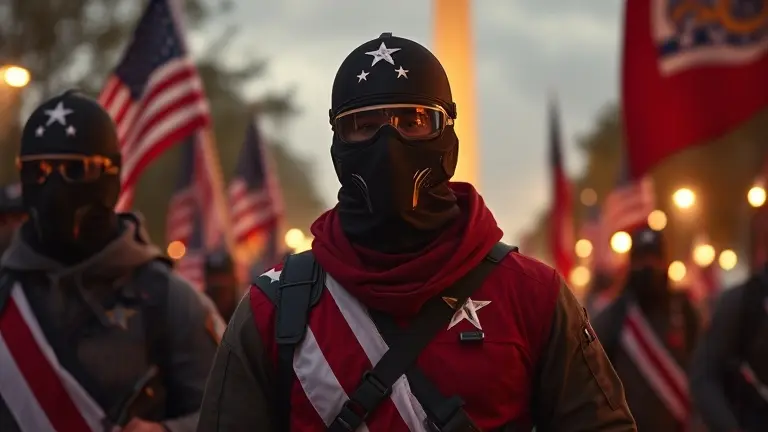
On July 4, 2026, as the United States marked its 250th anniversary with record-breaking heat and high-profile commemorations, the sanctity of the National Mall was interrupted by a familiar, yet chilling, sight. Members of the white nationalist group Patriot Front staged a calculated march, weaving through the capital’s security protocols to claim space during the nation’s Semiquincentennial birthday. By positioning themselves at the epicenter of American history, the group utilized a classic strategy of ‘propaganda of the deed,’ seeking to transform a celebratory milestone into a backdrop for their exclusionary narrative, thereby forcing their presence into the national consciousness.
This demonstration was far from an isolated incident; it was a strategic escalation of the group’s ongoing campaign to hijack national symbols for maximum media visibility. As the country navigates the complex intersection of extreme political movements and heightened security, the public is often left adrift in a sea of contradictory reports and polarized framing. Analyzing this event requires more than a surface-level look at the marchers themselves; it demands an understanding of how these groups weaponize the news cycle, leaving the average citizen struggling to maintain objectivity amidst a relentless barrage of emotionally charged, draining information.
Patriot Front Presence Disrupts Semiquincentennial Celebrations in D.C.

On July 4, 2026, the United States marked its 250th anniversary—the Semiquincentennial—with high-profile events on the National Mall. However, these celebrations were punctuated by the arrival of the Patriot Front, a white nationalist march that drew significant attention as members navigated the capital’s center. Dressed in their signature uniforms and face coverings, the group demonstrated in the vicinity of Union Station and Capitol Hill, deliberately intersecting with the holiday’s massive crowds and the scheduled political rallies defining the day. Their appearance serves as a pointed case study in the group’s “propaganda of the deed” strategy, which prioritizes the hijacking of iconic national milestones to gain outsized visibility.
Security and Environmental Challenges
The demonstration occurred under a complex backdrop of unprecedented security protocols and environmental stressors. Law enforcement agencies were already at peak alert to secure the nation’s birthday festivities, meaning the group’s arrival added significant strain to existing perimeter controls. Furthermore, the march took place amidst a record-breaking heat wave that forced many attendees to seek shade or medical assistance. The following factors complicated the city’s response to the presence of the organization:
- Heightened Security Buffer: The intense protective measures surrounding the National Mall forced demonstrators into transit corridors, creating friction between the marchers and public holiday transit.
- Logistical Strain: Security teams had to balance the protection of diverse rally participants with the containment of a controversial, organized group, testing the city’s ability to maintain public order during a national event.
- Climate Impact: The extreme heat required significant emergency resources, leaving authorities to manage potential health emergencies while simultaneously monitoring the marchers’ movements across high-traffic urban areas.
While the group successfully garnered media attention, their presence underscored the deep political polarization currently characterizing the United States. By choosing such a symbolic date, the Patriot Front sought to project an exclusionary ideology onto a day intended for national unity, forcing an immediate debate regarding the boundaries of public assembly and the protection of historical commemorations.
The Strategy of ‘Propaganda of the Deed’
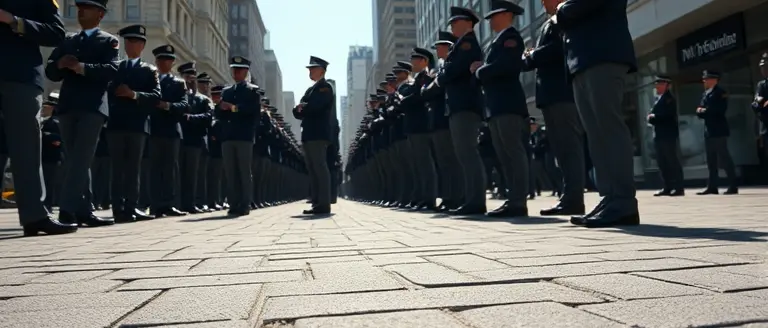
The Patriot Front organization relies heavily on a tactical framework known as “propaganda of the deed.” By choosing the United States’ 250th anniversary to execute a white nationalist march in Washington, D.C., the group intentionally sought to hijack a moment of national unity to maximize its own visibility. This strategy posits that provocative, high-visibility actions—rather than traditional political discourse—are the most effective tools for spreading an exclusionary ideology. By appearing in the capital during the Semiquincentennial, members aimed to generate viral content and force their presence into the national news cycle, effectively leveraging the scale of the holiday as a platform for their messaging.
Why High-Visibility Marches Matter
Historically, the group utilizes these choreographed events to achieve specific organizational goals:
- Recruitment Optics: Demonstrations provide professional-looking footage for social media propaganda, intended to project a sense of organization and strength to potential sympathizers.
- Psychological Impact: By appearing in iconic locations, the group attempts to “claim” national symbols, creating a jarring juxtaposition between their rhetoric and mainstream patriotic celebrations.
- Attention Acquisition: The “propaganda of the deed” theory suggests that the mere act of disruption generates media coverage, which provides the group with a megaphone that would otherwise be inaccessible through traditional, legal political channels.
The July 4, 2026, demonstration aligns with a well-documented pattern of appearing in major metropolitan centers. By navigating the security-heavy, heat-impacted environment of the National Mall, the group effectively tested their logistics against heightened law enforcement presence. This specific form of political activism serves to galvanize their base while simultaneously fueling the ongoing public debate regarding the extent of extremist influence in American civic life. Analysts suggest that as long as these provocative marches continue to trigger widespread media coverage, the group will likely maintain this strategy as their primary method for gaining notoriety.
Hijacking National Symbols: The Ideological Conflict

The appearance of Patriot Front members in Washington, D.C., during the nation’s 250th anniversary celebration serves as a calculated exercise in the “propaganda of the deed.” By timing their appearance to coincide with the Semiquincentennial, the group attempts to bridge the gap between their exclusionary white nationalist march tactics and the broader, inclusive American identity. This strategy of hijacking national symbols is central to their branding; they utilize the aesthetic markers of American patriotism—flags, uniforms, and military-style formations—to project a facade of legitimacy while masking an ideology that stands in direct opposition to the founding principles of equality and democracy.
The Contrast of Ideology and Symbolism
The tension between this group and the public narrative of the July 4 celebrations is rooted in a fundamental disagreement over who “belongs” in the American experiment. While the national anniversary emphasizes the evolution of a multi-ethnic, democratic republic, Patriot Front promotes a vision of a nation defined by racial homogeneity.
Key aspects of this symbolic appropriation include:
- Aesthetic Co-option: By adopting traditional red, white, and blue imagery, the organization seeks to confuse casual observers and create a visual link between their extreme ideology and mainstream patriotism.
- Tactical Visibility: The selection of high-profile, security-heavy locations like Capitol Hill and Union Station is designed to force media coverage, ensuring their visual brand reaches a national audience under the guise of an authentic “patriotic” gathering.
- Historical Distortion: Their messaging often strips national symbols of their democratic context, reinterpreting them through a lens of identity politics that excludes the diverse populations that have shaped the United States over the last two and a half centuries.
By inserting themselves into the heart of the capital during a moment of historic unity, the group highlights the growing political polarization within the country. While the mainstream celebrates the resilience of the nation, the presence of such groups acts as a stark reminder of the ongoing ideological struggle over the definition of American values and the symbols used to represent them.
Security Implications and Public Polarization

The appearance of Patriot Front members in Washington, D.C., during the nation’s 250th-anniversary celebrations presented a complex logistical challenge for local and federal law enforcement. Managing the security of the National Mall while balancing the fundamental rights of assembly requires a delicate, high-stakes operational strategy. Authorities were already contending with record-breaking heat waves and massive crowds, which significantly strained emergency resources. The infiltration of a white nationalist march into such a high-profile, security-heavy environment raises critical questions regarding the effectiveness of public safety protocols when groups utilize “propaganda of the deed” tactics to maximize visibility during milestone events.
The tactical timing of this demonstration serves as a case study in how fringe organizations attempt to hijack national symbols to amplify their messaging. By appearing in the capital during the Semiquincentennial, the group sought to juxtapose their exclusionary ideology against the broader narrative of American unity. This incident has further accelerated public discourse on several fronts:
- Resource Allocation: The burden placed on law enforcement to contain and monitor potential extremist activity while simultaneously ensuring the safety of general holiday attendees.
- Civic Disruption: The impact of organized, masked political demonstrations on the overall atmosphere of national celebrations, which are intended to be inclusive and commemorative.
- Societal Polarization: The way in which the presence of such groups acts as a flashpoint for deep political division, forcing citizens and policymakers to confront the visibility of extremist movements in the public square.
Ultimately, the event underscores the profound political polarization currently defining the United States. While authorities focused on maintaining order near Union Station and Capitol Hill, the broader implications involve a national struggle to define which movements and ideologies have a place within the public discourse. This ongoing tension highlights the fragility of large-scale public events in an era where ideological groups increasingly prioritize confrontational presence as a core recruitment and visibility strategy.
Preserving Cognitive Sovereignty in a Polarized Era
The events in Washington, D.C., during the Semiquincentennial serve as a stark reminder that national milestones are increasingly being utilized as stages for ideological theater. As groups like Patriot Front employ calculated maneuvers to hijack symbols of unity, the resulting media firestorm creates a landscape of relentless cognitive friction. For the analytical reader, the challenge is no longer just processing the news, but shielding the mind from the fatigue and mental fog induced by manufactured political chaos.
In an age where your attention is the primary currency of ideological conflict, maintaining mental clarity is the ultimate form of resistance. To stay truly objective and informed, you must transcend the noise. The Brain Song is designed to serve as your cognitive shield, utilizing neuroscience-based auditory stimulation to clear the mental clutter, allowing you to synthesize complex information with laser-like focus rather than reactionary emotional burnout.
By integrating this 12-minute routine into your daily regimen, you aren’t just consuming content—you are sharpening your analytical lens. Don’t let the intensity of today’s political discourse compromise your clarity; take control of your cognitive health and remain a grounded, objective observer in a turbulent world.
 Reclaim your focus and sharpen your analytical perspective on today’s complex climate—try the 12-minute daily auditory routine that experts are using to maintain cognitive clarity.Yes, I Want to Sharpen My Focus Now!