
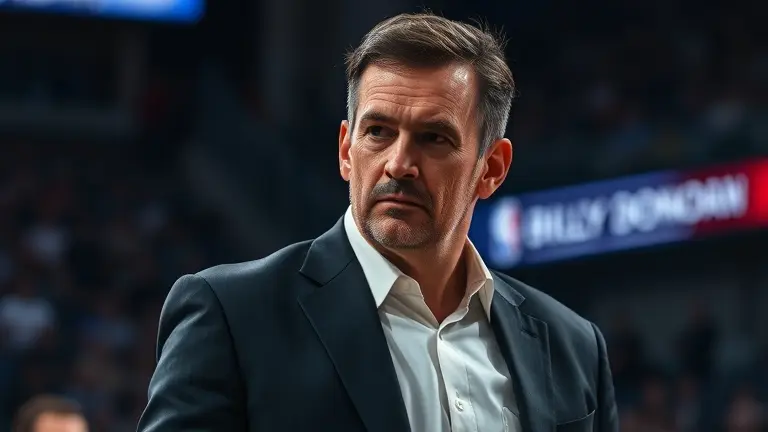
In a move that has sent shockwaves through the NBA, veteran coach Billy Donovan has officially stepped down as the Chicago Bulls head coach to join the San Antonio Spurs as a lead assistant. Ending an impressive 11-season tenure at the helm of the Oklahoma City Thunder and the Bulls, Donovan’s decision to transition from the head chair to a subordinate role is as rare as it is strategic. While the Bulls reportedly fought to retain him, Donovan’s exit signals a profound shift, prioritizing tactical synergy and the unique culture of the Spurs organization over the prestige of leading his own locker room.
This unconventional pivot invites us to look past the surface of standard coaching carousel news and into the psychology of high-level professional transition. Why would a seasoned head coach choose to recalibrate his role at this stage? The answer lies in the necessity of a mental reset—the ability to shed the inertia of past routines to gain a fresh, elite perspective. Much like an NBA franchise undergoing a structural evolution, every individual requires a high-functioning cognitive framework to navigate major career shifts with precision, clarity, and sustained focus.
The Coaching Shift of the Decade: Billy Donovan Leaves Chicago for San Antonio

In a move that has sent shockwaves throughout the NBA, Billy Donovan has officially vacated his position as the head coach of the Chicago Bulls. As of July 2, 2026, the veteran tactician has opted to step away from the pressures of the lead chair after an impressive 11-season tenure as an NBA head coach, split between his time with the Oklahoma City Thunder and the Bulls. Despite reported aggressive efforts by Chicago’s front office to retain him following a series of “extensive meetings,” Donovan has chosen a path rarely traveled by coaches of his stature: accepting a role as a lead assistant coach for the San Antonio Spurs.
The Anatomy of an Unprecedented Transition
The decision marks a profound shift in the professional trajectory of a high-profile sports figure. Rarely do coaches with over a decade of head coaching experience pivot to a subordinate staff position unless they are seeking a specific environment or long-term strategic alignment. Analysts suggest several factors behind this transition:
- Strategic Synergy: Donovan’s wealth of knowledge is expected to provide the Spurs with a sophisticated offensive and defensive framework, likely aimed at accelerating the development of the franchise’s current roster.
- Front Office Dynamics: While the Bulls fought to keep him, the internal discussions likely reached an impasse regarding the future direction of the organization, prompting Donovan to explore fresh opportunities elsewhere.
- The “Assistant” Paradigm: By moving to a lead assistant role, Donovan minimizes the daily administrative and media burdens of a head coach while remaining intimately involved in the high-level X’s and O’s of elite professional basketball.
This move effectively closes a significant chapter in Chicago’s coaching history and forces the Bulls to pivot toward a new leadership identity. For the Spurs, the acquisition of a proven veteran like Donovan represents a massive influx of tactical expertise, signaling a calculated, long-term approach to reclaiming their status as a championship-contending force in the Western Conference.
The Rare Pivot: Why a Veteran Head Coach Would Step Back

In the landscape of professional basketball, it is almost unprecedented for a coach with 11 seasons of experience as an NBA head coach to willingly accept a subordinate role. Historically, the coaching hierarchy operates in one direction: assistants climb the ladder to become head coaches. Billy Donovan opting to transition from the Chicago Bulls head coaching position to a lead assistant role under the San Antonio Spurs staff represents a massive departure from traditional career trajectories. This move suggests that for a veteran of his caliber, the decision-making process shifted away from titles and toward organizational fit, long-term strategic alignment, and the pursuit of a specific basketball culture that prioritizes collective success over individual leadership.
Examining the Motivations Behind the Shift
When a seasoned tactician like Donovan steps away from a lead chair, observers must look beyond the surface level. Evidence suggests several tactical and personal drivers for such an unconventional career pivot:
- Organizational Synergy: By joining the Spurs, Donovan is aligning himself with a franchise culture renowned for stability, player development, and structural longevity.
- Reduced Administrative Burden: Serving as a lead assistant allows a coach to focus exclusively on schematic development, scouting, and in-game adjustments without the immense pressures of media management and front-office politics inherent to the head coach role.
- Strategic Collaboration: The opportunity to integrate his offensive and defensive philosophies into a different system can be more rewarding for a seasoned professional than maintaining a status quo in a rebuilding environment.
The rarity of this move highlights a mature outlook on a professional career. After leading both the Oklahoma City Thunder and the Bulls, Donovan has reached a stage where his legacy is defined less by his title and more by the influence he exerts on the court. Whether this pivot serves as a sabbatical-like reprieve or a permanent shift toward specialized coaching, it serves as a fascinating case study in how elite sports figures redefine their value in an ever-evolving NBA landscape.
Synergy in San Antonio: Tactical Implications for the Spurs

The arrival of Billy Donovan in San Antonio represents a rare infusion of seasoned head-coaching expertise into an assistant role. After spending 11 seasons leading the Oklahoma City Thunder and the Chicago Bulls, Donovan brings a sophisticated tactical library that could fundamentally shift the Spurs’ operational ceiling. By moving from the primary decision-making seat to a supportive staff position, Donovan offers the organization a “co-pilot” dynamic that provides high-level oversight on offensive pacing and defensive rotations. His ability to synthesize complex player data into actionable on-court adjustments—a hallmark of his tenure in Chicago—is expected to refine the Spurs’ execution during high-leverage late-game scenarios.
Tactical Integration and Strategic Evolution
Donovan’s primary contribution will likely revolve around bridging the gap between theoretical game-planning and real-time adjustment. His experience managing star-heavy rosters and evolving offensive schemes provides a unique layer of support for the current staff. Key areas of focus for this new synergy include:
- Advanced Playbook Expansion: Integrating Donovan’s preferred spacing concepts to maximize scoring efficiency in the half-court set.
- Defensive Accountability: Leveraging his history of building disciplined, top-tier defensive units to bolster San Antonio’s perimeter intensity.
- Coaching Mentorship: Acting as a high-level sounding board for staff, allowing for more granular focus on individual player development and situational awareness.
This transition suggests that the Spurs are prioritizing high-IQ basketball over traditional hierarchical structure. By offloading the pressure of a head coaching role, Donovan can now dedicate his full focus to the nuance of the X’s and O’s, potentially turning the San Antonio bench into one of the most intellectually equipped units in the NBA. This collaborative model provides a blueprint for how veteran coaches can successfully pivot, ensuring that their tenure of experience continues to impact the game even after stepping away from the demands of a lead head-coaching position.
A Retrospective on the Donovan Era: From OKC to the Windy City

Spanning 11 seasons, the head coaching tenure of Billy Donovan represents a unique chapter in modern NBA history. Beginning with his transition from the collegiate ranks to the Oklahoma City Thunder in 2015, Donovan quickly established himself as a tactician capable of managing high-usage stars and complex locker room dynamics. During his five-year stint in OKC, he successfully steered the team through the post-Kevin Durant transition, fostering a competitive culture that emphasized grit and defensive versatility. His ability to adapt his schemes to prioritize player development while maintaining playoff relevance earned him significant respect across the league.
Upon joining the Chicago Bulls in 2020, Donovan faced a different set of challenges, focusing on roster reconstruction and the integration of diverse offensive weapons. His legacy in Chicago is defined by a commitment to structured execution, even when faced with significant injury setbacks. Key highlights and philosophies from his 11-year run include:
- Adaptive Offensive Systems: Donovan proved adept at modifying his playbook to suit the specific strengths of his personnel, often utilizing guard-heavy sets to create spacing.
- Star Management: Whether handling veteran superstars or emerging talents, he maintained a reputation for clear communication and professional accountability.
- Defensive Tenacity: Consistently preaching “next-man-up” mentalities, his teams were frequently recognized for defensive effort, particularly in high-leverage late-game situations.
As Donovan pivots to his new role as a lead assistant for the San Antonio Spurs, he carries over a wealth of institutional knowledge. While the coaching landscape continues to evolve, the decision to step away from the head chair to serve in a supporting capacity underscores his desire to prioritize strategic impact over title status. This move suggests that his primary focus remains on high-level basketball operations and mentorship, likely providing the Spurs with an invaluable layer of veteran expertise as they build their future.
Mastering Your Own Tactical Pivot
Billy Donovan’s transition from a head coach to a key assistant is a testament to the power of intellectual humility and the constant pursuit of growth. By stepping away from the spotlight to refocus on offensive and defensive schematic mastery, he is effectively optimizing his career trajectory for the long term. This level of intentionality is not reserved for the sidelines of the AT&T Center; it is a mindset that high-performers across all industries must cultivate to avoid the fatigue of routine and maintain a competitive edge during their own professional turning points.
Achieving this level of cognitive flexibility requires more than just willpower; it demands a systematic approach to mental clarity. Just as Donovan is recalibrating his tactical approach to thrive in a new environment, you can sharpen your own executive function to handle life’s most complex pivots. This is where The Brain Song becomes your ultimate mental conditioning tool, designed to help you bypass cognitive fog and unlock the same level of acute, laser-like focus that defines the world’s most successful coaches.
By integrating sound-pattern science into your daily regimen, you aren’t just working; you are optimizing your neurological performance to think faster, decide sharper, and perform under pressure. Whether you are facing a massive career change or simply looking to regain your peak mental output, reclaiming your focus is the secret weapon to mastering your personal strategy. Don’t leave your performance to chance when you can harness the tools of elite-level clarity.
 Reclaim your mental edge and sharpen your focus for your own ‘career pivots’—see how the science of sound patterns can transform your daily performance.Unlock My Peak Performance Today!