

As the 2026 Wimbledon Championships ignite, all eyes are locked on the electric rise of American talent Alycia Parks. Following a commanding first-round victory over Alicia Dudeney, Parks has signaled to the tennis world that her game is no longer just about raw power—it is about calculated, high-speed execution on the most prestigious grass courts in the world. As she pivots to face Mananchaya Sawangkaew in the second round, analysts are noting a distinct evolution in her court movement and serving precision, elements that have transformed her from a promising newcomer into a genuine contender in London.
Yet, beyond the physical statistics, the defining factor of this Wimbledon run will be Parks’ ability to maintain a psychological advantage when the rallies lengthen and the pressure mounts. In a sport where matches are often decided by fractions of a second, the ability to process tactical adjustments instantaneously is what separates the elite from the rest of the field. To understand her trajectory, we must look deeper at the cognitive conditioning driving these athletes to sustain championship-level focus from the first serve to the final set.
Alycia Parks at Wimbledon 2026: Second Round Preview
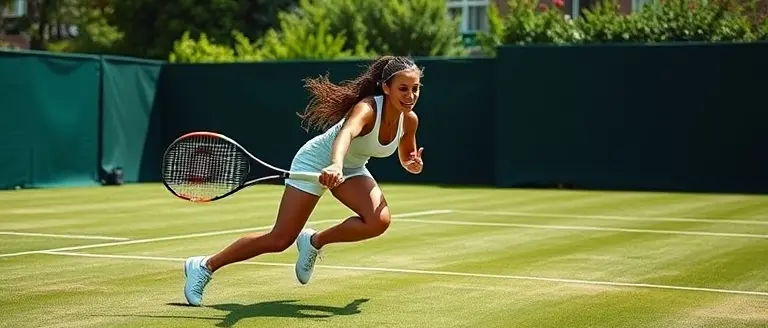
Alycia Parks has officially signaled her arrival at the 2026 Wimbledon Championships, delivering a clinical performance in the opening round to defeat Alicia Dudeney. This victory not only provides the American with vital momentum but also highlights the refinements she has made to her game during the current season. Parks, known for her explosive power and aggressive baseline play, showcased excellent control on the grass courts, effectively neutralizing Dudeney’s defensive schemes. Analysts have noted that her serve, often considered the cornerstone of her game, looked particularly lethal during the first-round fixture, frequently setting up short balls that she capitalized on with decisive forehand winners.
Tactical Outlook: The Path to the Second Round
Moving into the second round, Alycia Parks is set to face Mananchaya Sawangkaew, a match that represents a crucial test of her tactical patience. Unlike her previous opponent, Sawangkaew is expected to demand a higher level of consistency from the baseline. For Parks to advance further in this Grand Slam, she must maintain the high first-serve percentage that characterized her debut while limiting unforced errors during long rallies.
Key performance metrics to watch in this upcoming matchup include:
- Serve Dominance: Can Parks maintain her high ace count on the fast grass surface?
- Court Coverage: Improved lateral movement has been a focal point of her 2026 training, which will be essential against Sawangkaew’s baseline speed.
- Aggression Management: Balancing her natural high-risk, high-reward style with the calculated shot selection required for success at the All England Club.
The women’s singles draw at Wimbledon 2026 remains wide open, and with her current form, Parks is positioning herself as a dark horse capable of upsetting higher-seeded players. Fans should keep a close eye on her court positioning, as she has shown a renewed willingness to shorten points by moving forward—a strategy that historically rewards players on these specific conditions.
Tactical Evolution: Analyzing Parks’ 2026 Grass Court Strategy

Throughout the 2026 season, Alycia Parks has demonstrated a clear tactical maturation, particularly in how she navigates the unique demands of grass courts. Historically known for a heavy-hitting game suited for hard courts, Parks has refined her movement and shot selection to excel at the 2026 Wimbledon Championships. Her performance against Alicia Dudeney in the opening round showcased a more disciplined approach to the surface, prioritizing lower ball trajectories and increased variety to neutralize opponents.
Refining the Service and Net Game
The most significant shift in Parks’ arsenal this year is the calculated adjustment of her service rhythm. On the slick grass of SW19, she has prioritized high-percentage first serves over pure velocity, allowing her to set up short, put-away volleys more effectively. By shortening her backswing, she has improved her reaction time at the net, a critical tactical improvement for grass court success. Analysts have noted that she is no longer purely reliant on baseline power; she is now proactively integrating:
- Slice Backhands: Utilizing the low bounce to force opponents into awkward positions.
- Aggressive Net Approaches: Moving forward behind her serve with improved footwork to cut off angles.
- Court Positioning: Staying closer to the baseline to take time away from her adversaries.
As she moves into her second-round clash against Mananchaya Sawangkaew, these technical refinements will be tested against a different style of play. Evidence suggests that Parks’ newfound comfort with the “serve-and-volley” transition is what distinguishes her 2026 campaign from previous years. By tightening her defensive patterns, she has transformed her game into a multifaceted threat capable of dominating the faster surface conditions of the tournament.
Breaking Down the Serve: The Power Behind the Performance

Alycia Parks has long been recognized for possessing one of the most explosive serves on the WTA tour, and her performance during the 2026 Wimbledon Championships suggests she has reached a new level of tactical maturity. Her ability to generate massive pace while maintaining a high first-serve percentage on the slick grass of SW19 is the cornerstone of her current success. By refining her biomechanical loading phase—specifically her deep knee bend and fluid kinetic chain—Parks is effectively maximizing the “pop” off her racquet while minimizing the physical strain that often plagues power servers over the course of a grueling Grand Slam.
Technical Precision and Tactical Utility
The consistency in her ball toss has been the most visible improvement in her 2026 campaign. By keeping the toss remarkably uniform, she prevents opponents like Alicia Dudeney from reading her placement early, forcing them to remain on their heels. This technical stability is creating high-percentage points, allowing Parks to dictate rallies from the very first shot. Key aspects of her current serving dominance include:
- Improved Placement: Increased reliance on the “wide” serve to pull opponents off the court, creating massive windows for her trademark forehand winner.
- Heightened Second Serve Aggression: Instead of relying on a safe, spinning kick serve, Parks is maintaining high velocity on her second serves, putting immense pressure on her opponents’ return games.
- Strategic Variety: Her ability to disguise her serve direction during critical break points has proven to be a game-changer, preventing opponents from gaining any rhythm.
As she moves into the second round against Mananchaya Sawangkaew, this serve will remain her primary engine. If she continues to hit her spots with such authority, she will likely dictate the pace of the match, minimizing the need for extended baseline exchanges and keeping her energy levels high for the second week of the tournament. The synergy between her serve and her follow-up net transitions is arguably the most lethal combination in her current arsenal.
Predictions and Path to the Third Round

As Alycia Parks marches into the second round of the 2026 Wimbledon Championships, momentum is firmly on her side. Coming off a decisive victory against Alicia Dudeney on June 29, Parks displayed the kind of baseline aggression and serving prowess that is essential for success on the grass courts of the All England Club. Her upcoming encounter with Mananchaya Sawangkaew presents a fascinating tactical contrast that will likely define her path to the third round. While Sawangkaew is known for her disciplined counter-punching and ability to neutralize power, Parks’ current form suggests she is better equipped to dictate the terms of engagement through her explosive serve and high-velocity forehand.
Tactical Analysis: The Keys to Victory
To secure a spot in the third round, Alycia Parks must prioritize consistency over pure raw power. Data from her recent matches indicates that her first-serve percentage has seen a marginal but critical increase in the 2026 season, a development that makes her exceptionally difficult to break on a fast surface. Fans and analysts should watch for these specific tactical elements during the match:
- Serve Dominance: Parks must utilize her high-velocity serve to set up short-court finishes, preventing Sawangkaew from establishing a rhythm in long, drawn-out rallies.
- Net Aggression: Incorporating more frequent forays to the net will force Sawangkaew to hit difficult passing shots under pressure, favoring the American’s reach and volleying touch.
- Surface Adaptation: On grass, the low bounce can occasionally disrupt high-topspin players. Parks’ flatter, more linear groundstrokes are perfectly suited for this environment, providing her a distinct advantage.
While Sawangkaew is a resilient competitor, the evidence suggests that if Parks maintains her composure during service games, she should be able to control the tempo. By managing her unforced error count—a primary focus of her training throughout the 2026 season—Parks is well-positioned to advance. Should she execute this game plan effectively, she remains a formidable threat to climb deep into the Wimbledon draw, setting up a high-stakes potential showdown in the later rounds of this year’s Grand Slam.
Unlock Your Peak Athletic Potential
Alycia Parks’ journey at Wimbledon serves as a masterclass in the intersection of physical agility and neurological sharpness. While her serve speed grabs the headlines, her capacity for rapid decision-making under high-pressure scenarios is the true engine behind her 2026 performance. It is this high-stakes mental processing that differentiates the champions from those who crumble under the glare of the Grand Slam spotlight.
This is where the principles of elite sports neuroscience become essential for any competitor. Much like the top-tier strategies now being analyzed in professional tennis, The Brain Song acts as a cognitive conditioning tool designed to enhance focus, sharpen reaction times, and mitigate mental fatigue. By utilizing auditory training to optimize neural efficiency, you can bridge the gap between your physical intent and your actual performance on the court.
Whether you are an aspiring athlete or a fan seeking to elevate your own mental acuity, incorporating systematic cognitive training is the natural next step in achieving peak performance. It is time to treat your brain with the same dedication you give to your physical training. Are you ready to sharpen your edge and perform at your highest level?
 Train your brain for peak performance just like the pros—click here to start your 12-minute daily mental conditioning routine.
Yes, I Want This Now!