

The grass courts of SW19 have seen many legends rise, but never quite like this. As 44-year-old tennis icon Serena Williams steps onto Centre Court for the 2026 Wimbledon Championships, she isn’t just chasing another title—she is attempting an unprecedented comeback to professional singles competition. Waiting on the other side of the net is Maya Joint, a 20-year-old rising star who spent her childhood watching Serena redefine the sport. This generational clash is far more than a first-round match; it is a profound intersection of tennis history, where the weight of a legendary legacy meets the hunger of the next generation.
While the world watches to see if Serena can capture the magic that once made her invincible, the tactical reality is as compelling as the narrative. Beyond the physical endurance required for such a high-stakes return, this match forces us to examine the evolution of the game, the impact on WTA rankings, and the extreme cognitive toll of competing at the highest level after a four-year hiatus. To perform at this intensity, both veteran and newcomer must master something far more elusive than speed: the absolute, unwavering power of mental clarity.
The Return to Centre Court: Serena Williams vs. Maya Joint
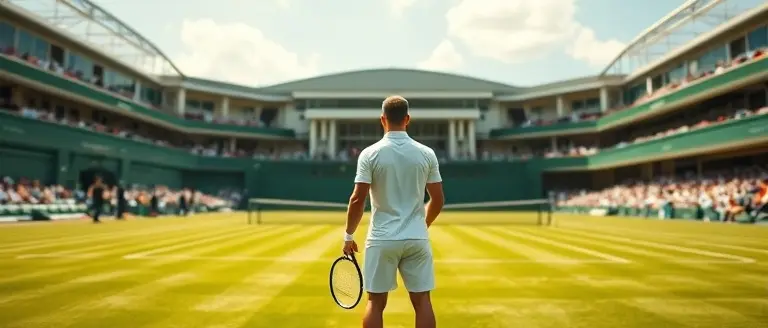
The anticipation surrounding the 2026 Wimbledon Championships has reached a fever pitch as Serena Williams prepares for her highly anticipated return to professional singles competition. Stepping onto Centre Court for her first major singles match since the 2022 US Open, the 44-year-old icon is set to face 20-year-old rising star Maya Joint. This generational clash represents more than just a first-round exit or survival; it marks the historic reappearance of one of the greatest athletes to ever grace the grass at the All England Club. Having accepted a wildcard entry, Williams arrives with a physique that industry peers, including Novak Djokovic, have described as conditioned by intense training, signaling that she is not merely here for a farewell tour but to compete at the highest level.
A Study in Contrast: Legacy Meets the Future
The matchup against Maya Joint, currently ranked world No. 53, offers a compelling narrative of tennis evolution. For Joint, this draw is a surreal convergence of reality and childhood dreams, having grown up idolizing the woman she now meets across the net. From a tactical perspective, this encounter highlights the bridge between different eras of the WTA tour:
- Tactical Depth: Williams brings a career of championship-level experience and an unmatched serve, while Joint represents the modern, high-intensity baseline game favored by the current generation.
- Mental Fortitude: While Williams carries the weight of a legendary legacy, Joint enters with the “fearless” mindset of a rising contender with nothing to lose.
- The Comeback Narrative: Media outlets ranging from CBS Sports to The Guardian are closely watching how Williams’ game has adapted after a four-year hiatus, particularly regarding her court coverage and movement on grass.
This match is already generating unprecedented betting interest and fan engagement, serving as a litmus test for how the tour has changed since Williams last dominated the field. Whether she secures a victory or simply tests the limits of her endurance, her presence at Wimbledon remains the focal point of the 2026 tennis calendar, effectively underscoring the enduring power of her brand and the respect she commands across the sport.
Legacy vs. The New Wave: Statistical Comparison
The highly anticipated clash at the 2026 Wimbledon Championships represents more than just a first-round match; it is a profound collision of tennis eras. Serena Williams, the undisputed titan of the modern game, returns to the singles circuit armed with a legacy defined by raw, unparalleled power and an elite, predatory serve. In contrast, 20-year-old Maya Joint, currently ranked world No. 53, embodies the modern WTA evolution—a game predicated on unrelenting court coverage, extreme defensive agility, and high-RPM topspin groundstrokes designed to neutralize heavy hitters.
Tactical Profiles and Generational Shifts
While Williams built her reputation on “first-strike tennis”—ending points in three shots or fewer—Joint represents a new generation of tactical versatility. Analysts observe that while Williams possesses the technical blueprint for grass-court dominance, her four-year hiatus from singles competition forces a reliance on match-hardened instincts rather than current touring rhythm.
- Serena Williams’ Power Profile: Historically noted for serve speeds eclipsing 120 mph, her primary advantage remains the ability to dictate from the baseline. Evidence suggests her off-season preparation has focused on maintaining that high-velocity explosive power.
- Maya Joint’s Modern Agility: As a younger competitor, Joint excels in lateral movement and defensive “reset” shots. Her ability to extend rallies and transition from defense to offense under pressure will be the primary test for Williams’ endurance.
Statistical Expectations
Comparing their playing styles highlights a clear dichotomy:
- Court Coverage: Joint maintains a higher average distance covered per point, utilizing a modern, sliding-heavy approach on grass that contrasts with Williams’ more traditional, balanced footwork.
- Consistency vs. Winners: Williams’ game remains high-risk, high-reward. For Joint, success will hinge on her first-serve percentage and her capacity to return the legendary Williams serve deep enough to prevent the 44-year-old from setting up her dominant forehand.
As the tennis world watches this generational transition, the metrics suggest that Williams’ historical ceiling remains higher, but Joint’s current tour-level conditioning provides a significant edge in long-form, high-intensity rallies.
How to Watch: Full Match Schedule and Broadcast Details

The highly anticipated return of Serena Williams to professional singles competition at the 2026 Wimbledon Championships is officially set for the opening day of the tournament. Fans eager to witness this historic clash against rising star Maya Joint should prepare for primetime viewing. As a headline event on Centre Court, the match is scheduled to begin no earlier than 1:00 PM BST (8:00 AM ET). Given the high volume of media interest and the potential for extended rallies, viewers are advised to tune in at least 30 minutes early to catch pre-match analysis and on-court introductions.
Official Broadcast Channels and Streaming Platforms
For audiences in the United States, comprehensive coverage of the Wimbledon tournament is managed primarily through the ESPN network family. To ensure you do not miss a single moment of the match, utilize the following broadcast and digital resources:
- Television: The primary broadcast will be carried live on ESPN and ESPN2. Check your local cable listings for high-definition availability in your region.
- Streaming: The match will be available for live streaming via the ESPN+ platform and the WatchESPN app. Subscribers can access multi-court feeds, allowing for custom viewing experiences.
- Tennis Channel: Secondary coverage, including post-match press conferences and tactical breakdowns featuring the performance of Maya Joint and Serena Williams, will be featured on the Tennis Channel throughout the tournament fortnight.
Tips for Navigating Tournament Coverage
Navigating the opening rounds requires strategic planning, especially when following marquee matchups. To optimize your viewing experience, prioritize using the official Wimbledon mobile app for real-time score updates and court notifications. Because this is the most anticipated first-round fixture of the year, betting interest is at an all-time high; verify that your streaming connection is stable to avoid latency issues during critical tie-break moments. If you are accessing coverage via international VPNs or third-party sports aggregators, ensure your software is updated to prevent mid-match stream interruptions. Monitor social media channels for last-minute schedule adjustments due to London’s unpredictable weather patterns, which could shift match start times on short notice.
The Stakes: Implications for the 2026 Wimbledon Draw

The return of Serena Williams to the Wimbledon grass introduces a volatile variable into the 2026 women’s singles draw. While her wildcard entry bypasses standard ranking requirements, her presence transforms a routine first-round match against Maya Joint into a potential watershed moment for the tournament. A victory for the 44-year-old legend would not only ignite the home crowd but also signal to the field that her technical adjustments during her four-year hiatus have successfully mitigated the physical demands of modern professional tennis. Analysts suggest that if Williams advances, the psychological pressure on top-seeded players will shift significantly, as they would be forced to navigate the narrative gravity of a Serena comeback throughout the second week of the tournament.
For Maya Joint, this matchup represents a high-stakes baptism by fire. As a rising star ranked No. 53, a win over her idol would instantly validate her ascent and likely propel her into the top tier of WTA contenders. Conversely, the betting markets reflect extreme uncertainty, with bookmakers hedging against the “Serena effect”—the phenomenon where public sentiment drives volume regardless of current ranking differentials.
Key implications for the tournament structure include:
- Ranking Volatility: A deep run by Williams would disrupt the expected distribution of points in the 2026 tour, potentially forcing WTA officials to re-evaluate wildcard entry criteria for future majors.
- Betting Market Shifts: High interest in the Williams-Joint match has forced oddsmakers to offer specialized, prop-heavy markets, indicating that this contest is being treated with the significance of a late-round final.
- Legacy Benchmarking: This clash serves as a direct barometer for the current WTA generation; if the tour’s younger demographic fails to contain a returning legend, it may invite scrutiny regarding the overall depth and intensity of the current field.
Ultimately, this match signifies more than a single spot in the second round. It is a defining test of whether Serena Williams can reconcile her historic tactical dominance with the evolving athletic standards of the current generation, effectively dictating the momentum for the remainder of the 2026 season.
Mastering the Mental Edge of a Champion
Whether you are a professional athlete navigating the pressure of a global stage or a high-performer tackling the daily grind, the secret to longevity and success lies in the resilience of your cognitive function. The ‘Legacy Match’ between Serena Williams and Maya Joint serves as a powerful reminder that at the elite level, the difference between winning and losing is often won in the mind before the first serve is even struck. Maintaining focus and overcoming the cognitive hurdles that challenge even the greatest legends requires more than standard training; it demands a cutting-edge approach to neurological optimization.
This is where The Brain Song becomes an essential tool for your performance arsenal. Designed to bridge the gap between historical dominance and future-ready mental acuity, this neuroscience-backed routine helps athletes and high-achievers alike combat the ‘brain fog’ that inhibits peak results. By integrating this 12-minute daily neuro-auditory training, you can sharpen your cognitive edge, improve mental recovery, and maintain the intense focus necessary to excel under pressure, effectively mirroring the state-of-the-art mental preparation used by the world’s most elite competitors.
Don’t leave your performance to chance. Embrace the same advanced cognitive conditioning that keeps modern champions sharp, focused, and ready to defy expectations regardless of age or challenge. It is time to elevate your mental game to legendary status.
 Unlock your elite performance potential and sharpen your mental edge with The Brain Song’s 12-minute daily audio routine.Yes, I Want This Now!