
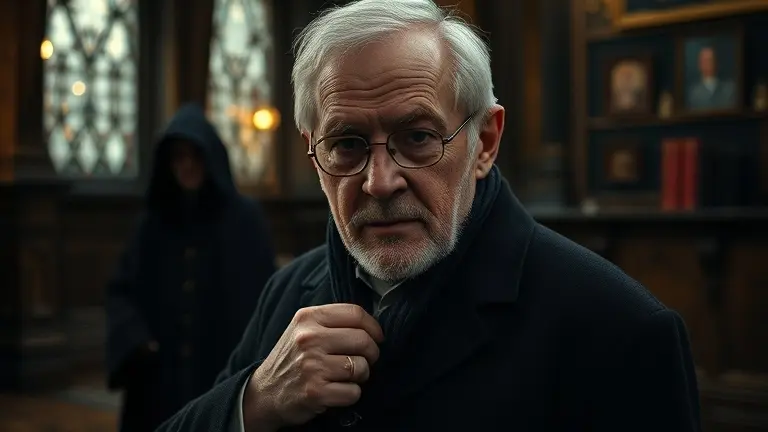
The passing of Michael Byrne at 82 marks the end of an era for British character acting—a loss felt deeply by those who recognize his distinct, chilling gravitas on screen. While global audiences primarily know him as the formidable Gellert Grindelwald in Harry Potter and the Deathly Hallows: Part 1 or as the ruthless Colonel Ernst Vogel in Indiana Jones and the Last Crusade, these iconic roles only scratched the surface of a career defined by absolute precision and terrifying authority. Whether commanding the attention of the National Theatre stage alongside legends like Laurence Olivier or effortlessly slipping into the skin of history’s most memorable villains, Byrne was a master of his craft.
To truly appreciate the nuance of his performances, one must look beyond the marquee franchises. His work was never merely about playing a ‘bad guy’; it was about the subtle, calculated choices that made his characters feel dangerously human. In this retrospective, we peel back the layers of his storied life and examine the technical brilliance that allowed him to anchor high-stakes cinema for decades, reminding us all of the profound power found in the art of the character actor.
Remembering Michael Byrne: A Legacy Beyond the Screen

The passing of British character actor Michael Byrne at the age of 82 has triggered a significant wave of reflection across the entertainment industry. While news reports confirmed his death on June 30, 2026, the outpouring of tributes underscores the deep impact he had on multiple generations of film fans. For many, the name michael byrne harry potter serves as the primary entry point to his career, specifically due to his portrayal of Gellert Grindelwald in the 2010 blockbuster Harry Potter and the Deathly Hallows: Part 1. His performance in the Wizarding World captured the quiet menace and cold authority that became a hallmark of his long-standing profession, solidifying his status as a master of screen villainy.
Beyond his contributions to the Harry Potter franchise, Byrne was a quintessential fixture of British stage and screen, having refined his craft alongside legends like Laurence Olivier at the National Theatre. His career trajectory was defined by an ability to disappear into roles, shifting seamlessly between high-stakes blockbusters and prestige dramas.
Key highlights of his extensive filmography include:
- Indiana Jones and the Last Crusade (1989): His unforgettable performance as the villainous Colonel Ernst Vogel remains a gold standard for 80s action cinema.
- Braveheart (1995): A demonstration of his command in historical epic storytelling.
- James Bond Franchise: His appearances in the 007 series further established his reputation as a reliable, versatile performer capable of elevating any project he joined.
- The National Theatre: His formative years on the stage provided the technical foundation that allowed him to project authority and nuance in his film roles.
Byrne’s legacy is not merely limited to his specific characters, but rather the consistency of his presence. Whether he was a primary antagonist or a supporting authority figure, he possessed a rare talent for elevating the stakes of a scene. Fans on platforms like Reddit have noted that he was the rare actor who managed to anchor himself in the most iconic franchises of the last forty years, from Bond and Harry Potter to the world of Indiana Jones. He leaves behind a body of work that serves as a masterclass in the craft of character acting, ensuring his influence will be studied and appreciated by cinephiles for years to come.
The Grindelwald Connection: A Masterclass in Villainy
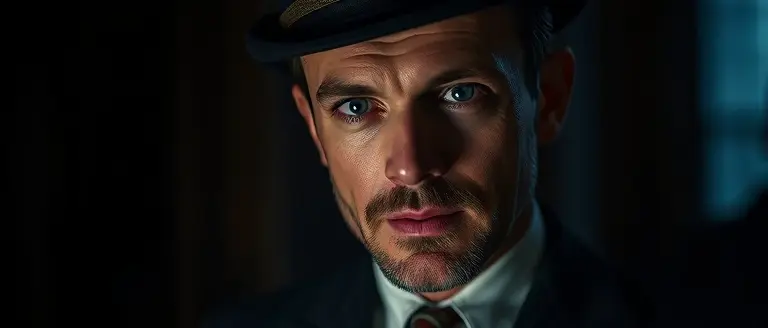
In Harry Potter and the Deathly Hallows: Part 1 (2010), Michael Byrne delivered a chilling, albeit brief, performance as the older Gellert Grindelwald. While the character appeared in a limited capacity, Byrne’s portrayal was instrumental in grounding the Wizarding World’s history. Rather than relying on overt magical spectacle, Byrne opted for a performance rooted in weary, calculated menace. He captured the essence of a once-great wizard who had surrendered his youthful hubris to the cold reality of Voldemort’s interrogation. His ability to convey internal conflict through subtle facial expressions remains a testament to his stage-trained background at the National Theatre.
A Career Defined by Intimidating Authority
Byrne’s work in the Harry Potter franchise serves as an excellent case study for his versatility as a character actor. His portrayal of Grindelwald stands in stark contrast to his most iconic villainous role: Colonel Ernst Vogel in Indiana Jones and the Last Crusade (1989). While Vogel was defined by rigid, antagonistic nationalism and physical brutality, his Grindelwald was defined by quiet intellect and moral resignation.
Key attributes of Byrne’s villainous craft included:
- Physical Presence: He maintained an authoritative posture that commanded the frame regardless of the setting.
- Measured Delivery: His deliberate, precise speech patterns lent an air of danger to even the most mundane dialogue.
- The “Everyman” Threat: He possessed a rare talent for playing bureaucratic villains who represented real-world consequences, whether through the Nazi regime in Indiana Jones or the dark history of the Wizarding World.
Byrne’s legacy as a quintessential British character actor is defined by this capacity to elevate secondary roles into foundational pillars of a narrative. Whether through the lens of a blockbuster franchise or intimate drama, he brought a level of grounded realism that modern cinema often overlooks. For fans of these major franchises, Michael Byrne will be remembered as the man who brought an undeniable weight and humanity to some of fiction’s most notorious antagonists.
From the National Theatre to the Global Stage
While modern audiences recognize Michael Byrne for his chilling turn as Gellert Grindelwald in Harry Potter and the Deathly Hallows: Part 1, his professional foundation was built on the prestigious boards of the United Kingdom’s National Theatre. Long before he became a familiar face in Hollywood blockbusters, Byrne honed his craft during an era of theatrical excellence. Working alongside titans of the industry such as Laurence Olivier and Maggie Smith, he developed the rigorous discipline and technical precision that would define his decades-long career. This formative environment demanded an ability to disappear into complex roles, a skill that eventually became the hallmark of his screen presence.
The Craft of a Character Actor
Byrne’s time in the theatre served as an intensive apprenticeship in nuance. The transition from stage to screen for a character actor requires a delicate balance of projection and subtlety, and Byrne mastered this transition seamlessly. His ability to command a room—or an entire film set—was deeply rooted in these early experiences. Industry observers often point to his versatility as his greatest asset, allowing him to portray authority figures and villains with equal intensity. Whether he was playing a high-ranking officer or a mystical antagonist, his performances remained grounded in the classical training he acquired during those early, transformative years.
- Classical Foundation: His tenure at the National Theatre provided the essential toolkit for his later villainous turns.
- Collaborative Excellence: Working with legends like Laurence Olivier instilled a standard of performance that elevated his work in major franchises.
- Enduring Legacy: His reputation as a “quintessential British character actor” was earned through decades of high-caliber, transformative work that spanned from intimate stage dramas to global cinematic hits like Indiana Jones and the Harry Potter series.
Byrne’s trajectory proves that the most memorable performances in cinema history are often delivered by those who spent their youth perfecting the craft away from the spotlight, waiting for the right moment to make their mark on the global stage.
The Quintessential Reliable Actor: An Industry Appreciation

In the sprawling landscape of British cinema, certain performers serve as the structural steel of a production—unassuming, unflinching, and entirely essential. Michael Byrne, who passed away at 82, was the epitome of this “quintessential reliable actor.” While his portrayal of Gellert Grindelwald in Harry Potter and the Deathly Hallows: Part 1 brought him global recognition among a new generation of fantasy fans, his true legacy lies in a decades-long career defined by an unwavering dedication to the craft. Whether appearing in high-octane blockbusters or stage productions at the National Theatre, Byrne possessed the rare ability to command a scene without ever needing to be the loudest voice in the room.
Mastering the Art of the Supporting Role
Byrne’s brilliance was rooted in his versatility and his disciplined approach to character work. He belonged to an era of British acting that prioritized technical precision and emotional depth over mere celebrity. His ability to vanish into roles—ranging from the chilling Colonel Ernst Vogel in Indiana Jones and the Last Crusade to his diverse television appearances—demonstrated a masterclass in professional adaptability. Industry peers often cite that the strength of a film is frequently determined by the caliber of its character actors, and in this regard, Byrne was a titan.
- Longevity and Range: He navigated the complexities of period dramas, action epics, and gritty thrillers with equal conviction.
- Presence Over Prominence: Even when limited to brief screen time, he left an indelible mark on major franchises, including the James Bond universe and Braveheart.
- Theatrical Roots: His background working alongside legends like Laurence Olivier and Maggie Smith instilled in him a foundational respect for narrative storytelling.
Ultimately, fans and critics alike remember him not just for the specific characters he inhabited, but for the reliability he brought to every project. He proved that an actor does not need to chase center stage to achieve greatness; by serving the story with total integrity, Michael Byrne secured his place as a cornerstone of modern cinema. His legacy is one of craft, consistency, and an enduring respect for the medium that entertained millions.
A Legacy of Unmatched Precision
Michael Byrne’s career serves as a masterclass in the necessity of focus and intellectual depth. Just as he commanded the stage alongside titans of the theatre, his ability to inhabit complex, authority-driven roles required an unwavering mental sharpness that few actors ever truly master. To study his work is to study the importance of being fully present, capturing every subtle gesture and cadence that turned a villainous role into a legendary performance.
Engaging with the intricate details of cinema history, much like unpacking the multifaceted career of an actor as prolific as Byrne, demands a level of cognitive clarity that many of us struggle to maintain in a distracted world. To fully process the artistic brilliance he brought to the screen, you need your mind operating at its peak potential. This is where The Brain Song becomes an essential tool for the cultured enthusiast; it is specifically designed to provide the mental sharpness required to dive deep into complex subjects and retain the nuance that makes history so fascinating.
By choosing to optimize your cognitive flow, you ensure that you aren’t just watching a performance, but truly understanding the craft behind it. Just as Byrne dedicated his life to the pursuit of excellence, you deserve the focus necessary to master your own intellectual endeavors, ensuring you never miss the critical details that define a legacy.
 Experience the same clarity Byrne brought to his roles—discover how 12 minutes of The Brain Song can help you master your own focus today.Sharpen My Focus Today!