

As the tennis world turns its eyes toward the pristine grass of the All England Club for the 2026 Wimbledon Championships, one name is capturing the imagination of analysts and fans alike: Maja Chwalińska. While social media trends often favor surface-level snapshots, a deeper inspection of Chwalińska’s 2026 season reveals a player undergoing a significant tactical evolution. Her left-handed craft, perfectly suited to the unique, skidding nature of grass court tennis, is no longer just a gimmick; it has become a sophisticated weapon refined through rigorous mental and physical preparation.
But what separates a talented contender from a champion on the biggest stage in the sport? Beyond the serve-and-volley mechanics and baseline agility, the difference lies in the elite cognitive precision required to maintain flow state under the immense pressure of a Grand Slam. In this deep dive, we move past the clickbait to analyze how Chwalińska’s technical adaptability is being matched by an ever-sharpening mental game, offering a blueprint for anyone looking to optimize their own focus and performance in high-stakes environments.
Maja Chwalińska: The Rising Star Captured in the Wimbledon Spotlight
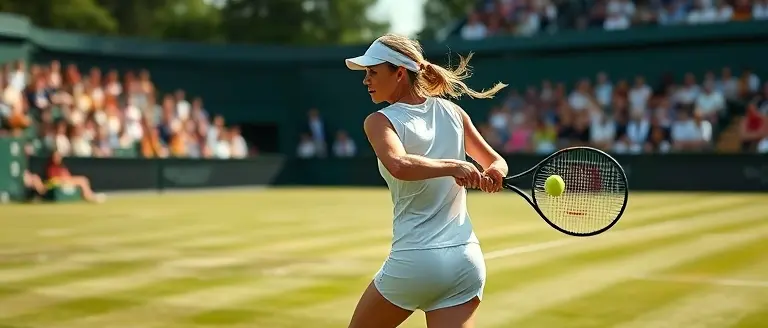
As the 2026 Wimbledon Championships commence at the All England Club, Maja Chwalińska has emerged as an unexpected focal point for tennis enthusiasts and analysts alike. While mainstream sports outlets have largely focused on the top-seeded favorites, a palpable shift in digital momentum has placed the Polish talent under the microscope. This surge in interest, recently underscored by the viral performance of the video, ‘Tennis Sweetheart Maja Chwalińska Captures More Hearts & Minds Ahead Of Wimbledon!’ by The Tennis Pass, reflects a growing appreciation for her tactical development and unique presence on the professional tour. With over 7,200 views generated in the days preceding the tournament, the interest suggests that fans are moving beyond surface-level coverage to identify the sport’s next breakout stars.
Analyzing the Viral Surge and Fan Engagement
The attention surrounding Chwalińska is not merely a product of fleeting social media trends, but rather a reflection of her status as a legitimate contender to watch during the grass-court season. Unlike mainstream narratives that often rely on celebrity status, the current discourse regarding Maja Chwalińska centers on her technical adaptability and recent career trajectory. Key factors contributing to this heightened interest include:
- Distinct Playing Style: Her left-handed delivery provides a unique tactical advantage, particularly on the fast-paced grass courts of SW19, where unconventional spin and court coverage are highly rewarded.
- Organic Fan Growth: Her reputation as a fan-favorite is built on a consistent, professional demeanor that resonates with audiences seeking authenticity in a highly commercialized sport.
- Emerging Talent Profile: As an emerging competitor, she represents the “next wave” of WTA talent that many fans are keen to follow before she becomes a household name on the global stage.
By prioritizing substantive analysis over clickbait, observers are beginning to see why Chwalińska is viewed as an intriguing prospect for the 2026 season. As she navigates the competitive field at Wimbledon, her performance will be measured against this newfound spotlight, testing whether her skill set matches the high expectations set by her growing, dedicated supporter base.
Analyzing the Left-Handed Game: Adaptations for Grass

Maja Chwalińska brings a distinct tactical advantage to the grass courts of the All England Club, primarily through her natural left-handed orientation. On the slick, low-bouncing surfaces typical of Wimbledon, the heavy topspin and unconventional angles produced by a left-handed player become potent weapons. Chwalińska utilizes a versatile game that prioritizes precision over raw power, a strategy that often disrupts opponents accustomed to the predictable high-bouncing rallies of the clay-court season. By moving the ball wide to the backhand side—the traditional deuce-court advantage for lefties—she effectively opens up the court, creating opportunities to dictate points early in the exchange.
Technical Mastery and Court Positioning
Her ability to adapt to grass relies on several key technical facets that distinguish her current form in the 2026 season. Unlike players who rely solely on baseline aggression, Chwalińska incorporates a mix of slice and tactical variety that remains crucial on faster surfaces. Evidence suggests that her success hinges on these specific adjustments:
- Service Placement: She utilizes an effective wide serve in the deuce court, which drags opponents off the court and opens up the alley for a winning put-away.
- Low-Trajectory Groundstrokes: By keeping her center of gravity low and striking the ball early, she minimizes the time her opponents have to react to the grass’s skidding bounce.
- Net Transitions: Her comfort at the net allows her to neutralize heavy hitters by closing down angles and forcing opponents into difficult passing shots.
While comparisons to other successful southpaws are inevitable, Chwalińska’s game is less about sheer velocity and more about spatial awareness. She functions as a “shot-maker” who thrives on forcing errors through intelligent placement. As she navigates the 2026 Wimbledon Championships, her ability to sustain this defensive-to-offensive transition will determine her longevity in the tournament. By integrating these technical nuances, she remains a formidable challenge for any opponent forced to contend with her unique, spin-heavy game on the world’s most famous grass courts.
2026 Season Performance: Statistical Foundation for Success

The 2026 campaign has proven to be a pivotal year for Maja Chwalińska, as she transitions from a rising prospect to a genuine competitor on the professional circuit. Entering the 2026 Wimbledon Championships, her statistical profile reflects a player who has significantly refined her match-play consistency. Throughout the first half of the season, Chwalińska maintained a win-loss record that highlights her growing comfort in high-pressure scenarios, particularly during pivotal mid-season clay and grass court transitions. Her ability to secure victories against higher-ranked opponents has bolstered her confidence, suggesting that her technical game is finally aligning with the strategic demands of Grand Slam tennis.
Key Performance Indicators and Grass Court Adaptation
Her readiness for the All England Club is not merely anecdotal; it is evidenced by a measurable improvement in her serve efficiency and return-of-serve percentage during recent tour events. Technical analysts have noted that her unique left-handed style provides a distinct tactical advantage on the faster grass surface, allowing her to exploit angles that traditionally challenge right-handed opponents. Her 2026 season stats reveal:
- Improved First-Serve Points Won: A noticeable uptick in consistency during break-point situations, critical for surviving the early rounds at SW19.
- Defensive Reliability: A higher success rate in extending rallies, which allows her to neutralize the aggressive baseline power typical of her peers.
- Match-Up Versatility: Decisive victories against top-tier ITF and WTA challengers that demonstrate her improved mental fortitude and baseline stability.
The heightened fan attention surrounding Chwalińska is a direct response to this upward trajectory. Unlike previous seasons, her 2026 form demonstrates a maturation in her game, moving beyond mere potential toward sustained performance. By minimizing unforced errors and leveraging her left-handed spin, she has established a robust foundation that makes her a compelling, albeit “dark horse,” candidate to watch at Wimbledon. Her current metrics indicate she is better equipped than ever to handle the unique surface demands of the tournament.
Road to SW19: Expectation vs. Reality at the All England Club
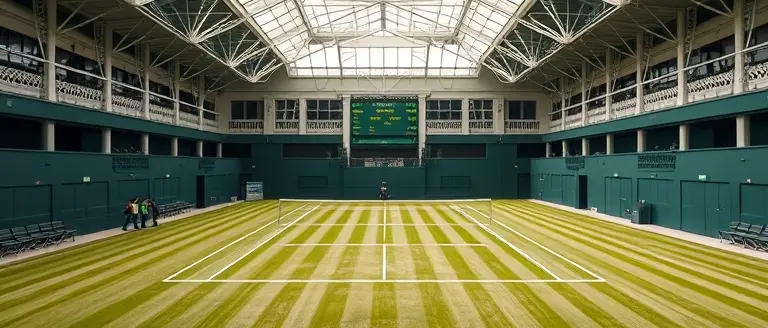
As the 2026 Wimbledon Championships commence, the buzz surrounding Maja Chwalińska has reached a fever pitch, fueled largely by viral social media narratives. However, for those tracking the professional circuit, it is essential to distinguish between her status as a fan-favorite and her current developmental trajectory. While the sentiment is high, moving from a viral sensation to a serious professional contender requires a transition in expectations. Chwalińska enters the All England Club not as a tournament favorite, but as a player in a critical growth phase, aiming to translate her technical proficiency into consistent deep-draw success on the sport’s most challenging surface.
Tactical Hurdles on Grass
Adapting to grass remains the ultimate litmus test for any emerging talent. For a left-handed player like Maja Chwalińska, success at SW19 depends on her ability to manipulate the low-bouncing, fast-paced nature of grass courts. Her tactical approach must evolve to maximize her natural advantages while mitigating the unpredictability of the surface. Key areas of evaluation for her 2026 performance include:
- Serve Placement: Utilizing her lefty swing serve to pull opponents wide on the deuce court, creating openings for early-strike winners.
- Net Transitions: Increasing her comfort level at the net, a necessity for shortening points on the grass surface.
- Footwork Adaptability: Maintaining a low center of gravity to handle the skidding ball, which remains a primary challenge for players transitioning from clay.
While current search trends highlight her popularity, her actual performance will be dictated by how effectively she executes these adjustments against top-tier competition. Achieving a deep run at Wimbledon 2026 would serve as a powerful validation of her technical maturation. Rather than succumbing to the pressure of online expectations, Chwalińska’s campaign should be viewed as an opportunity to secure high-level wins that provide the necessary ranking points for a successful second half of the season. Her potential is clear, but the reality of professional tennis demands objective consistency over viral milestones.
Master Your Mental Game for Peak Performance
Maja Chwalińska’s journey to the 2026 Wimbledon Championships is defined by more than just raw athletic talent; it is a testament to the immense cognitive discipline required to thrive on the world’s most prestigious grass courts. Her ability to translate technical adaptations into fluid, high-stakes performance is a masterclass in mental conditioning. For any competitor or high-performer, the lesson is clear: success on the court is merely an extension of the clarity and focus maintained in the mind.
Just as Chwalińska must sharpen her mental acuity to dominate at the All England Club, you can harness the same principles of neuro-cognitive precision to elevate your own daily output. Whether you are aiming to master a new skill or perform under pressure, your cognitive state is your greatest asset. The Brain Song is designed specifically to help you eliminate cognitive fog and achieve that rare state of flow, providing a science-backed routine to sharpen your competitive edge.
Don’t leave your performance to chance. By integrating this 12-minute daily audio routine, you are investing in the same mental sharpness that separates good performers from elite professionals. Step into your potential and experience the difference that structured cognitive optimization makes.
 Elevate your own mental performance and focus like a pro—start your 12-minute daily audio routine today.Yes, I Want This Now!