
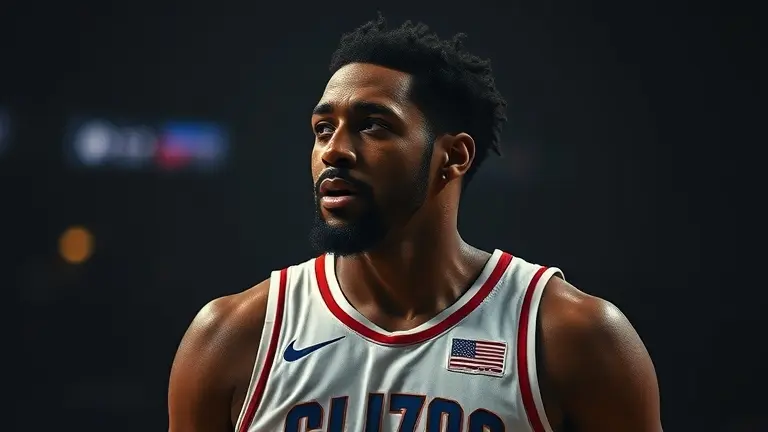
The atmosphere surrounding Kawhi Leonard has shifted from anticipated championship contention to a state of profound uncertainty. As June 2026 brings reports of “real” trade discussions between the Clippers and potential suitors, the narrative has curdled into a harsh critique of the two-time Finals MVP. Despite delivering a career-best 27.9 points per game, Leonard finds himself caught in the crosshairs of a scathing public narrative that labels him an injury-prone asset failing to live up to a massive $50.3 million salary. This isn’t just a sports story; it is a complex case study of the modern NBA superstar archetype, where immense talent is constantly pitted against the cold, hard realities of cap space and durability.
As fans and analysts dissect potential landing spots like Toronto or San Antonio, the deeper question persists: how should we define a career defined as much by its brilliance as by its absences? Navigating the volatile, high-stress cycle of NBA trade rumors is exhausting, leaving even the most dedicated followers searching for clarity amidst the cacophony of speculation. Understanding Leonard’s legacy requires moving past the superficial headlines and addressing the underlying tension between peak output and systemic physical risk.
The 2026 Trade Storm: Why the Clippers Are Finally Listening to Offers
As of late June 2026, the status of Kawhi Leonard in Los Angeles has shifted from untouchable franchise cornerstone to a legitimate trade asset. Reports from high-profile NBA insiders, including Jake Fischer, confirm that the Los Angeles Clippers have entered into “real” trade conversations, marking a stunning pivot for a front office that once banked its entire future on Leonard’s availability. This departure from their established strategy stems from a growing disconnect between Leonard’s elite individual output and his inability to anchor the team during the high-stakes postseason.
The Business of Attrition
While Leonard recently concluded a statistically dominant season—averaging a career-high 27.9 PPG—the Clippers are increasingly concerned about the long-term viability of the roster. Facing a daunting $50.3 million salary for the 2026-27 season, the organization is weighing the value of that scoring prowess against the harsh reality of his injury-plagued tenure. The narrative reached a fever pitch following a scathing June 28 op-ed by the LA Times’ Bill Plaschke, who labeled Leonard the “worst free-agent signing in L.A. history.” This public critique mirrors the private frustration growing within the Clippers’ organization regarding:
- Injury Management: The perpetual uncertainty surrounding Leonard’s health during critical stretches of the season.
- Cap Flexibility: The financial strain of carrying a massive contract that limits the front office’s ability to surround Leonard with a deeper, more resilient supporting cast.
- Return on Investment: The realization that high-level regular-season scoring is not a sufficient substitute for the championship reliability the team envisioned when they signed him.
This shift in perspective has opened the door for teams like the Toronto Raptors, Dallas Mavericks, and Houston Rockets to engage in serious discussions. Whether the Clippers opt to finalize a deal depends on their willingness to accept a package that justifies moving on from an all-time great player, despite the polarizing “what-if” legacy that now defines his time in Southern California.
The $50 Million Question: Evaluating the Business Reality of a Kawhi Trade
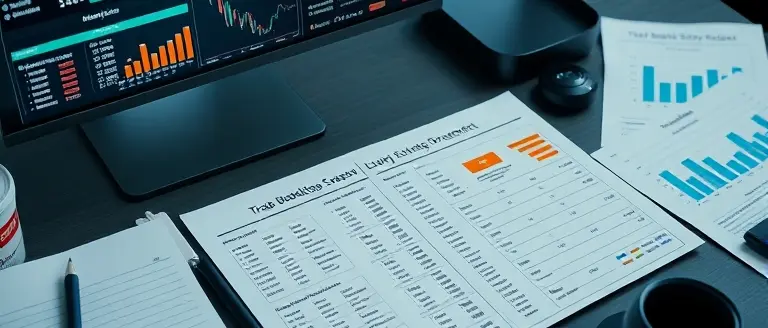
Moving Kawhi Leonard in the current NBA landscape is not merely a basketball decision; it is a complex exercise in financial engineering. With a staggering $50.3 million salary on the books for the 2026-27 season, any potential trade partner must navigate severe salary-cap constraints. For teams like the Toronto Raptors, Dallas Mavericks, or Houston Rockets, acquiring Leonard requires matching significant outgoing salary, which often necessitates gutting depth or sacrificing future draft capital. This financial hurdle forces front offices to adopt a high-stakes, “all-in” roster construction strategy, where the margin for error effectively disappears the moment the contract is acquired.
The “Kawhi Leonard Archetype” and Risk Management
Leonard embodies the modern NBA’s most polarizing archetype: the high-output superstar who delivers MVP-level production—evidenced by his career-high 27.9 points per game—but carries a persistent, unpredictable risk profile regarding availability. This volatility is the core driver of the current trade speculation.
- The Production-Availability Paradox: General managers are balancing his elite talent against the reality that his health status frequently dictates a team’s ceiling.
- Salary Cap Constraints: The $50.3M figure occupies a massive portion of a team’s cap space, limiting the ability to sign complementary depth pieces.
- The “What-If” Legacy: Because his injury history often sidelines him during critical playoff stretches, potential suitors must weigh the championship upside against the tangible risk of the superstar being unavailable during the postseason.
Ultimately, teams exploring a trade for Leonard are betting that his singular ability to take over games outweighs the massive fiscal burden and the inherent uncertainty of his physical status. As the Los Angeles Clippers look to move forward, the business reality remains clear: finding a dance partner willing to assume both the salary and the medical history is the single greatest obstacle to any potential deal.
Filtering the Noise: Assessing Potential Suitors (Raptors, Mavericks, and Rockets)

As of late June 2026, the trade landscape for Kawhi Leonard has shifted from pure speculation to tangible front-office activity. With Leonard entering the final year of his deal at a staggering $50.3M salary, the Los Angeles Clippers are clearly signaling a desire to restructure their cap situation. However, not all reported interest carries the same weight. While the Dallas Mavericks and Houston Rockets have surfaced in trade discussions as teams looking to consolidate talent for a championship push, their fit remains secondary to Leonard’s own stated preferences.
The Toronto Raptors: A Homecoming Narrative
The Toronto Raptors remain the most legitimate suitor, fueled by the historical success of the 2019 championship run. Unlike the Rockets or Mavericks, the Raptors represent a destination where Leonard has expressed a willingness to sign a long-term extension. From a roster perspective, Toronto views him as a veteran anchor capable of elevating their young core. However, the financial complexity of absorbing his massive contract means any package would likely require the Raptors to offload significant salary, a move they are only likely to make if they are confident in his long-term health and commitment.
Tactical Fit vs. Strategic Reality
When evaluating the potential suitors beyond Toronto, the disparity between “interest” and “feasibility” becomes apparent:
- Dallas Mavericks: The front office is likely exploring the Kawhi Leonard archetype to add wing defense and secondary playmaking. Yet, their ability to match the $50.3M salary without gutting their current rotation remains a significant hurdle.
- Houston Rockets: While the Rockets have the assets to pull off a blockbuster, they are traditionally cautious regarding aging, injury-prone stars. Their interest is likely exploratory, weighing his elite 27.9 PPG output against the risks associated with his recurring injury history.
Ultimately, Leonard holds the leverage. Because he is reportedly only open to extending with specific franchises like the Raptors or Spurs, he effectively acts as a gatekeeper. Teams uninterested in a “rental” scenario are unlikely to offer premium trade assets for a player who could walk in free agency next summer, regardless of his undeniable individual performance.
The Future of the ‘Load Management’ Era: A Legacy Analysis

The 2026 trade climate surrounding Kawhi Leonard serves as a definitive case study for the “Kawhi Experiment”—a philosophy that prioritized long-term physical preservation over the traditional 82-game availability model. As the Clippers weigh moving on from their superstar, the basketball world is left to reconcile his undeniable on-court brilliance with the inherent risks of building a franchise around a high-fragility athlete. While Leonard produced a career-high 27.9 points per game this past season, the financial strain of his $50.3M salary against his unpredictable injury timeline has effectively accelerated the dissolution of the load management era.
Rethinking the Superstar Archetype
The modern NBA has increasingly trended toward protecting its premier talent, but Leonard remains the polarizing face of this shift. His legacy is now caught in a precarious balance:
- The “All-Time Great” Perspective: Viewed through his two championships and Finals MVPs, Leonard remains a generational talent whose tactical impact is unmatched when healthy.
- The “What-If” Narrative: Critics—most notably exemplified by recent local media scrutiny—argue that his unavailability represents a failure of team-building strategy, categorizing him as a high-output luxury that current salary cap structures can no longer justify.
- The Fragility Penalty: The willingness of teams like the Toronto Raptors, Dallas Mavericks, and Houston Rockets to engage in trade talks indicates that front offices are moving toward a more transaction-heavy approach regarding aging stars, prioritizing agility in salary cap management over loyalty.
Ultimately, Leonard’s tenure in Los Angeles may be remembered as the final gasp of an experiment where individual physical maintenance was allowed to override collective roster consistency. Future teams will undoubtedly look at the 2026 trade deadline as the moment the league shifted, signaling that even the most elite superstars are now subject to the harsh economic realities of availability and the unforgiving nature of a championship window defined by health.
Restoring Clarity in an Age of Sports Noise
The saga of Kawhi Leonard serves as a mirror for the modern fan: we are often so consumed by the erratic, high-stress churn of trade speculation and biased media narratives that we lose our own sense of focus. Much like the precision required on the court, your ability to process complex information relies on a sharp, clear mind, yet the constant barrage of headlines often leaves us trapped in a cycle of mental fatigue and unproductive analysis.
Just as an elite athlete like Leonard must manage his recovery to sustain performance, you need a strategy to filter out the noise and regain cognitive equilibrium. This is where The Brain Song becomes essential. By providing a scientifically-backed approach to mental clarity, it acts as the cognitive recovery tool you need to detach from the burnout of the sports news cycle and reclaim your focus. It bridges the gap between the chaotic world of professional sports and your own need for high-level mental performance.
By integrating this 12-minute daily routine into your life, you are not just escaping the rumors; you are sharpening the very tools needed to navigate the complexities of life with the same discipline that defines a champion. Don’t let the information overload dictate your mental state any longer—take back control of your focus starting today.
 Shift your focus from the noise to your own peak performance; experience the 12-minute daily routine that restores mental clarity and combats the chaos of the modern news cycle.Transform My Life Today