
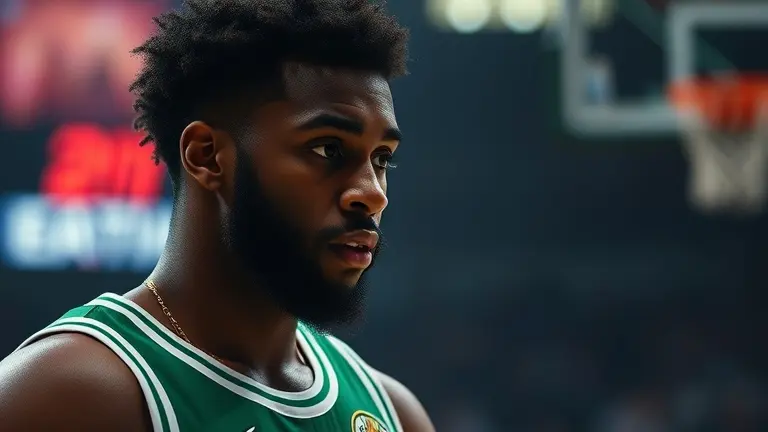
The atmosphere surrounding the Boston Celtics this June has shifted from championship euphoria to the cold, clinical precision of an off-season roster overhaul. At the epicenter of this volatility is Jaylen Brown, whose name has become synonymous with the league’s most high-stakes trade rumors. Beyond the surface-level chatter of blockbuster deals for Giannis Antetokounmpo or the shifting rotation roles for players like Payton Pritchard, a deeper, more structural friction has emerged: an intense clash between professional athletic performance and rigid internal analytics. Reports of Brown challenging his own organization’s assessment of his status as a ‘starting-caliber’ player represent more than just a momentary locker-room dispute; they highlight a growing divide between traditional basketball intuition and the data-driven mandates governing modern front-office strategy.
As we peel back the layers of this narrative, it becomes clear that this is a case study in how information, when interpreted through competing lenses, can destabilize even the most successful franchises. To understand the future of the Celtics, we must move past the binary ‘will he stay or go’ headlines and investigate the metrics dictating these moves and the psychological cost of operating in an environment where your value is constantly calculated, recalibrated, and debated under the harsh fluorescent lights of the front office.
The Celtics’ 2026 Crossroads: Decoding the Jaylen Brown Trade Rumors

The Boston Celtics find themselves at a high-stakes inflection point this June, as jaylen brown trade rumors intensify against a backdrop of internal structural friction. What began as speculative chatter has evolved into a concrete narrative centered on the front office’s desire to pivot toward a franchise-altering move for Giannis Antetokounmpo. This strategic shift represents more than simple roster churn; it signals a fundamental divergence between traditional scouting evaluations and the modern, efficiency-driven metrics currently shaping Boston’s front-office decision-making.
The Analytics Friction and Valuation Crisis
A significant catalyst for this volatility is the reported internal confrontation regarding Brown’s utility. Evidence suggests that a rift has formed between the star player and the organization’s analytics department. Reports indicate that an internal appraisal labeled Brown as failing to meet “starting-caliber” efficiency thresholds. This has fueled broader questions about how these teams reconcile box-score production with granular metrics:
- Defensive Versatility vs. Advanced Tracking: Does Brown’s isolation frequency outweigh the team’s desired offensive spacing models?
- The “Starting-Caliber” Debate: Analytics departments often prioritize net-rating impacts over traditional counting stats, potentially undervaluing players with high individual usage rates.
- Cultural Costs: When internal analytics directly conflict with a core player’s perceived value, it creates a “cultural friction” that often necessitates a trade to preserve locker room harmony.
Strategic Implications for the Roster
While fans focus on high-profile names, the secondary ripple effects of a potential jaylen brown departure remain substantial. If the Celtics pursue a mega-deal for an MVP-caliber talent, players like payton pritchard may see their roles elevated or become primary trade assets to balance salary cap constraints. As we move closer to NBA Free Agency, the objective for the Boston front office is clear: maximize the championship window by aligning personnel with the highest possible analytical ceiling, even if it requires parting ways with established stars. These jaylen brown trade rumors are less about personal performance and more about a cold, calculated bet on the future of the franchise’s tactical identity.
Beyond the Box Score: Why Analytics Departments Are Challenging Traditional Valuations

The friction surrounding the current Jaylen Brown trade rumors highlights a fundamental shift in how NBA front offices evaluate talent. While casual fans and traditional media focus on counting stats like points, rebounds, and assists per game, the Celtics analytics department is increasingly prioritizing “efficiency-per-possession” and “impact-on-winning” metrics. This discrepancy often leads to internal conflict, as coaching staffs and players prioritize eye-test performance and box-score volume, while front offices scrutinize the hidden costs of a player’s usage.
The Metrics Shaping Modern NBA Strategy
Modern analytical models look far deeper than traditional scoring volume. By utilizing spatial tracking and play-by-play data, departments are beginning to value specific, subtle contributions over raw production. Key areas of divergence include:
- Defensive Versatility and Positioning: Rather than looking at blocks or steals, analysts measure a player’s ability to minimize an opponent’s expected points per possession (EPP).
- Gravity and Floor Spacing: Statistical models calculate how a player’s presence on the perimeter pulls defenders away from the paint, effectively creating “invisible” efficiency for teammates.
- Decision-Making Efficiency: Analysts weigh the cost of turnovers and forced shots against a player’s true shooting percentage, often finding that high-volume scorers may actually suppress overall offensive flow.
This shift explains why an internal report might controversially flag a star like Jalen Brown differently than his public profile suggests. When front offices model potential trade packages involving assets like Payton Pritchard or high-stakes deals for players like Giannis Antetokounmpo, they are searching for a specific statistical archetype that fits their long-term system rather than a legacy name brand. Ultimately, this creates a volatile environment where the perceived value of a player can vary wildly depending on whether the lens is traditional box-score production or high-frequency analytical output. As the Celtics offseason 2026 progresses, this tug-of-war between traditional valuation and machine-driven analysis will continue to define the league’s trade landscape.
The Giannis Equation: Assessing Trade Feasibility and Salary Cap Realities

The prospect of a Jaylen Brown trade centered around acquiring Giannis Antetokounmpo represents a tectonic shift for the Celtics front office. From a general manager’s perspective, executing such a blockbuster requires navigating the NBA’s restrictive “second apron” rules. Because Antetokounmpo commands a supermax-level salary, the matching logistics are extraordinarily complex. The Celtics cannot simply swap star power; they must aggregate enough incoming salary to satisfy trade machine requirements, which inevitably pulls depth players into the crosshairs.
The Role of Secondary Assets and Cap Flexibility
In these high-stakes scenarios, players like Payton Pritchard become essential “cap-fillers.” While Pritchard provides significant value through his perimeter shooting and hustle, his contract is often viewed by evaluators as a necessary piece to balance the books when moving a marquee asset like Jalen Brown.
Key challenges for the Celtics in this hypothetical acquisition include:
- Salary Matching Hurdles: The need to move roughly $40-$50 million in outgoing salary means that the team’s depth would be hollowed out, leaving the roster top-heavy.
- Fiscal Sustainability: Trading for a player of Giannis’s caliber requires long-term payroll commitment. The front office must decide if the immediate championship window justifies potentially hindering their ability to retain other core role players in the following two seasons.
- The Valuation Gap: Reports of internal friction regarding analytics-based appraisals of Brown suggest that the front office is looking at the roster through a data-first lens. If the organization believes their current analytics model identifies diminishing returns on Brown, they may prioritize this move to reset the team’s cap profile.
Ultimately, balancing “win-now” ambition against long-term fiscal health is the hallmark of elite management. Any Jaylen Brown trade rumors involving a Giannis-level talent must be evaluated not just on the talent swap, but on the structural integrity of the remaining roster. If the Celtics move forward, they are essentially betting that a top-tier superstar duo can overcome the lack of bench depth and the potential loss of secondary playmakers like Pritchard.
Cultural Friction and the Cost of Championship Aspirations

The recent reports of a high-stakes confrontation between Jaylen Brown and the Boston Celtics analytics department highlight a growing, often uncomfortable, rift within modern NBA front offices. As the organization maneuvers toward potential Jaylen Brown trade scenarios—potentially involving a blockbuster deal for a superstar like Giannis Antetokounmpo—the internal friction suggests that the gap between traditional basketball evaluation and data-driven metrics has reached a breaking point. When a franchise cornerstone challenges an internal appraisal labeling him as anything less than a “starting-caliber player,” it signals a breakdown in the symbiotic relationship between star athletes and the back-office strategists who influence roster construction.
The Impact on Team Chemistry and Roster Identity
This cultural friction creates significant uncertainty as the Celtics approach the NBA Free Agency window. By questioning the internal valuation of one of their most vital contributors, the front office risks alienating not just Brown, but the broader locker room culture. The narrative surrounding Jalen Brown (often misspelled as such by fans tracking the volatility) is no longer confined to court performance; it has evolved into a case study on organizational trust.
- Valuation Disparity: Modern analytics often prioritize efficiency and spatial impact over traditional box-score production, which can lead to friction when players feel their “intangible” contributions are being erased by cold data.
- Secondary Effects: Speculation regarding players like Payton Pritchard highlights the fear of a total “roster overhaul.” If a star like Brown is deemed expendable by an analytics algorithm, the value of support pieces becomes entirely transactional rather than developmental.
- Cultural Cost: Trading a player who identifies as a core franchise pillar can erode the “Celtics pride” identity, turning a championship-caliber culture into a purely mercenary environment.
Ultimately, the cost of pursuing championship aspirations through aggressive trades—such as those surfacing in current Jaylen Brown trade rumors—must be measured against the risk of dismantling a high-functioning locker room. Moving a player of Brown’s stature during his prime years, while statistically defensible in a vacuum, carries a tangible risk to the team’s psychological stability and overall chemistry.
Mastering the Cognitive Edge in an Analytics-Driven Era
The saga surrounding Jaylen Brown serves as a potent reminder that in the high-pressure world of professional sports, success is no longer dictated by talent alone, but by the ability to navigate complex data environments. Whether you are an NBA front-office executive or a professional managing your own career, the demand for sharp, analytical thinking has never been higher. When the stakes are at their zenith, the ability to maintain clarity, process conflicting information, and make high-leverage decisions without succumbing to the noise of internal metrics becomes your ultimate competitive advantage.
Just as the Celtics front office strives to optimize performance through rigorous data, high-achieving individuals must prioritize their own cognitive efficiency. Navigating these environments often leads to mental fatigue, but you can sharpen your focus and enhance your learning capacity to stay ahead of the curve. The Brain Song is designed specifically for those who require an analytical edge, offering a science-based approach to clearing mental fog and sustaining peak performance during periods of intense professional volatility.
By integrating The Brain Song into your daily routine, you move beyond the reactionary cycle of the industry and into a space of sustained mental mastery. Do not leave your performance to chance when you can optimize your mind to match the speed of the game.
 Optimize your cognitive performance for the upcoming NBA off-season by integrating The Brain Song into your daily routine.Transform My Focus Today