
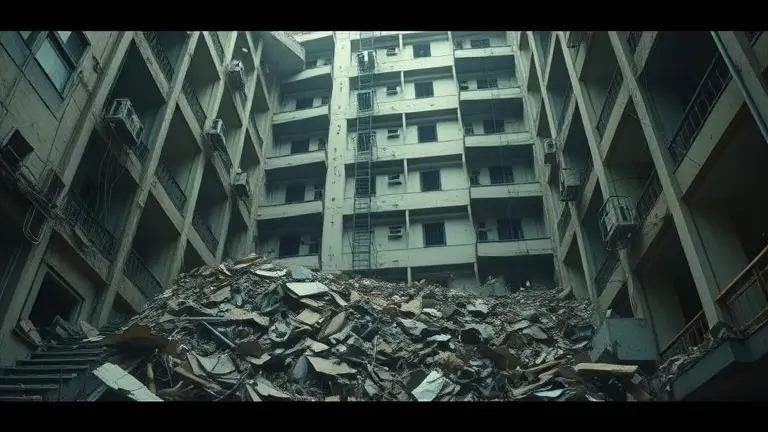
The global community continues to process the profound sorrow surrounding Venezuelan soccer player Héctor Bello, whose life was irrevocably altered by the catastrophic earthquakes that struck the region in late June 2026. While the heroism displayed by his wife, Andrea, who tragically perished while protecting their young daughter, Alana, has rightfully moved the world, the event has also cast a sharp, uncomfortable light on the systemic vulnerabilities of local infrastructure. Behind the headlines of this personal tragedy lies a deeper, critical inquiry into the architectural standards and residential building practices that proved fatal under the pressure of seismic activity.
This report moves beyond the immediate emotional narrative to investigate the technical infrastructure failures that left so many families exposed to collapse. By examining the intersection of modern safety protocols and the reality of regional construction, we aim to provide a sober analysis of what it means to build with resilience. Ensuring that our homes are constructed not just with materials, but with verified, precise schematics, is no longer a luxury—it is a fundamental imperative for safety in an increasingly unpredictable world.
The Tragic Impact of the Recent Venezuela Earthquakes
In late June 2026, a series of powerful twin earthquakes struck Venezuela, causing widespread structural failure and a profound humanitarian crisis. The seismic activity resulted in significant damage to residential infrastructure, leaving many communities in states of emergency. Among the most widely reported tragedies was the collapse of a multi-story building that directly affected the family of professional soccer player Héctor Bello, a defender for the second division club Marítimo de La Guaira. During the collapse, his wife, Andrea Bello, lost her life in the wreckage. Their 20-month-old daughter, Alana, was recovered from the debris, emerging as a survivor of the catastrophic event.
Understanding the Structural Vulnerabilities
The loss of life resulting from these seismic events has prompted immediate questions regarding urban planning and the seismic resilience of regional infrastructure. Experts note that in many areas of Venezuela, the age of residential buildings, combined with varying adherence to modern structural reinforcement standards, creates significant risks during high-magnitude tremors. The tragedy involving the Bello family has brought these broader systemic issues into sharp focus, highlighting the urgent need for:
- Comprehensive safety assessments of aging multi-family dwellings to prevent future collapses.
- Enhanced emergency response protocols designed to prioritize search and rescue operations in dense urban environments.
- Public policy reform aimed at improving construction standards to better withstand seismic activity.
The public response to the tragedy has been characterized by deep sympathy for Héctor Bello and his surviving daughter. While the personal nature of this loss has dominated headlines, the event serves as a somber reminder of the vulnerabilities inherent in the region’s current housing stock. As recovery efforts continue, local authorities and humanitarian organizations are working to address the immediate needs of those displaced, while simultaneously evaluating the long-term seismic preparedness required to protect the population from similar future disasters.
Understanding Seismic Vulnerability in Venezuela
The June 2026 seismic events that tragically impacted the life of Héctor Bello and his family serve as a sobering reminder of the underlying geological instability defining the Venezuelan coastline. Venezuela is situated near the complex tectonic boundary between the Caribbean Plate and the South American Plate. This convergence zone is characterized by significant strike-slip faulting, which frequently generates tremors that pose a constant risk to high-density residential areas, particularly in northern coastal cities like La Guaira. Unlike regions with modern, strictly enforced seismic building codes, many older or rapidly constructed developments in this area lack the structural reinforcement necessary to withstand high-magnitude kinetic energy.
Infrastructure Challenges and Regional Risks
The structural failure observed during recent earthquakes highlights systemic challenges regarding urban planning and disaster mitigation. In many coastal municipalities, decades of economic volatility have hindered the modernization of infrastructure, leaving many residents living in buildings that do not meet contemporary international safety standards. Key factors contributing to this heightened vulnerability include:
- Substandard Construction Materials: Use of unreinforced masonry or aging concrete in high-density zones significantly increases the risk of pancake-style collapses during seismic activity.
- Topographical Instability: Much of the urban development in the La Guaira region is built on slopes or reclaimed land, which can be prone to soil liquefaction and landslides when subjected to intense ground shaking.
- Maintenance Deficits: A lack of consistent structural inspections allows for the degradation of foundation integrity, rendering buildings susceptible even to moderate tremors.
Addressing these risks requires a shift toward rigorous infrastructure auditing and the implementation of robust, modernized seismic regulations. While the personal story of Héctor Bello has garnered widespread sympathy, it also highlights the urgent necessity for a national conversation regarding investment in disaster-resilient housing. Strengthening these frameworks is essential to protecting families and ensuring that urban growth in seismically active regions does not come at the cost of human lives.
The Importance of Disaster Preparedness and Urban Safety

The tragic loss experienced by Héctor Bello and his family serves as a somber reminder of the critical intersection between seismic activity and urban infrastructure. When natural disasters strike, the resilience of residential buildings often dictates the survival rate of entire communities. Experts argue that the vulnerability of older urban centers to high-magnitude tremors underscores an urgent need for modernization in building codes and strict enforcement of seismic safety regulations. Retrofitting existing structures—particularly in high-density regions—is no longer a luxury but a fundamental requirement to prevent catastrophic collapses during unforeseen geological events.
Strengthening Community Resilience
Beyond structural engineering, disaster preparedness must be integrated into the daily lives of families residing in seismic zones. Establishing a proactive safety culture can significantly improve outcomes when government response teams are delayed. Families are encouraged to adopt the following measures to mitigate risks:
- Emergency Kit Maintenance: Maintain a 72-hour supply of water, non-perishable food, and medical essentials, stored in a secure, easily accessible location.
- Structural Assessments: Periodically consult with professional engineers to identify vulnerabilities in residential units, such as unanchored heavy furniture or compromised foundation elements.
- Family Communication Plans: Establish a pre-designated meeting point and an out-of-area emergency contact person to ensure coordination when cellular networks are disrupted.
- Drop, Cover, and Hold On: Regularly practice standardized safety drills to ensure that all household members—including children—know how to protect themselves instinctively during the initial shaking.
The narrative surrounding the 2026 Venezuelan earthquakes highlights that while personal heroism is inspiring, systemic improvements in urban planning are the primary line of defense. By prioritizing investments in disaster-resilient infrastructure and community-wide emergency training, municipalities can better protect their citizens, ensuring that families have the best possible chance of safety when the ground beneath them shifts.
Supporting the Affected: Humanitarian Initiatives
In the wake of the devastating earthquakes that struck Venezuela in late June 2026, a massive mobilization of aid has emerged to support the displaced and grieving. The tragedy, which touched the family of soccer player Hector Bello, has brought international attention to the fragility of local infrastructure and the urgent need for robust disaster relief systems. Humanitarian efforts are currently prioritizing the distribution of essential medical supplies, temporary housing, and psychological counseling for those profoundly impacted by the structural collapses.
Mobilization of Relief Efforts
Local and international humanitarian organizations, including regional emergency response teams and global aid partners, are coordinating to address the immediate needs of survivors. While the public focus has often centered on high-profile figures like Hector Bello and the heroism surrounding his late wife, relief agencies are ensuring that assistance is directed toward the broader community affected by the catastrophe. Key areas of intervention include:
- Psychological First Aid: Specialized teams are being deployed to provide trauma-informed therapy to families who have suffered profound loss, emphasizing long-term mental health stability.
- Medical Infrastructure Support: Emergency clinics are receiving additional resources to manage injuries sustained during the building collapses.
- Infrastructure Audits: Independent bodies are working to assess the integrity of standing buildings to prevent further casualties as aftershocks continue to pose a threat.
- Community Resource Centers: Dedicated hubs have been established to help displaced residents coordinate with social services for food, clothing, and legal support.
The response highlights a collective commitment to rebuilding, not just physically, but as a community. As the nation processes this disaster, there is a clear emphasis on ensuring that families receive not only immediate physical aid but also the privacy and space necessary to navigate their personal recovery. By integrating professional psychosocial care with disaster relief, organizations aim to build resilience among survivors, ensuring that the legacy of those lost—including the selfless bravery seen in incidents involving victims like Andrea Bello—is honored through the sustained protection of the living.
Building a Future Built on Proven Reliability
The tragedy surrounding Héctor Bello and his family underscores a devastating reality: the structural integrity of our living environments is not just a matter of convenience, but a profound issue of safety and survival. When we analyze the infrastructure failures that led to such heartbreak, it becomes clear that the margin for error in construction is zero. Understanding the foundational importance of professional-grade schematics and code-compliant design is the first step in ensuring that the structures we inhabit can withstand the tests of time and nature.
In the wake of such regional catastrophes, the necessity for precise, verified building standards becomes undeniable. True security is built on technical accuracy rather than guesswork or substandard practices. By prioritizing workshop-tested plans, we can better appreciate the complexity and technical rigor required to create truly safe environments, effectively shifting our perspective from passive inhabitants to informed advocates for structural excellence.
We invite you to explore the intersection of precision planning and structural integrity. Embracing professional design resources is the natural next step for anyone committed to the safety, durability, and lasting quality of their own building projects. When you choose verified, reliable plans, you aren’t just building; you are investing in peace of mind.
 Learn more about the importance of professional-grade building plans and structural accuracy for your own safety and peace of mind.Transform My Construction Standards Today!