
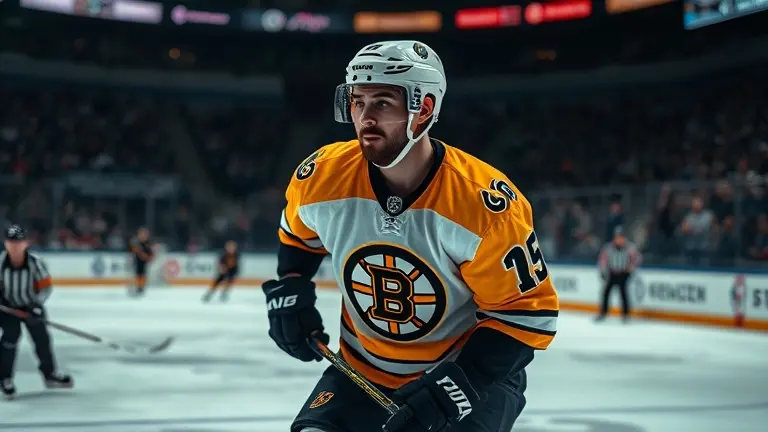
The NHL landscape shifted seismically this week as the Boston Bruins executed a blockbuster trade to acquire dynamic winger JJ Peterka from the Utah Mammoth. In a move that has sent shockwaves through fantasy leagues and front offices alike, Boston surrendered significant future capital—including their 2026 23rd overall pick and a 2028 first-rounder—to secure the services of the 24-year-old playmaker. With 25 goals and 47 points in the 2025-26 campaign, Peterka arrives in Boston with high expectations, but the hefty price tag has sparked an immediate and intense debate among analysts: did the Bruins overpay for a potential star, or is this the championship-caliber acquisition required to push them over the top?
Beyond the raw transaction data, this trade forces a deeper examination of tactical fit and financial maneuvering. As Peterka prepares to transition from the Mammoth’s system into the rigorous tactical framework of the Bruins, he faces the ultimate test of cognitive adaptability. Success in the modern NHL is no longer just about raw athleticism; it is about how quickly a player can rewire their mental approach to match a new coaching scheme under the blinding spotlight of TD Garden. Understanding this high-stakes mental transformation is key to deciphering whether this trade will be remembered as a masterstroke or a misstep.
The Blockbuster Deal: Analyzing the JJ Peterka Trade
The NHL landscape shifted dramatically as the Boston Bruins finalized a massive blockbuster deal to acquire JJ Peterka from the Utah Mammoth. This high-profile transaction, executed just days before the 2026 NHL Draft, signals an aggressive “win-now” posture from the Bruins’ front office. By securing the 24-year-old winger, Boston has prioritized proven offensive production over the unpredictability of draft capital, sending a clear message that they intend to contend for the Stanley Cup in the 2026-27 season.
Hard Assets and Trade Composition
The cost for Peterka was significant, reflecting his status as a high-end top-six forward. To complete the trade, Boston surrendered:
- The 23rd overall pick in the 2026 NHL Draft.
- A future 2028 first-round selection.
This package highlights the premium placed on established talent, specifically a player coming off a robust campaign where he notched 25 goals and 47 points across 82 games. While the Utah Mammoth opted to reset their roster by stockpiling future assets, the Bruins clearly determined that the immediate utility of Peterka’s $7.7M AAV skillset outweighs the long-term potential of two first-round selections.
Timing and League Impact
The timing of this deal has sent shockwaves through NHL front offices, as it effectively removes a major player from the trade market right as teams finalize their draft boards. By making this move now, the Bruins have insulated themselves from the volatility of the draft floor, securing a player who has already proven he can handle a heavy workload at the professional level. For Boston, the trade is about mitigating risk; while the 2026 draft class holds promise, the Bruins are betting that Peterka’s established trajectory provides a more reliable path toward championship success than a mid-to-late first-round prospect. The league is now watching closely to see if other contenders will feel pressured to match this aggressive asset consolidation.
Tactical Fit: Peterka’s Role in the Bruins’ Top-Six

The acquisition of JJ Peterka represents a calculated gamble by the Boston Bruins front office to inject high-end speed and transition efficiency into their top-six forward group. Coming off a standout 2025-26 campaign where he tallied 25 goals and 47 points, Peterka provides the Bruins with a dual-threat winger capable of keeping pace with the modern, high-tempo NHL. His tactical utility lies in his ability to push defenders back on their heels, creating space for center-ice playmakers and forcing opposing defensive pairings to respect his shot from the high slot.
Strategic Line Placement and Synergy
Evidence suggests that Bruins coaching staff will likely deploy JJ Peterka on the right wing of the second line, providing a much-needed scoring catalyst behind the team’s top-line anchors. By pairing him with a reliable, defensive-minded center, the Bruins can mitigate the risks associated with Peterka’s aggressive offensive style while maximizing his finishing ability.
Key attributes that define his fit within the Bruins’ system include:
- Offensive Transition: Peterka’s elite skating allows him to carry the puck through the neutral zone, reducing the team’s reliance on dump-and-chase tactics.
- Finishing Capability: His 25-goal production last season demonstrates the clinical finishing ability required to convert secondary scoring chances—a recurring area of weakness in recent Bruins postseasons.
- Tactical Versatility: While primarily a wing, his ability to operate in high-traffic areas makes him a candidate for power-play rotations, potentially freeing up top-line personnel for specialized puck-possession duties.
By integrating JJ Peterka into the core, the Bruins are effectively shifting their offensive identity toward a more mobile, north-south approach. This transition from the Utah Mammoth’s previous systemic setup to Boston’s disciplined structure will likely prioritize his creative instinct, provided he can adapt to the rigorous two-way expectations central to the Bruins’ coaching philosophy. If this partnership flourishes, his $7.7M AAV will quickly be viewed as a justifiable investment in a prime-age offensive engine.
Salary Cap Implications: Evaluating the Cost of Acquisition
The acquisition of JJ Peterka by the Boston Bruins brings immediate offensive firepower, but it comes at a significant financial juncture for the organization. With an AAV of $7.7 million, Peterka occupies a substantial portion of the Bruins’ salary cap, signaling that the front office is shifting toward a “win-now” window. Given his output of 25 goals and 47 points in the 2025-26 season, Boston is banking on the winger to sustain or improve upon these totals to justify the heavy investment. This price tag effectively narrows the team’s flexibility, forcing management to be highly selective with the remaining budget as they look to shore up bottom-six depth and defensive pairings.
Balancing Roster Needs and Financial Flexibility
The “at what cost” narrative currently dominating fan discussions is rooted in the opportunity cost of Peterka’s contract. By committing $7.7M to a top-six winger, the Bruins have effectively limited their ability to pursue high-end free agents or retain internal depth pieces who may be entering restricted free agency. Strategic management of this cap hit will be essential, as the organization must now navigate:
- Secondary Scoring Dependencies: With Peterka eating up a sizable portion of the cap, the Bruins must rely on entry-level contracts and league-minimum veterans to fill out the depth chart.
- Long-term Outlook: Peterka’s age (24) aligns with the team’s core, which justifies the premium, but his contract performance will be monitored closely to ensure it doesn’t stifle future extensions for young defensive prospects.
- Trade-off Analysis: The decision to sacrifice the 2026 23rd overall pick and a 2028 first-rounder alongside this cap commitment highlights a high-stakes bet that Peterka will remain a perennial 20-goal threat.
Ultimately, the viability of this move hinges on Peterka’s transition into the Bruins’ coaching scheme. If he produces at a high level, the $7.7M hit will be viewed as a market-rate acquisition for a prime-age goal scorer; however, any drop in productivity will place immediate pressure on the Bruins’ cap sheet, potentially limiting their mobility during the mid-season trade deadline.
Future Value: The Long-Term Impact of Traded Draft Picks

The acquisition of JJ Peterka by the Boston Bruins represents a quintessential “win-now” maneuver, effectively betting the team’s medium-term stability against the uncertainty of the NHL draft. By parting with the 23rd overall pick in 2026 and a 2028 first-round selection, Boston management is explicitly signaling that their championship window is currently wide open. In the NHL, a 23rd overall pick typically has a moderate probability of becoming a top-six contributor within three to four years. By sacrificing this pick and a future asset, the Bruins have opted for the known commodity: a 24-year-old winger with 25 goals and 47 points under his belt, rather than the “lottery ticket” potential of high-end draft picks.
Evaluating the Draft Capital Trade-Off
When analyzing the long-term value, the distinction between immediate impact and sustainable asset management becomes clear:
- The Case for Utah: By stockpiling high-end draft capital, Utah is prioritizing a rebuild phase. Acquiring two first-round picks provides them with the flexibility to either select high-ceiling prospects or use those assets as currency in future trades to balance their roster.
- The Case for Boston: The Bruins avoid the risk of prospect development stagnation. JJ Peterka is already a proven NHL-caliber player, meaning he provides immediate production that a rookie drafted at 23rd overall would unlikely replicate for several seasons.
Ultimately, the long-term success of this trade hinges on Boston’s ability to secure a deep playoff run while Peterka is under contract. If the Bruins contend for a title during his tenure, the high cost of the draft picks will be considered a bargain. However, if the team fails to capitalize on this window, the loss of those two first-round selections could hinder the organization’s ability to replenish their prospect pool, leading to a talent drought in the late 2020s. For now, the move validates the Bruins’ aggressive strategy to supplement their core with established, productive talent.
Mastering the Mental Game for Elite Results
The acquisition of JJ Peterka is a massive gamble, placing the burden of success on his ability to rapidly synthesize new information and execute at a high level under immense pressure. Whether this trade proves to be a triumph or a cautionary tale ultimately hinges on the intangible: the speed and clarity of the player’s mental processing when the game intensity peaks. It is a stark reminder that in professional sports, as in high-performance careers, the difference between good and great is often found in the sharpness of one’s focus.
Just as Peterka must rewire his mental approach to thrive in the Bruins’ system, you have the opportunity to optimize your own internal performance. Elite cognitive endurance is not just reserved for the ice; it is a skill that can be developed. ‘The Brain Song’ is specifically designed to support this transition, utilizing neuroscience-based auditory stimulation to help you achieve peak mental clarity and laser-focused concentration, regardless of your playing field.
By integrating this tool into your daily routine, you apply the same logic as elite athletes—training the brain to sustain high performance under demanding conditions. If you are ready to enhance your focus and unlock a superior level of cognitive efficiency, the time to start is now.
 Ready to sharpen your mental edge? Click here to start your 12-minute daily audio routine and unlock the neuroscience of focus.Transform My Focus Today!