
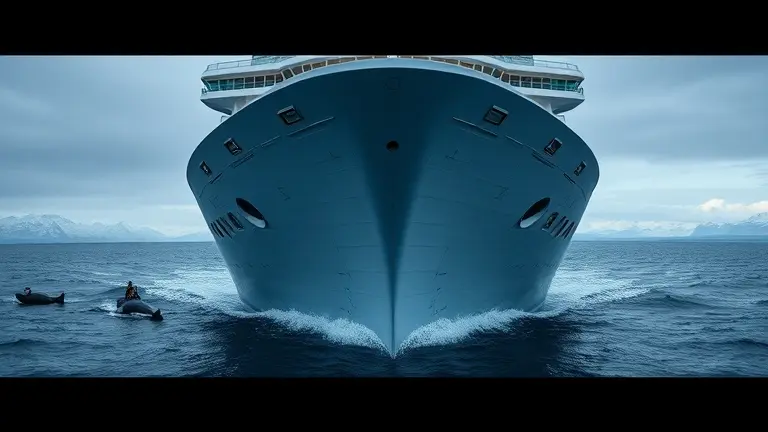
When the Ovation of the Seas docked in Seward, Alaska, in June 2026, the maritime industry faced a harrowing reality: a deceased, pregnant fin whale was discovered lodged against the ship’s bow. This tragic collision, confirmed by NOAA Fisheries and the Alaska SeaLife Center as a vessel strike, has ignited a fierce national conversation regarding the environmental stewardship of mega-cruise lines. As the industry faces mounting pressure to implement mandatory speed restrictions in critical marine habitats, the incident serves as a stark reminder of the immense technical and ethical challenges inherent in navigating the delicate ecosystems of the Last Frontier.
Beyond the immediate environmental backlash lies a complex engineering puzzle: how do massive commercial vessels balance rigid cruise schedules with the unpredictable realities of marine wildlife migration? Addressing this requires more than reactive policy—it demands a rigorous, data-driven approach to maritime safety. By moving beyond the headlines and examining the operational feasibility of speed mandates, whale detection systems, and historical maritime protocols, we can better understand how to prevent such catastrophes without compromising the integrity of global shipping logistics.
Understanding the Ovation of the Seas Incident
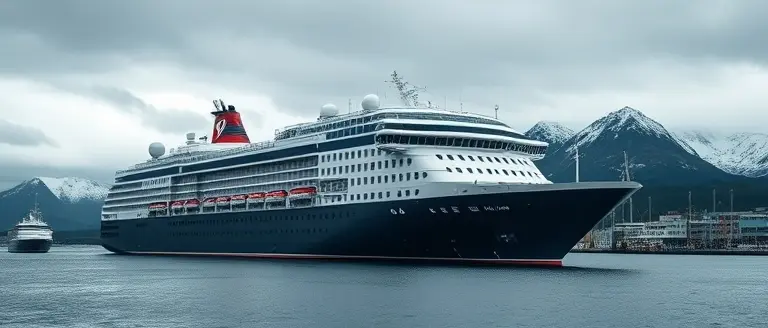
On June 19-20, 2026, a distressing maritime event brought significant scrutiny to the cruise industry when the Ovation of the Seas, one of Royal Caribbean’s largest vessels, arrived at the port of Seward, Alaska, with a deceased fin whale lodged against its bow. The incident quickly gained national attention after footage of the vessel entering the harbor circulated, revealing the tragic discovery of the marine mammal. The whale, which was confirmed to be pregnant, prompted an immediate and coordinated response from federal and state agencies, including NOAA Fisheries and the Alaska SeaLife Center, to conduct a thorough investigation into the circumstances surrounding the death.
Investigation and Necropsy Findings
Following the arrival of the ship, experts performed a preliminary necropsy to determine the cause of death. Findings were conclusive in their consistency with a vessel strike, identifying trauma sustained by the whale that matches the profile of a collision with a large ship. While the official investigation remains ongoing, the incident has highlighted the vulnerability of endangered species within busy Alaskan shipping lanes. Royal Caribbean issued an official statement shortly after the event, expressing that the company was “saddened to hear that one of our ships struck a whale,” and pledged cooperation with authorities to understand how the incident occurred.
Key aspects of the situation include:
- Species Impact: The deceased animal was identified as a fin whale, an endangered species known to frequent North Pacific waters.
- Operational Context: The Ovation of the Seas was conducting its scheduled Alaskan itinerary at the time of the event.
- Regulatory Scrutiny: Environmental groups and federal regulators are currently reviewing the incident to determine if existing maritime safety protocols were sufficient or if broader systemic changes—such as mandatory speed restrictions—are required to prevent future interactions.
The situation serves as a stark reminder of the complexities involved in navigating the rich, whale-inhabited waters of Alaska. As investigators continue their work, the cruise industry faces mounting pressure to demonstrate its commitment to environmental stewardship and to evaluate the efficacy of its current marine life avoidance strategies.
Current Maritime Regulations and Whale Protection in Alaska

The regulatory framework governing maritime traffic in Alaskan waters is a complex intersection of international maritime law, federal mandates, and voluntary conservation efforts. Currently, there is no blanket federal mandate requiring cruise ships to maintain specific, slow-speed thresholds in the Gulf of Alaska specifically to prevent whale strikes. Instead, the industry relies largely on the NOAA Fisheries guidelines, which encourage mariners to exercise heightened vigilance and navigate at reduced speeds when whales are sighted. Following the high-profile Royal Caribbean whale strike involving the Ovation of the Seas, industry analysts and environmental advocates are scrutinizing the efficacy of these non-binding protocols.
Existing Regulatory Frameworks and Challenges
Maritime safety in the region is overseen by a combination of the U.S. Coast Guard and NOAA. While seasonal “slow zones” are utilized in other parts of the United States—such as the East Coast to protect the North Atlantic Right Whale—these are not currently standard for the migratory corridors used by endangered fin whales in the North Pacific. The operational reality for mega-cruise ships creates significant hurdles:
- Fixed Scheduling Constraints: Cruise lines operate on rigid, multi-port itineraries that often leave little margin for the significant speed reductions required to effectively mitigate collision risks.
- Detection Limitations: Large-scale commercial vessels struggle with limited sightlines and the technical difficulty of detecting whales in varying sea states, making visual spotting ineffective as a primary safety mechanism.
- Voluntary vs. Mandatory Compliance: Current reliance on “voluntary speed reduction” leaves enforcement to the discretion of individual shipping lines rather than regulatory bodies.
The incident near Seward highlights a critical gap where existing maritime policies fail to account for the increasing frequency of mega-ship traffic in high-density marine mammal habitats. While Royal Caribbean has expressed regret regarding the whale strike, experts argue that without a transition from voluntary guidelines to mandatory, enforceable speed limits in sensitive regions, the risk of similar incidents remains high. As the NOAA investigation continues, the maritime industry faces mounting pressure to integrate advanced whale-detection technology and implement stricter navigational protocols to better protect Alaska’s vulnerable marine life.
Analyzing Mandatory Speed Restrictions: Pros and Cons
The incident involving the Royal Caribbean whale strike in Alaska has reignited intense debate regarding maritime safety and environmental protection. Central to this discourse is the proposal by groups like the Center for Biological Diversity to mandate speed limits of 10 knots or less for vessels traversing sensitive marine habitats. Marine biologists widely argue that there is a direct, linear correlation between vessel speed and the lethality of whale strikes; slower speeds increase the probability of a whale surfacing or maneuvering away from an approaching vessel while providing the bridge crew with essential additional seconds to initiate evasive maneuvers.
The Case for Speed Regulations
Proponents of mandatory speed restrictions highlight several critical benefits:
- Reduced Lethality: Peer-reviewed studies indicate that the force of impact is exponentially higher at speeds above 14 knots, making slower travel significantly safer for large cetaceans like the endangered fin whale.
- Navigation Buffers: Lower speeds provide vessel operators with a broader window of opportunity to identify and react to marine life obstacles, especially in areas with poor visibility or complex topography.
- Environmental Stewardship: Implementing these measures would signal a proactive commitment to conservation, helping cruise lines align with global ESG (Environmental, Social, and Governance) goals.
Logistical and Operational Challenges
Conversely, implementing universal speed limits presents significant hurdles for the cruise industry:
- Scheduling Complexity: Cruise itineraries are strictly timed to optimize port calls. Slowing down could lead to massive scheduling delays, requiring lines to restructure entire seasonal offerings.
- Propulsion Inefficiency: Large, modern cruise ships are engineered for specific cruising velocities. Operating continuously at low speeds can lead to mechanical strain and increased fuel consumption profiles, complicating engine efficiency.
- Enforcement Hurdles: Monitoring compliance across the vast, rugged coastline of Alaska is a monumental administrative challenge for regulators, requiring robust AIS tracking and potentially costly surveillance infrastructure.
Ultimately, balancing the protection of marine biodiversity with the operational realities of massive commercial vessels remains a complex task. While technological solutions such as AI-driven whale detection systems are emerging, they are not yet considered a replacement for the physical mitigation afforded by reduced speed. As the investigation into the Ovation of the Seas incident continues, the industry faces mounting pressure to find a sustainable middle ground that prioritizes maritime safety without compromising the viability of Alaskan cruising.
Perspectives from Marine Conservation Experts
The Royal Caribbean whale strike in Alaska involving the Ovation of the Seas has ignited a critical dialogue among marine biologists and conservationists regarding the inherent conflict between rapid maritime expansion and the preservation of endangered fin whales. Experts argue that while individual incidents may seem isolated, they are symptomatic of an industry that prioritizes rigid cruise scheduling over marine safety. Conservationists emphasize that simply mourning these losses is insufficient; instead, the industry must pivot toward systemic operational changes that mitigate the risk of lethal collisions in highly sensitive Alaskan waters.
The Debate Over Speed Restrictions vs. Technology
A primary point of contention is whether technological solutions or policy mandates offer the most viable path forward. Many conservation groups, including the Center for Biological Diversity, maintain that mandatory speed restrictions of 10 knots or less are the only proven method to reduce both the probability and severity of a vessel strike. However, shipping operators often cite the operational complexity of such limits on massive mega-ships.
To bridge this gap, marine experts are currently evaluating the efficacy of several modern safety tools:
- Thermal Imaging Systems: Advanced infrared cameras capable of detecting whale blows or surface heat signatures in varied visibility, though efficacy decreases in heavy fog.
- Acoustic Monitoring: Utilizing buoy arrays to listen for whale vocalizations, which could trigger real-time rerouting or speed reduction zones.
- Predictive Habitat Modeling: Using historical data to identify “high-risk” transit corridors during peak migration periods.
Ultimately, researchers suggest that technology should complement, not replace, reduced speed policies. The consensus among independent experts is that a “layered defense” approach is required, wherein cruise lines integrate AI-assisted detection with strict speed protocols in identified whale habitats. By moving toward a more proactive regulatory framework, the cruise industry can demonstrate a tangible commitment to marine stewardship, potentially preventing future incidents similar to the tragic strike in Seward.
Engineering a Safer Future Through Proven Precision
The tragedy in Alaskan waters highlights a systemic need for higher operational standards. Much like in maritime engineering, where a slight shift in navigation design can prevent a catastrophic collision, the success of any complex project relies on following verified, professional-grade blueprints rather than relying on guesswork or reactive measures. Whether we are managing global shipping lanes or undertaking a personal woodworking project, the principle remains identical: precision is the only safeguard against failure.
When you attempt complex builds without expert guidance, you risk the same types of errors that occur when systems lack proper technical oversight. Ted’s Woodworking offers a comprehensive library of 16,000 workshop-tested blueprints designed to eliminate the trial-and-error approach that leads to costly mistakes. By providing professional, error-proof documentation, this resource allows you to build with the same level of technical certainty and safety that we demand from our global industries, ensuring that every project is executed with precision from the start.
Take the step toward professional-grade craftsmanship and systematic success. Use the resources that turn complex challenges into achievable goals, ensuring that every detail is accounted for before you even begin.
 Build your next project with the same precision and safety standards that we demand from our global industries; explore the 16,000 workshop-tested blueprints here.Yes, I Want to Build with Precision!