
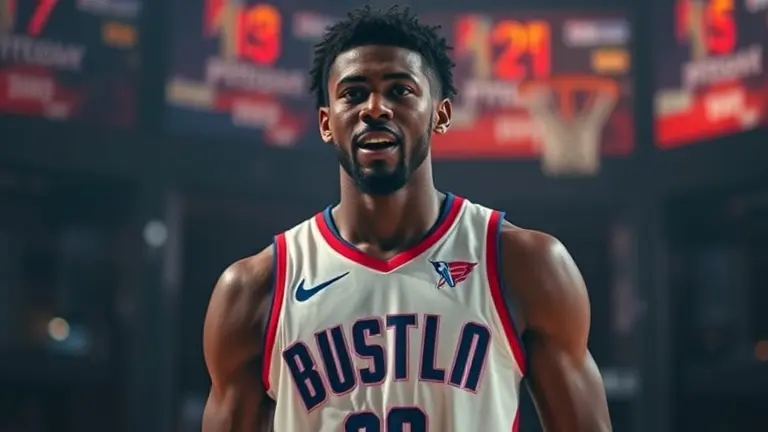
The NBA landscape shifted on the morning of June 26, 2026, when the Oklahoma City Thunder sent sharpshooting guard Isaiah Joe to the Detroit Pistons in a move that has ignited intense debate across the league. While the trade initially appears to be a standard transaction involving two future second-round picks, a deeper tactical analysis reveals a calculated move by both franchises. For Detroit, securing a high-efficiency perimeter weapon is a direct response to their offensive stagnation, whereas Oklahoma City’s decision reflects a strategic pivot in their long-term asset management.
Isaiah Joe, often recognized for his gravity-defying accuracy from beyond the arc, represents the specific type of spacing catalyst that modern offenses crave. In this deep dive, we will dissect Joe’s shooting zones, evaluate the true value of the compensation received, and project exactly how he transforms the Pistons’ rotation. Whether you are a die-hard fan or a basketball strategist, understanding the ‘why’ behind this deal is crucial to grasping the future trajectory of both rosters.
Breaking Down the Isaiah Joe Trade: Pistons Acquire Sharpshooter

On June 26, 2026, the NBA landscape shifted as the Detroit Pistons finalized a deal to acquire sharpshooting guard Isaiah Joe from the Oklahoma City Thunder. In exchange for the elite perimeter threat, the Pistons surrendered a package consisting of two future second-round draft picks. This transaction signals a clear intent from Detroit to bolster their floor-spacing capabilities as they look to transition from a developing squad to a legitimate contender in the Eastern Conference. By adding isaih joe to their backcourt, the Pistons gain a versatile weapon who has proven he can hit high-volume shots from beyond the arc while maintaining efficient percentages.
Trade Logistics and Roster Implications
The Isaiah Joe trade represents a calculated gamble for both franchises, reflecting their contrasting organizational priorities during this pivotal offseason. For Detroit, the acquisition addresses a critical need for depth, particularly in providing consistent spacing for their primary playmakers. The move is structured to integrate Joe seamlessly into a rotation that requires perimeter reliability.
- Pistons’ Tactical Advantage: Detroit secures a proven specialist who forces opposing defenses to respect the arc, creating more driving lanes for the team’s core.
- Thunder’s Strategic Pivot: By parting ways with Joe, Oklahoma City appears to be clearing roster space or reallocating assets for future flexibility, potentially preparing for more aggressive moves in the trade market.
- Asset Valuation: The inclusion of two second-round picks suggests a moderate valuation for the shooter, prioritizing draft capital for the Thunder while providing the Pistons with immediate, proven production rather than raw potential.
This move underscores the reality of the modern NBA, where elite “3-and-D” roles are highly coveted. As the offseason progresses, the impact of this deal will likely be measured by how effectively Joe helps the Pistons stabilize their shooting percentages and whether the Thunder leverage their newly acquired assets to pursue a higher-profile roster upgrade.
Elite Efficiency: Why Isaiah Joe’s Shooting Profile Matters
The Isaiah Joe trade represents a strategic shift for both franchises, but the primary narrative remains centered on Joe’s elite perimeter efficiency. As a sharpshooter, Joe provides immediate value that extends beyond raw scoring averages. Throughout his tenure with the Oklahoma City Thunder, he established himself as one of the most reliable catch-and-shoot threats in the NBA. His ability to maintain a high conversion rate—often hovering near the 40% mark—while under defensive pressure is what makes him a “gravity” asset. When Joe is on the court, opposing defenses cannot afford to collapse into the paint, effectively thinning out rim protection and creating additional driving lanes for his teammates.
Tactical Spacing and Perimeter Gravity
Joe’s skill set is a premium commodity for the Detroit Pistons, a team looking to optimize their offensive flow. His proficiency is rooted in three key areas:
- Quick-Trigger Release: Joe requires minimal space to launch, allowing him to capitalize on split-second defensive breakdowns.
- Catch-and-Shoot Reliability: He consistently demonstrates high efficiency in spot-up scenarios, making him the perfect complement to ball-dominant playmakers who need reliable targets on the perimeter.
- Floor Spacing Gravity: By drawing primary defenders to the arc, Joe forces opponents to respect his range, which naturally opens up the middle of the floor for high-percentage interior scoring.
While many analysts focus on his volume, the true value of isaih joe lies in his efficiency under duress. Even in high-leverage situations, his shooting mechanics remain consistent, providing a reliable pressure valve for any offensive scheme. By integrating a player with such specific, high-level utility, Detroit is clearly prioritizing floor spacing to complement their current roster composition. The addition of Joe ensures that regardless of the rotation, the Pistons now possess a legitimate threat that defenses must account for from the moment he checks into the game.
Asset Management: Evaluating the Return for Oklahoma City

The decision by the Oklahoma City Thunder to move isaih joe to the Detroit Pistons in exchange for two future second-round picks may appear puzzling at first glance, given his established role as a perimeter specialist. However, within the context of Sam Presti’s calculated long-term vision, this isaiah joe trade highlights the organization’s persistent focus on asset liquidity and roster optimization. By shedding a rotation player for draft capital, the Thunder are prioritizing the flexibility to maneuver in a crowded salary cap environment while continuing to consolidate their immense stockpile of picks for potential future trades.
Strategic Philosophy and Roster Balance
OKC’s front office operates on a philosophy that prioritizes the “next man up” mentality, often relying on internal development to replace production from outgoing veterans. With a young core already demanding significant extensions, the Thunder are likely managing their long-term tax liabilities. Losing Joe—an elite floor spacer—is a deliberate calculated risk. The logic here is two-fold:
- Cap Flexibility: Opening up roster spots and clearing salary allows the Thunder to be more aggressive in pursuing established stars or retaining their core group of ascending talent.
- Asset Currency: Second-round picks are highly liquid assets in the modern NBA. Whether used as sweeteners in larger deals or to select low-cost contributors on rookie-scale contracts, these picks provide the Thunder with “change” to finalize future high-stakes transactions.
The Trade-Off of Elite Shooting
While fans may lament the loss of Joe’s gravity, the Thunder’s strategy suggests they believe they can replicate his efficiency through their remaining depth or upcoming draft acquisitions. The isaiah joe trade serves as a reminder that in Oklahoma City’s ecosystem, no role player is considered “untouchable” if the opportunity arises to bolster their war chest. By offloading Joe now, the front office is betting that the incremental value of two future picks outweighs the immediate, albeit replaceable, perimeter shooting he provided during the regular season.
Detroit’s New Look: Projecting Joe’s Role in the Pistons’ Rotation

The acquisition of Isaiah Joe marks a significant tactical shift for the Detroit Pistons, who have prioritized perimeter gravity to balance their internal development roster. As an elite floor spacer, Joe is projected to slide seamlessly into the rotation as a primary wing option, likely operating as the designated “gravity” threat alongside the team’s primary ball-handlers. By adding Joe, Detroit addresses a perennial weakness in outside shooting efficiency, effectively forcing opposing defenses to stretch their coverage. This shift in personnel suggests that the coaching staff intends to prioritize “4-out” or “5-out” sets, creating necessary lanes for slashing wings and interior finishers to operate without encountering consistent double-teams.
Tactical Synergy and Playbook Integration
Joe’s impact on the Pistons’ rotation extends beyond catch-and-shoot opportunities. His movement-shooting profile requires sophisticated defensive rotations from opponents, which will fundamentally alter the Detroit playbook. When considering the Isaiah Joe trade, analysts note that his presence provides a safety valve for high-usage creators who previously lacked a reliable outlet when facing aggressive blitzing schemes.
Key elements of his projected role include:
- Transition Spacing: Acting as the trailing threat in fast-break scenarios to force long-distance closeouts.
- DHO Utility: Utilizing his high basketball IQ in dribble-handoff actions to neutralize defenders who sag off the perimeter.
- Closing Lineups: Securing minutes in crunch-time scenarios where defensive focus is narrowed, allowing Joe to act as a decoy or secondary scorer.
By integrating isaih joe into the second unit or as a starter, the Pistons are effectively diversifying their offensive threat level. Evidence suggests that the team is moving away from stagnant, isolation-heavy sets toward a more fluid, motion-based system. His ability to hit deep triples at an elite clip provides the necessary spacing to maximize the efficiency of the core roster, effectively raising the ceiling for the upcoming season’s offensive output.
Elevating Your Basketball IQ in a Shifting League
The acquisition of Isaiah Joe is a clear signal that the Detroit Pistons are prioritizing floor spacing to unlock their core rotation, while the Oklahoma City Thunder have successfully liquidated a high-value asset for future flexibility. Evaluating this trade requires moving past surface-level headlines to understand the underlying geometry of the court and the cold arithmetic of the salary cap. It is a masterclass in roster construction, provided you have the clarity to see the tactical layers beneath the trade.
Just as the Pistons rely on Joe to sharpen their perimeter offense, you need to sharpen your own cognitive focus to master the nuances of these complex roster moves. Processing advanced shooting metrics, trade value ratios, and long-term salary cap implications is a demanding cognitive exercise that requires peak mental efficiency. This is where The Brain Song becomes an essential tool for the serious basketball strategist.
By integrating a neuroscience-based cognitive routine into your daily intake of sports data, you can significantly enhance your focus and learning capacity. Treat your mind like the high-performance engine of an NBA front office; give it the precision tools it needs to synthesize complex information instantly. Optimize your analytical edge while you review the stats—try this 12-minute daily routine to sharpen your focus.
 Optimize your analytical edge while you review the stats—try this 12-minute daily routine to sharpen your focus.Yes, I Want This Now!