

On the evening of Friday, June 26, 2026, the skyline of Beijing was disrupted by a harrowing aviation incident as a light sport aircraft, identified as a Sunward SA60L Aurora, collided with the iconic CITIC Tower. Standing at a staggering 1,732 feet, the ‘China Zun’ is the tallest skyscraper in the city, and the impact at approximately 6:00 PM local time has sent shockwaves through the capital. As debris showered onto the streets below, local authorities moved swiftly to seal off the Central Business District, prioritizing the safety of citizens while launching an immediate investigation into the structural consequences of this collision.
While the world watches for verified updates regarding the pilot and the technical integrity of the tower, the event serves as a stark reminder of the precision required when managing complex systems. In the face of uncertainty, the public is rightfully demanding answers: Was this a mechanical failure, or a pilot error? How did such a small aircraft breach the airspace of one of the most protected architectural landmarks in the world? We are tracking official updates from Chinese state media to provide you with the most accurate, fact-based breakdown of this unfolding crisis, distinguishing reality from the flood of social media speculation.
Breaking: Light Sport Aircraft Collides with Beijing’s CITIC Tower
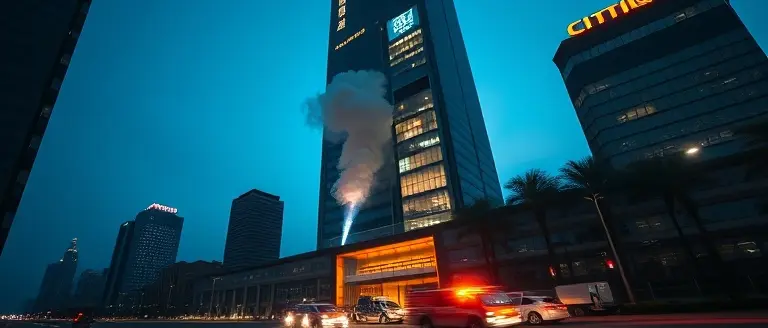
On Friday, June 26, 2026, a significant aerial incident occurred in the heart of the Chinese capital when a light sport aircraft, identified as a Sunward SA60L Aurora, collided with the CITIC Tower. The incident took place at approximately 6:00 PM local time, sending shockwaves through the city’s central business district. Known locally as “China Zun,” the CITIC Tower is the tallest skyscraper in Beijing, soaring to an impressive 1,732 feet across 109 stories. The impact caused immediate, visible structural damage to the building’s exterior facade, triggering an urgent emergency response.
Immediate Aftermath and Safety Protocols
Following the collision, eyewitnesses reported debris raining down onto the streets surrounding the skyscraper, creating a hazardous environment for pedestrians and commuters. Local authorities acted swiftly to mitigate risk to the public, sealing off a large perimeter around the impact site to prevent injury and facilitate a thorough investigation. Evacuation procedures were initiated for occupants within the affected sections of the tower as emergency services secured the scene. Current reports indicate the following key developments:
- Aircraft Details: The Sunward SA60L Aurora, a model typically utilized for light sport aviation, was confirmed as the vehicle involved in the crash.
- Structural Impact: While the facade suffered clear damage, official assessments regarding the broader structural integrity of the CITIC Tower remain ongoing.
- Public Safety: Police and emergency responders have established cordons, with traffic diverted away from the immediate area to allow rescue equipment access.
- Ongoing Investigation: Authorities are currently reviewing flight logs and radar data to determine how a light sport aircraft bypassed standard flight-restriction protocols in such a heavily monitored urban corridor.
As the situation remains fluid, officials are prioritizing the containment of the site and the collection of forensic evidence. While viral footage has circulated widely across social media, the public is encouraged to rely on updates from verified state media to distinguish confirmed facts from speculative reports regarding the cause of the beijing plane crash. Investigations into whether the incident was the result of mechanical failure or pilot error are expected to follow as the investigation proceeds.
What We Know So Far: Verified Facts vs. Social Media Speculation

In the wake of the beijing plane crash involving a Sunward SA60L Aurora light sport aircraft, the information environment has been dominated by fragmented eyewitness footage. As this situation develops near the CITIC Tower, it is vital to distinguish between confirmed reports from official state sources and the speculative narratives circulating on social media platforms. Authorities have cordoned off the area surrounding China’s tallest skyscraper to facilitate an investigation, and until an official forensic report is released, much of the digital chatter remains unverified.
Confirmed Details Regarding the Incident
Based on the latest briefings from local authorities and state-aligned reporting, the following facts have been established:
- Time and Location: The collision occurred on Friday, June 26, 2026, at approximately 6:00 PM local time at the CITIC Tower (China Zun) in the heart of the Beijing central business district.
- Aircraft Type: The vehicle involved has been identified as a Sunward SA60L Aurora, a light sport aircraft.
- Emergency Response: Local police and emergency services have successfully sealed off the immediate vicinity to address structural debris hazards and conduct a site survey.
- Casualties: As of the latest update, official sources have not released a verified casualty count, and the status of the pilot remains a subject of the ongoing investigation.
- Structural Status: While there is visible damage to the facade of the CITIC Tower, official structural integrity reports are currently pending assessment by government engineers.
The public is strongly cautioned against relying on unverified social media content, which often lacks context regarding flight paths or mechanical data. Speculation regarding the pilot’s intent or potential mechanical failures should be avoided until investigators release a formal summary. Relying on official Chinese state media updates is the only reliable way to monitor the status of this unfolding incident as investigations into the flight protocols of the beijing skyline continue.
The CITIC Tower: Understanding the Scale and Impact

Standing at a staggering 1,732 feet (528 meters), the CITIC Tower, colloquially known as China Zun, dominates the Beijing skyline as the city’s tallest skyscraper. Spanning 109 stories, the building is a marvel of modern engineering, designed to withstand intense seismic activity and high-altitude wind loads characteristic of the capital’s central business district. When a Sunward SA60L Aurora light sport aircraft collided with this structure on June 26, 2026, the contrast between the massive, steel-reinforced skyscraper and the lightweight, composite-material aircraft became a primary focal point for structural analysts and emergency response teams.
Structural Integrity and Impact Analysis
The impact event highlights significant questions regarding the vulnerability of ultra-high-rise landmarks to low-altitude aerial traffic. Because the CITIC Tower features a tapered “Zun” design—modeled after an ancient Chinese ritual vessel—its exterior facade consists of a complex curtain wall system. While the total mass of a light sport aircraft is negligible compared to the building’s enormous structural skeleton, the kinetic energy of such a collision can still result in:
- Facade Damage: Localized breakage of glass panels and metal cladding, leading to the debris fallout observed by eyewitnesses.
- Structural Redundancy: The building’s core-outrigger system is designed for extreme load-bearing; localized exterior impacts generally do not threaten the overall stability of the primary vertical columns.
- Safety Protocols: The incident has prompted an immediate review of flight-restriction protocols over the heart of Beijing, where air corridors are typically strictly regulated for commercial and state traffic.
Engineering experts emphasize that the Sunward SA60L Aurora, being a light aircraft, lacks the fuel load or structural mass necessary to compromise the skyscraper’s core. However, the event serves as a stark reminder of the security risks associated with light aviation in densely populated urban centers. Investigations are currently prioritizing the analysis of the impact point to determine if the structural damage remains superficial or if internal safety systems were compromised during the collision.
Ongoing Emergency Response and Investigation Protocols

Following the beijing plane crash involving the Sunward SA60L Aurora, local authorities have initiated a comprehensive emergency response to secure the site and ensure public safety. Immediately following the impact at the CITIC Tower, security forces cordoned off the central business district, effectively halting traffic and pedestrian access within a multi-block radius. Emergency services, including specialized fire and rescue teams, were deployed to the skyscraper to manage debris cleanup and conduct orderly evacuations of the 109-story structure. Current protocols prioritize clearing the surrounding streets of scattered wreckage to mitigate risks to those on the ground while structural engineers assess the facade of the landmark building for potential stability issues.
Investigation Procedures and Wreckage Analysis
As the area remains under lockdown, Chinese authorities have launched an extensive investigation into the technical and circumstantial factors surrounding the event. Investigators are currently focused on several critical tasks:
- Recovery of Flight Data: Specialized teams are scouring the impact site to locate the flight data recorder and any remaining avionics from the Sunward SA60L Aurora.
- Wreckage Examination: Technical experts are analyzing the physical remains of the aircraft to determine if the incident was caused by mechanical failure, pilot error, or external environmental factors.
- Regulatory Audit: Officials are reviewing flight path logs and existing security protocols governing Beijing’s restricted airspace to understand how the light sport aircraft entered such a sensitive zone.
- Structural Integrity Assessment: Independent engineering firms are working alongside city officials to perform non-destructive testing on the CITIC Tower to confirm that the collision did not compromise the skyscraper’s load-bearing capacity.
While speculation regarding the cause of the incident remains widespread on social media, officials maintain that no conclusions will be drawn until a full forensic review of the wreckage and ground surveillance data is completed. Public updates are expected as authorities reconcile the timeline of the pilot’s flight path with standard municipal aviation regulations.
Prioritizing Resilience and Internal Maintenance
As investigators continue to assess the structural stability of the CITIC Tower following this impact, the importance of proactive maintenance and precision becomes clear. Just as the engineers of the China Zun rely on robust systems to ensure the landmark’s longevity, maintaining your body’s essential internal systems is critical for your own quality of life and sustained vitality.
This philosophy of precision is why we turn our attention to the internal health support found in Protoflow. Formulated with high-quality ingredients, including the time-honored tradition of Chinese Ginseng, Protoflow serves as a proactive tool for your personal wellness. By focusing on deep-level internal support, this supplement mirrors the same dedication to structural integrity and performance that defines architectural marvels like the CITIC Tower. Embracing a proactive approach to your health is the most effective way to ensure that your internal systems continue to function at their peak, no matter what external pressures you face.
The journey toward long-term wellness requires reliable tools and a commitment to quality maintenance. Don’t wait for a sign that your body needs attention; choose a path of proactive care today. Experience the difference that premium herbal precision can make in your daily life.
 Discover how the herbal precision found in Protoflow supports your body’s essential systems today.Transform My Life Today