
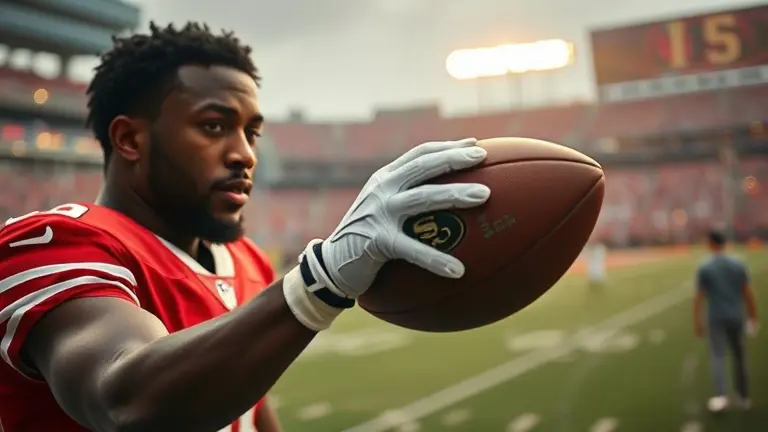
In the high-stakes theater of the National Football League, professional leverage is a currency as volatile as it is valuable. Since 2024, the situation surrounding Brandon Aiyuk has devolved from standard contract negotiations into a cautionary tale of optics and attrition. Currently sidelined on the ‘reserve/left squad’ list, Aiyuk’s recent social media activity—flashing cash and public displays involving Washington Commanders iconography—has created a narrative of instability that threatens to overshadow his on-field production. While the mainstream sports media remains fixated on the superficial drama of these digital outbursts, the reality is far more clinical: Aiyuk is navigating a complex web of league bylaws, salary cap constraints, and the harsh, objective assessment of front offices that view his recent behavior as a liability.
To understand Aiyuk’s current standing, one must look past the headlines and into the granular details of his contractual status. This analysis deconstructs the legal ramifications of his ‘reserve/left squad’ designation, the prohibitive hurdles to a trade, and the potential for tampering allegations that could further compromise his market value. As we peel back the layers of this professional standoff, it becomes clear that in the modern NFL, cognitive resilience and strategic decision-making are as vital as physical prowess. When the pressure mounts, the ability to maintain clarity—rather than succumbing to the impulse of the moment—is the defining trait that separates elite, long-term assets from those whose careers stall under the weight of their own distractions.
The Aiyuk Standoff: Analyzing the ‘Reserve/Left Squad’ Reality
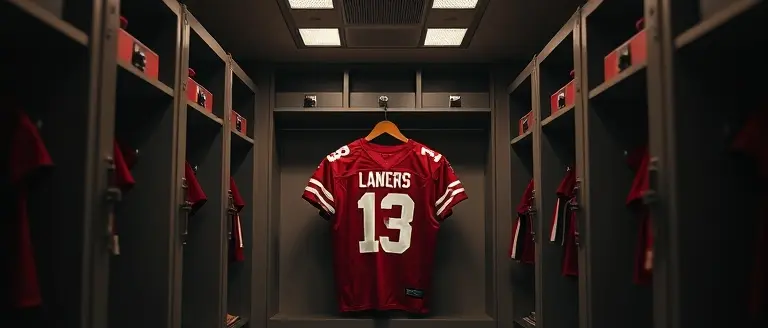
As of June 2026, the situation surrounding Brandon Aiyuk has devolved from a standard contract negotiation into a complex procedural stalemate. While social media narratives focus on his erratic posts—including viral clips featuring Washington Commanders branding—the actual legal reality is governed by the NFL’s ‘reserve/left squad’ designation. This status, effectively a limbo for players who fail to report or depart from team activities without authorization, strips the player of his immediate leverage. Because Aiyuk has not filed the necessary paperwork to officially exit this list, he remains technically tethered to the San Francisco 49ers, unable to seek employment elsewhere or force a trade under standard free agency protocols.
The disconnect between his public optics and his contractual reality is stark. NFL analysts observe that his recent behavior has created a significant “distraction tax,” drastically lowering his diminishing trade value. From a front-office perspective, acquiring a player who is currently non-compliant with team protocols represents a high-risk investment.
The Implications of the ‘Reserve/Left Squad’ Status
To understand why a resolution remains stalled, one must look at the specific mechanisms of his current standing:
- Contractual Freeze: Being on the ‘reserve/left squad’ list prevents the 49ers from having to pay Aiyuk his salary, while simultaneously holding his rights, effectively freezing the clock on his contract.
- Trade Deterrence: Potential suitors like the Commanders must weigh whether the player’s off-field unpredictability outweighs his on-field production. Teams are generally risk-averse regarding locker room stability.
- Tampering Thresholds: The speculation surrounding potential tampering charges highlights the sensitivity of the situation; however, internal league rules require more than just social media posturing to constitute an actionable violation, leaving Aiyuk in a precarious legal gray area that benefits neither his career nor his reputation.
Ultimately, until Aiyuk reconciles his professional obligations with the 49ers’ front office, he remains an asset in a state of suspended animation. The “lighting money on fire” rhetoric seen in sports media reflects the reality that his current path is actively devaluing his future earning potential in the NFL marketplace.
Leverage and Liabilities: Why Market Value Is Plummeting

In the modern NFL, Brandon Aiyuk finds himself at the center of a cautionary tale regarding how off-field optics directly correlate with professional valuation. While Aiyuk’s on-field production previously justified significant compensation, his current stint on the ‘reserve/left squad’ list combined with erratic social media activity has created a toxic perception for potential trade partners. From a front-office perspective, a player is not merely a collection of physical skills; they are a financial and cultural asset. When a player’s brand becomes defined by public displays of instability, the character risk becomes too high to ignore. General managers are increasingly wary of surrendering premium draft capital for a receiver who, despite his elite route-running and athleticism, appears to be a high-maintenance professional.
The Impact of Behavioral Optics on Trade Capital
The hesitation among league decision-makers stems from the realization that Aiyuk’s current behavior functions as a liability rather than leverage. By projecting a lack of alignment with team interests, he has inadvertently signaled that he may be a disruptive presence in any locker room. Key factors impacting his diminishing trade value include:
- Cultural Fit Concerns: Organizations prioritize team-first mentalities; Aiyuk’s recent posts, which involve flaunting wealth and public flirtations with other franchises, suggest a potential detachment from organizational standards.
- Tampering and Legal Risks: The speculation surrounding his actions and the potential for tampering charges add a layer of legal complexity that front offices are loath to manage during high-stakes negotiations.
- Resource Allocation: Trading for a player requires massive cap space commitments. Teams are re-evaluating whether the financial investment is worth the risk of an unproven commitment to their specific system.
Essentially, Aiyuk is currently “lighting money on fire” in terms of his long-term contract prospects. When a player’s social media presence necessitates a damage-control plan before the season even begins, teams inevitably pivot toward more stable, less volatile assets. For Aiyuk to regain his status as a marquee commodity, he must move beyond the social media posturing and demonstrate a return to professional focus that aligns with the realities of being a franchise-caliber receiver. As it stands, the market has correctly identified that his volatility is a risk that currently outweighs his upside.
The Salary Cap Chessboard: Why a Trade Remains Unlikely

While social media speculation suggests an imminent departure for Brandon Aiyuk, the fiscal reality dictated by the NFL’s Collective Bargaining Agreement (CBA) tells a much different story. For the San Francisco 49ers, trading a player currently on the reserve/left squad list is far more than a simple roster transaction; it is a complex exercise in managing dead money and accelerated cap hits. Because Aiyuk’s contract remains active despite his absence, the 49ers are constrained by the prorated signing bonus money that would immediately accelerate onto their cap if a trade were executed before the designated trigger dates. For a team perpetually pushing against the ceiling to maintain their championship window, absorbing a massive dead-cap penalty for a disgruntled asset is statistically irresponsible.
Furthermore, the “armchair-GM” narrative surrounding a potential move to the Washington Commanders ignores the prerequisite of clearing sufficient salary cap space. Acquiring a high-value wide receiver requires not only the draft capital to satisfy San Francisco but also the immediate financial bandwidth to absorb or restructure a significant contract. Under the current NFL cap structure, potential suitors must weigh several prohibitive factors:
- Dead Money Hazards: The 49ers would incur a significant salary cap charge, effectively “lighting money on fire” without receiving corresponding on-field production.
- Contractual Leverage: Any team trading for Aiyuk would inherit his existing baggage, with limited leverage to negotiate a long-term extension before proving his commitment to the organization.
- The ‘Reserve/Left Squad’ Complication: Until Aiyuk files the necessary paperwork to reinstate his status, he remains a contractually locked asset, complicating the logistics of any potential trade deadline or acquisition window.
The market value for Aiyuk is currently hampered by behavioral optics, making it difficult for the 49ers to justify a high-end trade return. When balancing the financial penalties against the diminished reliability of the player, the path of least resistance remains the status quo. Until the salary cap math aligns, the trade rumors surrounding Aiyuk should be viewed as speculative noise rather than a grounded, executive-level strategy.
The Cost of Distraction: Examining the ‘Lighting Money on Fire’ Trend

The current situation surrounding Brandon Aiyuk has transcended typical contract negotiations, moving into the precarious territory of professional self-sabotage. By remaining on the reserve/left squad list, Aiyuk has effectively frozen his career trajectory, a move that carries significant long-term risks. Historical precedents in the NFL demonstrate that front offices prioritize “locker room stability” alongside physical talent; players who openly antagonize their organizations through public theatrics, such as Aiyuk’s social media displays involving unauthorized team imagery and performative displays of wealth, often find their market value aggressively corrected by skeptical General Managers.
The Erosion of Leverage and Reputation
While Aiyuk may believe his erratic behavior provides leverage, the cold reality of NFL business suggests the opposite. The “lighting money on fire” narrative—a term echoed by league insiders—reflects a growing sentiment that the wide receiver has become an unnecessary liability. When a player’s brand becomes defined by off-field distractions rather than on-field production, their utility to a potential suitor, like the Washington Commanders, diminishes significantly. Potential trade partners are not just evaluating a player’s route-running; they are conducting a risk-assessment on his commitment to professional standards.
Key factors currently jeopardizing Aiyuk’s future include:
- The “Reserve/Left Squad” Stigma: Remaining inactive without filing formal exit paperwork suggests a lack of professional clarity, which complicates contract renegotiations.
- Institutional Distrust: Teams are increasingly wary of “high-maintenance” talent, fearing that erratic behavior in San Francisco will repeat elsewhere.
- Diminishing Trade Interest: As the 2026 season progresses, the window for a high-value trade closes, leaving the player with fewer options and a tarnished reputation.
To salvage his career, Aiyuk must pivot from his current path of public confrontation to one of quiet compliance. However, if the current behavior persists, he risks becoming an cautionary tale of how individual branding, when mismanaged, can effectively end a productive career before it reaches its natural conclusion. The San Francisco 49ers hold the contractual cards, and currently, there is little incentive for them to reward a player who has publicly signaled a desire to exit while simultaneously complicating his own tradeability.
Mastering the Mental Game Under Pressure
The saga of Brandon Aiyuk serves as a stark reminder that talent alone is insufficient to sustain a career in the NFL; it requires a sophisticated level of psychological discipline to navigate the immense scrutiny of professional sports. When athletes allow the noise of social media or the frustrations of contract negotiations to dictate their actions, they aren’t just risking their reputation—they are actively depreciating their professional value. The path forward for any high-performer, whether on the gridiron or in the boardroom, requires a grounded, rational approach to high-stakes environments, ensuring that impulses remain subordinate to long-term goals.
This is where the distinction between reactionary behavior and elite strategy becomes clear. If you look at the volatility surrounding Aiyuk, it is easy to see how mental fog and emotional reactivity can derail even the most promising trajectories. To avoid this pitfall and cultivate the same level of cognitive clarity required by top-tier professionals, you need a system designed to sharpen your focus. The Brain Song offers exactly that: a neuroscience-based solution specifically engineered to help you cut through the static of daily stress, optimize your executive function, and maintain your composure when the pressure is at its absolute peak.
By integrating this auditory conditioning into your daily routine, you move beyond the erratic decision-making that plagues so many careers and enter a state of sustained, high-level performance. You don’t have to be a professional athlete to appreciate the value of a clear, focused mind. It is time to treat your cognitive health with the same rigor you apply to your professional ambitions, ensuring that when the moment of truth arrives, your mind is your greatest asset, not your biggest liability.
 Achieve the same level of cognitive clarity as an elite strategist: start your daily 12-minute focus routine here.Transform My Mental Clarity Today!