

When Mirra Andreeva stepped onto the lush grass of the Bad Homburg Open, the tennis world was still buzzing from her electric performance at Roland Garros. As one of the most promising stars on the WTA tour, Andreeva entered the grass-court season with massive momentum, yet her swift 6-3, 6-4 exit at the hands of Ekaterina sent shockwaves through the tennis community. Is this premature departure merely a byproduct of the grueling transition from the heavy clay of Paris to the rapid, unpredictable surface of grass, or is it a sign of underlying vulnerability heading into the 2026 Wimbledon championships?
The shift from clay to grass is notoriously unforgiving, demanding not just a change in footwork and mechanics, but a profound recalibration of the mind. As we assess Andreeva’s readiness for Wimbledon, it is clear that pure physical talent is no longer the only variable at play. The pressure to maintain top-tier performance while pivoting between Grand Slam surfaces creates immense mental fatigue. To understand whether this is a minor setback or a warning sign, we must look beyond the scoreline and examine the cognitive endurance required to survive the high-stakes intensity of the professional grass court season.
Mirra Andreeva’s Bad Homburg Exit: A Grass Court Reality Check

The recent 6-3, 6-4 defeat of Mirra Andreeva at the Bad Homburg Open serves as a stark reminder of the volatile nature of the WTA grass court season 2026. Following her sensational performance at Roland Garros, many observers expected the young star to carry her clay-court momentum into the grass swing. However, this exit to Ekaterina highlights the distinct mechanical adjustments required for the fastest surface in tennis. While the scoreline reflects a decisive loss, viewing it as a collapse ignores the nuanced difficulty of shifting from the sliding, high-bouncing surface of red clay to the low-skidding, rapid-fire reality of grass courts.
Tactical Adjustments and Wimbledon Readiness
The transition to grass demands a reduction in backswing and an increased reliance on reaction time, areas where even the most talented teenagers often struggle during their early professional years. Mirra Andreeva’s Wimbledon 2026 prospects remain high, but this loss provides a necessary data point for her coaching staff to refine her movement patterns. Key factors in this transition include:
- Surface Mechanics: Grass requires lower center-of-gravity movement, which often contrasts with the heavy, topspin-reliant game cultivated during the European clay season.
- Pressure Management: As a current leader in the WTA race, Andreeva is now a target. Opponents at events like the Bad Homburg Open are playing with increased intensity, knowing that a victory over the season’s breakout star carries significant weight.
- Shortened Preparation: With limited time between the French Open and Wimbledon, finding a rhythm on grass is an objective hurdle for any player, regardless of recent success.
Rather than signaling a decline, this setback serves as a vital ‘reality check’ that underscores the steep learning curve of the professional tour. Andreeva Bad Homburg analysis suggests that while her tactical execution faced friction, her baseline consistency remains elite. If she utilizes the time before the Championships to adjust her footwork and shorten her stroke prep, she remains a formidable contender. For Andreeva, this match should be viewed as a tactical reset rather than a departure from her trajectory as a future Grand Slam champion.
Analyzing Andreeva’s Transition: Clay Dominance to Grass Vulnerability

The recent exit of Mirra Andreeva at the Bad Homburg Open serves as a stark reminder of the technical chasm between clay-court mastery and the specialized demands of the WTA grass court season 2026. Andreeva, who recently captivated the tennis world with her Roland Garros success, relies heavily on a patient, baseline-grinding style that thrives on the predictable, higher-bouncing surface of red clay. On grass, however, the lower bounce and increased pace require a fundamental shift in kinetic chain mechanics. While her slide-heavy movement is an asset on dirt, it often proves detrimental on slick grass courts, where shortened, explosive footwork is paramount to maintaining balance during rapid-fire exchanges.
Tactical Adjustments for Wimbledon
To be a legitimate threat at the 2026 Wimbledon championships, Andreeva must evolve her tactical approach. Currently, her defensive, behind-the-baseline positioning leaves her vulnerable to the aggressive net-rushing and short-angled volleys that characterize grass-court specialists. Key areas for technical refinement include:
- Footwork Efficiency: Transitioning from the extended, elongated strides used on clay to the short, choppy steps required to navigate the uneven grass surface.
- Court Positioning: Moving her starting point closer to the baseline to take the ball on the rise, thereby neutralizing opponents’ pace rather than yielding ground.
- Point Construction: Incorporating more variety—specifically slices and flatter groundstrokes—to keep the ball low, making it exponentially harder for opponents to generate depth.
While some analysts point to a ‘post-Roland Garros slump,’ a deeper Andreeva Bad Homburg analysis suggests this is a predictable hurdle for a young player transitioning to a faster surface. The lack of preparation time between Paris and the grass swing is a significant factor, but Andreeva’s ability to shorten her backswing and adapt her serve for surface-specific skidding will ultimately dictate her Mirra Andreeva Wimbledon 2026 ceiling. Her current top standing in the WTA race remains impressive, but sustained success at SW19 will require immediate adaptation to the nuances of lawn tennis.
Mirra Andreeva Wimbledon 2026: Setting Expectations for the Draw
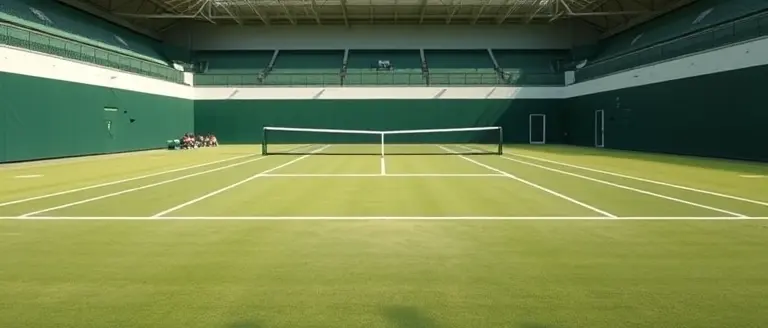
The recent exit at the Bad Homburg Open serves as a vital reality check for Mirra Andreeva as she pivots her focus toward the Wimbledon 2026 championships. While her early departure might alarm casual observers, seasoned analysts view this outcome through the lens of transition mechanics. Moving from the high-bouncing, patient rallies of Roland Garros to the low-skidding, rapid-fire surface of grass presents a steep learning curve for any young professional. The question facing her team is not one of talent, but of tactical adjustment—specifically, shortening her backswing and adapting her footwork to handle the unpredictable nature of grass-court tennis.
Evaluating Her Wimbledon Momentum
Despite holding the top spot in the WTA race, Andreeva faces intensified scrutiny. The 6-3, 6-4 loss suggests that her clay-court rhythm remains deeply ingrained, a common hurdle for players attempting back-to-back Grand Slam transitions. However, this setback should not discount her as a dark horse contender. Experts suggest that a early-round exit provides a necessary “reset” period, allowing her coaching staff to prioritize grass-court specific drills without the fatigue of a deep tournament run.
Consider the following factors impacting her Wimbledon draw:
- Seeding Security: Her consistent performance throughout the 2026 season ensures a high seed, likely shielding her from top-tier threats in the opening rounds.
- Psychological Resilience: Her ability to rebound after high-pressure situations—a hallmark of her recent breakthrough—will be tested as she looks to prove her versatility.
- Surface Adaptation: Analysts are closely monitoring her movement; efficiency on the baseline will be the primary indicator of her potential to navigate the second week of the tournament.
Ultimately, while the Andreeva Bad Homburg analysis reveals a need for refinement, it is premature to categorize this as a slump. Her trajectory suggests she remains one of the most formidable threats on tour, provided she successfully calibrates her game to the specific demands of the WTA grass court season 2026.
The Road Ahead: Adjusting Tactics for the All England Club

The surprising exit of Mirra Andreeva at the Bad Homburg Open serves as a vital diagnostic tool for her coaching staff as they pivot toward the Wimbledon 2026 championships. While her clay-court prowess at Roland Garros was built on heavy topspin and grueling baseline rallies, the WTA grass court season 2026 demands a radical departure from these mechanical habits. On the slick, low-bouncing surfaces of the All England Club, the luxury of time Andreeva enjoys on clay vanishes. Her team must now prioritize shortening her swing path and lowering her center of gravity to manage the unpredictable nature of grass-court trajectories.
Strategic Shifts for Grass Court Success
To avoid a similar fate in London, Andreeva’s tactical evolution requires specific adjustments:
- Serve-and-Return Rhythm: She must emphasize a flatter, more penetrating serve that minimizes setup time for opponents, while focusing on aggressive, short-swing returns to neutralize big servers.
- Tactical Mental Shifts: Grass requires a “first-strike” mentality. Andreeva must shift away from the extended cat-and-mouse rallies that defined her clay season and instead prioritize dictating points within the first three to four shots.
- Net Transitions: Incorporating deliberate, high-percentage forays to the net will be essential to shorten points and put pressure on seasoned grass-court veterans.
This early-season setback at Bad Homburg should be viewed not as a failure, but as a necessary recalibration. By identifying these limitations now, Andreeva gains the rare opportunity to refine her footwork and tactical depth before the stakes reach their peak at Wimbledon. If she can successfully translate her immense baseline talent into the more urgent, aggressive style required on grass, she remains a formidable candidate for the title. Her ability to synthesize this lesson will ultimately define her readiness for the rigorous challenges ahead.
Sharpening the Mind for Championship Performance
While mechanical adjustments are essential for mastering the slippery bounce of grass, the difference between a Grand Slam contender and a early-round exit often lies in split-second focus. Andreeva’s performance at the Bad Homburg Open highlights the universal struggle of maintaining elite mental acuity during the chaotic, high-pressure cycles of a professional tennis season. When the pace of play accelerates and the stakes reach a fever pitch at Wimbledon, the player who can maintain internal clarity under external pressure is the one who ultimately holds the trophy.
Elite athletes are increasingly turning to advanced cognitive recovery tools to reset their mental states between major tournaments, ensuring that their decision-making remains sharp even when physical fatigue sets in. The Brain Song is a scientifically backed, non-invasive neuro-auditory solution specifically designed to optimize this mental clarity. By integrating this 12-minute routine into your preparation, you are not just relaxing; you are sharpening your cognitive endurance and training your brain to stay focused during high-pressure situations, mirroring the tactical edge top-tier pros utilize to stay ahead of the field.
Your journey toward peak performance—whether on the court or in your personal goals—depends on your ability to cultivate consistent mental speed and presence. Don’t leave your performance to chance when you can scientifically enhance your focus. Take control of your mental environment today and prepare yourself to handle the pressure with ease and precision.
 Optimize your own cognitive endurance and maintain peak focus by trying the 12-minute Brain Song routine today.Yes, I Want This Now!