
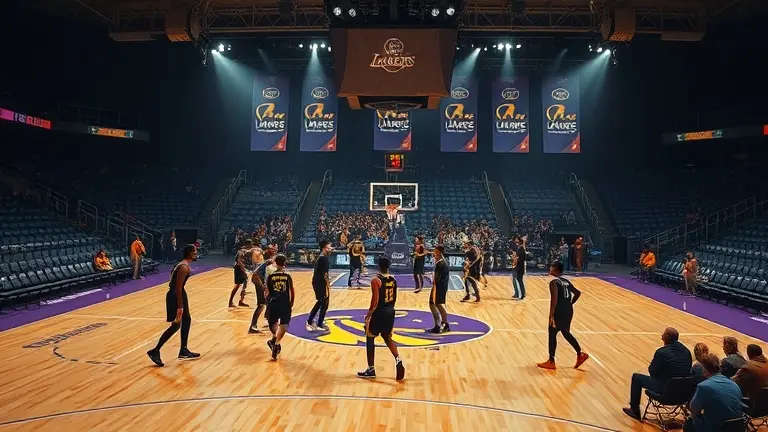
The 2026 NBA offseason has transformed Los Angeles into the epicenter of professional basketball, yet the frantic pace of the news cycle often obscures the underlying mechanics of the franchise. Between the strategic selection of Cameron Carr with the 24th pick and the polarizing decision to lock Austin Reaves into a four-year, $185 million maximum contract extension, the Lakers are signaling a definitive path forward. This is not merely a collection of personnel moves; it is a complex financial architecture designed to navigate a tightening salary cap while maintaining competitive relevance in a volatile Western Conference landscape.
For the dedicated fan, the sheer volume of salary-cap implications and roster-composition theories can feel overwhelming, especially when rumors constantly threaten to eclipse the cold, hard data. To truly understand whether the Lakers are engineering a methodical re-tooling phase or masking a deeper rebuild, one must move beyond the headlines and examine the long-term competitive window. Just as the Lakers front office must maintain extreme mental precision to navigate these complex salary cap restrictions, you need your full cognitive bandwidth to cut through the noise and understand the true impact of these moves.
A Pivotal 48 Hours: The Lakers’ 2026 Offseason Shakeup

The Los Angeles Lakers have set an aggressive tone for the 2026 NBA offseason, executing a series of high-stakes maneuvers that aim to redefine the franchise’s trajectory. Within a whirlwind 48-hour window, the front office demonstrated a clear intent to balance immediate competitiveness with a fresh infusion of young talent. By securing the 24th overall pick in a trade with the New York Knicks, the team successfully acquired wing Cameron Carr. This move signals a strategic shift toward bolstering perimeter depth and versatility, addressing a primary area of concern that plagued the roster throughout the previous campaign.
Financial Commitment and Strategic Re-Tooling
Simultaneously, the Lakers finalized a major four-year, $185 million maximum contract extension for Austin Reaves, a decision that has sparked significant debate across the league. While the financial commitment is substantial, the organization’s willingness to lock in Reaves suggests a long-term belief in his role as a foundational piece. However, this level of investment invites scrutiny regarding the team’s future salary cap flexibility and the expectation for Reaves to elevate his defensive consistency.
Key takeaways from this rapid roster evolution include:
- The Cameron Carr Factor: Utilizing draft capital to land a high-ceiling wing indicates a prioritization of player development to complement the current core.
- Salary Cap Implications: The $185 million extension creates a rigid financial framework, requiring the Lakers to hit on their mid-to-minimum contract signings to fill out the remaining roster spots.
- The “Re-tooling” Mandate: Rather than opting for a total rebuild, the Lakers are clearly attempting to navigate a competitive window that maximizes remaining talent while mitigating age-related regression.
As the team moves into the later rounds of the draft and prepares for free agency, the synergy between the 2026 NBA Draft acquisitions and the heavy financial investment in veterans like Reaves will ultimately determine whether this offseason results in a legitimate title push or a complex transition phase for one of the NBA’s most scrutinized franchises.
The Financial Math: Decoding the Austin Reaves Extension

The recent confirmation of Austin Reaves securing a four-year, $185 million maximum contract extension with the Los Angeles Lakers marks a pivotal shift in the organization’s financial architecture. By committing an average annual value of $46.25 million, the front office has effectively signaled that Reaves is considered a cornerstone piece of the franchise’s post-dynasty transition. From a salary-cap perspective, this massive investment locks the Lakers into a high-cost payroll, leaving minimal flexibility under the league’s second-tax apron. While the move ensures continuity for a key rotation player, it necessitates a rigorous analysis of whether his statistical output—specifically his efficiency in high-leverage situations—aligns with the salary expectations of a top-tier marquee star.
Strategic Cap Implications and Performance Metrics
The decision to allocate such significant capital to Reaves reflects a bet on his long-term developmental curve rather than just his current production. While critics point toward past injury hurdles and defensive inconsistencies as potential risks, the Lakers are betting on the following:
- Cap-Smoothing Anticipation: The franchise is likely banking on the projected rise in the NBA salary cap, which would make a $46M annual salary a more manageable percentage of the total team spend by the third and fourth years of the deal.
- Hierarchical Stability: By securing Reaves, the Lakers avoid the leverage loss that accompanies pending free agency, allowing them to focus their remaining assets on building around the draft-night acquisition of Cameron Carr.
- The “Replacement Cost” Argument: In a market where high-usage guards command premium prices, the front office clearly evaluated the difficulty of replacing Reaves’ versatility via free agency or trades without sacrificing significant draft equity.
Ultimately, the extension places immense pressure on Reaves to evolve into a primary offensive engine. If he cannot maintain elite shooting percentages and playmaking stability, this contract risks becoming a restrictive asset that limits the Lakers’ ability to surround their core with the defensive-minded role players necessary for a championship-contending roster.
Draft Strategy: Is Cameron Carr the Key to the Wing Rotation?

The Los Angeles Lakers made a decisive move during the 2026 NBA Draft by trading assets to secure the 24th overall pick, eventually selecting wing Cameron Carr. This acquisition underscores a calculated shift in front-office philosophy, moving away from a reliance on veteran minimum contracts toward a model that prioritizes internal growth and cost-controlled talent. By targeting a prospect with Carr’s profile, the Lakers are clearly attempting to address chronic depth issues on the perimeter—specifically the lack of switchable, high-IQ defenders who can space the floor alongside their core stars.
Scouting Report: Why Cameron Carr?
Cameron Carr brings a versatile toolkit that aligns with the modern NBA’s demand for “3-and-D” utility. His selection suggests that the Lakers’ scouting department prioritized the following attributes to bolster the Lakers roster:
- Elite Shooting Mechanics: Carr projects as a reliable floor-spacer who can capitalize on the gravity created by the team’s primary playmakers.
- Defensive Versatility: His wingspan and lateral quickness allow him to guard multiple positions, a necessity for a rotation that has struggled to contain explosive perimeter scorers.
- High Basketball IQ: Unlike traditional prospects, Carr’s collegiate experience suggests a player who can adapt quickly to the high-pressure environment of the Crypto.com Arena.
Integrating a rookie like Carr into a win-now environment is rarely seamless, yet the decision indicates the Lakers’ commitment to a dual-track strategy. While the front office has doubled down on expensive veteran extensions, the injection of young talent provides essential insurance. If Carr can adapt to the rigorous demands of the NBA, he will become the cornerstone of a secondary unit that allows the organization to maintain a competitive window without depleting the salary cap. This approach represents a necessary evolution in how the franchise manages its assets, proving that long-term sustainability is finally being weighed against the immediate need for success.
Strategic Roadmap: Building a Contender or Managing a Re-Tool?
The recent maneuvers by the Los Angeles Lakers during the 2026 offseason reveal a complex strategy that attempts to satisfy both the immediate need for star power and the long-term necessity for financial sustainability. By securing Austin Reaves to a four-year, $185 million extension, the franchise has signaled that it values continuity and core chemistry. While this deal has drawn criticism regarding its impact on the salary cap, team management views it as an essential investment in a proven playmaker who aligns with their offensive identity. This move is not merely a player retention exercise; it is an acknowledgment that maintaining high-level talent is non-negotiable for a market as demanding as Los Angeles.
Balancing Immediate Talent with Future Upside
The acquisition of Cameron Carr via the 24th pick represents the pivot point in the Lakers’ current strategy. By prioritizing a high-upside wing, the front office is clearly moving toward a “re-tooling” phase rather than a full-scale rebuild. Integrating young, cost-controlled talent like Carr allows the organization to hedge against the volatility of the veteran market. This “win-now” philosophy is anchored in several key tactical pillars:
- Financial Flexibility: The Reaves extension stabilizes the rotation, allowing the front office to forecast cap space more accurately over the next three seasons.
- Asset Management: Trading into the first round to secure Carr underscores a shift toward developing home-grown talent to complement marquee veterans.
- Strategic Depth: By surrounding established stars with versatile wings, the Lakers aim to solve historical issues regarding perimeter defense and floor spacing.
Ultimately, the Los Angeles Lakers are betting that this hybrid approach—pairing premium veteran extensions with aggressive draft-night acquisitions—will keep their championship window open without compromising their long-term flexibility. Whether this balancing act succeeds depends heavily on the development trajectory of their newest recruits and the efficiency of their cap management in a league that continues to penalize high-spending teams. The evidence suggests a commitment to competitive relevance, aiming to remain a perennial contender while slowly refreshing the roster’s overall athletic profile.
Mastering the Complexity of the Lakers’ Future
As we have explored, the Lakers’ 2026 strategy is a high-stakes balancing act. By committing to Austin Reaves while simultaneously integrating fresh talent like Cameron Carr, the front office is betting on internal development and cost-controlled production to offset the looming pressures of the salary cap. Whether this represents a genuine championship window or a tactical retreat depends entirely on your ability to synthesize these financial shifts against the realities of on-court performance.
Navigating these intricate scenarios requires more than just sports fandom; it demands elite analytical endurance. Just as the team’s management relies on precise, data-driven decision-making, you need the right cognitive edge to decode the future of the franchise without succumbing to the typical ‘brain fog’ of repetitive rumor cycles. This is where The Brain Song becomes your essential companion. By enhancing your mental clarity and sharpening your focus, this tool ensures you can process dense strategic information with the precision of a front-office executive.
Do not let the complexity of the off-season blur your analytical edge. Equip yourself with the clarity needed to see the Lakers’ true long-term roadmap clearly. Your ability to distinguish between tactical noise and legitimate team-building strategy starts with the health of your focus.
 Sharpen your perspective on the Lakers’ 2026 roadmap by training your focus with The Brain Song before diving into the financial data.Unlock My Cognitive Potential Now!