
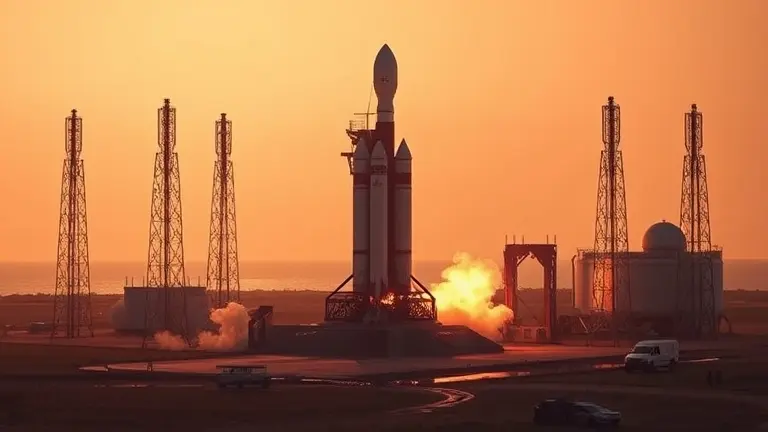
At 6:43 a.m. ET today, the Florida sky turned into a canvas for history as SpaceX successfully vaulted the new ‘Starfall’ reentry capsule into orbit. While the digital landscape is currently flooded with short-lived clips of the ascent and landing, the true story lies beneath the surface of the headlines. Starfall is not merely another hardware iteration; it is the linchpin for a nascent orbital manufacturing economy, designed specifically to retrieve delicate, space-forged materials that promise to redefine pharmaceutical and semiconductor production on Earth. By moving beyond the surface-level excitement of a rocket launch today, we can begin to see how this technical achievement signals a permanent shift from mere exploration to industrial orbital infrastructure.
This mission represents a monumental leap in cargo retrieval precision, bridging the gap between theoretical space manufacturing and reliable supply chain logistics. As we look past the plumes of smoke and the roar of the engines, we must examine the engineering rigor that made this feat possible. This level of technical complexity—where a margin of error measured in millimeters determines the success of a billion-dollar mission—is the gold standard for innovation, requiring a mastery of design that transforms ambitious blueprints into tangible, reality-bending achievements.
The Starfall Milestone: SpaceX’s Successful Maiden Mission
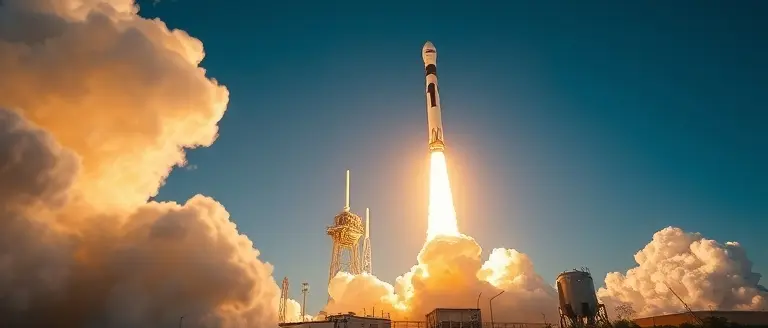
The early morning sky over Cape Canaveral, Florida, became the stage for a pivotal moment in aerospace history on June 23, 2026. At exactly 6:43 a.m. ET, the successful maiden launch of the SpaceX Starfall reentry capsule signaled a definitive transition in orbital logistics. While the public interest in any rocket launch today is often centered on the spectacle of liftoff, the Starfall mission represents something far more transformative: the maturation of an end-to-end industrial supply chain in low Earth orbit (LEO). Unlike previous missions focused primarily on station resupply, Starfall is a purpose-built spacecraft engineered specifically for the precision recovery of high-value cargo and sensitive space-manufactured materials.
Beyond Resupply: Industrial Retrieval
The technical objective of this mission was to validate the capsule’s thermal shielding and navigation systems under the stress of atmospheric reentry. By successfully launching and subsequently landing this proprietary hardware, SpaceX has addressed one of the most significant bottlenecks in the nascent space economy: the reliable, high-frequency return of orbital products.
Key takeaways from the successful Starfall demonstration include:
- Enhanced Payload Security: The capsule design prioritizes the stabilization of delicate manufactured goods, such as specialized fiber optics or pharmaceutical substrates, which are vulnerable to high G-forces during traditional descents.
- Economic Scalability: By reducing the cost and complexity of retrieval, SpaceX is effectively lowering the barrier to entry for private companies looking to utilize microgravity environments for manufacturing.
- Rapid Cadence: With this successful test, SpaceX continues to maintain its “jam-packed” launch schedule, ensuring that retrieval capacity can eventually scale in lockstep with the increasing volume of satellite deployments and orbital production runs.
This achievement marks a departure from standard cargo transport, positioning SpaceX as the primary facilitator for a circular space economy. For investors tracking the SpaceX launch trends and the broader SpaceX launch today news cycle, the Starfall mission confirms that the infrastructure for “made-in-space” commerce is no longer theoretical—it is now operational. As we look toward future missions, the focus will likely shift from basic validation to the optimization of this capsule for regular, high-frequency commercial service.
Starfall vs. Dragon: Defining the New Logistics Standard
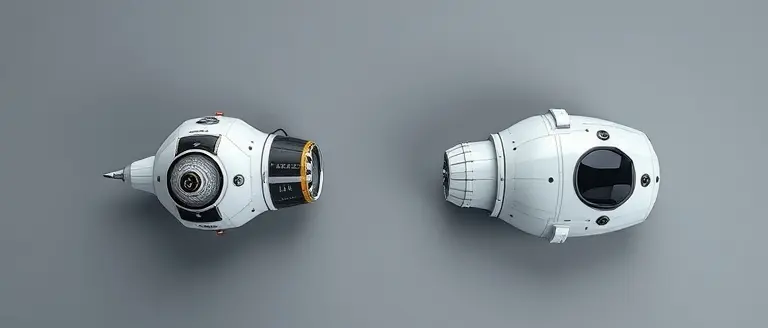
While the SpaceX Dragon capsule has served as the workhorse for International Space Station (ISS) resupply missions, the successful rocket launch today of the Starfall capsule marks a fundamental shift in orbital logistics. Unlike the Dragon, which is designed primarily for robust, high-volume cargo delivery and crew transportation, Starfall is engineered as a precision-recovery vessel. This distinction is critical for the burgeoning sector of space-based manufacturing, where the integrity of delicate materials—such as fiber-optic cables or high-purity pharmaceutical compounds—is paramount.
Technical Evolution in Reentry and Handling
The primary technical divergence lies in the reentry profile and internal environmental controls. Where Dragon utilizes a flight-proven ablative heat shield designed for durability under varying atmospheric conditions, Starfall employs an advanced, multi-stage thermal protection system. This system is specifically calibrated to dampen micro-vibrations during atmospheric descent, protecting sensitive electronics that would otherwise suffer from the harsh turbulence typical of standard splashdowns.
- Heat Shielding: Starfall incorporates proprietary thermal ceramics that maintain a lower internal temperature gradient compared to Dragon.
- Precision Landing: The capsule leverages an upgraded guidance navigation and control (GNC) suite, allowing for a significantly smaller landing footprint to ensure rapid ground-crew retrieval.
- Cargo Versatility: While Dragon maximizes raw volume, Starfall optimizes for payload stabilization, utilizing specialized internal dampening racks for fragile, space-manufactured assets.
Future-Proofing the Supply Chain
Evidence suggests that the spacex launch today is the first step toward a high-cadence return cycle that current logistics vessels cannot support. While Dragon requires extensive post-flight refurbishment, Starfall is built with a modular, rapid-turnaround architecture. For investors tracking the spacex launch today as a market signal, the efficiency gains represented by Starfall suggest that SpaceX is preparing to move from experimental orbital manufacturing to a fully commercialized, profitable logistics pipeline. This capability addresses the “last-mile” problem in space, ensuring that high-value materials can reach Earth-bound customers with minimal risk of degradation.
Unlocking the Trillion-Dollar Space Manufacturing Economy

The successful SpaceX launch today of the Starfall reentry capsule marks a pivotal shift in the orbital logistics landscape. While the initial search interest for a rocket launch today focused on the spectacle of the Cape Canaveral liftoff, the long-term utility of the Starfall capsule represents a fundamental change in how industries approach in-space manufacturing. By providing a dedicated, high-cadence vehicle for the safe return of fragile space-manufactured materials, SpaceX is effectively bridging the gap between experimental orbital research and viable, industrial-scale production.
Transforming Orbital Logistics
For years, the space economy has been constrained by the limitations of return vehicles. The Starfall capsule addresses this by optimizing payload protection and thermal resilience for delicate, high-value assets. This capability enables the profitable return of materials that currently hold enormous promise for terrestrial industries:
- Advanced Fiber Optics: Manufacturing ZBLAN fibers in microgravity yields significantly lower signal loss compared to Earth-bound production.
- Biotechnology: Orbital organ-printing and specialized tissue cultivation require precise, vibration-free return environments to maintain structural integrity.
- Superalloys: Unique crystal lattice structures formed in zero-gravity offer superior strength and heat resistance for aerospace and medical applications.
As investors monitor the SpaceX launch today results, the conversation is naturally shifting toward the company’s broader market trajectory. While speculation regarding a potential $75B IPO continues to drive market chatter, the technical success of Starfall provides tangible data to support such valuations. By securing the “return leg” of the supply chain, SpaceX is not merely a launch provider; they are becoming the primary infrastructure backbone for a nascent trillion-dollar space manufacturing market. This technical milestone proves that consistent, reliable, and cost-effective access to orbit is no longer theoretical, but an operational reality that will define the next decade of commercial space activity.
Investor Outlook: What Starfall Means for Future Market Valuation

The successful maiden flight of the Starfall reentry capsule has triggered a significant shift in how institutional investors perceive SpaceX’s long-term enterprise value. While the immediate excitement surrounding the rocket launch today focused on the technical execution of the flight, the financial implications extend far beyond simple mission success. For years, markets have speculated on a potential valuation exceeding $75 billion for SpaceX, and the Starfall program serves as a critical “proof of concept” required to justify such aggressive figures. By demonstrating the ability to reliably retrieve high-value cargo and space-manufactured materials from orbit, SpaceX has successfully transitioned from a launch services provider to a logistics backbone for the emerging orbital economy.
Bridging the Gap to Commercial Scalability
Repeatable, precise retrieval missions are the “missing link” for venture capitalists evaluating the viability of space-based manufacturing. Before Starfall, the costs associated with returning raw materials or delicate pharmaceutical compounds produced in microgravity were prohibitively high or lacked the required precision. With this mission, SpaceX effectively de-risks the supply chain for off-world manufacturing. Key factors driving this optimistic investor outlook include:
- Lowered Cost-per-Kilogram: Enhanced retrieval efficiency directly improves the unit economics for businesses operating in low Earth orbit.
- Asset Lifecycle Management: Being able to bring back sensitive equipment and research hardware allows for lower capital expenditures (CapEx) for space startups.
- Predictable Cadence: The high frequency of recent missions—ranging from Cape Canaveral to Vandenberg—demonstrates that the SpaceX launch infrastructure is robust enough to support continuous industrial operations.
Evidence suggests that the “Starfall effect” will likely bolster secondary market interest in SpaceX-related assets. Institutional capital requires tangible evidence of recurring revenue streams beyond government contracts; Starfall provides the necessary architecture to turn the orbital frontier into a sustainable, repeatable market. As SpaceX continues to refine its reentry hardware, investors are shifting their focus from simple flight success to the long-term utility and profitability of the assets returning to Earth.
Precision Engineering: The Blueprint for Success
The successful deployment of the Starfall capsule serves as a powerful reminder that monumental breakthroughs are always rooted in meticulous, error-proof planning. Just as SpaceX’s engineers rely on absolute precision to survive the harrowing heat of atmospheric reentry, any high-stakes project demands a foundation built on verified, technical certainty. Without an exact schematic, even the most innovative vision risks failure; but with the right guidance, the boundary between engineering theory and structural reality disappears.
If you are an engineer, builder, or hobbyist who values the same level of technical perfection exhibited in modern aerospace, you understand that professional results require professional tools. You can move beyond the frustration of trial-and-error construction by accessing a library of blueprints that demand, and deliver, nothing less than perfection. Much like the design schematics used to navigate the complexities of orbit, having access to an exhaustive database of verified, industrial-grade plans is the ultimate advantage in your own workshop.
We have bridged the gap between the macro-scale precision of space travel and the micro-scale craftsmanship of your own projects. It is time to treat your creations with the same level of rigorous standards that built the Starfall capsule. Apply the same engineering discipline to your workshop today.
 Ready to apply the same level of precision to your own workshop projects? Explore the ultimate library of 16,000 professional-grade blueprints here.Transform My Projects Today!