
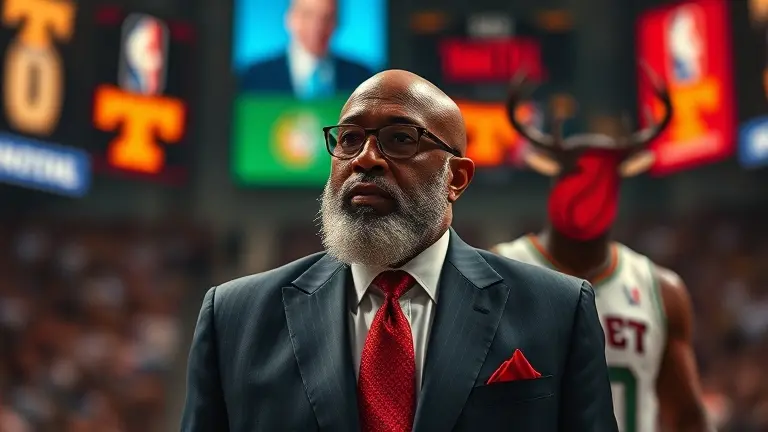
The sports world is currently reeling from the seismic shift caused by Jimmy Haslam’s direct intervention in the blockbuster trade of Giannis Antetokounmpo to the Miami Heat. As reports emerge characterizing the ownership magnate as the primary catalyst behind the deal, a burning question emerges: Is Haslam bringing a bold, transformative strategy to the NBA, or is he merely exporting the same volatile management style that has kept the Cleveland Browns in a perpetual state of uncertainty? This isn’t just about a roster move; it is about the intersection of high-stakes capital and the fragile ecosystem of professional sports legacies.
The ‘Haslam Effect’ has become the defining narrative of the week, underscored by a jarring contradiction: while he praises his own ‘unicorn’ assets in Cleveland, he simultaneously dismantles a generational talent in Milwaukee for the sake of immediate returns. By juxtaposing this aggressive trade strategy against his recent $130 million philanthropic commitment to the University of Tennessee, we see a complex portrait of an owner who refuses to operate in the shadows. This is a deep dive into the high-pressure decision-making environment that defines Haslam’s world—and why tracking it requires more mental agility than ever before.
The Haslam Effect: Orchestrating the Giannis Antetokounmpo Blockbuster

The June 2026 trade of Giannis Antetokounmpo to the Miami Heat serves as a definitive case study in the “Haslam Effect”—a management philosophy defined by hyper-aggressive intervention and a disregard for traditional front-office hierarchy. While internal negotiations typically rely on general managers and scouting departments, Jimmy Haslam acted as the primary architect of this blockbuster move. Reports confirm that Haslam personally intervened to derail discussions with the Boston Celtics, a suitor many believed offered a more robust package of draft capital and young talent. Haslam’s decision to favor the Heat’s offer stems from a deep-seated skepticism regarding player longevity and the long-term value of traditional rebuilding assets.
By prioritizing immediate roster flexibility and what he perceives as a more sustainable path to contention in Miami, Haslam has effectively bypassed the standard evaluation protocols of the Milwaukee Bucks. This top-down interference has created significant friction within the organization, leading many analysts to compare his behavior to his tenure with the Cleveland Browns. In the NFL, Haslam has often been criticized for “win-now” mandates that can undermine long-term stability; now, that same polarizing methodology is reshaping the landscape of the NBA.
Why the Heat Deal Outpaced Boston
The rejection of the Boston Celtics’ proposal highlights several core tenets of Haslam’s current decision-making framework:
- Asset Longevity Concerns: Haslam reportedly expressed concern over the physiological toll on the players offered by Boston, signaling a pivot toward more “durable” assets that fit his vision for a modernized rotation.
- Risk Mitigation: By controlling the trade narrative personally, Haslam sought to avoid the trap of “sunk cost” bias, preferring a clean break with a superstar over the potential for diminishing returns on aging draft picks.
- Direct Influence: The move reinforces a growing concern among fans and media that Haslam’s hands-on approach is overriding professional basketball operations, creating a new, volatile power dynamic for the Milwaukee franchise.
This intervention has sent shockwaves through the league, turning Haslam into a central figure in discussions regarding ownership boundaries in professional sports. Whether this bold, unilateral gamble pays off or alienates the fanbase further remains the most pressing question for the coming season.
Cleveland vs. Miami: Evaluating the Haslam Management Archetype

The recent blockbuster trade that sent Giannis Antetokounmpo to the Miami Heat has placed Jimmy Haslam at the center of a firestorm regarding his hands-on ownership style. For years, critics have dissected Haslam’s tenure with the Cleveland Browns, frequently pointing to a pattern of “aggressive interference” that often disrupts established front-office hierarchies. By prioritizing immediate, high-impact moves over long-term stability, Haslam has cultivated a reputation for volatility. His active role in forcing the Milwaukee Bucks to favor the Heat’s offer over Boston’s suggests that he is applying a similar “win-now” philosophy to the NBA, one that mirrors the high-stakes, sometimes unpredictable decision-making that has defined his time in the NFL.
The Duality of Aggressive Ownership
The core tension in the Haslam management archetype lies in the disconnect between his corporate success and his professional sports outcomes. While Haslam is undeniably willing to spend—evidenced by his recent $130 million donation to the University of Tennessee—his approach to roster construction often generates friction. The disparity between his treatment of Myles Garrett, whom he famously dubbed a “unicorn” and the foundational piece of the Browns, and his willingness to ship out an MVP-caliber talent like Antetokounmpo has left analysts questioning his internal logic.
- High-Stakes Risk Tolerance: Haslam prefers deals that offer immediate control over organizational trajectory, even if they bypass the consensus of traditional basketball operations.
- Management Volatility: His tendency to insert himself into personnel discussions creates a “top-down” environment that can alienate front-office staff.
- The “Unicorn” Contradiction: There is a growing narrative shift; if Haslam is willing to trade a generational talent like Giannis to fix perceived asset issues, the stability of his “untouchable” players—including those in Cleveland—must now be re-evaluated.
Ultimately, whether this aggressive strategy is a masterstroke or a liability remains to be seen. While his business acumen is undisputed, the volatile nature of sports requires a level of patience that, thus far, remains absent from the Haslam playbook.
The Myles Garrett vs. Giannis Paradox: Fan and Media Sentiment

The recent decision by Jimmy Haslam to orchestrate the blockbuster trade of Giannis Antetokounmpo to the Miami Heat has ignited a firestorm of debate, primarily centered on his contradictory management philosophy. Fans and media analysts are struggling to reconcile Haslam’s unwavering commitment to Cleveland Browns defensive end Myles Garrett—whom he has famously labeled a “unicorn” and a pillar of the organization—with his aggressive divestment from a generational NBA superstar. This perceived hypocrisy has fueled intense discourse across platforms like X (formerly Twitter) and Reddit, where users frequently contrast the perceived “long-term stability” afforded to the Browns’ star with the “win-now” ruthless efficiency applied to the Milwaukee Bucks.
The Conflict of Asset Valuation
Critics argue that Haslam’s handling of these two high-profile athletes reveals a calculated, albeit frustrating, approach to asset management. While Haslam appears content to anchor the Browns to Garrett’s massive contract, his push to favor the Heat’s trade package for Antetokounmpo over competing offers suggests a preemptive strike against what he likely perceives as a depreciating asset in the NBA. This has led to widespread frustration among basketball fans who feel that a championship-level legacy is being sacrificed for the sake of financial or structural flexibility.
Key points of contention currently trending in sports circles include:
- The “Unicorn” Inconsistency: Why is Garrett viewed as untouchable while a two-time MVP is viewed as a piece to be moved?
- Rebuild vs. Legacy: Is Haslam subconsciously applying NFL-style “re-building” cycles to an NBA franchise that operates under vastly different salary cap constraints?
- Management Duality: The tension between Haslam’s status as a billionaire benefactor—highlighted by his recent $130 million donation to the University of Tennessee—and his cold, transactional reputation in professional sports trades.
Ultimately, the online narrative suggests a growing distrust in Haslam’s long-term vision. By prioritizing immediate structural shifts over the organic growth of a dynasty, Haslam has painted himself as an owner whose primary interest lies in aggressive turnover rather than sustained, fan-centric success. Whether this strategy will eventually stabilize his reputation remains to be seen, but for now, the “Haslam Effect” is viewed by many as a disruptive force that prioritizes the bottom line over the sentimental value of sporting icons.
Philanthropy and Power: The Dual Narrative of the $130 Million Donation

The recent announcement of a staggering $130 million donation to the University of Tennessee serves as a fascinating counter-narrative to the chaotic fallout surrounding the Giannis Antetokounmpo trade. While Jimmy Haslam faces intense scrutiny for his aggressive, “win-now” management style within the Milwaukee Bucks front office, this massive philanthropic gesture functions as a strategic pivot toward legacy building. In the high-stakes world of billionaire ownership, such moves are rarely accidental; they create a duality where the same individual is simultaneously viewed as a ruthless sports disruptor and a pillar of the Tennessee community.
Strategic Timing or Genuine Altruism?
Observers are left to wonder if the timing of this gift was calculated to soften the public image of the Bucks owner during a week of severe media backlash. By shifting the conversation from the departure of a generational talent to a record-breaking educational contribution, Haslam is effectively diversifying his public footprint. This “dual-persona” approach is common among sports moguls, yet the intensity of his current sports-related controversies makes this specific donation feel particularly weighted:
- Legacy Cementing: Beyond mere PR, the investment in Tennessee ensures Haslam’s influence is felt far beyond the arena, securing a level of local reverence that often eludes NFL and NBA owners.
- Balancing the Ledger: There is a distinct contrast between the transactional nature of trading a franchise icon like Giannis and the long-term, altruistic impact of a nine-figure donation.
- Management Duality: Haslam’s ability to orchestrate complex athletic trades while simultaneously navigating university-level administration highlights a complex, and at times polarizing, vision for power.
Ultimately, whether this move serves as a shield against criticism or a sincere commitment to his roots, it highlights the broader complexities of professional sports ownership. Jimmy Haslam is currently testing the limits of how one individual can manipulate public perception through both fiscal aggression in the front office and strategic goodwill in the nonprofit sector. As his NFL tenure with the Cleveland Browns continues to face questioning, his public-facing acts of charity provide a necessary, albeit complicated, balance to his reputation as an uncompromising sports agitator.
Mastering Your Own Decision-Making Edge
Jimmy Haslam’s fingerprints on the Giannis Antetokounmpo trade represent a masterclass in the ‘win-now’ volatility that defines modern sports management. Whether his aggression is a strategic stroke of genius or the same impatience that has plagued his tenure with the Cleveland Browns, it is clear that Haslam operates in a reality where the margins for error are razor-thin. For observers of the game, parsing through these high-stakes maneuvers requires more than just passion; it demands a level of analytical precision that cuts through the noise of media speculation and front-office maneuvering.
Just as top-tier executives must maintain unicorn-level clarity when navigating multi-million dollar deals, you require peak cognitive performance to process the fast-paced, complex data streams that dictate our modern world. If you find yourself succumbing to the ‘brain fog’ of information overload, it is time to upgrade your mental toolkit. This is where The Brain Song acts as your analytical accelerator—a science-backed solution designed to sharpen your focus and enhance mental clarity, allowing you to synthesize information with the same decisiveness seen in the highest levels of professional sports.
Don’t let the noise of the headlines dull your edge. By integrating this tool into your daily routine, you bridge the gap between being a mere spectator and becoming a sharp, decisive thinker capable of navigating any high-pressure environment. Elevate your cognitive potential and master your focus today.
 Ready to cut through the noise and sharpen your own perspective? Click here to integrate The Brain Song into your daily routine and master your mental focus.Transform My Mental Clarity Today!