

If you have been searching for the latest earthquake near me over the past week, you are certainly not alone. Between genuine seismic reports and the viral, anxiety-fueled predictions circulating on social media, the digital landscape has become an exhausting minefield of misinformation. A recent scientific report regarding increased stress levels on California fault lines has been dangerously misinterpreted, leading to unfounded claims of specific, date-driven disasters. This atmosphere of uncertainty does more than just spike search volume; it creates a state of chronic, low-grade panic that clouds our ability to distinguish between geological data and fear-mongering.
It is time to separate the facts from the fiction. While understanding seismic activity is a cornerstone of public safety, the current wave of alarmism serves no one—especially when it erodes your mental well-being. By stripping away the sensationalist headlines and turning back to verifiable geological science, we can shift our focus from reactive dread to grounded, proactive preparedness. Let’s decode what the science actually says and reclaim your peace of mind from the cycle of digital misinformation.
Understanding the Surge: Why You’re Seeing Earthquake Rumors Right Now

If you have recently found yourself searching for the latest earthquake near me due to a sense of impending dread, you are not alone. The digital landscape has been flooded with anxiety-inducing content following the release of a scientific report from the University of Bern on June 18, 2026. This study, which analyzed geological data to suggest that certain California fault lines have reached their highest stress levels in 1,000 years, introduced the concept of an “earthquake gate.” While this is a significant finding for seismologists studying long-term tectonic behavior, the complexity of the data was quickly stripped of its nuance by social media platforms.
From Scientific Data to Social Media Myth
The gap between peer-reviewed geology and online fear-mongering has fueled a wave of misinformation. Accounts such as @Quakeprediction on X (formerly Twitter) leveraged the term “earthquake gate” to claim that a major seismic event was imminent, explicitly pointing to June 21, 2026, as the date for a “Big One” near Los Angeles.
It is vital to understand why these predictions are scientifically invalid:
- No Predictive Capability: Currently, no technology or scientific model can predict the exact date, time, or location of an earthquake.
- Misinterpretation of “Stress”: In geology, “highest stress levels” refers to a timescale of centuries. It is a long-term indicator of potential risk, not a short-term forecast.
- Automated Amplification: Automated news aggregators often pull real-time data from the USGS Earthquake Map, presenting minor, routine global tremors (2.5–4.5 magnitude) as an escalating chain of events. This creates a false perception of rising seismic activity, trapping users in an algorithmic loop of anxiety.
By conflating long-term geological stress with immediate, date-specific warnings, these online outlets have turned legitimate scientific inquiry into a tool for engagement-driven panic. When seeking information, always prioritize data from official sources like the United States Geological Survey (USGS) over speculative social media threads that lack verifiable, evidence-based methodology.
The Science Behind the Headlines: Interpreting the University of Bern Report

The recent surge in searches for the latest earthquake near me has been fueled by headlines regarding a June 18, 2026, study from the University of Bern. While reports of California faults reaching their “highest stress levels in 1,000 years” sound alarming, it is critical to understand these findings within the context of geological time. In seismology, stress accumulation is a process that occurs over centuries, not days or weeks. The research identifies a phenomenon known as an “earthquake gate“—a structural configuration in the fault line that may act as a threshold for seismic rupture—but this study does not provide the capability to predict specific dates for seismic events.
Understanding Geological Stress vs. Imminent Threats
To interpret these findings correctly, one must distinguish between long-term tectonic trends and short-term forecasting. When scientists describe a fault as having reached record-high stress levels, they are referring to a slow, incremental build-up of energy resulting from the steady movement of tectonic plates. These findings are vital for structural engineering and long-term disaster preparedness, but they offer zero utility for those attempting to pinpoint an exact date for an earthquake. Key takeaways from the scientific community include:
- Centuries, Not Days: Geological stress is measured on a decadal or centennial scale; the “1,000-year” metric reflects a duration of accumulation, not a ticking clock toward an imminent disaster.
- The “Earthquake Gate” Defined: This concept refers to the geometric complexity of a fault that may influence how an earthquake propagates. It is a discovery about fault mechanics, not a prediction tool.
- Absence of Predictive Capability: Current scientific consensus remains firm: there is no validated technology or methodology that can predict the day or time of an earthquake, regardless of stress accumulation levels.
The anxiety surrounding the latest earthquake near me is often exacerbated by misinformation that conflates these long-term risk assessments with short-term, date-specific warnings. By viewing these scientific reports as tools for building better infrastructure rather than sources of immediate alarm, residents can focus on legitimate, proactive safety measures rather than reactive panic.
How to Verify Seismic Activity: Reliable Sources vs. Social Media
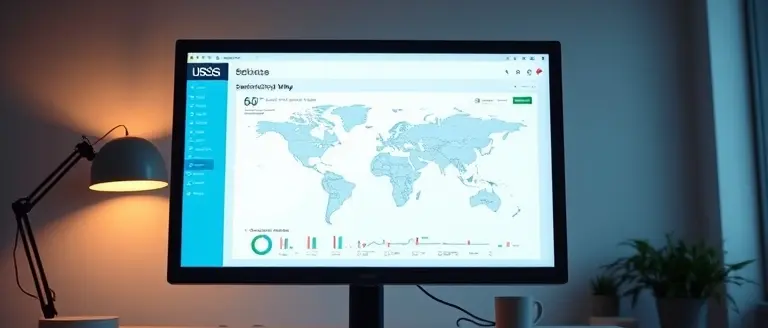
In an age of instant notifications, the urge to search for the “latest earthquake near me” is often triggered by viral social media posts or automated aggregators that lack geological context. It is essential to understand that anecdotal reports on platforms like X or Facebook are not scientific observations. When you see claims of an impending earthquake, they are almost always based on speculation rather than the physical data recorded by regional seismograph networks. Reliable verification requires looking at primary, peer-reviewed data sources that monitor the Earth’s crust in real-time.
Official Resources for Accurate Data
To avoid the cycle of misinformation, rely exclusively on government-sanctioned tools that translate raw seismic waves into understandable data. The following resources are the gold standard for tracking seismic activity:
- USGS Earthquake Hazards Program: The USGS official live map is the most authoritative source for verifying a quake. If it does not appear on this map, it has not been confirmed by scientific instrumentation.
- MyShake App: Developed by researchers at UC Berkeley, this app uses a smartphone’s sensors to detect seismic waves, providing both early warnings and historical data for local events.
- California Governor’s Office of Emergency Services (Cal OES): For regional safety updates and official emergency protocols, local state agencies remain the primary authority for residents.
Understanding the Data
When you access these official platforms, you are viewing data generated by a global network of seismographs. These instruments detect physical ground movement, not social media sentiment. Unlike sensationalist posts that predict specific dates or locations based on “energy signals,” the USGS utilizes strict parameters to verify magnitude and epicenter coordinates. Remember that low-magnitude seismic activity is a constant, natural occurrence in California; seeing a 2.5 magnitude quake on a map does not mean a “Big One” is imminent. By shifting your verification process to these official channels, you replace fear-driven panic with evidence-based situational awareness, ensuring you remain informed without falling prey to digital alarmism.
Building Resilience: Practical Steps for Earthquake Preparedness

Instead of succumbing to anxiety-driven searches for the latest earthquake near me, shifting your mindset toward proactive preparedness is the most effective way to manage the reality of seismic activity on the West Coast. While geological research from the University of Bern provides critical data for infrastructure planning, it is not a tool for predicting specific events. By transforming fear into agency, you can significantly increase your household’s safety profile long before a tremor occurs.
Essential Steps for Seismic Safety
Focusing on your immediate environment is the first line of defense. The following actions are recommended by emergency management experts to minimize physical risk:
- Secure Heavy Items: Large furniture pieces, such as bookshelves, water heaters, and television stands, should be anchored to wall studs using earthquake straps. These items are common causes of injury during shaking.
- Create a Communication Plan: Establish a predetermined meeting spot for family members and designate an out-of-state contact person. Local lines may become congested, but long-distance calls or text messages often have a better chance of going through.
- Build a Go-Bag: Assemble a robust emergency kit containing at least one gallon of water per person per day, non-perishable food, a flashlight, extra batteries, a whistle, and a first-aid kit. Keep these items in a portable, easy-to-access location.
- Practice Drop, Cover, and Hold On: Regularly rehearse the standard safety maneuver. Identifying a sturdy table or desk to crawl under immediately is a muscle-memory skill that saves lives.
Ultimately, living in a seismically active region requires respect for the science, not fear of the headlines. When you take concrete steps to reinforce your home and organize your resources, you move from passive consumption of alarmist social media content to active management of your personal safety. Regularly check the USGS Earthquake Map for verified data if you feel a tremor, and rely on official local emergency services for instructions rather than speculative online accounts. Preparation is your best insurance policy against the unpredictable nature of Earth’s crust.
Reclaim Your Calm Amidst the Digital Chaos
The core takeaway is simple: seismic science measures long-term probabilities, not specific dates. The “earthquake gate” findings are a critical reminder of why we build for resilience, but they are absolutely not a countdown to an imminent catastrophe. By relying on official USGS channels and rejecting the statistical noise of social media, you regain control over your perspective and your safety planning.
While preparing your emergency kit is a practical step for your physical safety, you must also prepare your mind. The constant, alarmist news cycle is designed to hijack your focus, leading to cognitive fatigue and ‘brain fog’ that impairs your decision-making. If you find yourself trapped in the cycle of constant refreshing and anxiety-driven searching, it is time to pivot toward mental resilience. The Brain Song serves as your cognitive defense tool, designed to help you quiet the digital noise, stabilize your emotional state, and restore the mental clarity needed to navigate high-stress environments with logic rather than fear.
By dedicating just a few minutes each day to re-centering your focus, you can break the feedback loop of anxiety and regain the ability to process information clearly and rationally. Don’t let misinformation dictate your mental state—start building your internal defense today.
 Regain your mental clarity and silence the digital noise; start your 12-minute daily session to combat stress and improve your focus today.Transform My Mental Clarity Today!