
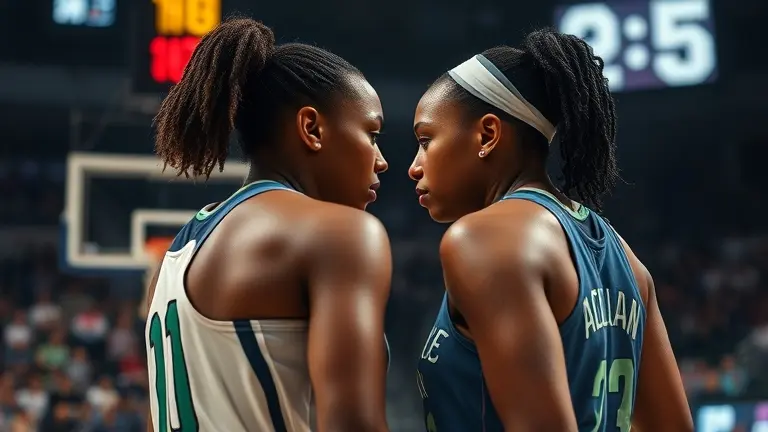
When Caitlin Clark and Angel Reese exchanged words during their recent high-intensity WNBA showdown, the digital sphere erupted in predictable fashion. Social media feeds were immediately flooded with looped footage of the physical confrontation, fueling the fires of an oversaturated rivalry narrative. However, beneath the surface-level noise of this latest ‘Fever-Dream’ clash lies a more compelling story: the evolution of two generational athletes operating under a level of, and scrutiny that would break most professionals. While the headlines focus on the friction, a closer examination of their on-court statistical output reveals a fascinating tension between their elite-level performance and the relentless, often polarized media circus that dictates the league’s modern narrative.
As the WNBA capitalizes on this star-powered intensity to drive record-breaking viewership, the true sociological phenomenon is not the rivalry itself, but the cognitive mastery required to maintain peak efficiency amidst such chaos. To thrive in this environment, athletes like Clark and Reese must possess an extraordinary capacity to filter out the deafening external pressure and lock in on the objective mechanics of the game. This ability to maintain mental clarity when the stakes are at their highest is not just an athletic necessity; it is a blueprint for elite performance that extends far beyond the basketball court.
The Fever-Dream Rivalry: Deconstructing the Recent On-Court Exchange
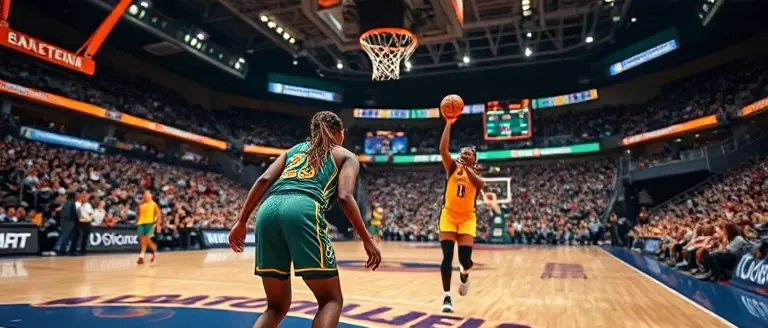
The professional landscape of the WNBA reached a new level of intensity during the mid-June 2026 series between the Indiana Fever and the Atlanta Dream. During this high-stakes stretch, where the two teams faced each other twice in just three days, Caitlin Clark and Angel Reese exchanged words during intense matchup sequences that quickly dominated social media discourse. The flashpoint occurred during the first quarter of their recent contest, following a physical foul that catalyzed an immediate, sharp interaction between the two stars. While observers noted Clark seemingly “waving off” Reese after a later engagement, these moments serve as a microcosm of the heightened competitive friction expected when elite athletes meet in rapid succession.
Contextualizing the On-Court Friction
Rather than viewing these exchanges as purely personal, it is more accurate to categorize them as a byproduct of professional proximity and the high-pressure environment of back-to-back scheduling. Key factors contributing to the optics of this interaction include:
- Frequency of Play: The compressed schedule of two games in three days minimizes the “cool-down” period between teams, allowing physical frustrations to linger and carry over from one game to the next.
- High-Stakes Performance: Both Clark and Reese operate as focal points for their respective franchises; when primary playmakers are tasked with defensive assignments against each other, the probability of contact-related tension naturally escalates.
- Media Narrative Amplification: Because the fanbase is deeply invested in the long-standing college-to-pro narrative, every on-court reaction is magnified. However, objective analysis suggests that this physical play is typical of high-intensity WNBA games where playoff positioning is on the line.
Ultimately, the viral nature of these encounters often distracts from the core reality: both players are highly competitive icons driving unprecedented league viewership. By moving beyond the reactionary headlines, it becomes clear that these exchanges are less about an interpersonal “feud” and more about the evolution of a professional rivalry that is becoming the cornerstone of modern women’s basketball entertainment.
Performance vs. Perception: Analyzing Statistical Trends Under Pressure
When Caitlin Clark and Angel Reese exchanged words during intense matchup scenarios, the media narrative often focuses on the friction rather than the technical output. However, a deep dive into the box scores from their recent back-to-back encounters reveals a more nuanced reality. By comparing their high-pressure production against their season-long averages, we can determine whether the “fever pitch” of social media discourse actually impacts their professional efficiency. Current data suggests that both stars maintain a high level of poise, with statistical variances remaining within standard game-to-game fluctuations.
Statistical Resilience in High-Stakes Games
Rather than buckling under the weight of the spotlight, both athletes have shown a capacity to lean into their respective roles during these games. Analysts examining the recent Indiana Fever and Atlanta Dream meetings noted that the intensity did not correlate with a significant spike in turnovers or a decline in defensive efficiency. Instead, the increased physical play often serves to stabilize their impact, as both players focus on high-percentage plays to counter the defensive focus placed upon them.
Key performance indicators to watch during these highly publicized rivalries include:
- True Shooting Percentage: Evaluating whether the emotional intensity of the game affects shot selection or execution.
- Usage Rate: Measuring if the players force plays during contentious moments or continue to operate within the flow of the team’s offensive scheme.
- Defensive Win Shares: Tracking the impact of their physical defensive battles on total team outcomes regardless of individual scoring output.
Ultimately, the perception of a “feud” often overshadows the reality of their professionalism. While the narrative surrounding how Caitlin Clark and Angel Reese exchanged words during intense matchup segments continues to drive massive viewership numbers, the empirical data suggests that their on-court chemistry is defined more by competitive grit than by the volatile storylines created by the external media apparatus. As the WNBA continues to grow, separating this noise from the statistical reality remains essential for evaluating their long-term trajectories as league icons.
The WNBA Growth Engine: Rivalries as a Catalyst for Record Viewership
The June 2026 scheduling of back-to-back Indiana Fever and Atlanta Dream matchups serves as a masterclass in modern sports promotion. By highlighting the high-stakes encounters where Caitlin Clark and Angel Reese exchanged words during an intense matchup, the WNBA is effectively leveraging the “rivalry narrative” to capture a mainstream audience. This strategic programming is not merely about basketball; it represents a broader shift in sports broadcasting, where the chemistry—and friction—between star players is curated to maximize engagement, sponsorship interest, and television viewership records.
The Strategic Value of Narrative-Driven Broadcasting
The WNBA’s recent surge in popularity is intrinsically linked to its ability to cultivate marquee individual brand identities that resonate with fans far beyond traditional basketball demographics. When these icons share the court, the resulting media discourse acts as a force multiplier for league visibility. Key drivers of this growth include:
- Broadcast Prioritization: Networks are increasingly structuring coverage around “must-see” player-versus-player dynamics, ensuring that casual fans are tethered to the league by emotional narratives.
- Social Amplification: Platforms like TikTok and X (formerly Twitter) turn physical sequences into viral moments, which in turn fuels the appetite for future head-to-head contests.
- Sponsorship Integration: Brands are gravitating toward these high-traffic games, recognizing that the intense focus on individual rivalries creates an ideal environment for high-conversion advertising.
Evidence suggests that the tension seen when players like Clark and Reese face off acts as an entry point for new viewers. By moving beyond a singular focus on the game score, the league successfully highlights the competitive spirit of its stars, solidifying its position in the American cultural zeitgeist. This ecosystem benefits the entire league, as the increased revenue from these marquee matchups facilitates broader investment in the WNBA’s infrastructure, ultimately raising the standard of play and player compensation across all franchises.
Moving Beyond the Feud: Why the Narrative is Changing

The spectacle of Caitlin Clark and Angel Reese exchanged words during intense matchup incidents has dominated headlines, yet a significant shift is underway in how analysts and seasoned fans consume the WNBA. While viral clips of on-court confrontations between the Indiana Fever and Atlanta Dream stars provide immediate social media engagement, the industry is increasingly pivoting toward a more sophisticated critique. This move away from the “feud” trope reflects a growing recognition that labeling these professional encounters as mere personal animosity undermines the tactical brilliance both athletes bring to the hardwood. By focusing exclusively on interpersonal drama, media outlets have historically overlooked the technical evolution of their games, which has arguably been the true driver of league-wide viewership growth.
A Data-Driven Perspective on Competitive Growth
The maturity of current coverage suggests a collective realization that the rivalry is a byproduct of high-stakes basketball rather than personal dislike. As Clark and Reese continue to face off in high-intensity schedules—such as their recent meetings within a three-day span—fans are beginning to prioritize the following aspects over the narrative of conflict:
- Statistical Impact: Analysts are shifting focus to objective metrics, comparing rebounds, assist-to-turnover ratios, and defensive positioning rather than emotional reactions.
- Strategic Maturity: Observations are highlighting how teams now game-plan specifically to neutralize the offensive gravity of both players, acknowledging their roles as professional anchors for their respective organizations.
- League Expansion: The “Fever-Dream” narrative is being re-contextualized as a catalyst for WNBA growth, positioning both stars as icons who have successfully professionalized a heated college-era competition.
Evidence suggests that when the narrative shifts toward basketball-first analysis, audience engagement sustains itself longer than it does with manufactured controversy. Ultimately, the evolution of this rivalry mirrors the growth of the WNBA itself: moving from niche interest to a major professional sports pillar that thrives on physical, high-level competition rather than external media archetypes.
Mastering the Mental Game
The intensity of the latest Fever-Dream matchups serves as a stark reminder that physical talent alone is insufficient at the professional level. The true differentiator between a star and a legend is the ability to maintain cognitive sharpness while operating under extreme duress. Just as these athletes must filter out the noise of the arena to execute perfect plays, maintaining that level of mental clarity is the ultimate challenge we all face in our professional and personal lives, where distractions often cloud our best decision-making processes.
Achieving this level of focus requires more than just willpower; it demands a dedicated strategy for mental state-management. This is where The Brain Song becomes your essential performance tool. By directly targeting cognitive enhancement and helping you eliminate persistent mental fog, this formula bridges the gap between chaos and clarity. It allows you to tune out the external noise that hinders your productivity, effectively helping you cultivate an athlete’s mindset to dominate your own competitive landscape.
Whether you are navigating a high-stakes business meeting or tackling complex daily goals, the science of focus remains the same. It is time to stop reacting to the friction in your environment and start controlling your internal clarity. Unlock your peak mental performance and sharpen your focus—discover how to cultivate an athlete’s mindset with The Brain Song.
 Unlock your peak mental performance and sharpen your focus—discover how to cultivate an athlete’s mindset with The Brain Song.Yes, I Want This Now!