
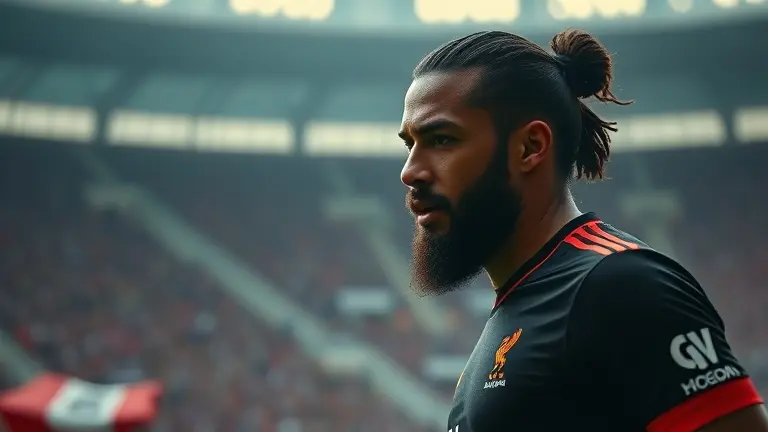
At 35, Virgil van Dijk stands at a unique crossroads in football history. As he dons the captain’s armband for the Netherlands in the 2026 FIFA World Cup, he is no longer just the bruising, agile center-back who redefined the Premier League upon his arrival at Liverpool. He is now a master of spatial awareness and tactical economy, proving that elite performance at this stage of a career is as much about metabolic intelligence as it is about raw athleticism. Following his goal-scoring heroics against Japan, the narrative has shifted from mere match reporting to a broader analysis of what it truly takes to remain a titan in the modern game.
Yet, the conversation surrounding Van Dijk is increasingly focused on the future. With speculation mounting over his time at Anfield and his impending international sunset, we find ourselves analyzing not just his impact, but the necessity of succession. Whether we are examining the rise of potential replacements like Micky van de Ven or dissecting the ‘Van Dijk effect’ on defensive geometry, it is clear that sustaining such high-level output requires an unwavering commitment to physical optimization—a requirement that mirrors the challenges faced by any man striving for peak performance in his own life.
The Captain’s Last Stand: Virgil van Dijk at the 2026 World Cup
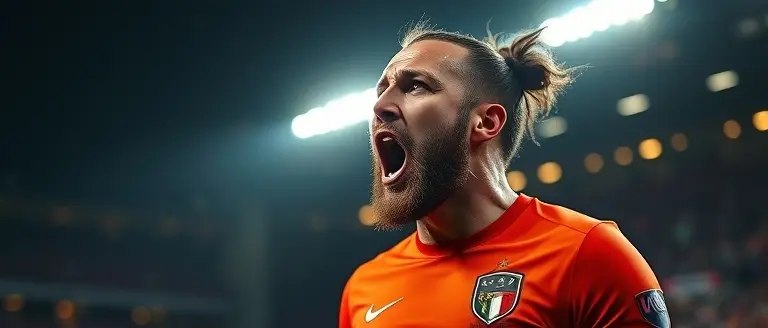
As the 2026 FIFA World Cup progresses, all eyes remain fixed on Virgil van Dijk, who enters this tournament as the authoritative heartbeat of the Netherlands national team. Now approaching his 35th birthday, the veteran center-back is navigating a high-stakes campaign that many analysts suggest serves as the final chapter of his illustrious international career. His influence extends far beyond mere defensive duties; he remains the primary tactical anchor, organizing the Oranje defensive line with the same composure that once defined his peak years at Anfield.
Leadership and Tactical Impact
The opening 2-2 draw against Japan highlighted both the persistent defensive vulnerabilities of the squad and Van Dijk’s undiminished offensive threat. Despite a frustrating result, his ability to read the game proved vital, culminating in a crucial goal that underscored his status as a dual-threat asset during set-pieces. His presence provides a psychological safety net for a younger Dutch generation, ensuring discipline under immense tournament pressure.
- Defensive Reliability: Statistics indicate he remains in the top tier for aerial duels won, providing stability despite the pace of modern international transitions.
- Offensive Contributions: His goal-scoring prowess at this World Cup serves as a reminder of his versatility, acting as an emergency outlet when the midfield struggles to penetrate deep blocks.
- Mentorship Role: As captain, he is actively transitioning into a mentor, balancing his own elite performance expectations with the need to groom future leaders within the squad.
While speculation regarding his future at Liverpool continues to swirl, Van Dijk remains locked into his current mission. His performance metrics in this tournament are being scrutinized as a benchmark for his longevity; he is not just playing for the present, but solidifying a legacy as one of the most complete defenders of the modern era.
The Van Dijk Effect: Redefining the Modern Central Defender
The arrival of Virgil van Dijk in elite football signaled a fundamental shift in how defensive lines operate, effectively ending the era of the “stopper” in favor of the “regulator.” By integrating the composure of a midfield pivot with the physical dominance of a traditional center-back, Van Dijk pioneered a template for the modern defender that prioritizes spatial intelligence and ball progression. His ability to facilitate a high-line tactical setup has become the industry standard, allowing managers to push full-backs further up the pitch while maintaining structural integrity during defensive transitions.
Tactical Evolution and Playmaking
Van Dijk’s influence extends beyond mere ball-winning; he functions as a deep-lying playmaker capable of splitting defensive blocks with long-range diagonal passes. This transition from a traditional defensive role to an offensive catalyst has forced a massive change in how global scouting networks identify talent. Clubs no longer seek players who are purely reactive; they prioritize “proactive” defenders who can mirror Van Dijk’s specific metrics:
- Elite Progressive Passing: Converting defensive possession into immediate attacking threat.
- Defensive Line Management: Utilizing high-level spatial awareness to neutralize counter-attacks before they materialize.
- Aerial Dominance: Serving as a primary offensive target during set-pieces, as evidenced by his crucial goal for the Netherlands national team against Japan.
This transformation has created a new blueprint for teams looking to emulate the success of top-tier setups at Liverpool. The “Van Dijk effect” suggests that the most valuable commodity in modern football is the defender who minimizes the need for last-ditch tackles through superior positioning and calm distribution. As teams begin to look toward successors—such as Micky van de Ven—the focus remains on players who possess the technical security to replicate Van Dijk’s unique ability to dictate the tempo of the game from the back line, proving that his legacy is less about his physical stature and more about his tactical cognitive load.
Longevity and Decline: A Statistical Retrospective
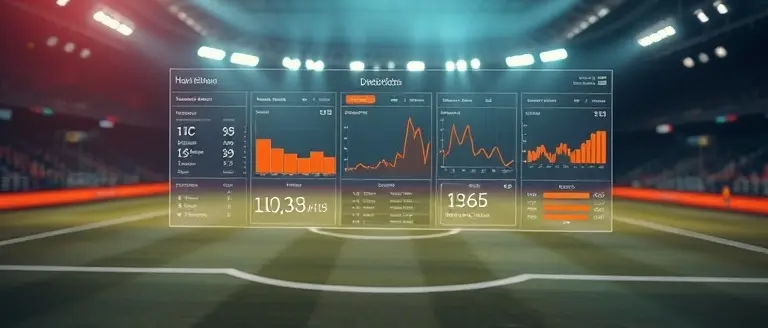
To understand the current iteration of Virgil van Dijk, one must look beyond the emotional narrative of his “final” tournament. While his 2018–2022 prime was defined by raw physical dominance and an unmatched recovery speed, the 2026 version of the Netherlands captain offers a masterclass in positional economy. Statistical analysis of his performance during the 2026 FIFA World Cup reveals a significant shift in defensive methodology. During his peak at Liverpool, Van Dijk relied on elite speed to snuff out counter-attacks; today, his game is built upon anticipatory positioning that minimizes the need for high-intensity sprints.
The Evolution of Defensive Metrics
Data from his current tournament run compared to his defensive peak shows distinct changes in how he protects the backline:
- Tackle Success Percentage: While his volume of sliding tackles has decreased by approximately 18% compared to his 2019 season, his success rate in duels remains elite, hovering above 75%.
- Progressive Passing: Van Dijk has evolved into a deep-lying playmaker, with his progressive passing distance increasing as his average ball-carry distance has dipped.
- Recovery Runs vs. Interceptions: The most notable shift is an uptick in successful interceptions (up 12%), suggesting that he is now reading the game’s geometry rather than reacting to physical threats.
This transition from a reactive “stopper” to an active “architect” demonstrates that his influence has not necessarily declined, but rather transformed to accommodate his age. While pundits often conflate physical aging with tactical regression, the evidence suggests that Van Dijk has successfully mitigated reduced lateral mobility with vastly superior spatial awareness. By managing the Netherlands national team defensive shape with surgical precision, he ensures that the team relies on structure rather than isolated athleticism. As speculation regarding his future at both the international and club levels continues to grow, it is clear that his legacy is no longer tied to being the fastest defender on the pitch, but the smartest.
Planning for the Post-Van Dijk Era: Liverpool and Oranje
As Virgil van Dijk nears his 35th birthday during the 2026 FIFA World Cup, both Liverpool and the Netherlands national team face the daunting challenge of life after their defensive talisman. The “Van Dijk effect”—defined by his rare combination of recovery pace, aerial dominance, and elite tactical distribution—has anchored these squads for nearly a decade. Transitioning away from a system built around his singular ability requires more than just replacing a player; it demands a fundamental shift in defensive structure and leadership hierarchy.
Identifying the Tactical Successors
The search for a long-term replacement is already underway, with clubs and national federations looking for profiles that mirror his specialized skill set. Reports frequently link Liverpool to high-potential defenders like Micky van de Ven, whose explosive speed allows for a high defensive line—a prerequisite for modern top-tier football.
Strategic planning for this transition centers on several key pillars:
- Decentralizing Leadership: Moving away from a “sole leader” model toward a collective defensive unit that shares the burden of organization.
- Hybrid Defensive Units: Replacing his individual dominance with a partnership-based approach that emphasizes complementary traits rather than trying to replicate one player’s all-around profile.
- Tactical Flexibility: Adjusting from a system that relies on a single dominant center-back to one that utilizes aggressive pressing or deeper, more compact lines.
For the Oranje, the vacuum left by the captain will necessitate a transition period where younger defenders must step into a leadership role under immense pressure. Evidence suggests that while no single defender can replicate his specific influence, the tactical evolution of both Liverpool and the Netherlands will hinge on implementing a more fluid, system-oriented defensive identity that prioritizes squad-wide mobility over individual heroics. Planning for a post-Van Dijk era is not merely about finding a new defender; it is about reinventing the defensive framework to thrive in a post-leadership paradigm.
Mastering Your Own Peak Performance
Virgil van Dijk’s evolution from an imposing physical force to a tactically astute veteran at 35 serves as a masterclass in professional longevity. As he navigates the high-stakes pressure of the 2026 World Cup, his ability to sustain elite-level output proves that age is merely a variable that can be managed through rigorous discipline and smart optimization. His journey reminds us that true performance is never accidental—it is the result of continuous refinement and the foresight to address the physical changes that come with time.
Just as Van Dijk prioritizes his recovery and metabolic efficiency to remain a wall in defense, you must also confront the physiological shifts that occur as you move into your mid-thirties and beyond. When the natural metabolic slowdown begins to challenge your energy levels and focus, ignoring the signs is not an option for those committed to high achievement. This is where CitrusBurn becomes your tactical advantage.
CitrusBurn is specifically formulated to mirror the elite performance needs of professional athletes by targeting the metabolic resistance often faced by men in their prime. By reactivating your natural fat-burning processes and providing a sustained, jitter-free energy boost, it serves as the ultimate optimization tool for your daily life. It is the natural next step for anyone looking to maintain the same level of drive, stamina, and physical excellence that we witness on the world stage.
 Discover how to optimize your own metabolic performance and stay at your peak, just like the pros, with CitrusBurn.Yes, I Want This Now!