

The morning sun hasn’t quite hit the horizon, yet you are already here, scanning for a wordle hint today to protect that hard-earned winning streak. You are not alone; for millions of players, the New York Times Wordle is the intellectual anchor of their morning routine. Whether you are hunting for that elusive second-guess win or just trying to navigate a particularly tricky configuration for today’s Wordle on June 19, the ritual of the puzzle is a testament to our collective love for mental stimulation.
However, beyond the letters and the colors, there is a deeper challenge at play: maintaining the cognitive edge required to solve these puzzles consistently as they grow increasingly complex. Solving #1826 requires more than just luck; it demands mental agility, focus, and a calm, analytical mind. As we break down the hints and strategy for today’s challenge, we invite you to consider not just how to win today, but how to sharpen the very tool you use to play—your own mind.
Wordle #1826: Your Daily Puzzle Guide for June 19, 2026

For millions of players, the morning ritual is incomplete without tackling the NYT Wordle. As we reach Wordle #1826 on June 19, 2026, the pressure to preserve those hard-earned winning streaks remains as intense as ever. Whether you are a casual player or a data-driven strategist, today’s puzzle presents a unique set of linguistic challenges that test both your vocabulary and your deductive reasoning. Engaging with the daily puzzle is more than just a quick game; it has become a staple of the digital morning routine, anchoring our focus before the workday begins.
Navigating Today’s Puzzle Mechanics
The brilliance of Wordle lies in its simplicity, yet today’s Wordle often features specific patterns—such as recurring vowels or uncommon consonant placements—that can easily derail a perfect score. By analyzing the difficulty of #1826, we can apply specific strategies to navigate the grid:
- Strategic Opening: Start with words rich in common vowels and high-frequency consonants like ‘R,’ ‘S,’ or ‘T’ to maximize the information gained in your first two turns.
- Pattern Recognition: If you hit a wall, look for common letter combinations. If the first three letters remain elusive, focus on identifying the placement of the vowel rather than forcing a complete word.
- The Streak Mindset: Remember that patience is a virtue. If you are struggling, stepping back for five minutes often provides the clarity needed to spot the solution without exhausting your limited guesses.
As a core component of the broader NYT gaming ecosystem, which includes popular titles like Strands and Connections, Wordle continues to reward consistent analytical habits. Relying on reliable wordle hint today resources ensures you remain within the game while sharpening your ability to deconstruct complex patterns, helping you maintain your streak long after today’s puzzle is solved.
Spoiler-Free Hints for Today’s Wordle

If you are looking for a wordle hint today to keep your streak alive without ruining the satisfaction of a self-solved puzzle, you have come to the right place. Navigating today’s wordle (#1826) requires a balance of tactical vowel placement and structural pattern recognition. Before you reach for the final answer, consider these strategic clues designed to narrow down your search while preserving the “Aha!” moment that makes the nyt wordle experience so rewarding.
Strategic Clues for June 19
To maximize your chances of finding the solution on your own, apply these tactical observations to your grid:
- Part of Speech: Today’s solution functions primarily as a noun, though it can occasionally be used in specific contexts to describe a physical state or action.
- Vowel Structure: The word contains exactly two vowels. Unlike more vowel-heavy puzzles, you will need to prioritize your consonant testing early to avoid burning through your six guesses on common filler letters.
- Letter Placement: Pay close attention to the second and fourth positions. There is a common consonant blend present that often trips up players who rely on standard opening words like “ADIEU” or “STARE.”
- Word Association: Think of a concept related to physical substance or a specific type of material. If you have already identified one or two letters, try to visualize words that fit that specific physical category.
By focusing on these specific wordle hint june 19 characteristics, you can systematically eliminate incorrect guesses. Remember, the key to high-level Wordle strategy is not just guessing common letters, but analyzing the “why” behind the word’s construction. If you find your grid remains largely empty after three guesses, prioritize testing common suffixes or unique letter combinations that appear in the middle of the word. Taking a moment to assess the remaining alphabet—rather than rushing the next guess—is often the difference between a successful streak and a lost game.
The Solution to Wordle #1826
If you have arrived at this section, you are ready to reveal the final answer for today’s Wordle puzzle. For those aiming to maintain a long-standing winning streak on the NYT Wordle, the solution for June 19, 2026, puzzle #1826 is SHRUB.
Understanding Today’s Wordle #1826
The word SHRUB acts as a botanical noun, referring to a woody plant which is smaller than a tree and has several main stems arising at or near the base. While common in daily parlance, the inclusion of the “SH” consonant blend at the start, followed by the specific vowel-consonant structure of “RUB,” often creates unexpected difficulty for players who favor vowel-heavy opening guesses like “ADIEU” or “AUDIO.” If your initial strategy relied heavily on standard vowel placement, the placement of the ‘U’ may have felt restrictive, potentially leading to missed opportunities in your second or third guesses.
Why This Word Was Challenging
Analyzing the difficulty of wordle hint today solutions provides critical insights into your long-term guessing strategy. Puzzle #1826 serves as a perfect example of why letter placement is more vital than mere letter frequency.
- Consonant Blends: The “SH” combination is a classic linguistic trap that often goes overlooked until later turns.
- Vowel Scarcity: With only one vowel present, the puzzle forces players to pivot toward common consonant patterns.
- Common Endings: The “-UB” suffix is frequently utilized in English, but it can be easily overlooked if the initial “SH” is not identified early in the grid.
By recognizing these patterns, you can refine your approach for future games. Maintaining a streak requires moving beyond basic guessing; it involves evaluating the density of your vocabulary and understanding how the NYT dictionary manages word rarity. Keep practicing your analytical techniques, and you will find that even tricky solutions become second nature.
Why Today’s Puzzle Was Particularly Tricky
For many players engaging with today’s wordle (#1826), the challenge lied in the deceptive simplicity of the word structure. While the nyt wordle occasionally features common vowels, today’s solution relied on a combination of consonants that rarely appear in the starting positions most players prefer. When analyzing the difficulty of a specific puzzle, we often look for “trap” letters—letters that frequently appear in English words but don’t quite fit the pattern, leading players to burn through their guesses on near-misses.
Identifying the Complexity of #1826
The primary frustration for many on June 19 stems from the specific consonant cluster involved. In the lexicon of wordle hint today strategies, we define “difficult” words as those that lack common high-frequency letters like ‘S’, ‘R’, or ‘T’ in their expected slots. Today’s puzzle presented a unique configuration:
- Rare Consonant Placement: The word forced players away from their standard “opening gambit” words.
- Vowel Isolation: Relying on a single, non-standard vowel made it difficult to establish a foothold early in the game.
- Letter Duplication Potential: Players who failed to test for repeated letters early on often found themselves stuck with four correct green squares but no viable way to determine the final, elusive character.
By understanding the logic behind these specific design choices, you can become a more resilient player. The game designers at the New York Times often utilize these patterns to break established player routines. Instead of defaulting to your usual starting word, consider using the logic learned from this post-mortem to pivot your strategy for tomorrow. Tracking these “trap” moments is the most effective way to protect your long-term winning streak and improve your analytical approach to every daily puzzle.
Master Your Morning Mental Edge
Solving today’s NYT Wordle is more than just a quick dopamine hit—it is an exercise in pattern recognition and linguistic agility. While the perfect hint can save your streak in a pinch, the true secret to long-term success lies in the sustained mental clarity you bring to the board every single morning. When you approach these puzzles with a sharp, focused mind, the logic behind the grid reveals itself much faster than when you are struggling through early-morning brain fog.
We understand that Wordle is a vital part of your daily ritual, and we want to help you elevate your performance from lucky guessing to calculated precision. The Brain Song is designed specifically for high-achievers who rely on their cognitive sharpness to start the day right. By integrating this 12-minute audio routine into your morning, you are not just waking up; you are priming your neural pathways for peak pattern recognition, ensuring you can tackle even the most obscure letter combinations with ease and confidence.
Think of it as a cognitive performance accelerator that prepares your brain for the day’s linguistic challenges. Stop letting mental fog compromise your winning streak and start optimizing your brain for success. It is the perfect companion to your daily NYT puzzles, giving you that extra bit of focus to solve faster and smarter every single time.
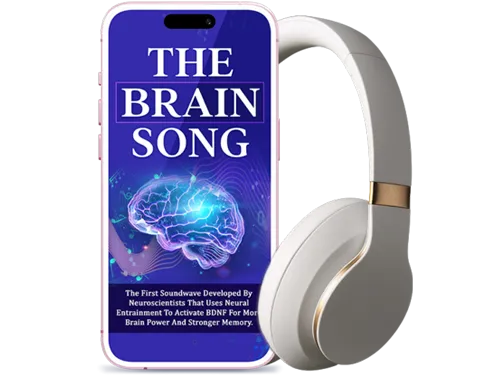 Boost your morning puzzle performance and clear your mental fog with the 12-minute Brain Song routine here.Transform My Focus Now!