
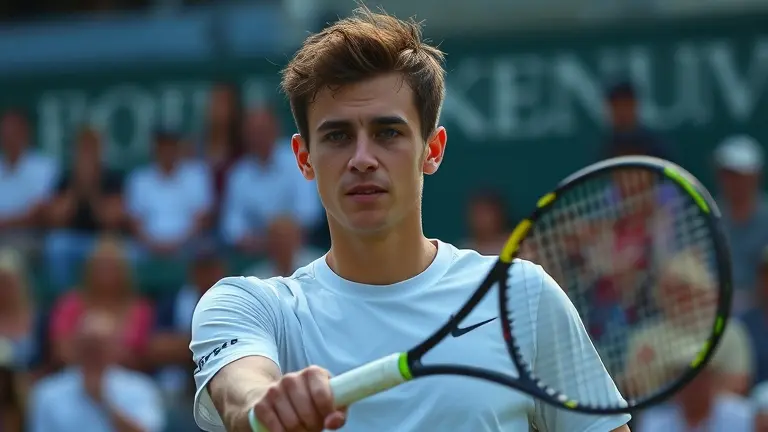
The grass courts of the Queen’s Club are witnessing a transformation. As the 2026 tournament heats up, Alex de Minaur has emerged as a formidable force, pairing his trademark agility with a newfound tactical patience that has propelled him into the quarterfinals. Following a gritty runner-up performance at the Libema Open, De Minaur’s current momentum is more than just a hot streak; it is the culmination of a deliberate recalibration of his game. Analysts and fans alike are buzzing, not just about his lightning-fast net play, but about the steely resolve he displays when the scoreline tightens.
This ‘turnaround’ in form has set the stage for an intense campaign at Wimbledon 2026, where the Australian tennis leader is no longer just a contender, but a genuine threat to the elite. While his physical speed is visible to all, the true story of De Minaur’s success lies deeper. It is the story of a professional athlete mastering the ‘invisible engine’—the unwavering mental focus required to make split-second, high-stakes decisions under the crushing pressure of championship tennis.
Alex de Minaur’s 2026 Grass-Court Surge: From Queen’s Club to Title Contender
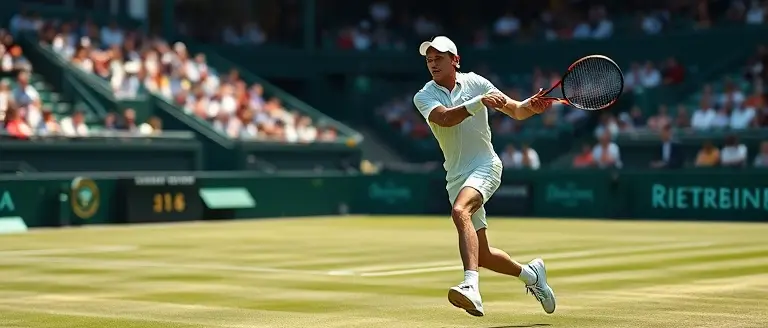
The 2026 grass-court season has witnessed a remarkable transformation for Alex de Minaur, who has firmly established himself as a primary contender at the prestigious Queen’s Club Championships. After securing his spot in the quarterfinals, the Australian standout has demonstrated the tactical maturity and physical resilience required to excel on the surface. This run follows his impressive runner-up finish at the Libema Open, a performance that served as a catalyst for his current momentum. Experts have praised his “incredible turnaround” in form, noting that his ability to adapt his baseline speed to the slick grass of London has been the defining factor of his recent success.
Strategic Dominance and Net Play
Central to De Minaur’s success is his refined approach to net play, which has transitioned from a defensive necessity to an aggressive weapon. By consistently shortening points, he has successfully mitigated the fatigue associated with high-intensity rallies, a strategy that bodes well for his upcoming challenges at Wimbledon 2026. His current trajectory is not merely a reflection of short-term gains but a clear manifestation of his evolution as a top-tier professional tennis player.
Key performance indicators driving his 2026 success include:
- Tactical Versatility: An improved ability to dictate play from both the forehand and backhand wings.
- Mental Toughness: A demonstrated capacity to recover from early-match deficits, as seen in his opening rounds at Queen’s.
- Consistency: Sustaining high-quality output across back-to-back tournament weeks.
It is essential for followers of the sport to distinguish these athletic achievements from unrelated trending search entities; while the name “Alex” may appear in various news cycles—such as reports concerning Alex Murdaugh—the professional career of Alex de Minaur is strictly confined to the sphere of international tennis. As the tournament reaches its climax, all eyes remain on whether the Aussie leader can convert this high-level form into a deep run at the All England Club. His recent progression suggests that he is not only in his prime but is actively closing the gap between being a consistent tour player and a genuine Grand Slam title threat.
The Evolution of ‘The Demon’: Analyzing His Refined Net Play

Known for his relentless baseline speed and defensive tenacity, Alex de Minaur has systematically upgraded his tactical repertoire to become a formidable force on grass. His 2026 campaign at the Queen’s Club Championships highlights a significant evolution in his game: a calculated transition from pure counter-punching to proactive, high-percentage net play. By closing the gap on opponents earlier in rallies, De Minaur has successfully shortened points on the slick grass surfaces, effectively conserving energy while maintaining constant pressure on his opposition.
Technical Adjustments and Tactical Versatility
The “Demon’s” recent performances reveal a refined approach to approach shots and volley technique. Evidence suggests that his ability to identify short balls and transition forward has become a cornerstone of his current success. His improved net play serves two primary functions:
- Shot Efficiency: By taking the ball on the rise and executing sharp, angled volleys, De Minaur forces opponents into difficult passing shots, reducing the duration of long, grinding rallies that were previously his hallmark.
- Court Coverage: His natural athleticism allows him to cover the net with unparalleled agility, making him difficult to lob or pass even for the tour’s most skilled ball strikers.
This tactical pivot is vital as he looks toward Wimbledon 2026. Modern grass-court tennis requires a blend of speed and technical variety; De Minaur’s willingness to disrupt rhythm through net-rushing gives him a distinct advantage over one-dimensional baseliners. His recent “incredible turnaround” during his opening rounds at Queen’s demonstrates that this adjustment is not merely experimental but a functional, reliable component of his championship-caliber strategy. By mastering the front court, the Australian star has transformed from a defensive specialist into a multi-faceted grass-court threat capable of dismantling the top seeds in the London draw.
Predicting Wimbledon 2026: Is De Minaur a Genuine Threat?

As the tennis world turns its collective gaze toward the All England Club, Alex de Minaur has firmly established himself as a legitimate contender for the 2026 Wimbledon title. His recent performances during the grass-court swing, particularly his resilience at the Queen’s Club Championships, suggest that his tactical evolution is peaking at the perfect time. Unlike previous seasons where his game relied heavily on defensive retrieval, the current iteration of the Australian star features a more aggressive, front-foot approach. By integrating high-percentage net play and improved service placement, he has successfully transitioned from a specialized counter-puncher into a well-rounded grass-court force capable of disrupting top-tier opponents.
Key Factors Driving His Grass-Court Momentum
The “turnaround” narrative surrounding De Minaur is supported by quantifiable improvements in his match-play metrics. His ability to shorten points and exploit the low bounce of the grass surface has transformed his statistical ceiling. Analysts note several critical components currently fueling his trajectory:
- Net Efficiency: His “devilishly good” net play has become a cornerstone of his strategy, providing a necessary weapon against power hitters who struggle with his court coverage.
- Tactical Flexibility: De Minaur has shown a greater willingness to adapt mid-match, a maturity that is essential for surviving the best-of-five format at a Grand Slam.
- Mental Fortitude: Recent comments regarding his support system and training environment indicate a newfound focus that is helping him maintain composure during high-stakes pressure points.
While established favorites remain in the draw, the data suggests that De Minaur is far more than a “dark-horse” candidate. His runner-up finish at the Libema Open served as an ideal primer for his current form, and his success alongside compatriots like Rinky Hijikata at Queen’s highlights the rising tide of Australian tennis. If he continues to optimize his baseline-to-net transition, evidence suggests he possesses the physical stamina and strategic acumen to make a deep, potentially historic run at Wimbledon 2026.
The Australian Leader: A Turning Point in Professional Growth

As the 2026 season progresses, Alex de Minaur has firmly solidified his position as the standard-bearer for Australian tennis. No longer merely a promising talent, the 27-year-old has evolved into a tactically astute, world-class competitor whose current form on the grass courts of the Queen’s Club Championships signals a deeper level of professional maturation. His journey, marked by consistent rankings growth and tactical refinement, reflects an athlete who has successfully shouldered the heavy expectations placed upon him by the Australian sporting public.
A Maturing Competitive Mindset
Evidence suggests that de Minaur’s current performance is the result of a calculated shift in his professional approach. By balancing aggressive baseline play with improved net efficiency—a development frequently highlighted in recent high-quality video analysis—he has transformed himself into a more multidimensional threat. Key factors contributing to his recent “incredible turnaround” include:
- Tactical Versatility: A newfound willingness to shorten points through refined serve-and-volley tactics.
- Mental Resilience: Enhanced composure during high-pressure matches, allowing him to navigate “scrappy” wins against top-tier opponents.
- Leadership Presence: Acting as a stabilizing force for fellow Australian players like Rinky Hijikata, fostering a culture of collective success on the global circuit.
- Emotional Integration: His transparent acknowledgment of the support system provided by partner Katie Boulter, which has provided a psychological equilibrium essential for sustaining long-tournament runs.
This maturation process is not just about rankings; it is about his development into a leader who understands the weight of national pride. As he pivots toward Wimbledon 2026, the narrative surrounding Alex de Minaur is no longer defined by his potential, but by his established ability to execute under the bright lights of prestigious ATP 500 events. His ability to perform consistently across surfaces confirms that he has entered his physical and mental prime, positioning him as a formidable contender for deep Grand Slam runs in the coming months.
Mastering the Invisible Game
Alex de Minaur’s ascent is a masterclass in professional growth, proving that long-term success is built as much in the mind as it is on the court. His ability to maintain composure during critical rallies at Queen’s highlights that the differentiator between a talented player and a champion is the capacity to harness pure, uninterrupted focus when it matters most.
While Alex’s physical prowess and net agility are clear, his true competitive edge is his cognitive stamina. You can mirror this high-performance mindset in your own professional and personal life. Just as an elite athlete relies on mental clarity to dominate the grass, you can sharpen your cognitive engine through neuroscience-based auditory training. The Brain Song is designed for those who demand peak mental sharpness, providing the exact tools needed to bridge the gap between reactive performance and proactive excellence.
By integrating this non-invasive, science-backed approach into your routine, you are not just working harder; you are training your brain to sustain the high-level focus required to reach your personal ‘Wimbledon.’ Unlock the same mental focus used by high-performance professionals and start your journey toward total clarity today.
 Unlock the same mental focus used by high-performance professionals; start your 12-minute daily cognitive routine here.Transform My Mental Clarity Today!