

As the 2026 U.S. Open descends upon the brutal, windswept fairways of Shinnecock Hills, all eyes are locked on Rory McIlroy. Following his triumphant Masters victory earlier this year, McIlroy returns to the major stage not just as a competitor, but as a vocal critic of the PGA Tour’s controversial structural overhaul, which he famously dismissed as a “glorified Korn Ferry Tour.” His arrival in New York is defined by a striking duality: the technical precision required to navigate Shinnecock’s legendary “2 p.m. watering quirks” and the heightened, somewhat combative mental clarity of a man chasing a career-defining Grand Slam arc.
While the headlines focus on his equipment adjustments and his sharp critiques of the tour’s two-tiered system, the real story lies in his evolution. McIlroy is operating at a peak intensity that separates the champions from the contenders. To conquer a course that demands absolute mental fortitude under tournament pressure, he is tapping into a level of cognitive sharpness that goes far beyond the driving range. For the elite golfer, understanding the intersection between McIlroy’s technical preparation and his mental state is the key to mastering the game at its highest level.
Rory McIlroy at Shinnecock: Navigating Controversies and High Expectations

As the golf world descends upon Shinnecock Hills for the 2026 U.S. Open, Rory McIlroy finds himself at the epicenter of both competitive anticipation and professional discord. Fresh off a career-defining victory at the 2026 Masters, McIlroy enters this major as the man to beat. However, his focus is currently split between mastering a notoriously difficult Shinnecock layout and voicing strong, unfiltered criticisms regarding the structural trajectory of professional golf.
The Structural Debate: A ‘Two-Tiered’ Turmoil
McIlroy has become the de facto voice of player frustration regarding the latest PGA Tour structural changes. His characterization of the new system as a “glorified Korn Ferry Tour” signals deep-seated concerns about the long-term stability and prestige of the professional circuit. His arguments center on:
- Elite Pathing: Concerns that the new tiering system creates a disconnect between the tour’s developmental goals and the elite level of major championships.
- Competitive Integrity: A belief that the current system lacks the necessary cohesion to maintain the stature of a premier global golf brand.
- Player Agency: A demand for more transparent leadership as the tour pivots to a model that many seasoned professionals—McIlroy included—deem fundamentally flawed.
Shinnecock Challenges and High Stakes
Beyond the boardroom, McIlroy is navigating the granular technicalities of Shinnecock Hills. He has been notably vocal about specific course management issues, specifically criticizing a “2 p.m. watering quirk” that threatens to disrupt the uniformity of the putting surfaces. For a player aiming to secure more Grand Slam success, these variables represent significant hurdles. As the gallery watches to see if his current form can translate to a U.S. Open triumph, his willingness to challenge both the Tour’s governance and the USGA’s course preparation marks him as a player who is operating with high stakes and absolute conviction. Whether these distractions hinder his performance or fuel his competitive fire remains the primary storyline of this week.
The Masters Momentum: Analyzing the Redemption Arc

The 2026 Masters victory served as the ultimate catharsis for Rory McIlroy, effectively shedding the “nearly man” narrative that had followed him through years of near-misses in major championships. By securing the Green Jacket, McIlroy did more than add to his trophy cabinet; he fundamentally recalibrated his mental approach to high-stakes pressure. This newfound psychological equilibrium is the primary X-factor heading into the 2026 U.S. Open at Shinnecock Hills. Where previous iterations of McIlroy might have pressed for perfection, the veteran version now exhibits a calculated patience—a vital asset for a notoriously demanding venue that punishes errant aggression.
The Shift in Competitive Psychology
Evidence suggests that McIlroy’s victory at Augusta National has created a “relief effect,” allowing him to approach major championship weeks with renewed clarity. Rather than chasing validation, he is playing from a position of historical security. This transition is evident in his recent tactical adjustments, where he prioritizes consistent ball-striking over high-variance heroics. Key indicators of his evolved form include:
- Improved Scrambling Efficiency: His ability to navigate difficult greenside situations has reached elite levels, matching his peak driving statistics.
- Decisive Course Management: McIlroy is showing a marked preference for conservative target lines on reachable par-4s, avoiding the “water hazards of ambition” that previously cost him.
- Mental Resilience: The capacity to bounce back from bogey streaks without losing focus, a discipline notably absent during his early career major struggles.
At Shinnecock Hills, where the firm and fast conditions demand absolute composure, McIlroy’s status as a reigning major champion provides him with an undeniable competitive advantage. He enters this U.S. Open not as a contender seeking redemption, but as a seasoned professional comfortable in his own skin, ready to navigate one of the toughest tests in golf with the calm efficiency of a champion. His trajectory indicates that this surge of momentum could sustain a deep run, marking a defining chapter in his legacy.
Technical Deep Dive: The Teased Equipment Adjustments

As Rory McIlroy prepares for the demanding test at Shinnecock Hills, his team has signaled subtle but significant modifications to his gear profile. Given the U.S. Open’s reputation for firm fairways and notoriously treacherous greens, McIlroy is prioritizing trajectory control and spin management. Evidence suggests that McIlroy is testing a adjusted wedge setup to optimize his performance around the greens, focusing on specific sole grinds that provide versatility on tight, baked-out lies. By refining the bounce and leading-edge geometry of his wedges, he aims to extract more consistent contact—a prerequisite for salvaging pars when the course firming begins to peak.
Precision Engineering for Shinnecock Hills
The equipment adjustments extend beyond the short game, with reports indicating potential tweaks to his driver and long-iron specs. To navigate the specific challenge of the “2 p.m. watering quirk” and the unpredictable wind patterns at Shinnecock, McIlroy is experimenting with shaft length and head loft settings. These adjustments are designed to tighten his dispersion and manage spin rates, ensuring that he can flight the ball lower when necessary to keep it under the breeze.
- Wedge Grinds: Increased heel relief allows for better manipulation of the club face on firm turf.
- Spin Optimization: Refined head weighting to minimize ballooning, maintaining a piercing trajectory in the afternoon winds.
- Launch Windows: Subtle loft adjustments help him match his 2026 major-winning form with the specific firmness of this year’s U.S. Open venue.
For the informed golf enthusiast, these technical shifts reflect a broader strategy of “major-proofing” his bag. While the average viewer sees a standard driver, McIlroy’s focus is on the micro-adjustments that prevent high-spin misses, ensuring that his path to further Grand Slam success is supported by the most precise equipment currently available on the PGA Tour.
The ‘Two-Tiered’ Tour: Impact on Long-Term Stability
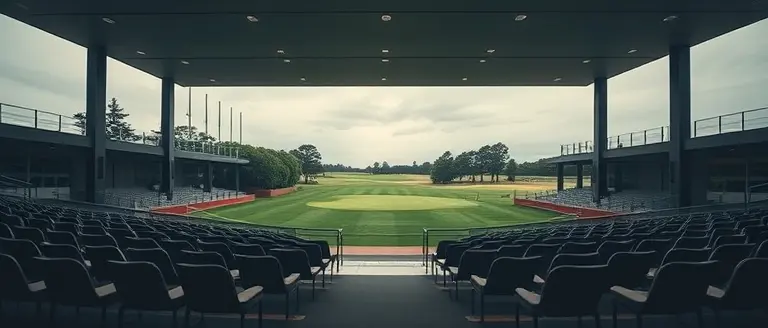
As Rory McIlroy arrives at Shinnecock Hills for the 2026 U.S. Open, his focus is split between major championship glory and the structural volatility of the PGA Tour. His recent dismissal of the newly implemented “two-tiered” system as a “glorified Korn Ferry Tour” has sparked intense debate regarding the future of the professional golf ecosystem. While proponents of the tiered structure argue it simplifies the viewing experience and concentrates elite talent in signature events, critics like McIlroy fear it creates a rigid class system that stifles the organic progression of rising stars.
Analyzing the Structural Risk
The primary concern among industry analysts is the potential erosion of talent depth. By creating a distinct separation between “Signature” and “Standard” tiers, the tour risks isolating the upper echelon from the foundational events that historically served as proving grounds for future champions. Key concerns regarding this shift include:
- Talent Stratification: A widening gap in World Ranking points and financial incentives may discourage top-tier players from competing in regional events, thinning the field of stars at historic venues.
- Viewer Engagement: While premium events see higher initial engagement, the dilution of standard tour events could lead to a broader loss of broadcast viewership and secondary market interest.
- Competitive Integrity: By institutionalizing tiers, the tour may inadvertently limit the “Cinderella story” narrative, which is a staple of professional golf’s appeal to the casual sports fan.
McIlroy’s candid criticism reflects a deeper anxiety that the tour is prioritizing short-term revenue models over the long-term preservation of the game’s competitive meritocracy. As the golf world watches his performance at Shinnecock, the debate over whether this tiering serves as a necessary evolution or a detrimental contraction will undoubtedly remain a focal point for players, stakeholders, and fans alike. The long-term stability of the PGA Tour depends on finding a balance that honors its history while maintaining financial viability.
Master Your Own Major Performance
Rory McIlroy’s pursuit of glory at Shinnecock Hills is a masterclass in high-stakes execution, proving that physical talent is only half the battle. Whether he is dissecting course conditions or navigating the political landscape of the PGA Tour, his success hinges on an unwavering, razor-sharp focus that allows him to remain locked in when the pressure is at its absolute peak. For the serious enthusiast, replicating this elite state is not just a dream—it is a reachable standard of mental conditioning.
While McIlroy relies on hours of range time and course scouting, he also attributes his success to a heightened state of mental clarity—an attribute that science now allows us to sharpen in our daily lives. This is where The Brain Song becomes your essential partner. Designed as a neuroscience-backed tool for cognitive optimization, it helps high-achievers mitigate mental fog and enhance decision-making capacity. By integrating this into your routine, you can bridge the gap between passive sports appreciation and your own pursuit of peak cognitive performance.
Aligning your mental state with the rigorous demands of your daily challenges is the natural next step for anyone chasing excellence. Just as McIlroy prepares his mind for the grueling test of a U.S. Open, you can equip yourself with the clarity needed to conquer your own complex challenges. Experience the mental edge that drives champions.
 Unlock your elite mental state today and experience the same cognitive sharpening that drives the world’s best athletes.Transform My Life Today