
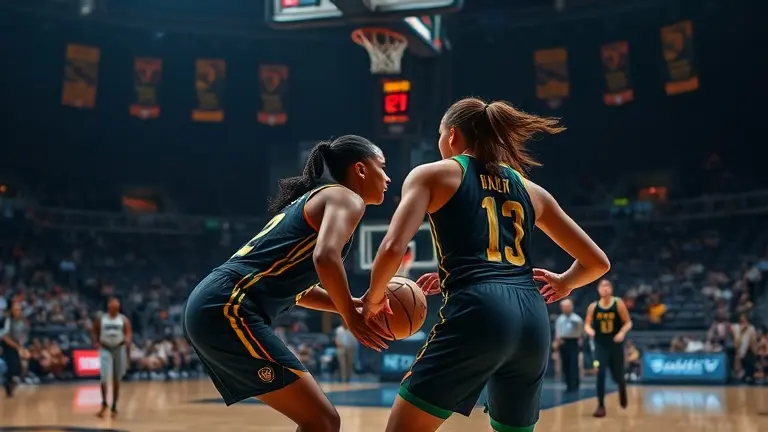
The June 16, 2026, showdown at Gainbridge Fieldhouse between the Indiana Fever and the Toronto Tempo was more than just a regular-season clash; it was a masterclass in tactical basketball that has ignited fervent debate across the league. While the casual viewer may have been dazzled by the raw athleticism on display, those digging deeper into the tempo vs fever narrative witnessed an evolution in playmaking that signals a shift in the WNBA’s competitive landscape. With the Indiana Fever proving their dominance through a sophisticated display of team chemistry, the game served as a stark reminder that modern basketball is a high-speed game of chess.
Beyond the box scores and betting odds, the true story lies in the precision of the Fever’s execution. From the record-breaking assist metrics posted by Caitlin Clark to the nuanced, opportunistic scoring of Sophie Cunningham, this performance provided a wealth of analytical material for fans willing to look closer. As we move away from ephemeral game-day recaps, it is time to shift our focus toward the underlying strategies that allowed Indiana to dismantle Toronto’s defensive schemes, revealing exactly how professional-grade basketball is won in the modern era.
Recap: Indiana Fever vs. Toronto Tempo – A June 16th Showdown

The June 16, 2026, fever vs tempo matchup at Gainbridge Fieldhouse arrived with significant expectations, serving as a litmus test for both franchises mid-season. Entering the arena, the Indiana Fever held a respectable 8-5 record, looking to cement their status as a top-tier playoff contender, while the Toronto Tempo arrived with a 7-7 standing, eager to upset the home-court advantage. The atmosphere in Indianapolis was electric, driven by a surge in demand for live broadcasts and a heightened focus on the playmaking clinic expected from Indiana’s star-studded roster.
Key Game Dynamics and Player Performances
From the opening tip-off, it became clear that the Fever’s tactical preparations were designed to exploit the Tempo’s defensive perimeter. The game was ultimately defined by a masterclass in vision and ball distribution. Caitlin Clark dominated the narrative, setting a new benchmark for assist metrics that forced Toronto to scramble throughout the second half. Her ability to dismantle the defense provided the perfect platform for her teammates to flourish, most notably Sophie Cunningham, whose offensive aggression and reliable shooting proved lethal against Toronto’s struggling defensive rotations.
Several critical factors contributed to the final outcome:
- Playmaking Efficiency: The Indiana Fever utilized high-pick-and-roll sets to neutralize the Toronto Tempo frontcourt, leading to wide-open perimeter looks.
- Supportive Scoring: While Clark orchestrated the offense, the emergence of Sophie Cunningham as a primary scoring threat provided the necessary depth to keep the scoreboard lopsided.
- Defensive Resilience: The Fever’s ability to limit the Tempo’s transition scoring allowed Indiana to dictate the pace, effectively controlling the game’s momentum for three consecutive quarters.
This victory not only improved Indiana’s standing but also highlighted the growing chemistry within their squad. By systematically breaking down the Tempo’s defensive schemes, the Fever proved that their offensive ceiling continues to climb as they head deeper into the WNBA regular season.
Caitlin Clark’s Playmaking Masterclass: The Assist Record Breakdown

In the highly anticipated tempo vs fever matchup at Gainbridge Fieldhouse, Caitlin Clark delivered a performance that redefined perimeter playmaking in the WNBA. By consistently dismantling the Toronto Tempo defensive scheme, Clark’s ability to manipulate defensive rotations allowed the Indiana Fever to maintain high-efficiency scoring sequences throughout the game. Her record-setting assist tally was not merely a byproduct of volume, but a strategic masterclass in exploiting defensive lapses, particularly when Toronto shifted into high-pressure man-to-man coverage.
Decoding the Tactical Breakdown
Clark’s success stemmed from her elite court vision and the precision of her transition passing. When the Toronto Tempo attempted to trap her at the top of the key, she consistently identified the “short roll” or the open corner shooter, effectively neutralizing the double-team before it could disrupt the Fever’s offensive flow. Key observations from the game include:
- Manipulating Defensive Gravity: Clark frequently drew two defenders toward the logo, creating a 4-on-3 advantage that led to high-percentage looks for teammates like Sophie Cunningham.
- Transition Vision: Her ability to throw “hit-ahead” passes in transition caught the Tempo defense off-balance, consistently punishing them for failing to get back in their defensive sets.
- Pick-and-Roll Execution: Clark utilized precise screen navigation to force switches, identifying mismatches between Tempo’s perimeter defenders and the Indiana Fever’s frontcourt players.
The synergy between Clark and her teammates was a primary driver for the Fever’s dominant offensive output. By forcing the Tempo defense to account for her deep-range shooting threat, she opened up passing lanes that would otherwise be contested. This tactical flexibility highlights the evolution of Clark’s game, as she moves beyond scoring to become an elite floor general capable of breaking down even the most disciplined defensive structures. The evidence from this game suggests that as long as she dictates the pace, the Fever possess the infrastructure to outplay teams with deeper rotations like Toronto.
Sophie Cunningham’s Impact: Beyond the Stat Sheet
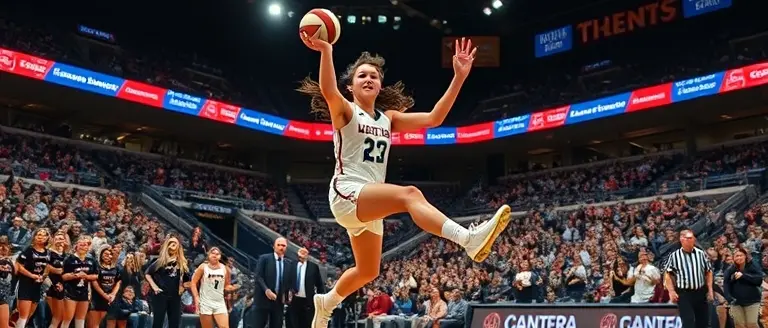
While the Indiana Fever victory over the Toronto Tempo on June 16, 2026, was largely defined by Caitlin Clark’s record-setting assist metrics, the tactical success of the team rested heavily on the veteran presence of Sophie Cunningham. Beyond the raw numbers found in the box score, Cunningham provided a stabilizing force that allowed the Fever to maintain their offensive rhythm against a scrappy Tempo defense. Her ability to operate as a secondary scoring option effectively neutralized the Toronto defensive focus, which was stretched thin attempting to account for Clark’s perimeter gravity and elite court vision.
Defensive Versatility and Floor Spacing
Cunningham’s role in the tempo vs fever matchup highlighted her evolution into a true two-way weapon. Her contributions were not limited to shooting; they extended to high-IQ defensive rotations and perimeter pressure that disrupted Toronto’s backcourt flow. By forcing difficult possessions, Cunningham enabled the Fever to transition quickly into their preferred high-tempo offense. Key aspects of her performance that bolstered the team included:
- Gravity and Spacing: Her presence on the wing prevented the Toronto Tempo defense from collapsing entirely on Clark during pick-and-roll sequences.
- Defensive Versatility: She showcased an ability to guard multiple positions, often taking on the challenge of slowing down the Tempo’s most efficient scorers in transition.
- Secondary Playmaking: Cunningham demonstrated improved decision-making, acting as a release valve when double teams were sent toward the Fever’s primary ball handlers.
Evidence from the game suggests that the Fever are evolving into a more cohesive unit where star power is augmented by reliable role players. When Sophie Cunningham is effectively integrated into the offensive scheme, the Fever possess a level of offensive diversity that makes them incredibly difficult to defend. This performance was a clear indicator that for the Indiana Fever to sustain a deep playoff run, the chemistry between Clark’s playmaking and Cunningham’s veteran poise will remain the engine of their success.
Strategic Failures: Why the Toronto Tempo Defense Struggled
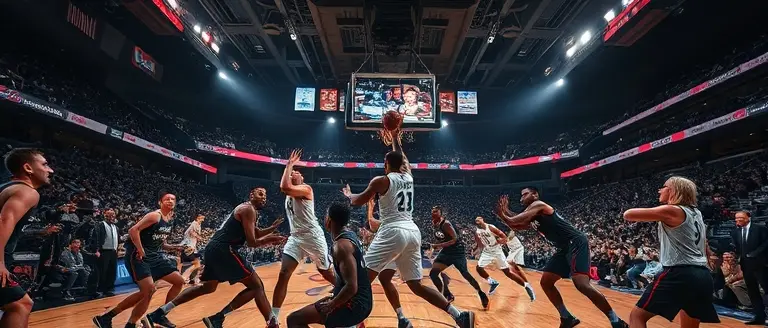
The fever vs tempo matchup on June 16, 2026, served as a masterclass in how defensive hesitation can unravel a professional game plan. While the Toronto Tempo entered the contest with a respectable .500 record, their defensive scheme failed to adapt to the high-tempo offensive orchestrations led by Caitlin Clark. Analysts noted that the Tempo’s insistence on a traditional drop-coverage defense allowed Clark to dictate the pace of the game, consistently finding seams in the perimeter defense. By refusing to pressure the ball early in the half-court set, the Toronto defense left their post players stranded on an island, forcing them to choose between contesting Clark’s lethal deep-range shooting or abandoning their assignments in the paint.
Defensive Breakdowns and Rotational Failures
The most glaring issue for the Toronto unit was the inability to track off-ball movement, specifically the high-IQ cuts executed by Sophie Cunningham. The Indiana Fever exploited these gaps repeatedly, utilizing Cunningham as a secondary playmaker who thrives on chaotic defensive rotations. When the Tempo focused their energy on hedging against Clark, they habitually lost track of Cunningham on the weak side.
Key defensive failures included:
- Failure to switch: The Toronto defense repeatedly defaulted to fighting through screens rather than switching, allowing the Fever to generate high-percentage looks.
- Poor transition recovery: The Tempo struggled to match up in semi-transition, often leaving Clark wide open at the top of the key after missed shots.
- Over-commitment to the ball: By collapsing too far into the lane to challenge drives, the Tempo left corner shooters and perimeter threats like Clark with massive pockets of space.
Ultimately, the defensive struggles were a byproduct of a scheme that lacked the versatility required to contain an elite distributor. As evidenced by the post-game analysis, the Indiana Fever exploited these tactical rigidities to build an insurmountable lead, forcing Toronto to chase the game rather than setting their own defensive tempo.
Elevate Your Analytical Game
The Indiana Fever’s masterclass against the Toronto Tempo wasn’t just a highlight reel—it was a blueprint for modern basketball execution. By dissecting the tactical layers behind Caitlin Clark’s record-shattering assists and Sophie Cunningham’s pivotal spatial awareness, we see that the true value of the game lies beyond the final scoreboard. Understanding these nuances separates the casual fan from the true student of the sport.
However, processing the sheer velocity of these tactical shifts requires more than just interest; it demands peak mental clarity. Just as the Indiana Fever rely on split-second decision-making on the court, your ability to break down complex plays depends entirely on your own cognitive sharpness. When the game moves at this pace, mental fatigue can cause you to miss the very details that define a team’s strategy.
This is where The Brain Song becomes your essential pre-game ritual. By leveraging scientifically backed auditory stimulation to enhance focus and accelerate your processing of complex information, it allows you to synthesize game-day analytics with professional-grade alertness. Think of it as upgrading your internal processor so you can keep up with the elite movement on the court, turning you from a passive spectator into a sharp, observant analyst who catches every tactical nuance.
 Ready to sharpen your analytical edge? Start your 12-minute daily audio routine to boost your cognitive focus and catch every tactical nuance in today’s game recap.Sharpen My Analytical Edge Now!