
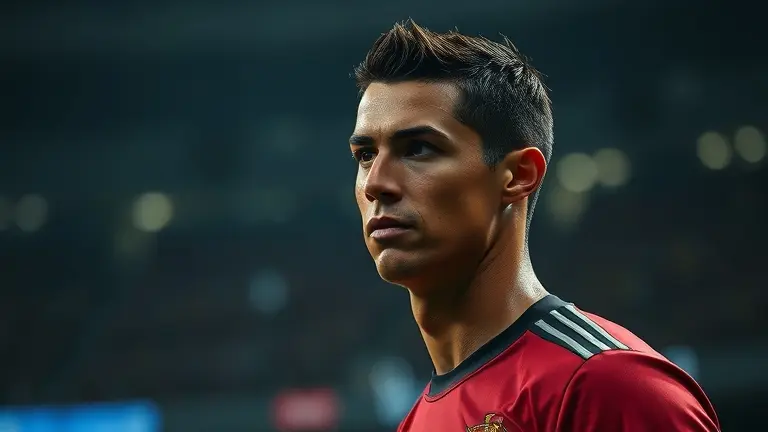
As Cristiano Ronaldo steps onto the pitch for what he has confirmed will be his final World Cup, the global conversation has shifted from his legendary career stats to a singular, piercing question: How old is Ronaldo, and how is he still competing at this level? At 41, CR7 is defying the biological clock that has forced contemporaries like Harry Kane or even the fading icons of his generation into early retirement or less rigorous leagues. His presence in the 2026 Portugal squad isn’t just a tribute to his legacy; it is a profound testament to an unprecedented era of athletic preservation.
Yet, behind the headlines of his physical durability lies a scientific reality that fascinates experts and fans alike. Ronaldo’s continued elite output forces us to confront the ‘physiology of longevity.’ While the debate over whether he remains a tactical asset or an anchor for the Portuguese team continues to ignite sports forums, his physical state remains undeniable. He stands as a living case study of how professional discipline, when paired with optimal metabolic maintenance, can extend the peak of human athletic performance long after the traditional decline begins.
The 41-Year-Old Phenomenon: Why Ronaldo is the Final Outlier
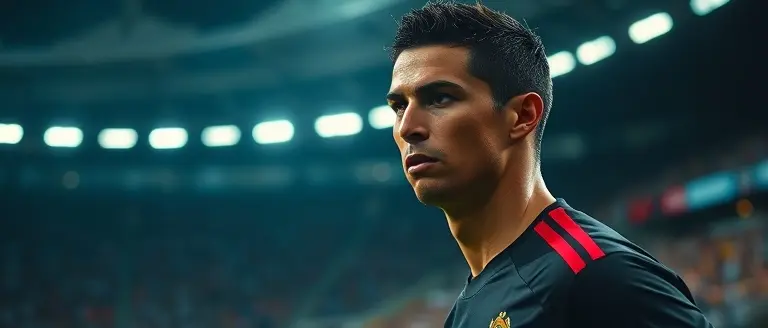
As the 2026 FIFA World Cup captures the global imagination, the question of how old is Cristiano Ronaldo has transformed from a simple trivia inquiry into a profound exploration of human potential. At 41 years old, CR7 is not merely participating in the tournament; he is anchoring the Portuguese squad and rewriting the biological expectations of elite football. This appearance, which he confirmed to CNN would “definitely” be his final World Cup, marks the conclusion of a historic career that has spanned over two decades. His presence on the pitch serves as a stark reminder that we are witnessing the end of an era, positioning him as the final outlier in a sport that typically pushes players toward retirement a full decade earlier.
Redefining the Athlete’s Lifecycle
The public fascination with his longevity is well-founded, as Ronaldo’s ability to maintain high-intensity performance levels at an age where most contemporaries have long since pivoted to coaching or punditry is unprecedented. While younger stars like Harry Kane continue to set their own scoring records, the narrative surrounding Ronaldo is one of meticulous physical management and tactical adaptation. His longevity is supported by several key factors:
- Precision Conditioning: A career-long dedication to recovery science and hyper-specific nutrition.
- Tactical Evolution: Shifting from a high-speed winger to a clinical, positioning-based striker to mitigate the natural decline in explosive acceleration.
- Psychological Resilience: Maintaining the “excited and anxious” intensity noted by teammate Bruno Fernandes, proving that mental sharpness is as vital as physical endurance.
By defying conventional retirement timelines, Ronaldo has fundamentally shifted the perception of career longevity in professional sports. Whether he is viewed as a tactical centerpiece or an experienced leader in the locker room, his impact on the 2026 World Cup ensures that his legacy as a physical anomaly remains secure for generations to come.
Beyond Biology: The Science of Sustained Performance
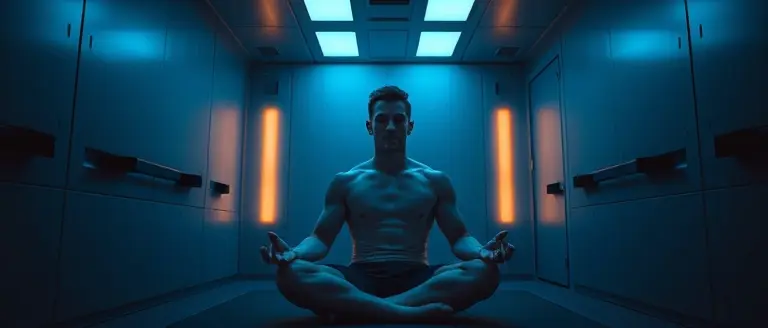
The question of how old is Cristiano Ronaldo is no longer just a biographical detail; it has become a central case study in human sports science. At 41 years old, CR7 has transcended traditional athletic aging curves, shifting the discourse from mere chronological age to the mechanics of sustained biological output. His ability to remain a pivotal figure in the 2026 World Cup is not a stroke of luck, but the result of a meticulously engineered lifestyle that prioritizes recovery as much as training intensity. Experts suggest that his longevity is underpinned by a three-pillar strategy: molecular-level nutrition, advanced sleep architecture, and a perpetual “growth mindset” that keeps his cognitive reflexes sharpened for the high-pressure demands of international football.
The Pillars of Elite Longevity
While contemporary players like Harry Kane continue to push the boundaries of modern scoring, Ronaldo’s methodology focuses on preserving explosive power and muscle elasticity long after most professionals retire. His daily routine is defined by:
- Precision Nutrition: A strict adherence to a high-protein, low-sugar diet tailored to his current metabolic profile, avoiding inflammatory foods that slow post-match recovery.
- Active Recovery: Utilization of cryotherapy, hyperbaric oxygen chambers, and structured mobility sessions that minimize the micro-trauma typically associated with decades of elite competition.
- Cognitive Resilience: His intense focus and “anxious” competitive drive, noted by teammates like Bruno Fernandes, suggest that his mental fortitude acts as the final buffer against physical fatigue.
By viewing his age as a manageable variable rather than an immovable barrier, Cristiano Ronaldo has effectively redefined what is possible for an elite athlete. Whether he is viewed as a tactical anchor or a lethal finisher, the science of his longevity proves that through obsessive discipline, the human body can remain competitive well into its fourth decade. This dedication to his craft serves as a masterclass for future generations, illustrating that the fading of a legend is ultimately a choice of lifestyle rather than a biological inevitability.
Tactical Evolution or Tactical Liability?
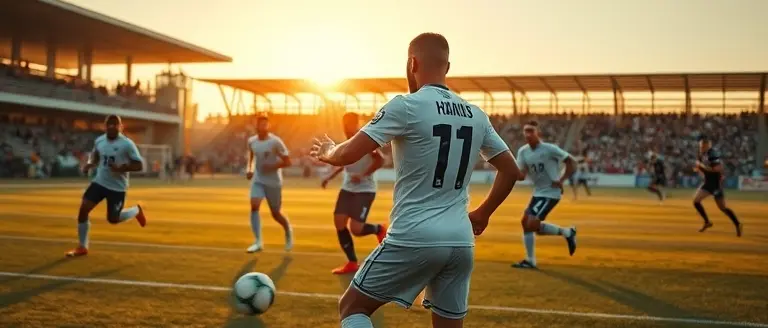
The discourse surrounding CR7 at the 2026 FIFA World Cup is fundamentally polarized, oscillating between awe at his historical longevity and critical scrutiny regarding his on-pitch utility. At 41 years old, Cristiano Ronaldo no longer possesses the blistering pace that defined his tenure at Manchester United or Real Madrid. Skeptics argue that in an era of high-intensity, Gegenpressing football, his limited defensive tracking and reduced mobility turn him into a tactical liability, forcing the rest of the Portugal squad to compensate for his lack of spatial coverage. Critics often point to these defensive gaps as a potential anchor that prevents the team from maintaining a cohesive, modern press against elite international opposition.
However, a more nuanced analysis reveals a deliberate tactical evolution. Rather than being a liability, Ronaldo has transitioned into a “goal-poaching pivot” who dictates the final third through sheer positioning intelligence. By conserving energy during defensive phases, he remains explosive in the box, utilizing his superior anticipation to exploit spaces younger defenders often overlook. Coach-player chemistry has been vital in this transition; the Portuguese staff has recalibrated their system to allow the 41-year-old icon to remain a focal point without requiring him to cover expansive ground.
Key aspects of this tactical adaptation include:
- Off-Ball Positioning: Ronaldo excels at drawing defenders toward him, effectively creating pockets of space for teammates like Harry Kane—or in this case, his younger Portuguese cohorts—to exploit.
- Clinical Efficiency: While his volume of sprints has decreased, his efficiency in converting high-value chances remains statistically elite compared to his peers.
- Psychological Gravity: His presence acts as a gravity well, shifting the opponent’s defensive focus and allowing Portugal to dictate play through calculated, methodical build-ups rather than chaotic transitions.
Ultimately, whether Ronaldo is viewed as a liability or a strategic masterstroke depends on the team’s ability to facilitate his current physical profile. As he competes in what is confirmed to be his final World Cup, his role is less about covering every blade of grass and more about providing a clinical, veteran anchor in a high-pressure environment. Evidence suggests that when the tactical framework is built to support his specific aging curve, his impact remains disproportionately high relative to his limited defensive contribution.
The Retirement Anxiety: Grappling with the End of an Era
The global football community finds itself in a state of collective introspection as Cristiano Ronaldo takes the pitch for what he has confirmed will be his final World Cup. For a generation of fans who have come of age in the shadow of his dominance, how old is Cristiano Ronaldo is no longer just a biographical query; it is a timestamp on an entire era of sporting excellence. This “retirement anxiety” stems from the reality that the professional landscape is shifting. With legends like Ronaldo, Lionel Messi, and Luka Modrić reaching the final chapters of their careers, the sport faces an inevitable transition that feels less like a simple changing of the guard and more like the end of a cultural epoch.
Why the 2026 World Cup Marks a Historic Threshold
The sentiment surrounding the Portugal captain is unique because he represents the ultimate outlier in professional longevity. As he competes at age 41, the discourse transcends mere performance metrics. Fans are grappling with the psychological finality of his departure, creating a heightened emotional investment in every touch, goal, and tactical decision he makes on the field. This anxiety is fueled by several factors:
- The “Ever-Present” Mythos: CR7 has been a constant at the pinnacle of football for over two decades. His removal from the international stage removes a narrative anchor that has defined global sports discourse since the early 2000s.
- The Contrast with Modern Players: Comparisons to younger stars like Harry Kane highlight the sheer anomaly of Ronaldo’s output. While contemporaries have transitioned into different roles or retired, Ronaldo’s insistence on remaining an elite-level striker continues to defy traditional physiological expectations.
- Legacy Preservation: Every match in the 2026 tournament is viewed through the lens of a farewell tour, forcing spectators to reconcile the icon of their youth with the veteran presence he is today.
Ultimately, whether observers view his presence as a strategic asset or a nostalgic inclusion, the weight of his legacy is undeniable. As he steps off the world stage, he leaves behind a standard of discipline and physical maintenance that will serve as the benchmark for future generations, closing the book on an unparalleled chapter in sports history.
Mastering Your Own Peak Performance
Cristiano Ronaldo’s career represents the pinnacle of what the human body can achieve when pushed to its absolute limits. However, the true lesson of his longevity is not merely found in training hours, but in the sophisticated management of the body’s internal systems. For the everyday athlete or anyone looking to maintain a high-functioning, lean physique past the age of 35, the real battle is not against age itself, but against the natural onset of ‘thermogenic resistance’ that slows down metabolic efficiency.
While elite training is the foundation of Ronaldo’s success, you can naturally support your own metabolic resilience. By optimizing your body’s thermogenic pathways, you can bridge the gap between where you are and the peak physical state you strive to maintain. This is where modern bio-hacking meets daily necessity; providing your system with the support it needs to stay lean and energized is the most strategic move you can make for your own ‘longevity’ journey.
We have identified the exact solution designed to overcome the metabolic shifts that typically hinder progress in adults over 35. It is time to stop fighting your own biology and start working with it, mirroring the same focus on metabolic optimization that keeps the world’s greatest athletes at the top of their game.
 Unlock your body’s potential for athletic longevity—discover the science behind metabolic optimization here.Transform My Metabolism Today!