
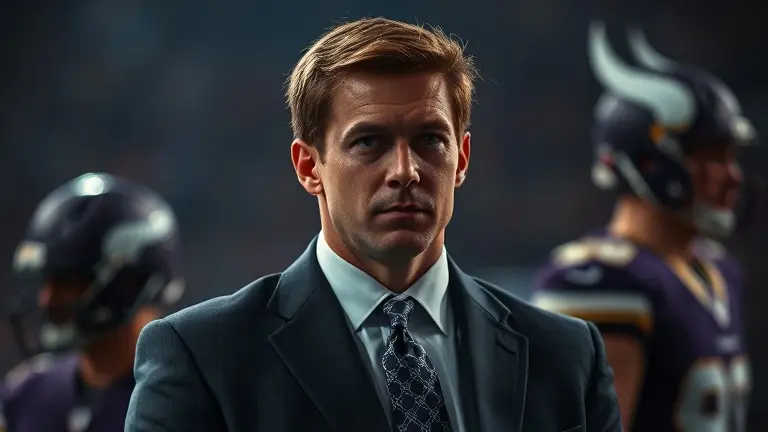
In a move that has sent shockwaves across the NFC North, the Minnesota Vikings have officially tapped former Chicago Bears General Manager Ryan Pace to join their front office in an advisory capacity. After six tumultuous years overseeing the Bears, where his tenure was defined by an aggressive—and often polarizing—approach to roster construction and high-stakes trades, Pace’s move to a divisional rival is as unexpected as it is significant. This transition forces a reckoning with his past: the brilliant draft hits like Roquan Smith, the haunting misses like the trade-up for Mitch Trubisky, and the overarching philosophy that kept Chicago in constant pursuit of roster upgrades.
As the Vikings integrate Pace’s specialized expertise, analysts and fans alike are left to wonder: is this a calculated gamble to gain a divisional edge in scouting, or a potential disruption to a stable front-office culture? By examining how Pace’s specific draft record and personnel strategies align with Minnesota’s current needs, we can decode what this means for the team’s long-term trajectory and whether the ‘Pace factor’ will actually translate into wins on the gridiron.
Ryan Pace Joins Minnesota Vikings: The NFC North Shake-Up

The landscape of the NFC North shifted unexpectedly on June 16, 2026, when reports confirmed that former Chicago Bears General Manager Ryan Pace has been hired to join the Minnesota Vikings front office in an advisory capacity. This move marks a high-profile return to the division for the veteran executive, who oversaw Chicago’s personnel decisions from 2015 to 2021. Given the long-standing, often bitter rivalry between the Bears and the Vikings, seeing a former GM cross divisional lines is a rare occurrence that has triggered significant debate among NFL analysts and fan bases alike.
Strategic Implications of the Hire
The decision to bring Pace into the fold suggests that the Vikings are prioritizing experienced, institutional knowledge of their divisional foes. By leveraging his background, Minnesota aims to gain a unique tactical advantage in how they approach scouting and game-planning against the Chicago Bears. Key aspects of this transition include:
- Divisional Intelligence: Pace holds deep insights into the internal culture and historical personnel patterns of a major NFC North rival.
- Draft and Trade Philosophy: Known for his aggressive approach to player acquisition, Pace’s presence could influence how the Vikings handle draft-day trades and high-stakes roster moves.
- Front Office Integration: As an advisor, Pace provides a sounding board for current leadership, offering a perspective shaped by years of high-pressure decision-making in a major market.
The gravity of this hire lies in the transition from a long-term divisional rival to an internal advisor. While skeptics point to the mixed results of his tenure in Chicago, proponents argue that his “aggressive-first” scouting mentality—which frequently saw him move up in drafts to secure preferred talent—could provide the spark needed for the Vikings to remain competitive. Whether this hiring strategy pays dividends remains to be seen, but it undoubtedly signals that Minnesota is committed to shaking up their operational strategy as they look to assert dominance within the NFC North.
The Pace Legacy: A Retrospective of the Chicago Bears Era (2015-2021)

The tenure of Ryan Pace as General Manager of the Chicago Bears (2015–2021) remains one of the most polarizing chapters in recent franchise history. Pace inherited a roster in need of a complete overhaul and immediately adopted an aggressive, high-risk personnel philosophy that prioritized premium talent acquisition over draft capital conservation. His management style was defined by a willingness to trade up in the NFL Draft to secure “his guys,” a strategy that yielded both foundational defensive pillars and high-profile roster deficiencies.
Key Personnel Successes and Failures
Pace’s ability to identify defensive talent was, at times, elite. Under his leadership, the Bears consistently bolstered the defensive side of the ball, securing core players who defined the team’s identity for years. However, these successes were often overshadowed by significant miscalculations regarding offensive infrastructure and quarterback development.
- Defensive Hits: Pace was instrumental in drafting All-Pro linebacker Roquan Smith and finding immense value in safety Eddie Jackson, who developed into one of the league’s premier playmakers.
- The Quarterback Dilemma: The defining narrative of the Pace era is undoubtedly the 2017 NFL Draft. By trading up to select Mitchell Trubisky second overall—passing on future MVP talents like Patrick Mahomes and Deshaun Watson—Pace anchored the team’s championship window to a prospect who struggled to gain consistency.
- Aggressive Asset Management: While his intent to push for a Super Bowl was clear, the frequent trading of future high-round picks for veterans frequently left the Bears with a depleted “war chest,” limiting the team’s ability to rebuild through depth during late-tenure slumps.
Ultimately, the Ryan Pace era serves as a masterclass in the risks of “all-in” roster building. While he demonstrated a keen eye for defensive talent and an aggressive willingness to fill roster gaps, the lack of a sustainable quarterback strategy hindered the team’s ability to maintain success. As he transitions to his new advisory role with the Minnesota Vikings, the front office will undoubtedly be looking to leverage his scouting instincts while potentially tempering his tendency for high-cost gambles.
Decoding the Advisor Role: Pace’s Fit Within the Vikings Front Office
The appointment of Ryan Pace as an advisor to the Minnesota Vikings front office marks a tactical shift in how the organization intends to leverage institutional knowledge within the NFC North. In the modern NFL, an “advisor” role typically functions as a high-level consultant who sits outside the primary chain of command, allowing the individual to provide objective analysis on personnel, draft board construction, and free-agent valuations without the burden of day-to-day administrative oversight. Unlike a General Manager or a Director of Player Personnel, whose decisions directly impact the salary cap and roster composition, Pace’s influence will likely be channeled through strategy sessions and internal audits of the Vikings’ scouting process.
Complementing Existing Scouting Strengths
By bringing in a former Chicago Bears GM, the Vikings gain an executive who has spent years scouting the same regional talent pools and rivals. Pace’s professional history is defined by a willingness to move aggressively in the draft—a philosophy that often challenges the conventional consensus. Within the current Minnesota front-office hierarchy, this provides several distinct advantages:
- Divisional Intelligence: Pace offers deep insights into the internal structures and decision-making patterns of divisional rivals, particularly his former team in Chicago.
- Draft Board Calibration: His experience in identifying mid-to-late round talent could provide the Vikings’ scouting department with a critical “second set of eyes” during intense draft room deliberations.
- Risk Assessment: Having experienced the highs and lows of high-profile acquisitions, Pace can provide the Vikings leadership with a sober perspective on the potential pitfalls of aggressive roster moves.
Evidence suggests that by utilizing Pace as a specialized advisor rather than a department head, the Vikings can integrate his analytical expertise without destabilizing the existing power structure. This allows the front office to benefit from his extensive NFL scouting network while maintaining the strategic vision established by the current regime. Ultimately, this move indicates a commitment to leaving no stone unturned as the organization seeks to sharpen its personnel evaluation and maintain a competitive edge in an increasingly tight divisional race.
Competitive Advantage or Redundant Hire? The Divisional Scouting Factor
The appointment of Ryan Pace to the Minnesota Vikings front office has sparked an intense debate regarding the true value of institutional knowledge in the modern NFL. On the surface, bringing in a former NFC North general manager provides the Vikings with a direct line into the inner workings of their most bitter rival, the Chicago Bears. Pace served as the Bears’ GM from 2015 to 2021, and his fingerprints remain on the league’s scouting landscape. By leveraging his intimate understanding of the personnel cycles and the specific drafting tendencies of organizations he once navigated, the Vikings theoretically gain a “mole” who can provide nuanced scouting reports on divisional opponents that go far beyond standard film study.
Evaluating the Insider Edge
Whether this translates to a genuine competitive edge depends heavily on the shelf life of the information Pace holds. While his knowledge of internal structures and player tendencies is undeniable, critics argue that the landscape of the NFL shifts rapidly. Several factors challenge the immediate impact of this hire:
- Roster Turnover: The majority of the players Pace originally scouted and signed in Chicago have since moved on or retired, limiting the relevance of his player-specific dossiers.
- Front Office Evolution: The Bears have undergone significant cultural and strategic changes since his departure, meaning his knowledge of their current decision-making hierarchy may be outdated.
- Divisional Parity: Scouting in the NFC North is highly sophisticated; divisional rivals already possess exhaustive data on one another, potentially rendering “inside info” redundant.
Ultimately, Ryan Pace is most valuable to the Vikings not for his memory of the past, but for his aggressive personnel philosophy. If the Vikings are looking to pivot their strategy—specifically regarding draft-day trades and high-upside gambles—Pace’s experience as an executive offers a seasoned perspective that can pressure existing staff to avoid complacency. While he may not possess a “magic bullet” to dismantle the Bears, his presence ensures the Vikings remain at the cutting edge of divisional strategy, providing a strategic check-and-balance in a highly competitive division.
Sharpening Your Analytical Edge for NFL Strategy
Ryan Pace’s integration into the Minnesota Vikings front office serves as a profound case study in executive strategy—a process that demands intense cognitive clarity and the ability to synthesize complex, often conflicting, scouting data under extreme pressure. Just as NFL front-office executives must maintain unwavering focus to evaluate talent and predict future performance, those of us analyzing these high-stakes decisions require a similar level of mental sharpness. Navigating the nuances of draft projections and personnel deep-dives can lead to significant mental fatigue, threatening the very objectivity that allows us to see the game clearly.
This is where cognitive optimization becomes the ultimate differentiator. Much like the Vikings are aiming to sharpen their decision-making process with this new advisory hire, you can elevate your own analytical capacity to stay ahead of the game. Our, The Brain Song, offers a sophisticated, science-backed approach to combating mental fog, enabling you to process information with greater precision and sustain the focus required for deep-level sports research.
By integrating this auditory routine into your daily workflow, you transition from simply consuming headlines to mastering the strategic details that define championship organizations. Don’t let mental exhaustion cloud your judgment when the next big roster move breaks; instead, harness the mental clarity needed to dissect every nuance like a pro. Start by optimizing your own analytical edge and sharpening your focus before diving into the next round of draft projections by trying the Brain Song’s 12-minute auditory routine.
 Optimize your own analytical edge and sharpen your focus before diving into the next round of draft projections by trying the Brain Song’s 12-minute auditory routine.Sharpen My Analytical Focus Today!