
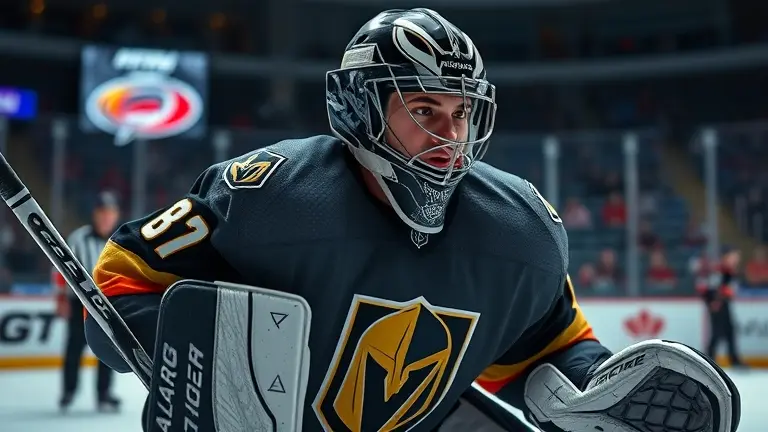
The image of Carter Hart slumped against the post as the Carolina Hurricanes celebrated their Stanley Cup victory has become the defining visual of the 2026 postseason. To the casual observer, it was a moment of singular heartbreak; to the analytics community, it was the culmination of a series defined by defensive lapses and sustained cognitive pressure. While social media discourse fixates on his emotional reaction and the optics of allowing four or more goals in key matchups, a deeper dive into the numbers reveals a complex narrative of a goaltender tasked with anchoring an aggressive, high-event system under the relentless scrutiny of head coach John Tortorella.
Moving beyond the viral highlights, we must objectively evaluate Hart’s performance through the lens of high-stakes goaltending metrics versus his established career trajectory. By dissecting his puck-tracking efficiency and response times during the Final, we gain a clearer picture of whether this series was a structural failure or a personal decline. In the high-pressure environment of the NHL, the difference between an elite save and a back-breaking goal often comes down to millisecond-level cognitive processing—a reality that underscores the evolving importance of mental discipline in modern sports.
The 2026 Stanley Cup Final: Beyond the Viral Imagery

The immediate aftermath of the 2026 Stanley Cup Final saw social media flooded with footage of Carter Hart following the Vegas Golden Knights’ six-game series defeat to the Carolina Hurricanes. While the viral imagery of Hart’s visible heartbreak dominated the headlines, such reactions often obscure the complex reality of a starting goaltender thrust into the highest level of professional pressure. For Hart, this series represented a critical juncture in his career trajectory, serving as his debut run as a Vegas starter in the ultimate high-stakes environment. Despite the public narrative focusing heavily on his emotional state, objective analysis of the series requires a shift toward evaluating the systemic challenges he faced under head coach John Tortorella.
Tactical Context and Performance Pressures
The Golden Knights’ strategy throughout the 2026 postseason leaned heavily on Hart to stabilize a defensive core that faced immense transition. Throughout the series against Carolina, Hart was subjected to a barrage of high-danger scoring chances that challenged his consistency. Key factors influencing the discourse around his performance included:
- Shot Volume and Quality: Hart frequently faced 30+ shots per game, with a significant percentage categorized as high-danger, placing extreme strain on his save percentage metrics.
- Defensive Support: The gap between the Hurricanes’ aggressive transition game and the Knights’ defensive recovery time left Hart exposed in several high-scoring affairs.
- Tortorella’s System: Operating under John Tortorella requires a specific brand of accountability; while the coach publicly defended his netminder, the tactical expectations on Hart remained rigid, even as he allowed four or more goals in multiple games.
By stripping away the superficial focus on post-game emotions, it becomes clear that Hart’s postseason was a litmus test for his durability and tactical adaptability. As the organization transitions into the 2026-2027 off-season, the front office faces the challenge of balancing this statistical reality against the intense, often reactionary skepticism expressed by a segment of the fan base. Moving forward, the focus must shift from the viral narrative to the technical adjustments required to elevate his game when the stakes are at their zenith.
A Tactical Post-Mortem: Dissecting Hart’s Performance Metrics

To move beyond the viral narrative surrounding the 2026 Stanley Cup Final, we must analyze Carter Hart through the lens of objective performance metrics. Throughout the six-game series against the Carolina Hurricanes, Hart’s statistical profile revealed significant departures from his established regular-season efficiency. The primary concern lies in his High-Danger Save Percentage (HDSV%), which dipped significantly compared to his career benchmarks. While Hart maintained a solid foundation during the earlier rounds, the high-pressure environment of the Final exposed vulnerabilities in his lateral tracking and reaction times against high-velocity, cross-ice passes.
Evaluating Technical Anomalies and Defensive Structure
When analyzing the games where Hart allowed four or more goals, the data suggests a combination of individual technical lapses and systemic defensive breakdowns. Key observations from the tape and analytics include:
- Rebound Control Issues: Hart struggled with “sticking” pucks, often redirecting shots into high-slot areas rather than the corners. This inefficiency forced his defensemen into scramble situations, ultimately leading to second-chance scoring opportunities for the Hurricanes.
- Structural Defensive Lapses: Evidence suggests that the Vegas Golden Knights’ defensive coverage failed to limit “Grade A” chances. Frequently, the blueline allowed unchallenged entries, placing the burden of responsibility squarely on Hart to make miracle saves.
- Gap Between Regular Season and Playoffs: Hart’s regular-season metrics boasted elite efficiency, specifically in low-to-mid danger save percentage. The regression observed in June implies that while technical form was present, the sheer volume of high-quality chances allowed by the team’s defensive structure created an unsustainable environment for any goaltender.
Ultimately, attributing the series loss solely to Hart overlooks the structural challenges inherent in the Golden Knights’ defensive scheme under the pressure of a Final. While Hart must refine his rebound control and consistency, the analytical data highlights a team-wide defensive regression that exacerbated his individual performance inconsistencies. Moving forward, the organization must decide if the fix requires technical coaching refinements for Hart or a schematic overhaul of the defensive zone coverage.
Under the Microscope: The Tortorella Coaching Dynamic
Playing under John Tortorella represents one of the most intense psychological environments in professional hockey. For a starting goaltender like Carter Hart, this dynamic during the 2026 Stanley Cup Final functioned as a double-edged sword. Tortorella is known for his demanding, accountability-based coaching style, and his public, unwavering support for Hart throughout the postseason was intended to act as a stabilizer for the young netminder. By consistently backing his starter despite statistical fluctuations, Tortorella aimed to foster a culture of resilience. However, this high-profile endorsement arguably intensified the scrutiny Hart faced from fans and media when performance levels dropped, specifically during games where he allowed four or more goals.
The Impact of Tactical Accountability
The pressure of Tortorella’s system relies heavily on defensive structure and shot suppression. When that structure wavered against the Carolina Hurricanes, the spotlight naturally intensified on the goaltender. Key factors in this complex coaching dynamic included:
- Public Validation: Tortorella’s willingness to defend Hart during post-game press conferences signaled organizational trust, yet it also highlighted that Hart was the primary focal point of the series outcome.
- Tactical Rigidity: The expectation for “error-free” hockey in a Tortorella-led system leaves little margin for a goalie to recover from early defensive lapses, creating a high-stress environment where every goal allowed feels magnified.
- Psychological Load: Evidence suggests that while some players thrive under Tortorella’s direct, “no-nonsense” communication, the constant media cycle surrounding the coach’s comments added a layer of secondary pressure for Hart that extended beyond the ice.
Ultimately, the interplay between Tortorella’s leadership and Hart’s performance creates a narrative of heavy expectations. Whether this coaching style served to insulate Hart from external noise or inadvertently amplified the weight of the Stanley Cup Final loss remains a central point of debate among NHL analysts and Vegas Golden Knights supporters alike.
The Road to 2027: Organizational Confidence vs. Fan Skepticism
As the Vegas Golden Knights pivot toward the 2026-2027 season, the front office remains publicly steadfast in its support for Carter Hart. Despite the high-profile defensive collapses witnessed during the Stanley Cup Final, the organization views Hart as a foundational piece of their long-term competitive window. General management has emphasized that the transition into a deep postseason run involves significant psychological maturation, and they appear committed to weathering the volatility that defined Hart’s 2026 performance. While internal metrics indicate that the coaching staff remains satisfied with Hart’s technical foundation and work ethic, the prevailing narrative among the fanbase has shifted toward intense skepticism. This disconnect between executive confidence and the vocal frustration of the supporters creates a high-pressure environment for Hart as he enters the off-season.
Necessary Adjustments for Elite Re-emergence
To silence critics and validate the organization’s faith, Hart must address specific areas of his game before the puck drops in October. Achieving consistency at the elite level will require a multi-faceted evolution:
- Refinement of High-Danger Response: Hart struggled with lateral mobility when facing cross-seam passes during the final series against Carolina. Technical adjustments to his stance and post-integration will be vital to decreasing the number of four-goal games allowed.
- Mental Resilience Protocols: Following his viral emotional response, it is clear that managing the volatility of a seven-game series is a priority. Incorporating specialized sports psychology support will be critical for maintaining focus when momentum shifts against the Knights.
- Performance Stability: Analytics show a correlation between early-period lapses and long-term defensive breakdowns. Developing a more rigid pre-game mental routine to sharpen focus during the opening ten minutes could stabilize his save percentage significantly.
Ultimately, the 2026-2027 season serves as a litmus test for Hart. While the Vegas Golden Knights are prepared to offer him the crease, he must translate this difficult playoff experience into tangible, data-driven improvement to secure his status as a top-tier NHL goaltender.
The Cognitive Edge in Elite Goaltending
As we look toward the 2026-2027 season, the skepticism surrounding Carter Hart’s performance serves as a reminder that goaltending at the championship level is as much a psychological challenge as a physical one. When the lights are brightest and the fatigue sets in, the margin for error effectively vanishes. While the statistics from this Stanley Cup Final provide a diagnostic view of the technical breakdown, they also point toward a broader truth: elite success requires not just physical conditioning, but supreme cognitive optimization to remain composed under extreme external stress.
This is where the real battle is fought. While the physical stats tell us what happened on the ice, the real battle for a starting goalie often takes place in the mind; maintaining that level of cognitive clarity during a seven-game series is exactly why elite athletes are turning to neuroscience-based tools to optimize their mental output. If you want to achieve the same level of focus and mental sharpness that pros rely on to overcome high-pressure environments, The Brain Song is designed to facilitate that breakthrough through advanced auditory stimulation, effectively serving as the ‘off-ice’ mental training regimen you need to mitigate cognitive fog.
By integrating this neuroscience-backed methodology into your daily routine, you can experience enhanced focus and improved learning capacity, providing you with the same competitive edge required to excel when the pressure is at its peak. Don’t leave your potential to chance—take the necessary step to optimize your mental performance today.
 Discover how you can sharpen your own mental performance and focus with the neuroscience-backed methodology behind The Brain Song.Transform My Mental Clarity Today!