
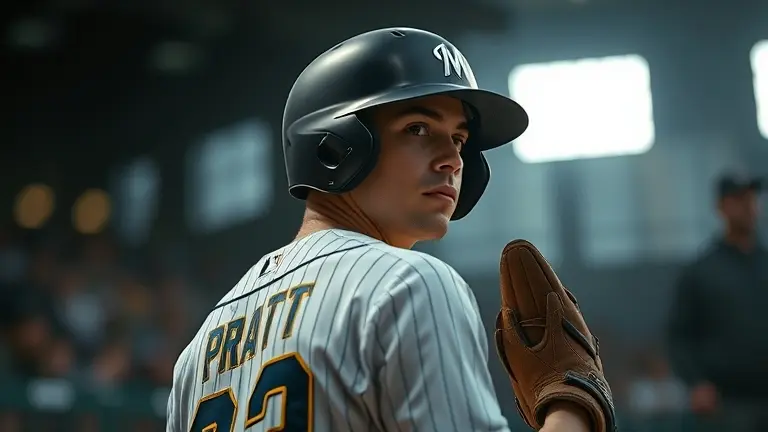
The Guardians vs. Brewers Showdown: Spotlight on Cooper Pratt’s Call-Up

The June 16, 2026, series opener between the Cleveland Guardians and the Milwaukee Brewers has evolved from a standard interleague matchup into one of the most anticipated games of the summer. While both clubs are battling for critical positioning in their respective divisions, the national spotlight is firmly fixed on a single roster maneuver: the emergency promotion of 21-year-old shortstop prospect Cooper Pratt. Called up from Triple-A Nashville just hours before the first pitch, Pratt’s sudden arrival signals a bold shift in the Brewers’ organizational strategy, forcing fans and scouts alike to pivot their attention toward the middle infield.
Why the Baseball World is Watching
The excitement surrounding the Guardians vs. Brewers series is largely driven by Pratt’s rapid ascent through the minor league ranks. Known for his elite defensive range and a disciplined approach at the plate, Pratt has been a constant point of discussion on platforms like BrewCrewBall. His promotion comes at a pivotal moment, as the Brewers look to inject youthful energy into a veteran-heavy lineup. Key factors contributing to the hype include:
- Elite Prospect Pedigree: Pratt is widely regarded as one of the most complete shortstop prospects in the game, possessing a combination of raw power and high baseball IQ.
- Tactical Integration: Analysts are closely watching how manager staff adjusts the batting order to accommodate a rookie in a high-stakes, mid-season series against a formidable Guardians pitching staff.
- The Debut Pressure: Following reports that described him as “relaxed and confident,” the league is eager to see if his Triple-A production translates immediately against major-league-caliber breaking balls.
For fantasy baseball players and casual observers, this matchup is more than just a win-loss statistic; it is the first real look at the potential face of the Milwaukee franchise. As the game unfolds, all eyes remain on whether Pratt can solidify his role as a long-term solution at short, effectively turning an ordinary interleague series into a defining moment of the 2026 MLB season.
Cooper Pratt’s MLB Debut: A Play-by-Play Breakdown

The highly anticipated Guardians vs Brewers series opener on June 16, 2026, will be remembered primarily for the major league arrival of Cooper Pratt. Stepping into the starting lineup straight from Triple-A Nashville, the 21-year-old shortstop demonstrated the composure that made him a top-tier organizational prospect. During his first MLB at-bat, Pratt displayed a mature approach, forcing the Guardians’ starting pitcher to work through a deep count. His ability to track off-speed pitches and remain disciplined against high-velocity heat suggests that the scouting reports highlighting his “relaxed and confident” demeanor were accurate under the pressure of the big-league spotlight.
Tactical Impact and Defensive Contributions
Beyond his performance at the plate, Pratt’s defensive versatility was a focal point of the matchup. Tasked with anchoring the middle infield, he showcased rapid lateral movement and a high baseball IQ, successfully navigating a complex defensive shift implemented by the Brewers’ coaching staff to neutralize the Guardians’ lineup.
- Plate Discipline: Pratt showed no signs of “debut jitters,” exhibiting a selective eye that allowed him to maintain competitive at-bats throughout the early innings.
- Defensive Range: His quick transition from fielding to throwing highlighted why the Brewers prioritized his promotion ahead of this crucial interleague series.
- Momentum Shift: By stabilizing the shortstop position, Pratt allowed the Brewers to maintain defensive cohesion, which served as a catalyst for the team’s rhythm against a formidable Guardians offense.
As the game progressed, it became evident that the Brewers’ decision to accelerate his development pipeline was a calculated move. While the statistical sample size of this debut remains small, the early evidence suggests that Pratt possesses the technical foundation required to contribute immediately at the professional level. His integration into the current lineup offers a glimpse into the future of Milwaukee’s roster strategy, balancing veteran presence with high-ceiling talent to secure a competitive edge in the divisional race.
Brewers Lineup Changes and Strategic Roster Adjustments
The arrival of Cooper Pratt in the major leagues creates a ripple effect across the Milwaukee Brewers’ daily operations. By pulling the 21-year-old shortstop prospect from Triple-A Nashville just ahead of the Guardians vs Brewers series, management has signaled a clear shift toward prioritizing high-ceiling talent to inject energy into the middle-infield rotation. Integrating a prospect of this caliber requires more than just a spot on the roster; it necessitates a calculated adjustment to the team’s defensive synergy and batting order efficiency.
Impact on Defensive Structure and Veteran Roles
The decision to promote Pratt forces the Brewers’ coaching staff to re-evaluate the defensive versatility of their veteran core. With Pratt projected to take the primary shortstop role, existing players are expected to see increased time at second base or in utility roles, aiming to maintain defensive consistency while providing the team’s youngest star with necessary seasoning. Key considerations for this lineup evolution include:
- Redistribution of Infield Reps: Veterans may transition into a platoon or mentor role to assist Pratt’s defensive development.
- Tactical Defensive Positioning: Managerial strategy is expected to shift, utilizing Pratt’s range to cover ground in high-leverage innings against the Guardians.
- Offensive Production: By inserting Pratt into the lineup, the Brewers hope to balance the bottom-half hitting production that has occasionally stalled during critical interleague stretches.
Evidence suggests that the Brewers view this call-up as a long-term investment. By introducing Pratt during a high-stakes series against Cleveland, the organization is testing his ability to handle pressure in real-time. This roster shift is not merely a stop-gap measure; it reflects a broader 2026 strategy centered on aggressive prospect integration. As the team moves through the series, the focus will remain on how Pratt’s presence stabilizes the infield, allowing the Brewers to maximize defensive efficiency while leveraging his dynamic plate approach to create run-scoring opportunities.
The 2026 Prospect Pipeline: Is Pratt the Future of Milwaukee?

The promotion of Cooper Pratt to the major leagues ahead of the Guardians vs Brewers series serves as a definitive case study for the Milwaukee organization’s long-term development philosophy. By prioritizing a methodical progression from the Biloxi Shuckers through Triple-A Nashville, the front office has successfully insulated Pratt from the pressures of early-career instability. This strategy mirrors the successful cultivation of previous franchise cornerstones, emphasizing consistent plate discipline and defensive versatility. As fans analyze his impact during this high-stakes interleague matchup, it becomes clear that Pratt is not merely a depth piece; he is the linchpin for Milwaukee’s 2026 contention window.
Sustaining the Competitive Edge
The Brewers’ farm system has increasingly focused on “high-floor” prospects who can integrate seamlessly into the Brewers lineup changes necessitated by injuries or strategic fatigue. Pratt’s development trajectory highlights several key tenets of the organization’s modern approach:
- Elite Pitch Recognition: Unlike many high-ceiling prospects who struggle with professional-grade breaking balls, Pratt’s metrics show an advanced ability to lay off pitcher-chase pitches, a trait essential for sustained MLB success.
- Defensive Reliability: By mastering the shortstop position at the minor league level, he provides the defensive stability needed to allow veteran players to transition into flexible utility roles.
- Institutional Alignment: His seamless jump from Triple-A confirms that the coaching staff at the minor league level is perfectly aligned with the major league bench’s tactical requirements.
Looking ahead, the long-term role of Pratt will be to anchor the middle infield, allowing the front office to reallocate resources toward shoring up the pitching rotation. If his early-game poise holds, Pratt will likely be viewed as the primary success story of the 2026 pipeline, proving that a disciplined, data-backed development model remains the most effective path toward building a perennial postseason contender in the National League.