
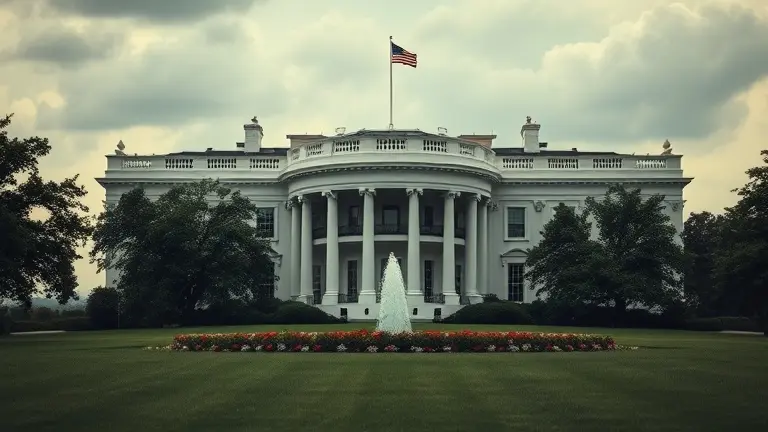
In a summer defined by unprecedented political theater, the American public finds itself trapped between two jarring realities: the rigid authority of the United States federal judge and the gladiator-style spectacle of a White House birthday celebration. When a federal court recently ordered the removal of President Trump’s name from prominent federal property, the ruling sent shockwaves through an administration currently balancing official duty with a highly visible, pop-culture-infused agenda. As the nation watches the juxtaposition of cold legal mandates against the backdrop of a controversial UFC event staged on the White House lawn, the boundaries between constitutional checks and balances and pure entertainment have never been more blurred.
This friction point goes beyond simple headlines; it raises fundamental questions about the politicization of public space and the legitimacy of ‘sports diplomacy’ in the modern era. As voters and analysts attempt to reconcile these disparate events, a heavy sense of cognitive fatigue has settled over the electorate. Navigating the dense intersection of judiciary power and executive provocation requires more than just political interest—it demands a level of mental clarity that is increasingly difficult to maintain in a cycle of constant, polarizing noise.
Law vs. Lawn: A Convergence of Federal Rulings and White House Spectacle
The current political landscape in mid-June 2026 is defined by a striking collision between cold legal mandates and high-octane public spectacles. At the center of this friction is a United States federal judge, whose recent ruling has ordered the removal of President Donald Trump’s name from several federal properties, including the Kennedy Center. This decision acts as a potent check on the administration’s executive reach, forcing a debate over the sanctity and nomenclature of public spaces. As the administration grapples with this judicial setback, the public’s attention is simultaneously captured by the trump 80th birthday white house celebrations, which took an unconventional turn with an on-site UFC event.
The Intersection of Governance and Entertainment
The juxtaposition of a federal court exercising its authority against a backdrop of “gladiator-style” entertainment at the White House has polarized observers. While supporters view the event as an evolution of modern “sports diplomacy” designed to bridge partisan divides, critics—including voices like Bill Maher—argue that such spectacles signal a troubling erosion of presidential decorum. This perception is exacerbated by the timing:
- Legal Accountability: The court’s order serves as a reminder that executive naming rights on federal property are subject to legislative and judicial oversight.
- Cultural Distraction: Critics suggest the massive visibility of the UFC last night and related celebratory events may be functioning as a tactical distraction from the administration’s mounting legal challenges.
- Separation of Powers: The friction points highlight an increasing tension regarding how national heritage sites are utilized, with the judiciary acting as the final arbiter against the politicization of public venues.
Evidence suggests that the public is struggling to reconcile these two realities. As citizens search for clarity on events surrounding the administration’s pivot toward pop-culture integration, the tension between the judiciary’s sober authority and the White House’s performative style remains a defining feature of the current U.S. political crisis.
The Legal Precedent: Authority Over Federal Naming Rights

The recent intervention by a United States federal judge regarding the naming rights of federal landmarks highlights the complex statutory boundaries governing public property. At the heart of the dispute is the principle that federal buildings and institutions are managed under specific congressional mandates, rather than the unilateral discretion of the executive branch. When a federal court issues an order—such as the mandate to remove specific names from the Kennedy Center—it is typically grounded in the interpretation of the Antiquities Act or specific naming statutes established by Congress. These laws are designed to prevent the politicization of neutral federal spaces and ensure that the legacy of a national landmark remains tethered to its original legislative purpose rather than the changing tide of current administrations.
Judicial Reasoning and Statutory Authority
The court’s decision relies heavily on established administrative law. When reviewing challenges to federal property naming, the judiciary examines whether the administration exceeded its “delegated authority.” Key legal factors often include:
- Legislative Intent: Did the initial authorizing legislation for the property provide the administration with the power to alter naming conventions?
- Administrative Procedure Act (APA): Did the agency follow the required notice-and-comment process before making significant changes to high-profile assets?
- Historical Precedent: Past rulings emphasize that public monuments represent the collective history of the United States rather than the platform of a sitting president.
While the public may conflate this ruling with the broader news cycle—including recent events like the controversial UFC spectacle on the White House lawn—the legal outcome remains strictly focused on statutory adherence. By asserting that the executive branch cannot unilaterally override historical designations, the United States federal judge serves as a vital institutional “check” on executive reach. This judicial scrutiny ensures that the maintenance of national treasures remains consistent with long-term federal policy, isolating the court’s decision from the fluctuating popularity of contemporary figures or the “sports diplomacy” initiatives currently dominating media headlines. As the government continues to navigate these legal constraints, the tension between administrative ambition and established naming precedent serves as a defining feature of the current legal landscape.
Entertainment as Policy: Evaluating the ‘Sports Diplomacy’ Narrative
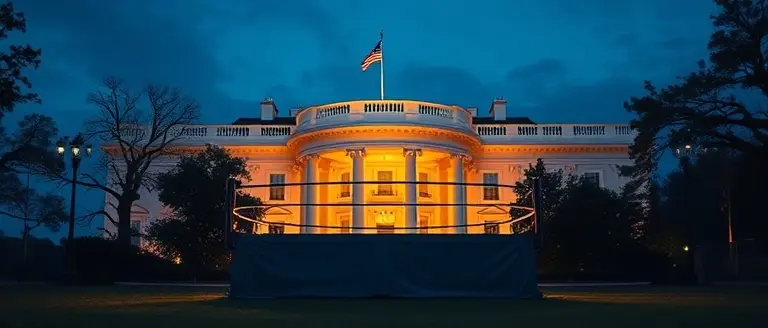
The administration’s recent embrace of “sports diplomacy”—most notably exemplified by the UFC event hosted on the White House lawn during President Trump’s 80th birthday celebrations—represents a sharp departure from traditional diplomatic engagement. While history offers precedents for sports as a bridge between nations, such as the 1971 “Ping-Pong Diplomacy” between the U.S. and China, critics argue that bringing combat sports to the seat of government fundamentally alters the decorum of the executive branch. By framing this spectacle as a diplomatic tool, the administration is attempting to leverage the massive reach of UFC media to bypass traditional communication channels, effectively blending governance with high-octane pop culture.
The Tactical Distraction Hypothesis
Observers are increasingly questioning whether the focus on these high-profile events serves as a strategic counterweight to mounting legal pressures. As a United States federal judge continues to issue rulings that challenge executive authority—specifically the recent order mandating the removal of the Trump name from federal properties—the administration has leaned heavily into its “entertainment pivot.” The juxtaposition is stark:
- Judicial Oversight: A federal judge is systematically dismantling administrative overreach regarding naming rights on national monuments.
- Spectacle Management: The White House is deploying “gladiator-style” entertainment to capture public attention and dominate the news cycle.
Evidence suggests that this synchronization is not coincidental. By generating viral moments that dominate social media feeds, the administration seeks to minimize the political fallout from court-ordered setbacks. However, this strategy faces mounting skepticism. Critics, including public commentators like Bill Maher, argue that the degradation of presidential norms threatens the integrity of government heritage sites. As the public weighs the validity of these spectacles, the core debate remains: Is this a legitimate attempt at modernizing influence, or a tactical distraction meant to obscure the friction between a defiant United States federal judge and the current executive agenda?
Public Pulse: Decoding the Polarization of National Heritage Sites

The recent intersection of high-stakes legal rulings and populist spectacle has exposed a profound sociological divide regarding the purpose of American federal property. As a United States federal judge continues to issue orders impacting the administration’s control over public landmarks—most notably the stripping of names from federal sites—the public is increasingly questioning whether these spaces should remain bastions of traditional governance or evolve into platforms for modern cultural expression. The friction between the courtroom and the executive branch is palpable, particularly as the administration blends official policy with high-profile entertainment, such as the controversial UFC event hosted on the White House lawn during recent celebrations.
The Clash of Institutional Norms
Public sentiment remains sharply polarized, mirroring the broader political climate in the United States. Observers are debating whether the “sports diplomacy” initiative represents a necessary modernization of the presidency or a concerning erosion of institutional decorum. Proponents of the current administration’s approach often cite the need to bridge the gap between Washington and the electorate, framing events like the “UFC last night” as accessible, high-energy engagement that brings fresh demographics into the political fold. Conversely, critics view this shift as a tactical distraction, arguing that transforming the White House into a venue for cage-fighting undermines the gravity of the office and complicates the legal disputes currently unfolding in court.
The Question of Sacred Space
The core of this debate centers on whether the government should maintain strict neutrality in public spaces or utilize them for political branding. Key facets of this ongoing public discourse include:
- Judicial Oversight: Many citizens are looking toward the United States federal judge as a necessary check on executive overreach, particularly regarding the aesthetic and nomenclature of federal buildings.
- Cultural Erosion vs. Evolution: A vocal segment of the population warns that the “gladiator-style” entertainment at the White House diminishes the historical significance of the Executive Mansion.
- Modern Diplomacy: Supporters argue that the partnership between the administration and the UFC is a legitimate, albeit unconventional, tool of soft power designed to reach global audiences in a changing media landscape.
Ultimately, whether the public views the White House as a “sacred” space or a dynamic cultural stage depends on one’s interpretation of presidential duty. While the legal battles over federal property rights remain tied up in litigation, the broader cultural debate ensures that every move by the administration will continue to be viewed through the lens of institutional integrity versus populist accessibility.
Maintaining Clarity Amidst a Media Firestorm
As the legal battle over federal property rights continues to unfold alongside the administration’s entertainment-focused strategy, it is clear that we are witnessing a pivotal moment in how our institutions interact with the public. Deciphering whether these events constitute a necessary check on executive power or a tactical distraction requires a sharp, objective perspective. However, the sheer intensity of this news cycle is designed to exhaust even the most diligent observer, leading to the mental fog that often obscures the truth.
While untangling the complex intersection of federal law and presidential spectacle can be mentally draining, maintaining peak cognitive clarity is essential to staying objective in this volatile political climate. This is where The Brain Song becomes an indispensable tool. By leveraging neuroscience-based auditory technology, it helps you clear the mental static generated by today’s hyper-partisan environment, allowing you to process dense information with renewed focus and analytical precision.
By integrating this tool into your daily routine, you aren’t just consuming the news—you are mastering it. Don’t let the noise of the headlines compromise your ability to think clearly about the future of our democracy. Invest in your cognitive performance today and stay ahead of the curve, regardless of how chaotic the political landscape becomes.
 Regain your mental edge: Use The Brain Song to clear the fog and process complex information with absolute clarity.Clear My Mental Fog Now!