

When the Detroit Tigers and Houston Astros face off at Daikin Park this June 15th, the marquee matchup won’t be about a battle for divisional supremacy—it will be a collision between two franchises struggling to justify their massive pre-season expectations. Both teams currently languish in the bottom half of their divisions with sub-.500 records, turning what was supposed to be a competitive showcase into a desperate search for answers. For fans, fantasy baseball managers, and analysts, the glaring gap between the Tigers’ aggressive roster consolidation and the Astros’ uncharacteristic stagnation isn’t just a statistical anomaly; it is a fundamental breakdown that demands a deeper investigation into coaching, roster management, and the fragility of high-end expectations in a modern MLB landscape.
As the series approaches, the conversation must shift beyond simple betting odds and starting lineups. We are witnessing an ‘underperformance crisis’ that requires us to look past the box scores and into the mechanics of why these teams failed to launch. To truly understand the playoff math for these under-.500 squads, one must be able to synthesize complex datasets and identify the hidden trends that the casual observer misses. This deep-dive analysis is the only way to peel back the layers of this 2026 disappointment and determine if there is any hope for a late-summer resurgence.
Tigers vs. Astros: Series Preview and Game Outlook (June 15, 2026)
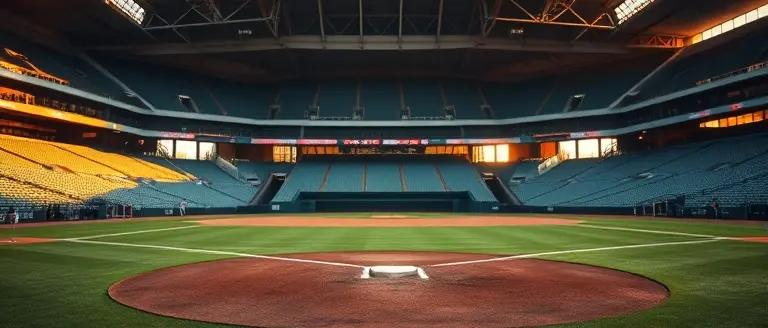
The Tigers vs. Astros series opening on June 15, 2026, at Daikin Park brings together two franchises currently navigating a significant “underperformance crisis.” Entering this mid-June clash, the Detroit Tigers find themselves at 29-42, while the Houston Astros sit at 33-40. Both teams occupy fourth place in their respective divisions, a reality that stands in stark contrast to the lofty preseason expectations surrounding their rosters. As these two struggling ballclubs collide, the primary narrative shifts from division title contention to an urgent need for stability and momentum as the season approaches its halfway point.
Key Matchup Dynamics and Strategic Outlook
For fantasy baseball players and sports bettors monitoring this series, the focus centers on whether either team can leverage home-field advantage or favorable pitching matchups to spark a turnaround. Despite the statistical reality of their sub-.500 records, the talent profiles—particularly the high-profile rotation pieces—remain a point of interest for analysts. The gap between the hype of Detroit’s offseason acquisitions and their current win-loss column has become a focal point of recent sports media coverage, with questions lingering over coaching decisions and roster management.
- Venue Implications: Playing at Daikin Park provides a specific environmental challenge for the visiting Tigers, who will need to navigate the unique dimensions and atmospheric conditions that historically favor the Astros’ offensive rhythm.
- Pitching Spotlight: The effectiveness of the starting rotation will be the ultimate deciding factor, as both teams have struggled with bullpen depth and late-game leads throughout the first two months of the 2026 campaign.
- Playoff Math: With both teams hovering significantly below the .500 mark, every game in this series is treated as a must-win to remain on the periphery of the Wild Card conversation.
Observers should look for lineup adjustments in the series opener, as both managers seek the right chemistry to ignite stagnant offenses. While the surface-level betting odds suggest a tightly contested series, the underlying metrics reveal two teams fighting to define their identity for the remainder of the summer. Fans can expect an intense, albeit desperate, series as both squads attempt to validate their rosters before the trade deadline landscape begins to shift.
Roster Management and Coaching Under Pressure

The tigers vs astros series arrives at a pivotal moment, highlighting the systemic underperformance of two franchises that entered 2026 with high aspirations. Both organizations are currently grappling with an “underperformance crisis,” as their respective rosters fail to translate paper talent into on-field wins. The Detroit Tigers, despite significant offseason investments aimed at complementing ace Tarik Skubal, have struggled to stabilize their rotation and lineup depth. Similarly, the Houston Astros have seen their championship window rattle under the weight of injury-riddled production and inconsistent bullpen management.
Structural Failures and Statistical Realities
The gap between pre-season hype and current statistical reality is stark. For Detroit, the strategy of pairing elite talent like Skubal with secondary arms has yielded poor returns, leading to a 29-42 record that leaves the front office questioning their roster construction. Meanwhile, Houston’s 33-40 standing suggests a team caught in a difficult transition phase. Key factors contributing to these failures include:
- Inconsistent Offensive Output: Both teams have struggled with situational hitting and failing to convert runners in scoring position, a direct reflection of poor plate discipline and questionable lineup construction.
- Bullpen Volatility: High-leverage relief outings have become liabilities for both clubs, putting immense strain on starting pitchers who are already struggling to provide deep outings.
- Coaching Accountability: Managers for both the Tigers and Astros are facing mounting pressure. Critics point to rigid analytical frameworks that have failed to adapt to the realities of the 2026 season’s offensive environment.
With both teams sitting in fourth place, the focus is shifting toward whether these managers are on the “hot seat.” Evidence suggests that without a significant mid-season turnaround, the front offices will likely pivot toward evaluating personnel overhauls. As the tigers vs astros matchup unfolds, the games serve as a referendum on whether these coaching staffs can course-correct or if the season is destined to be categorized as a rebuilding failure.
Statistical Reality: The Gap Between Pre-Season Hype and Current Performance

As the Tigers vs Astros series begins at Daikin Park, the surface-level records of 29-42 and 33-40, respectively, tell a story of profound systemic failure. Pre-season projections anticipated both clubs competing for division titles; instead, advanced metrics reveal a regression that has paralyzed their playoff aspirations. For Detroit, the much-hyped acquisition of veteran starters to bolster a rotation led by Tarik Skubal has largely failed to stabilize the back end. The team ERA has ballooned, significantly hampered by a bullpen that ranks in the bottom third of the league in inherited runners scored and save percentage.
The Houston Astros are facing a similar crisis of efficiency. Historically a powerhouse, the Astros’ offensive output has cratered compared to their 2025 performance. Their team batting average has dipped below the league median, driven by a lack of situational hitting and an uncharacteristic struggle to drive in runners in scoring position. When examining the statistical decay, several key areas of concern emerge:
Critical Metrics of Underperformance
- Bullpen ERA: Both clubs have suffered from late-inning collapses, with bullpen ERA spikes over 1.5 runs higher than their 2025 seasonal averages.
- Run Differential: The negative run differential for both the Detroit Tigers and Houston Astros suggests their sub-.500 records are not a result of bad luck, but rather a direct reflection of poor roster production.
- Batting Discipline: Both lineups are currently chasing pitches outside the strike zone at a higher frequency, leading to increased strikeout rates and a significant drop in OPS.
The regression is most visible in how both teams handle high-leverage situations. While individual talent—such as Skubal’s dominance—remains high, the collective output remains disjointed. As these teams meet this week, the statistical reality suggests that neither club is currently equipped to mount a mid-season turnaround without radical adjustments to their offensive approach and bullpen management strategies. Evidence suggests that without a corrective shift in these core metrics, the post-All-Star break conversation for both franchises will shift from playoff math to rebuilding for 2027.
Playoff Math: Can Sub-.500 Teams Still Contend?

As the Detroit Tigers and the Houston Astros prepare for their mid-June series at Daikin Park, both franchises face a harsh statistical reality. With the Tigers holding a 29-42 record and the Astros sitting at 33-40, the margin for error has effectively vanished. In the current MLB landscape, qualifying for the Wild Card with a sub-.500 record is mathematically possible but historically improbable. To remain relevant in the playoff conversation, both teams must transition from their current pace to a high-octane winning percentage—likely requiring a sustained clip of .650 or higher over the next two months.
The Path to Postseason Relevance
The “underperformance crisis” currently plaguing these clubs stems from a failure to convert pre-season expectations into on-field wins. For the Tigers, the high-profile attempt to anchor the rotation with stars like Tarik Skubal has been hampered by inconsistent offensive support. Similarly, the Astros have struggled to find their traditional rhythm, leaving both teams effectively trapped in the fourth-place mire of their respective divisions. To secure a postseason berth, the following benchmarks must be met:
- Winning Percentage Adjustment: Both teams need to play at a 65% win rate through the All-Star break to stabilize their postseason probabilities.
- Head-to-Head Importance: In a series like tigers vs astros, every victory is a “six-point swing,” as it directly impacts the tie-breaker scenarios for the final Wild Card spots.
- Strength of Schedule: Teams must capitalize on upcoming series against divisional rivals; falling further behind now creates an insurmountable gap in the run differential.
Ultimately, while the analytics suggest a slim path forward, both front offices must decide whether to reinforce their rosters or pivot toward evaluating prospects for the 2027 campaign. If the current stagnation continues through July, the mathematical probability of a late-season surge will likely drop below 5%, forcing both organizations to prioritize long-term asset management over a futile pursuit of an October appearance.
Sharpening Your Analytical Edge
The tale of the 2026 Tigers vs. Astros series is a sobering reminder that on-paper talent rarely guarantees performance on the diamond. As we examine the failures of roster construction and the disconnect in team strategy, it becomes clear that the difference between a championship contender and a rebuilding team often lies in the precision of the front office’s data interpretation. Uncovering the ‘why’ behind this decline is a task that demands intense analytical stamina and the ability to process vast amounts of statistical information without succumbing to the mental fog that inevitably accompanies deep-work research.
If you find yourself struggling to maintain the cognitive focus necessary to connect these complex dots, it is time to upgrade your research toolkit. Investigating the root causes of these franchises’ struggles requires a level of mental clarity that goes beyond standard sports commentary. The Brain Song is designed specifically for high-level analysts and dedicated fantasy managers who need to maintain peak cognitive performance while parsing intricate baseball trends and playoff probabilities. It is not just a supplement; it is an essential utility for those who demand excellence from their data synthesis.
By integrating this 12-minute audio routine into your research process, you gain the edge required to stay sharp when the stakes are high and the data is dense. Don’t let mental fatigue prevent you from finding the truth behind the 2026 season’s most frustrating narratives. Optimize your analytical edge and clear the mental fog before your next deep-dive; discover how The Brain Song supports your cognitive performance here.
 Optimize your analytical edge and clear the mental fog before your next deep-dive; discover how The Brain Song supports your cognitive performance here.Transform My Analytical Edge Now!