
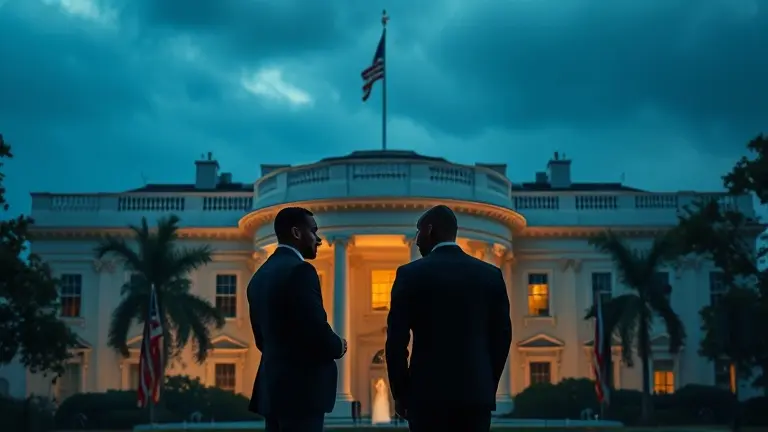
On June 14, 2026, the digital landscape erupted when screenshots circulated on X, purportedly showing UFC legend Daniel Cormier receiving direct messages from Eric Trump. The alleged exchange, which surfaced in the wake of the ‘UFC Freedom 250’ event at the White House, suggested inquiries into ‘rigged’ fights and requests for insider betting data. As the story gained viral momentum, both parties issued swift denials: Cormier cited a security breach, while Trump dismissed the imagery as sophisticated AI-generated fabrications. The incident has left observers grappling with a modern dilemma: are we witnessing a genuine account compromise or a calculated disinformation campaign?
This mystery sits at the intersection of political optics and digital forensics. In an era where deepfakes and manipulated screenshots can effortlessly influence public perception, the truth often hides behind layers of technical deception. To move beyond the headlines, we must analyze the visual artifacts, the context of the platform, and the psychological impact of such leaks on our collective perception of high-stakes sports and politics.
The UFC Freedom 250 Incident: Explaining the Viral Eric Trump and Daniel Cormier DM Screenshots

On June 14, 2026, the intersection of high-stakes sports and national politics took a bizarre turn following the high-profile UFC Freedom 250 event hosted at the White House. The controversy erupted when screenshots surfaced on the official X (formerly Twitter) account of UFC legend Daniel Cormier. The images appeared to capture a private conversation between Cormier and Eric Trump, in which the latter allegedly inquired about the legitimacy of fight outcomes and sought potential insider betting information regarding the evening’s bouts. The leaked exchange prompted immediate shock across the MMA and political landscapes, leading to widespread speculation about the integrity of the event.
The viral incident triggered intense scrutiny as users analyzed the timeline of the posts and the nature of the alleged inquiry. Key aspects of the initial fallout included:
- Allegations of Rigging: The screenshots suggested that Eric Trump was questioning whether specific fights were predetermined, a claim that would have massive implications for both the UFC and the integrity of regulated sports betting.
- Public Outcry: Within hours, the screenshots were shared tens of thousands of times, fueling theories about political interference in professional combat sports.
- Rapid Denial: Both parties involved moved quickly to distance themselves from the content. Eric Trump publicly dismissed the images as “clearly fabricated” and “AI-generated,” while Daniel Cormier claimed his account had been compromised, stating, “I got hacked or something.”
Despite the confusion surrounding the authenticity of these daniel cormier eric trump messages, both figures remain steadfast in their denial. Current forensic investigations are looking into the technical origins of the images to determine if this was a sophisticated hacking event or an AI-generated disinformation campaign. As sports news outlets like The Athletic and TMZ continue to follow the story, the incident remains a primary example of how easily digital trust can be undermined in the era of viral social media misinformation. Whether these screenshots were the work of a malicious actor or a highly calculated deepfake remains a subject of ongoing debate among cybersecurity experts and the public alike.
Hacking or Fabrication? Analyzing the Official Denials and Claims

The controversy surrounding the alleged direct messages between Eric Trump and Daniel Cormier has triggered a polarized debate over the legitimacy of digital evidence. Following the circulation of screenshots linked to the ‘UFC Freedom 250’ event, both figures offered swift, albeit distinct, denials. Daniel Cormier publicly attributed the suspicious activity to a security breach, stating, “I got hacked or something,” suggesting a vulnerability in his account management. Conversely, Eric Trump dismissed the allegations as entirely fictitious, characterizing the screenshots as “AI-generated” and “clearly fabricated.” This clash of narratives highlights the increasingly complex challenge of verifying authenticity in an era where high-profile accounts are frequent targets of both malicious actors and synthetic media creators.
Evaluating Modern Defense Strategies in Viral Controversies
The defensive strategies employed by both parties reflect common tactics seen in contemporary social media crises. When public figures face damaging digital leaks, they typically categorize the incident into one of two buckets: external unauthorized access or sophisticated disinformation.
- The “Hacked” Defense: This is the traditional standard for social media damage control. By claiming a security breach, the account owner shifts the responsibility away from their personal intent and toward technical system failures. However, this defense often faces skepticism from cybersecurity experts who require forensic proof, such as IP logs or unrecognized login sessions, to substantiate the claim.
- The “AI-Fabrication” Defense: As generative AI tools become more accessible, claiming an image or chat log is an “AI deepfake” has become a potent counter-narrative. This strategy targets the public’s inherent distrust of visual media. If Daniel Cormier and Eric Trump are to fully clear their names, digital forensic analysts will likely need to scrutinize metadata, font inconsistencies, and interface artifacts present in the original screenshots to determine if the interaction between daniel cormier eric trump ever occurred or if the entire exchange was a product of synthetic manipulation.
Ultimately, until X (formerly Twitter) releases transparency data regarding the account’s activity during the timeframe of the event, the truth remains obscured by the very platforms that fueled the viral spread. The incident serves as a stark reminder of how quickly political tension and sports fandom can converge into a disinformation wildfire.
The Mechanics of Digital Deception: How Modern AI Creates Believable Fake DMs

The viral controversy surrounding the alleged Daniel Cormier eric trump direct messages serves as a textbook case of how modern synthetic media exploits the vulnerabilities of digital communication. The ease with which high-quality, fabricated screenshots can now be generated has blurred the lines between genuine account breaches and sophisticated disinformation campaigns. Modern AI tools, often referred to as “generative UI” platforms, can replicate the precise typography, padding, color hex codes, and icon spacing of platforms like X with uncanny accuracy. Unlike older, crude photo-editing methods, these AI models are trained on thousands of social media interface examples, allowing them to render “verification checkmarks,” timestamps, and response threading that are virtually indistinguishable from reality at a glance.
Technical Indicators of Fabrication
The technical process involves manipulating the DOM (Document Object Model) structure or utilizing specialized synthetic image generators that understand the aesthetic nuances of mobile application interfaces. Even for tech-savvy users, verifying a screenshot involves more than just a visual inspection. To identify whether an image is a sophisticated deepfake or a genuine leak, analysts look for:
- Pixel-Level Anomalies: Inconsistencies in anti-aliasing around text, which often occur when digital fonts are improperly re-rendered or scaled during the editing process.
- Metadata Discrepancies: While screenshots often strip original metadata, the absence of consistent digital “noise” or grain—common in raw phone captures—can signal that the image was synthesized rather than taken.
- Interface Incoherence: AI tools sometimes struggle to maintain platform-wide consistency, such as mixing light and dark mode elements or placing notification badges in mathematically incorrect positions based on the user’s specific account settings.
The daniel cormier eric trump incident highlights the sociopolitical risks inherent in this technological shift. When public figures are targeted, the goal is rarely perfect accuracy; instead, it is to generate enough ambiguity to force a “he-said, she-said” media cycle. By exploiting the public’s inherent distrust in digital security, bad actors can deploy “leaks” that force the subjects into reactive damage control, regardless of whether the underlying messages are authentic. As cybersecurity experts emphasize, the best defense against this brand of deception remains extreme skepticism toward unverified, single-source screenshots, particularly when they involve high-stakes political or sports-related topics.
Digital Forensics and Platform Accountability in the Age of Misinformation

The controversy surrounding the alleged Daniel Cormier eric trump direct messages underscores a growing crisis in digital verification. As screenshots of supposed conversations circulate online, the burden of proof falls on forensic analysis to distinguish between a genuine account breach and sophisticated digital forgery. When high-profile figures like eric trump and daniel cormier face allegations of impropriety, the immediate reliance on visual media—often easily manipulated—highlights the necessity for rigorous metadata scrutiny. Cybersecurity experts note that authenticating such claims requires more than surface-level observation; it necessitates an examination of server-side logs and X’s transparency reports to confirm unauthorized login attempts or device inconsistencies.
Identifying Technical Indicators of Forgery
To determine if the daniel cormier eric trump exchange was a calculated disinformation campaign, forensic investigators typically look for specific anomalies that characterize AI-generated or edited imagery:
- Artifact Analysis: Professionals examine the compression patterns around text bubbles, which often differ in AI-generated overlays compared to native platform screenshots.
- Timestamp Discrepancies: Investigators compare the “post-and-delete” timeline against global server synchronization to identify logical gaps in the interaction sequence.
- Metadata Trails: Genuine social media leaks often retain EXIF data or specific rendering signatures that are frequently stripped or altered by third-party editing software.
- Contextual Behavioral Patterns: Experts cross-reference the alleged message cadence with the known communication habits of the parties involved to detect deviations in tone or syntax.
Ultimately, the ambiguity of this situation emphasizes the demand for greater platform accountability. Without definitive access to the back-end records of the accounts involved, the public is often left to navigate a vacuum of information. As seen in the aftermath of the ‘UFC Freedom 250’ event, until social media companies provide transparent data logs, events like this will continue to blur the lines between reality and simulation, making media literacy the most essential tool for any digital consumer.
Sharpen Your Lens on the Digital Truth
As we peel back the layers of the Eric Trump and Daniel Cormier incident, it becomes clear that the real challenge isn’t just identifying a single leak—it is navigating the fog of digital uncertainty. Whether a breach or an AI production, these events thrive on our tendency to react before we verify. Discerning reality requires more than just skepticism; it demands a high level of mental clarity and the ability to process complex evidence without succumbing to information burnout.
Just as technical precision is required to decode deepfakes, your mind needs to be at its peak to discern truth from sophisticated manipulation. This is where The Brain Song becomes your essential investigative partner. By leveraging neuroscience-based principles to sharpen your focus and enhance cognitive clarity, this supplement provides the analytical edge necessary for those who demand the truth. It is the perfect tool for readers who refuse to be misled by the noise of modern digital warfare.
Maintaining an objective, clear-headed perspective is no longer just an advantage—it is a necessity in our complex information ecosystem. Don’t let mental fog cloud your judgment when evaluating the next big story.
 Sharpen your analytical focus and combat mental fog while you investigate: Discover how The Brain Song can help you stay alert and clear-headed.Unlock My Cognitive Clarity Now!