
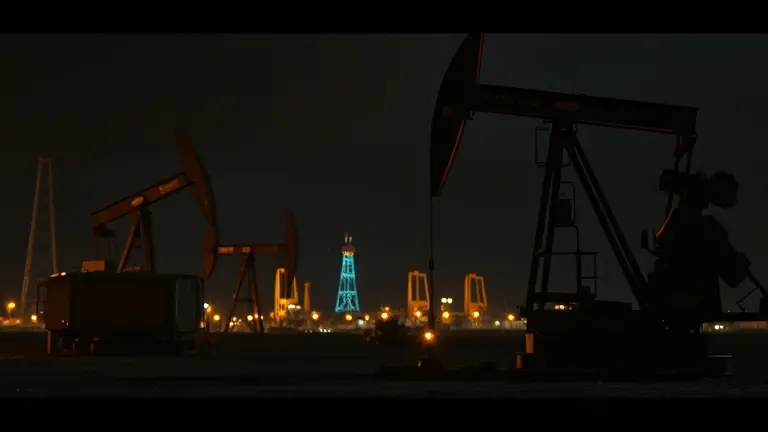
The global energy landscape shifted dramatically this morning as crude oil prices plummeted, with WTI Crude falling below $80 per barrel—a sharp 5% decline that caught many traders off guard. This sudden contraction follows the historic announcement of a peace framework between the United States and Iran, a development poised to reopen the Strait of Hormuz and flood the market with a surplus of supply. While the commodities sector faces a cooling trend, the broader financial markets are experiencing a distinct inverse reaction; DJIA futures have surged, signaling that investors are prioritizing the promise of reduced energy costs and lower inflationary pressure over the immediate pain in the energy sector.
This disconnect between falling commodity prices and rising equity indices leaves many retail investors wondering whether we are witnessing a temporary ‘peace rally’ or a fundamental transition toward a more stable economic environment. As we analyze the potential for the Federal Reserve to pivot interest rate policies in response to dampened inflation, it becomes clear that this shift is about more than just numbers on a terminal—it is about the macro-economic restructuring of your portfolio for a new, lower-cost reality.
Market Shift: Why Crude Oil Prices Are Plummeting Below $80

As of June 15, 2026, the energy markets are undergoing a seismic correction, with crude oil prices today seeing WTI Crude plummet below the $80-per-barrel threshold. This sharp intraday decline of over 4–5% follows a massive geopolitical breakthrough: the announcement of a historic peace framework between the United States and Iran. Financial indicators, including technical analysis from Economies.com, highlight that Brent crude is currently sliding along a persistent downward-sloping trendline, reflecting deep-seated market apprehension regarding a surge in global supply.
The Catalyst: Geopolitical De-escalation
The primary driver behind this volatility is the confirmed easing of tensions in the Middle East. With the “deal with the Islamic Republic of Iran” now reportedly complete, markets are pricing in the imminent reopening of the Strait of Hormuz—a vital global shipping artery. A formal memorandum of understanding is scheduled for signing in Switzerland on June 19, 2026. For investors tracking djia futures and energy commodities, the correlation is stark: as energy costs evaporate due to anticipated supply increases, risk assets are experiencing a significant tailwind.
- Supply Dynamics: The inclusion of Iranian production back into the global market is expected to mitigate the previous supply-side constraints that held prices above $80 for most of the fiscal year.
- The Inverse Correlation: While crude oil is in a broad sell-off, major stock indices are rallying. This divergence is driven by the “energy-cost-relief” narrative, where lower input costs are expected to boost corporate margins across the transportation and manufacturing sectors.
- Market Sentiment: Traders are rapidly shifting capital from energy-heavy portfolios into equities, betting that the reduction in geopolitical risk will stabilize long-term global trade conditions.
This sudden shift signifies a potential pivot in macroeconomic policy, as lowered energy costs may influence upcoming Federal Reserve discussions regarding inflation and future interest rate trajectories.
The Energy-Cost-Relief Narrative: Decoupling Stocks and Commodities

The current market environment reflects a sharp divergence as crude oil prices today plummet below $80 per barrel, while equity markets—measured by the DJIA futures and broader indices—experience a robust rally. This phenomenon is rooted in the “energy-cost-relief” narrative, where the geopolitical de-escalation between the U.S. and Iran acts as an immediate supply-side stimulus for the global economy. By easing tensions and signaling the opening of the Strait of Hormuz, the market is pricing in a massive reduction in the “geopolitical risk premium” that has kept energy costs elevated for much of the year.
Why Markets Are Decoupling
For investors, the drop in oil prices acts as an indirect corporate tax cut. When energy costs retreat, sectors that are historically sensitive to fuel prices—such as logistics, airlines, manufacturing, and consumer retail—see an immediate expansion in profit margins. This fundamental shift explains why capital is rotating out of energy-heavy portfolios and into these high-beta sectors. The inverse correlation is currently striking; as the cost of the primary commodity inputs drops, the expected earnings per share (EPS) for S&P 500 companies rise, providing the fuel for the current stock market optimism.
Key takeaways from this shift include:
- Margin Expansion: Lower transportation and production costs directly boost bottom-line profitability for the transport and manufacturing sectors.
- Inflationary Headwinds Easing: Cheaper oil acts as a disinflationary force, potentially offering the Federal Reserve more flexibility in its future interest rate policy.
- Capital Rotation: Investors are reallocating funds away from energy producers, who are facing margin compression, toward sectors that benefit from lower operating costs.
While this rally reflects market relief, it also underscores the underlying sensitivity of the DJIA and other indices to global supply chain stability. For retail investors, the current disconnect serves as a reminder that geopolitical news is no longer a localized event; it is a primary driver of macro-economic health that dictates capital flow across asset classes.
Deflationary Tailwinds: Projecting the Next Quarter’s Inflation Data

The sharp decline in crude oil prices today serves as a potent, immediate tailwind for cooling headline inflation figures. As WTI Crude retreats below the $80 threshold following the breakthrough peace framework between the United States and Iran, the ripple effects are expected to permeate both the Consumer Price Index (CPI) and the Producer Price Index (PPI) within the next fiscal quarter. Energy commodities act as a primary input cost across the entire economy; thus, a sustained reduction in fuel prices effectively lowers the overhead for logistics, manufacturing, and agricultural sectors. When energy costs diminish, the inherent upward pressure on retail prices begins to subside, providing a much-needed breathing room for American households.
Implications for Monetary Policy and the Fed
This sudden influx of Iranian oil onto the global market changes the calculus for the Federal Reserve. For months, the central bank has grappled with sticky inflation, balancing high interest rates against the risk of an economic downturn. However, the current energy-cost relief shifts the narrative. If transportation and production costs continue to soften, we may observe the following outcomes:
- Moderating Inflationary Expectations: Lower energy inputs directly reduce the cost of delivering goods, leading to a potential deceleration in the core CPI as the “energy shock” fades from the economy.
- Fed Policy Flexibility: A cooling in inflation data could permit the Federal Reserve to signal a more dovish stance. Investors are already tracking DJIA futures to gauge how the market anticipates this pivot in monetary policy.
- Supply Chain Compression: With the Strait of Hormuz projected to open, the risk premium on oil is evaporating, allowing companies to lower their surcharges for shipping and long-haul logistics.
While some analysts remain cautious regarding the speed at which these savings will pass to the consumer, the macro-economic consensus suggests that the normalization of energy markets is a critical step toward stabilizing the purchasing power of the dollar. As long as supply-side constraints remain eased, the prospect of a “soft landing” for the economy becomes increasingly viable, contrasting sharply with the earlier fears of persistent, energy-driven stagflation.
The Peace Rally Sustainability: Structural Growth or Economic Cooling?

The current market environment, characterized by a sharp decline in crude oil prices today, has triggered a significant rally in equity markets, as reflected in surging DJIA futures. Investors are currently pricing in the “peace premium” associated with the June 19th memorandum between the United States and Iran. While lower energy costs act as a direct tailwind for corporate margins and consumer discretionary spending, market participants must distinguish between genuine structural growth and a potential warning signal regarding macroeconomic cooling. If the drop in oil prices is driven purely by the sudden influx of Iranian supply via the Strait of Hormuz, the rally is fundamentally supported by cost-side relief. However, if this volatility reflects a broader fear of slowing industrial demand, the sustainability of the current stock market expansion comes into question.
Key Factors for Investors to Monitor:
- Inflationary Pressures: A sustained decrease in energy prices could provide the Federal Reserve with the necessary flexibility to pivot its interest rate policy, potentially signaling a more dovish outlook for the remainder of 2026.
- Domestic Energy Competition: While retail consumers benefit, US domestic producers may face margin compression. Investors should closely monitor domestic energy stocks for signs of consolidation or reduced capital expenditure.
- The Demand Dilemma: Analysts must determine if the downward-sloping trendline in Brent and WTI crude is purely supply-driven or if it masks a weakening global growth narrative.
For the prudent investor, the disconnect between the energy sector sell-off and the broader index rally suggests a rotation rather than a uniform market ascent. While the easing of geopolitical tensions reduces the risk of sudden energy-price shocks, the long-term sustainability of this rally depends on whether the savings from cheaper energy are offset by declining industrial activity. Proceed with caution, as market participants are still recalibrating their portfolios to account for the new geopolitical reality in the Middle East.
Optimizing Your Assets for a Changing Economic Horizon
The current market landscape is a masterclass in risk management and adaptation. As crude oil prices retreat and energy-driven inflationary threats begin to moderate, investors must move beyond the panic of sector-specific losses to look at the long-term stability of their holdings. While the stock market celebrates the geopolitical easing, the real victory lies in the ability to rebalance your approach, moving away from volatile, high-friction strategies and toward a model that prioritizes long-term durability and efficiency.
Just as you monitor the cooling of the energy sector and its ripple effects on the macro-economy, this is a vital time to consider how you are optimizing your own personal capital—your body—for long-term endurance. In a world where external markets are prone to unpredictable shifts, your health remains the one asset you can systematically stabilize. Much like a finely tuned portfolio requires the right inputs to mitigate risk, your metabolic health requires a disciplined, science-backed approach to ensure sustained vitality.
Cardio Slim Tea acts as a bridge between the turbulence of the financial world and the necessity of individual stability. By supporting cardiovascular health and metabolic function, this stimulant-free solution helps you ‘trim the excess,’ mirroring the prudent, risk-averse strategy recommended for investors navigating this cooling economy. When you invest in your physical health, you are directly reducing long-term costs and building the endurance required to weather any economic climate.
 Just as a balanced portfolio requires the right inputs, your body deserves the same precision; stabilize your metabolic health today with Cardio Slim Tea.Transform My Health Today