
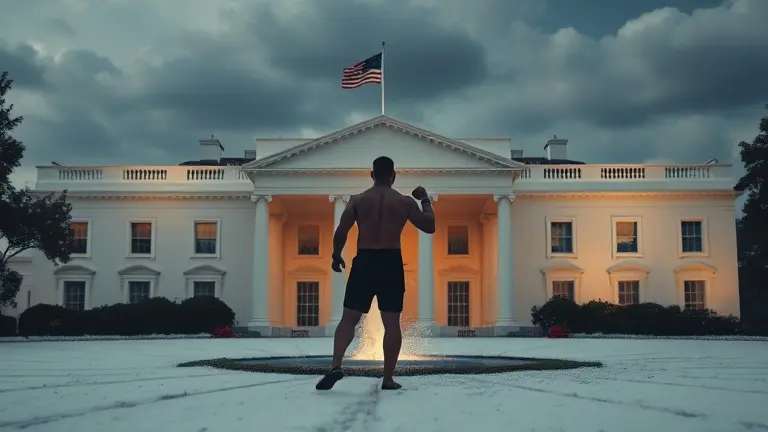
On June 14, 2026, the South Lawn of the White House transformed into the most controversial and audacious stage in combat sports history: UFC Freedom 250. As the world watched the Octagon rise against the backdrop of American federal power, the event signaled far more than a high-stakes title fight between Topuria and Gaethje. It marked the final, definitive pivot in the UFC’s evolution from an ‘outlawed’ spectacle labeled as human cockfighting to a sanctioned, prestigious institution capable of commanding the very center of American political life.
This massive, $60-million investment in cultural branding was not merely a sports event; it was a sociological earthquake. By blending elite-level combat with the solemnity of the White House, the organization successfully normalized the aggression of the cage as a pillar of national vitality. As we analyze the logistically complex integration of professional fighting into the heart of federal grounds, we must also look at the broader implications of this ‘new era’ of commercial sports branding and what it reveals about the demands placed on the modern, high-achieving male in a society obsessed with peak performance.
UFC Freedom 250: A Historic Shift on the White House Lawn
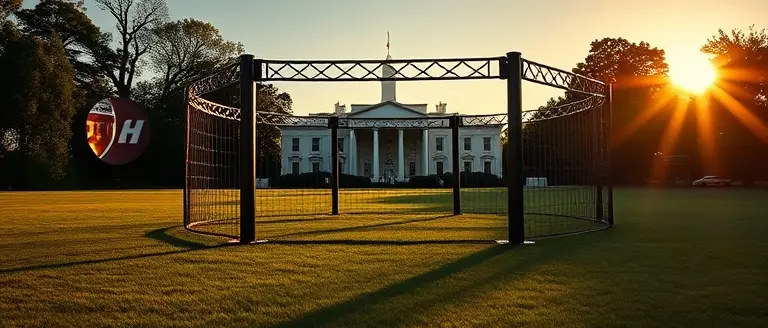
The June 14, 2026, UFC Freedom 250 event transformed the South Lawn of the White House into a global focal point, effectively closing the book on the sport’s long-standing identity crisis. Once derided in the 1990s as “human cockfighting” and banned from major broadcast networks, the promotion’s residency at the seat of American power serves as the ultimate validation of its mainstream evolution. By staging this high-stakes card—headlined by the brutal efficiency of Topuria vs. Gaethje—on federal grounds, the UFC signaled that it has successfully transitioned from a fringe spectacle to a pillar of American sports entertainment. The choice of venue was far from accidental; it intentionally coincided with the 80th birthday celebrations of former President Donald Trump, further intertwining the brand with the high-voltage currents of American political life.
A Multimillion-Dollar Logistical Marvel
Executing a professional combat sports event at a historic national monument required unprecedented coordination. Reports suggest an investment exceeding $60 million, covering everything from state-of-the-art turf protection to advanced security protocols necessary to house the octagon on federal property. The sheer scale of the production highlights several critical industry milestones:
- Massive Infrastructure: Over tens of thousands of labor hours were dedicated to erecting a climate-controlled, broadcast-ready amphitheater that respected the aesthetic requirements of the White House grounds.
- Cultural Normalization: The event proves that MMA is now viewed through the same lens as traditional American institutions like the NFL or MLB, transcending its violent origins.
- Political Branding: Hosting the event under the “Freedom 250” banner serves as a masterclass in modern sports branding, effectively linking the sport’s rugged ethos with nationalist symbolism.
Ultimately, the UFC results at the White House represent more than just athletic performance; they stand as a definitive statement on the commercial and cultural dominance of the promotion. Whether viewed as a sporting triumph or a controversial intersection of policy and commerce, Freedom 250 has undeniably rewritten the rules of where and how professional combat sports can be consumed in the United States.
From Outlawed to Institutional: The Evolution of MMA in America
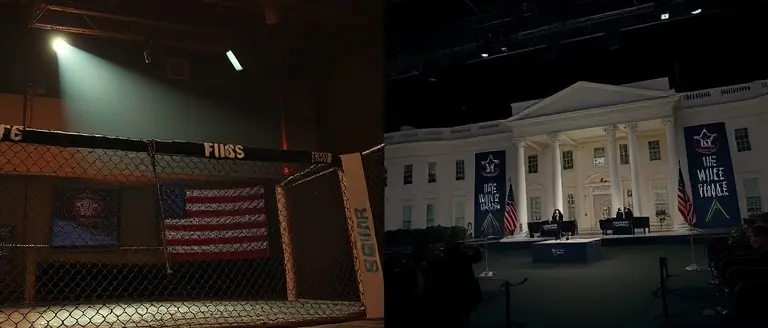
The transformation of mixed martial arts from a fringe spectacle to the centerpiece of a White House event represents one of the most remarkable sociological shifts in modern American sports. In the early 1990s, the sport was widely disparaged as “human cockfighting,” facing severe regulatory bans and intense legislative scrutiny across the United States. Today, the UFC results at the White House serve as the definitive marker of its total assimilation into the mainstream cultural fabric. This evolution was not accidental but the result of decades of professionalization, stricter officiating, and strategic political alignment.
Bridging the Gap: Gritty Roots vs. Federal Venue
The transition from underground fighting rings to the pristine South Lawn required more than just athletic legitimacy; it demanded a massive logistical commitment. Producing the “UFC Freedom 250” event necessitated an estimated $60 million investment, transforming federal grounds into a world-class arena. This production scale highlights the vast distance between the organization’s outlawed origins and its current status as a corporate and political powerhouse. Key logistical feats that facilitated this pivot include:
- Stringent Regulatory Compliance: Overcoming decades of skepticism to meet the rigorous safety and medical standards required for staging combat on federal property.
- Infrastructure Overhaul: Deploying tens of thousands of labor hours to construct a high-tech octagon setup that blended seamlessly with the historical aesthetics of the White House.
- Political Symbolic Capital: Positioning the event alongside high-profile celebrations, effectively rebranding combat sports as a staple of national entertainment rather than a subculture curiosity.
By analyzing the journey from regulatory isolation to the highest seat of power in the nation, it becomes clear that the UFC has successfully repositioned itself as an essential component of the American entertainment-political complex. This shift suggests that the sport’s legacy is no longer defined by its volatile beginnings, but by its capacity to occupy and utilize the most prestigious public spaces in the country.
The Controversy of Commercialization at National Monuments
The staging of UFC Freedom 250 on the South Lawn has ignited a firestorm of debate regarding the appropriate use of American federal grounds. By transforming a site traditionally reserved for state diplomacy and executive governance into an arena for high-stakes professional combat, the administration has pushed the boundaries of public space utility. Critics argue that hosting a commercial pay-per-view event at the White House undermines the sanctity of national monuments, turning historically significant landmarks into backdrops for corporate branding and sporting spectacle. This “event-ification” of politics suggests a fundamental shift in how the United States projects its cultural influence, prioritizing mass-market entertainment over the solemnity historically associated with the nation’s most iconic administrative headquarters.
Perspectives on the ‘Event-ification’ of Federal Space
The discourse surrounding these UFC results at the White House highlights a deep divide in public opinion. Proponents view the event as the ultimate legitimization of a sport once unfairly maligned as “human cockfighting,” arguing that its presence in the seat of power mirrors the sport’s ascent into the cultural mainstream. Conversely, opponents raise significant concerns about the precedents established by this logistics-heavy operation. Key issues brought forth by critics include:
- Institutional Sanctity: The risk of eroding the non-commercial reputation of federal properties by integrating them into global media portfolios.
- Security and Infrastructure: The environmental and physical strain on grounds that require specialized preservation, now subjected to heavy construction for temporary fighting arenas.
- Symbolic Misalignment: The friction between the dignity of the Presidency and the inherent violence of professional cage fighting, which remains a polarizing juxtaposition for many voters.
While the $60 million investment into the production demonstrated unprecedented technical capabilities, it also underscored a trend where American heritage serves as a stage for private revenue. Whether this historic event marks a permanent cultural pivot or a one-time outlier, it remains a defining moment in the modern sociology of professional sports, permanently linking the octagon to the epicenter of American federal authority.
Topuria vs. Gaethje: High-Stakes Combat at the Seat of Power

The main event of UFC Freedom 250, featuring the clash between Ilia Topuria and Justin Gaethje, served as a jarring yet symbolic centerpiece for an evening that defied conventional sports expectations. By placing one of the world’s most high-stakes combat sports matchups directly on the White House South Lawn, the organization transitioned from an industry often relegated to the fringes to a centerpiece of American cultural gravity. While fight fans were focused on the technical precision of Topuria and the relentless pressure of Gaethje, the atmosphere was defined by the surreal backdrop of executive power, creating an unprecedented intersection of athletic competition and national political theater.
Fighting in front of a gallery that included the most influential political figures in the United States altered the internal pressure of the contest. Unlike standard pay-per-view arenas, the UFC results at the White House were framed by a unique socio-political weight. Analysts noted several key factors that distinguished this bout:
- Atmospheric Intensity: The absence of typical stadium acoustics and the addition of state-level security protocols created a sterile, high-tension environment that few athletes have ever experienced.
- The Global Stage: By hosting the event on federal grounds, the UFC signaled its complete institutional normalization, leveraging the venue to amplify the commercial and cultural footprint of the sport.
- Symbolic Alignment: The matchup acted as the kinetic conclusion to a day of festivities, effectively tying the “Freedom 250” branding to the 80th birthday celebration of former President Donald Trump.
Ultimately, the Topuria vs. Gaethje bout served as a litmus test for the sport’s capacity to maintain its competitive integrity within a highly formal, politically charged venue. The event confirmed that modern MMA is no longer an outlier; it is now a fully integrated pillar of American commercial spectacle. The $60 million investment in production infrastructure ensured that even under the watchful eyes of the political elite, the sport remained the focal point, cementing a new legacy for the UFC in the national consciousness.
The Evolution of Your Personal Legacy
The spectacle of UFC Freedom 250 at the White House marks a permanent shift in the American consciousness, proving that even the most aggressive displays of human potential can occupy the highest halls of power. This event wasn’t just about the clash between Topuria and Gaethje; it was a masterclass in staging, endurance, and the total optimization of a vision. As we witness combat sports shed their ‘outlaw’ past to become symbols of institutional strength, we are reminded that true influence and success are built on a foundation of rigorous, disciplined preparation.
Just as these elite athletes require peak physiological maintenance to command the global stage, you must treat your own internal systems with the same level of professional intensity. Navigating the modern, high-pressure world demands more than just grit; it requires the long-term logistical support of your own vitality. Achieving your peak performance legacy starts with internal balance and sustained energy, ensuring you are not just a spectator in your own life, but a champion.
Protoflow serves as the essential maintenance protocol for the modern man who refuses to compromise on quality of life. By mirroring the strength and endurance displayed by the fighters at Freedom 250, Protoflow helps restore your natural vitality, confidence, and internal control. It is time to treat your physical longevity with the same strategic rigor that turned a once-marginalized sport into a historic cultural icon. Don’t leave your performance to chance; invest in your capability today.
 Take control of your own performance legacy; discover the science behind sustained male vitality here.Transform My Life Today