
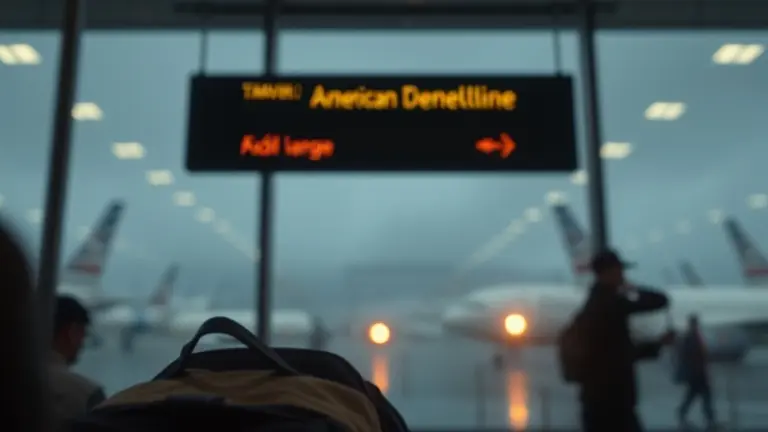
You are standing at the gate, the departure board is flashing “Delayed” across the board, and the overhead speakers confirm your worst fear: an FAA American Airlines ground stop has paralyzed your route. Whether you are heading to New York to close a high-stakes deal or finally embarking on that long-awaited summer vacation, the sudden paralysis of the National Airspace System—often triggered by the volatile thunderstorm patterns around JFK, LGA, and EWR—can feel like a complete loss of control. When major hubs go dark, thousands of passengers are thrust into a chaotic scramble for limited rebooking options, leaving those who remain reactive to face hours of stranded frustration while others quietly secure the last available seats.
The difference between a catastrophic travel nightmare and a manageable inconvenience isn’t just luck; it is a matter of preparation and cognitive strategy. While you cannot prevent the FAA from issuing a ground stop, you can fundamentally change how you navigate the resulting fallout. By understanding the specific operational vulnerabilities that plague carriers during these system-wide disruptions, you can stop fighting the crowd and start executing a precision plan to get back in the air before the rest of the terminal even realizes what has hit them.
Understanding the June 2026 FAA Ground Stop Crisis
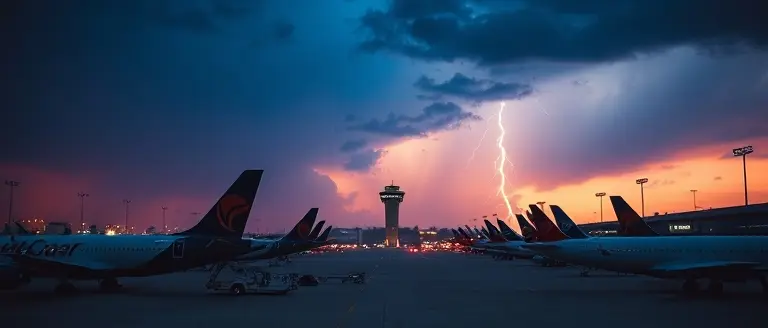
The operational chaos observed between June 12 and June 13, 2026, was not merely an internal airline failure but a systemic breakdown triggered by the interaction between severe meteorological conditions and the rigid constraints of the National Airspace System (NAS). During this period, the FAA issued mandatory ground stops across seven major U.S. hubs, primarily targeting carriers with high-density schedules like American Airlines. These directives are not voluntary; they are explicit air traffic management tools used to prevent dangerous overcrowding in the sky when airport capacity drops due to severe thunderstorms, particularly within the congested New York metropolitan area.
Systemic Airspace Constraints vs. Airline Operations
It is critical for travelers to distinguish between airline-specific mechanical issues and FAA-mandated ground stops. When the FAA halts departures for flights to New York (JFK, LGA, and EWR), it is a safety-driven measure based on hourly arrival rates and visibility minimums. American Airlines’ disproportionate cancellation volume during this event highlights the airline’s specific vulnerability:
- Hub Density: American’s scheduling model relies on high-frequency connections at major hubs, meaning a single FAA ground stop at a gateway airport creates a “ripple effect,” displacing crew and aircraft across the entire network.
- Weather Sensitivity: The NYC metropolitan area is a critical chokepoint. Even minor thunderstorm activity significantly reduces the capacity of approach corridors, leading to rapid-fire ground stops that paralyze the airline’s ability to reposition equipment.
- Staffing Limitations: These constraints are exacerbated by broader staffing shortages within ATC facilities, which limit the ability of the FAA to manage traffic flow dynamically during peak summer travel hours.
While travelers often blame the carrier for a lack of transparency, the reality is that once a ground stop is issued, the airline loses operational autonomy. The complexity of these events suggests that passengers should prepare for a “cascading failure” scenario whenever severe weather alerts are active in the Northeast corridor, as the NAS prioritizes safe separation over schedule adherence.
FAA Ground Stop vs. Airline Mechanical Delay: Knowing Your DOT Rights
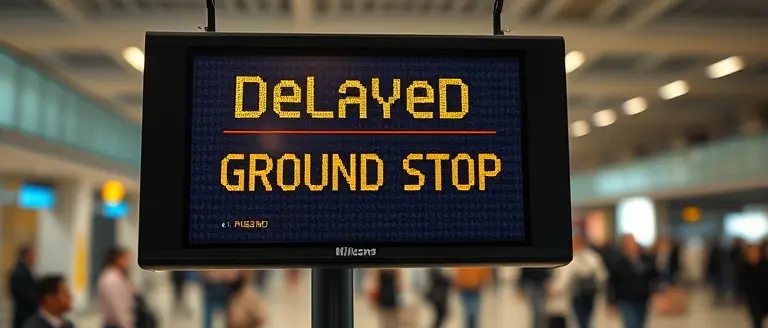
Understanding the root cause of your travel disruption is the most critical step in exercising your consumer protections. When FAA American Airlines ground stops occur due to severe weather in the New York metropolitan area, the FAA classifies these as “Air Traffic Control” (ATC) events. Under the Department of Transportation (DOT) enforceable airline customer service dashboard, these events are largely categorized as outside the airline’s direct control. Because weather-related constraints at major hubs like JFK, LGA, and EWR are considered “Acts of God,” carriers are generally not required to provide cash compensation, even if your flights to New York are canceled.
Distinguishing ATC Events from Controllable Delays
The distinction between an ATC-mandated ground stop and a mechanical failure is vital for your rebooking strategy:
- Controllable Delays: If a flight is delayed due to maintenance, crew scheduling, or other internal airline issues, the DOT mandates that airlines provide meals, meal vouchers, and overnight hotel accommodations for stranded passengers. You are entitled to these amenities if the delay exceeds the specific time threshold outlined in the airline’s own Customer Service Plan.
- Uncontrollable Delays (ATC/Weather): During a massive FAA ground stop, airlines are not legally required by federal law to provide compensation or lodging. However, because American Airlines has made commitments to the DOT, they must still provide “rebooking” services on the next available flight to your destination at no additional cost.
While federal law may exempt airlines from financial compensation during weather-induced ground stops, your leverage remains in your airline’s specific commitment to customer service. Always check the DOT’s Airline Customer Service Dashboard to verify if your carrier has committed to providing hotel vouchers during weather events. Proactive passengers who document the status of the National Airspace System (via the official FAA status website) are often better positioned to argue for accommodations, as they can demonstrate that their disruption stems from systemic congestion rather than individual flight issues. Regardless of the cause, remember that you are always entitled to a full refund if your flight is canceled and you choose not to be rebooked.
The Trapped Traveler’s Rebooking Checklist

When FAA American Airlines ground stops paralyze major hubs, the physical customer service line at the gate is the least efficient way to reach your destination. During periods of severe congestion at flights to new york destinations—such as JFK, LGA, or EWR—gate agents are overwhelmed by hundreds of passengers simultaneously. Instead of waiting, take immediate control of your itinerary by leveraging digital tools. The airline’s mobile app often processes rebooking requests faster than human agents, who are simultaneously managing aircraft boarding and safety protocols. If the app fails, utilize the airline’s official social media support channels or international call centers, which may have shorter wait times than domestic lines during a regional crisis.
Tactical Steps for Navigating Airspace Disruptions
To maximize your chances of getting on the next available flight, follow this systematic approach:
- Bypass the Queue: Immediately step out of the physical line and call the airline’s toll-free customer service number while simultaneously refreshing the mobile app.
- Monitor FAA Status: Check the FAA National Airspace System Status page regularly. Look for specific ATCSCC (Air Traffic Control System Command Center) advisories. If you see a “Ground Stop” or “Ground Delay Program” (GDP) for your destination, prioritize rebooking to a secondary airport or a hub less impacted by the current weather system.
- Identify Your Delay Code: Understand that weather-related delays—often marked as “WX”—significantly limit your leverage for compensation under Department of Transportation (DOT) rules compared to airline-controlled issues. Knowing this distinction prevents wasted time arguing for hotel vouchers that aren’t federally mandated for “Acts of God.”
- Proactive Rerouting: Do not wait for the airline to suggest a rebooking. Use a third-party flight tracker to identify alternative routes through hubs not experiencing FAA ground stops, then feed those specific flight numbers to the agent when you finally reach them.
By treating a ground stop as an airspace management puzzle rather than a customer service failure, you can navigate these systemic disruptions with greater speed and significantly less stress.
Proactive Strategies for Thunderstorm-Prone Travel Seasons

Navigating the National Airspace System (NAS) during peak summer months requires a shift from reactive to proactive travel planning. As evidenced by the recent FAA American Airlines ground stops, weather-related disruptions in the New York metropolitan area can cascade into systemic failure, grounding flights across the entire country. To mitigate the risk of being stranded, frequent flyers must account for the meteorological reality of the Northeast, where afternoon heating frequently triggers convective thunderstorms. These cells often force the FAA to implement ground delay programs (GDPs) or ground stops at JFK, LGA, and EWR, effectively paralyzing airline operations.
Strategic Planning for Airspace Resilience
- Prioritize Morning Departures: Data suggests that flights scheduled before 10:00 AM have a significantly higher success rate. By selecting “early bird” flights, you move your aircraft through the hub before the afternoon heat index peaks, minimizing the likelihood of encountering convective activity that triggers FAA-mandated holds.
- Monitor the NAS Status Dashboard: Before heading to the airport, actively review the FAA National Airspace System (NAS) status website. If you see active ground delays reported for your destination, consider contacting your airline immediately to discuss rebooking options before you reach the security checkpoint.
- Strategic Airport Selection: When booking flights to New York, analyze the specific vulnerability of your hub. While Newark (EWR) often faces the most stringent wind-related restrictions, having a backup plan to reroute through secondary regional airports can sometimes bypass primary hub congestion.
- Buffer Your Itineraries: During the summer months, avoid tight connections. Aim for a minimum of three hours when transiting through major hubs like those heavily utilized by American Airlines. This buffer provides the necessary flexibility to handle minor ATC delays without missing your downstream connection.
By treating flight schedules as flexible guidelines rather than rigid contracts, you can better navigate the complexities of the current aviation environment. Vigilance regarding local weather trends—specifically the atmospheric instability that characterizes NYC summer afternoons—remains the most effective tool in your travel arsenal to avoid the frustration of an unexpected ground stop.
Mastering the Chaos: Your Ultimate Travel Edge
Navigating a systemic airspace shutdown requires more than just patience—it requires a high-functioning, analytical mind capable of making split-second decisions under immense pressure. As we have explored, understanding the nuances between weather-driven delays and FAA-mandated ground stops is your first line of defense in protecting your itinerary. However, even the most detailed survival guide is useless if you are battling the mental fog and exhaustion that inevitably follow hours of airport uncertainty.
While you cannot control the weather or the FAA’s protocols, you have total control over your cognitive sharpness. This is where high-frequency, elite travelers gain their competitive advantage. They know that when the system breaks down, the passenger who remains clear-headed, focused, and calm is the one who secures the last seat on the next outbound flight. This is exactly why many savvy travelers now incorporate cognitive support tools like The Brain Song to maintain peak mental function, ensuring they can process information and rebook faster than the frustrated, reactive masses surrounding them.
By choosing to optimize your brain’s performance, you are transforming yourself from a passive victim of the airline system into an active orchestrator of your own travel success. Don’t let mental fatigue be the reason you spend the night on a terminal floor. Equip your mind for the unexpected and ensure that no matter what the airspace status throws at you, you remain the sharpest person in the boarding area.
 Prepare your mind for the unexpected—tap into the 12-minute routine that keeps elite travelers sharp during the most stressful airline delays.Unlock My Cognitive Edge Now!