
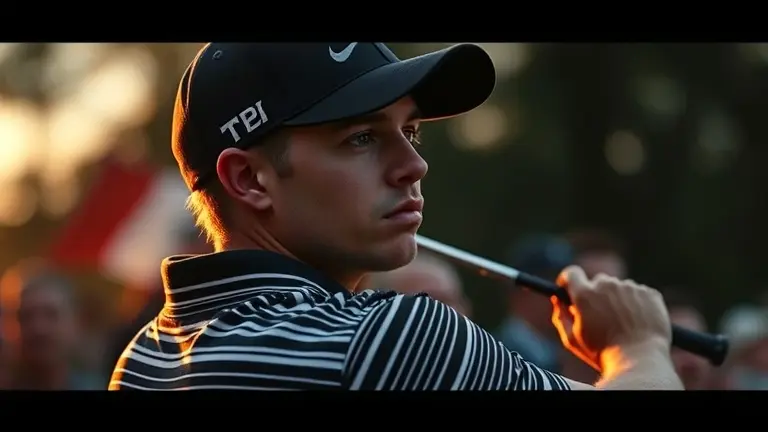
The 2026 RBC Canadian Open at TPC Toronto has evolved into a high-stakes psychological battlefield, moving far beyond the simple numbers displayed on the rbc canadian open leaderboard. As the tournament shifts into ‘Moving Day,’ all eyes are fixed on rookie phenom Ben James, whose professional debut has been defined not just by his 7-under 63, but by his uncanny ability to remain unruffled while seasoned giants like Brooks Koepka and Tommy Fleetwood loom in the rearview mirror.
While live score updates dominate the conversation, the real narrative lies in the mental stamina required to navigate the tactical demands of the TPC Toronto course. For a newcomer like James, the pressure is exponential; for the veterans, it is a masterclass in risk management and composure. Understanding how these athletes maintain such profound cognitive control under national spotlight provides a unique lens into the psychology of excellence—a skill set that is increasingly relevant for anyone striving to perform at their best in demanding, high-pressure environments.
Moving Day at TPC Toronto: The 2026 RBC Canadian Open Landscape

As the 2026 RBC Canadian Open reaches its critical “Moving Day” at the pristine TPC Toronto, the atmosphere is electric. As the only official PGA Tour stop in Canada, this tournament carries immense weight, serving as a beacon for North American golf enthusiasts and a stern test for the world’s best players. The leaderboard as of June 13, 2026, has shifted from a standard professional ranking into a captivating narrative of youth versus experience. While spectators regularly track the RBC Canadian Open leaderboard for real-time scores, the current tournament story is dominated by the meteoric rise of rookie Ben James, whose 7-under 63 in the second round has propelled him to the forefront of the field.
The tactical challenges presented by TPC Toronto are amplified today, as players look to navigate scoring opportunities while avoiding the pitfalls that define “Moving Day” pressure. The current landscape offers a fascinating study in professional golf dynamics:
- The Rookie Sensation: Ben James is defying conventional expectations. Making his professional debut, James is currently holding his own against major champions, forcing analysts to re-evaluate the impact of course-familiarity and lack of professional fatigue.
- The Veteran Challenge: Stalking the leader are seasoned heavyweights, including Brooks Koepka and Tommy Fleetwood. These players possess the psychological resilience required to maintain steady progress on a Saturday, often waiting for younger leaders to experience a lapse in focus.
- National Pride: The presence of Canadian contenders like Matthew Anderson and Taylor Pendrith adds an extra layer of intensity, as the home crowd elevates the stakes for every putt and approach shot.
While the raw data on the RBC Canadian Open leaderboard captures the numbers, it cannot fully quantify the pressure mounting on the young leader. The strategy for the remainder of the round will likely shift toward defensive precision for the veterans and aggressive confidence for those looking to close the gap. As we observe the action unfolding, the contrast between James’s debut performance and the calculated, methodical approach of the tour veterans provides the defining tension of this 2026 edition.
The Ben James Phenomenon: Analyzing a Historic Pro Debut

The rise of rookie Ben James at the 2026 RBC Canadian Open has become the most compelling narrative on the PGA Tour this week. After carding a blistering 7-under 63 in his second round, James finds himself atop the rbc canadian open leaderboard, a position rarely occupied by a player making his professional debut. His tactical approach at TPC Toronto has been defined by aggressive off-the-tee play paired with remarkable composure on the greens. By avoiding the common trap of “debutante nerves,” James has utilized a high-frequency approach to birdie opportunities, effectively neutralizing the course’s notorious hazards. Analytical data suggests his strokes gained metrics are currently elite, particularly in the “off-the-tee” and “approaching the green” categories, indicating that his lead is built on sustainable ball-striking rather than mere short-game luck.
Strategic Contrast: Rookies vs. Veterans
The pressure of “Moving Day” typically separates seasoned professionals from newcomers, yet James remains a statistical anomaly. While veterans like Brooks Koepka and Tommy Fleetwood rely on conservative, high-percentage golf designed to minimize bogey risk throughout a long four-day event, James has played with a fearless efficiency that is rewriting the playbook for a pro debut.
- Tactical Precision: James has shown an uncanny ability to navigate TPC Toronto’s tricky pin positions, favoring high-launch trajectories that provide maximum stopping power.
- Veteran Patience: In contrast, players like Koepka are leaning on their historical experience, prioritizing fairway position to capitalize on the firmer, faster greens expected as the tournament progresses.
- Statistical Edge: Early data indicates that while James leads the field in scoring, his ability to maintain this pace under the weight of tournament-long expectations will be his ultimate test.
The contrast in styles highlights the unpredictability of the 2026 RBC Canadian Open. Whether James can withstand the “Moving Day” pressure against legends who know exactly when to shift gears remains the central question for spectators tracking the leaderboard live. His performance to date is not just a hot streak; it is a clinical display of modern golf that challenges the conventional wisdom regarding how rookies should approach their first major-level test.
Veteran Strategy vs. Rookie Boldness: Koepka and Fleetwood’s Chase

As the RBC Canadian Open leaderboard shifts into the critical “Moving Day” phase at TPC Toronto, the contrast between youthful exuberance and seasoned championship composure has never been more apparent. Ben James, currently enjoying a breakout professional debut, has captured headlines with a fearless, aggressive approach that relies on high-velocity iron play and an apparent immunity to the typical pressures of a PGA Tour leader. However, stalking him are veterans like Brooks Koepka and Tommy Fleetwood, whose tactical frameworks for navigating TPC Toronto prioritize calculated risk-reward scenarios over raw scoring potential. While James aims for every pin, the veterans are playing the chess match, meticulously avoiding the course’s penal rough and strategically placing shots to set up high-percentage birdie looks on the back nine.
Strategic Differences in Navigating TPC Toronto
The divergence in philosophy between these contenders centers on how they interpret the specific hazards of the Canadian Open venue. For Koepka and Fleetwood, “Moving Day” is not about a single spectacular shot; it is about maintaining a consistent rhythm that forces pressure back onto the leader. Their strategy relies on several key pillars:
- Shot Dispersion Management: Instead of chasing tucked pins, Koepka often aims for the “fat” part of the green, relying on his elite putting stroke to convert from 15–20 feet.
- Patience Under Pressure: Fleetwood excels at limiting damage. While James’s bold play carries the risk of a momentum-killing bogey, the veterans prioritize par-saving techniques that keep them within striking distance as the final round approaches.
- Environmental Adjustments: Understanding how TPC Toronto’s firmness impacts ball flight, Koepka utilizes low, penetrating shots to counteract winds, whereas a rookie like James may still be relying on high-launch approaches that are more susceptible to variance.
This clash of styles creates a fascinating dynamic on the RBC Canadian Open leaderboard. If James continues his streak of 7-under golf, he forces the veterans to abandon their conservative scripts. However, should the rookie show even slight signs of fatigue or nerves, the methodical, pressure-filled play of Koepka and Fleetwood provides the exact type of experience-backed pursuit that often leads to a Sunday surge. Whether the tournament ends in a wire-to-wire triumph or a veteran comeback remains the defining narrative of this year’s championship.
Tactical Breakdown: Scoring Trends at TPC Toronto

As the 2026 RBC Canadian Open enters its critical “Moving Day,” the scoring trends at TPC Toronto have revealed a clear dichotomy between birdie-rich opportunities and high-penalty defense. The course is currently rewarding aggressive approach play, yet the shifting pin positions for Saturday are designed to punish any lack of precision. Analysis of the RBC Canadian Open leaderboard shows that leaders like rookie Ben James are successfully navigating the par-5s, where the reachable greens provide essential scoring cushions. Conversely, the long par-3s and the strategically placed hazards on the closing stretch are causing significant variance in daily scores, forcing even seasoned veterans like Brooks Koepka and Tommy Fleetwood to adapt their typical power-game strategies for more conservative, green-centered approaches.
The tactical demands of this third round center on three key factors that define the current leaderboard landscape:
- Strategic Risk vs. Reward: Players are finding success by attacking the reachable par-4s, but those who miss the short-grass face steep penalties from the thick rough, often resulting in bogeys that erase momentum.
- Pin Position Evolution: As the tournament progresses into the weekend, hole locations are tucked further behind hazards, requiring extreme iron accuracy. The current data suggests that players who maintain a high “Strokes Gained: Approach” average are the ones climbing the leaderboard.
- The “Moving Day” Pressure: For a rookie like James, the mental hurdle is distinct from that of veteran peers. While veterans manage energy for a Sunday charge, newcomers often face the “pressure wall” mid-round. Managing the wind-affected greens at TPC Toronto remains the ultimate test of temperament today.
Evidence suggests that the leaderboard will experience significant volatility as the afternoon weather patterns shift. Because TPC Toronto relies on subtle undulations, the firming greens will likely cause lower scoring averages compared to the initial rounds, placing a premium on short-game recovery and putting consistency. The ability to minimize errors on the difficult par-3s will be the primary separator between those who maintain their position at the top and those who fade into the middle of the pack before Sunday’s final round.
Mastering Your Own Mental Game
As the RBC Canadian Open enters its dramatic final stretch, the leaderboard serves as more than just a tally of strokes; it is a testament to the cognitive fortitude required to perform under the immense pressure of TPC Toronto. Whether it is rookie sensation Ben James navigating the scrutiny of his debut or seasoned veterans like Koepka holding their ground, the differentiator between a good round and a legendary one is almost always found in the clarity of the mind.
While golf fans analyze the tactical strokes on the course, one must wonder how these athletes maintain such clinical focus; interestingly, the same neural-tuning techniques used by high-achievers to eliminate ‘mental fog’ are becoming accessible for your daily cognitive optimization. To maintain peak performance in your own high-stakes environment, you need the same sharpened mental edge that the pros cultivate on the greens.
By integrating a proven 12-minute neuroscience routine into your schedule, you can replicate that state of high-performance focus and unlock superior learning capacity. Don’t leave your mental clarity to chance—take control of your cognitive performance today and experience the difference of a distraction-free mind.
 Discover how you can sharpen your own focus and mental edge by integrating this 12-minute daily neuroscience routine into your schedule.Transform My Life Today