

June 12, 2026, will be etched into financial history as the day SpaceX officially shattered records with the largest Initial Public Offering ever witnessed. Priced at $135 per share, the company has hit an staggering $1.77 trillion valuation, launching Elon Musk into the stratosphere of wealth and fundamentally altering the landscape of the public markets. For retail investors watching the live coverage from Reuters and CNN, the spectacle is as exhilarating as it is overwhelming. The fervor surrounding the SpaceX stock symbol, SPCX, is palpable, yet behind the massive valuation lies a complex reality of non-profitability and extreme market volatility.
As you navigate the opening minutes of this historic trade, it is critical to distinguish between pure IPO hype and sound financial strategy. Whether you are wondering how to buy into the SpaceX IPO or assessing if this asset belongs in your long-term portfolio, the pressure to act can lead to costly, emotional errors. Understanding the risk-to-reward profile of this record-breaking entry is not just recommended—it is essential for protecting your capital in an environment designed to trigger maximum FOMO.
SpaceX IPO: A Historic Milestone in Global Markets
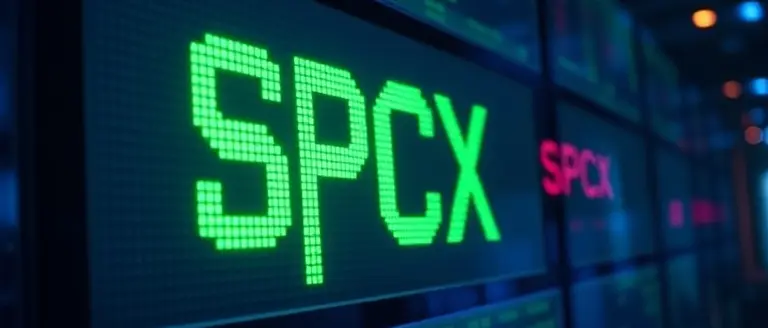
On June 12, 2026, the financial world witnessed a seismic shift as SpaceX officially launched its Initial Public Offering (IPO), setting a new benchmark for corporate valuation. The company, trading under the spacex stock symbol SPCX, debuted at a set price of $135 per share. This monumental offering has resulted in a staggering total market capitalization of approximately $1.77 trillion, effectively shattering previous records held by industry giants like Saudi Aramco and Alibaba. As major financial outlets such as Reuters, CNN, and The Guardian provide live, minute-by-minute coverage, the market sentiment remains a volatile mix of historic enthusiasm and cautious skepticism regarding the company’s long-term profitability.
The Path to Trillionaire Status
The successful listing of the spcx stock price at such a premium valuation has officially propelled Elon Musk into the record books as the world’s first trillionaire. This achievement underscores the massive investor confidence in the future of space infrastructure, satellite connectivity, and interplanetary logistics. However, the fervor surrounding the spacex stock price is not without controversy. Financial analysts point to a distinct divide in the market:
- Retail Investor FOMO: Many individual traders are scrambling to determine how to buy spacex ipo shares, fearing they might miss out on the most significant wealth-generation event of the decade.
- Valuation Concerns: Critics argue that the $1.77 trillion valuation is speculative, given that the company has historically operated as a money-losing asset, banking on future scalability rather than current quarterly dividends.
- Index Fund Inclusion: The debate continues regarding the role of retail portfolios and index funds absorbing shares of a company that lacks a traditional path to immediate profit.
As trading continues on this historic day, the global market is watching closely to see if the spcx stock price can maintain its momentum or if the inevitable cooling-off period will adjust the expectations set by this massive ipo launch. For those asking what time does spacex go public, the answer is now reality; the market is currently in the process of defining the true value of the space economy.
How to Trade SpaceX (SPCX) as the Market Opens

The long-awaited SpaceX IPO has officially arrived, bringing the ticker symbol SPCX to major exchanges. For retail investors looking to capitalize on this historic $1.77 trillion valuation, executing trades on Day 1 requires a disciplined approach to navigate extreme initial volatility. As the market opens, you will likely encounter significant price swings as institutional algorithmic trading stabilizes the opening share price of $135. Before you log into your brokerage account, it is critical to understand that high-profile debuts often trade with substantial premiums compared to their fundamental value, and retail participation often carries increased risk during the initial hours of public availability.
Essential Trading Logistics for Day 1
To mitigate the risks associated with high-volatility IPOs, professional traders recommend specific tactical execution strategies rather than standard market buys. Consider these steps to protect your portfolio as you attempt to purchase SPCX stock:
- Utilize Limit Orders: Avoid using market orders, which execute at the best available price at that microsecond. A limit order allows you to set a specific maximum price you are willing to pay, ensuring you do not fall victim to “slippage” during rapid price fluctuations.
- Monitor Market Depth: Use your brokerage’s Level 2 data to observe the buy and sell walls. This helps identify where major liquidity exists and whether the price is trending toward an artificial peak created by FOMO (fear of missing out).
- Account for Volatility: IPOs frequently trigger volatility halts. Be aware that trading may be paused if the price fluctuates too aggressively, which can lead to delayed executions and added uncertainty.
- Assess Brokerage Accessibility: Ensure your platform supports IPO trading immediately at the opening bell. Some retail platforms may experience temporary latency or outages due to the massive surge in interest surrounding the SpaceX stock price.
While the desire to own a piece of Elon Musk’s aerospace giant is high, remember that this asset is currently not yet profitable. Investors should perform a fundamental analysis versus the current IPO hype before committing capital. Given the historic scale of this offering, the market may take several days to find a stable “fair value” range, making it prudent to approach your entry with caution and clear risk-management parameters.
Risk vs. Reward: Should Retail Investors Buy on Day One?

The excitement surrounding the SPCX stock price debut has reached a fever pitch, with retail investors grappling with intense FOMO (Fear Of Missing Out) as the market opens. While the official SpaceX stock symbol—SPCX—is now live on major exchanges, it is vital for individual investors to distinguish between legitimate long-term potential and the chaotic volatility common during the first 24 hours of a record-breaking IPO. Entering the market on day one requires a sober understanding of the risks associated with a company that, despite its massive $1.77 trillion valuation, is currently working toward sustained profitability.
Navigating Market Volatility and Fundamental Risks
Buying shares during the initial hours of trading often exposes retail participants to “pump and dump” price action, where institutional algorithms and day traders capitalize on hype-driven spikes. Investors should consider the following before placing an order:
- Profitability Concerns: SpaceX’s valuation is built heavily on future projections. Unlike established blue-chip companies, the current lack of consistent net profit means the SpaceX stock price may experience extreme swings based on mission success, regulatory hurdles, or shifts in government contracts.
- The Valuation Gap: At $135 per share, investors are paying a premium for the brand and the leadership of Elon Musk. Assessing whether this price is fundamentally justified or purely driven by public frenzy is essential for risk management.
- Volatility Expectations: High-profile debuts often face aggressive profit-taking from early private investors. This selling pressure can lead to significant drawdown immediately following the initial surge.
Rather than succumbing to the immediate pressure of the SpaceX IPO, long-term investors should focus on fundamental analysis. Building a position over time—often referred to as dollar-cost averaging—can mitigate the impact of short-term volatility. History suggests that waiting for the initial market sentiment to settle often provides a more stable entry point, allowing shareholders to invest in the company’s mission rather than merely the opening day headline.
Fundamental Analysis: Is SpaceX Overvalued?

The official market entry of SpaceX (SPCX) at a $1.77 trillion valuation has ignited intense debate among financial analysts regarding whether the current spcx stock price is supported by tangible business performance or driven purely by speculative IPO hype. To determine if the company is overvalued, investors must look beyond the initial trading frenzy and examine the core pillars of its aerospace and telecommunications business. While the valuation places SpaceX in the same echelon as the world’s largest technology conglomerates, it creates a unique challenge for retail investors trying to calculate a fair price-to-earnings ratio for a firm that is currently reinvesting nearly every dollar of revenue into R&D and scaling infrastructure.
Assessing the Growth Drivers
When evaluating the sustainability of the spacex stock symbol performance, analysts typically focus on three critical metrics:
- Launch Volume: The cadence of Falcon 9 and Starship missions continues to lead the global industry, creating a formidable “moat” that competitors struggle to breach.
- Starlink Expansion: Starlink remains the primary driver of revenue growth, with projections suggesting massive scalability as global connectivity demands rise, potentially justifying a premium valuation.
- Government and Defense Contracts: The stability provided by multi-year contracts with NASA and the Department of Defense acts as a hedge against the cyclical nature of commercial satellite deployment.
Despite these strengths, the lack of consistent net profitability creates a high-risk profile for those looking to buy the SpaceX IPO. Unlike established blue-chip stocks, the spcx stock price is inherently tied to future promises rather than current dividends or positive cash flow. Investors should recognize that while the long-term potential of colonizing Mars or revolutionizing global broadband is massive, the current valuation assumes near-perfect execution over the next decade. If growth rates in the Starlink division miss internal projections, or if launch costs do not decrease as anticipated, the stock may face significant volatility as the market corrects to reflect actual operational realities rather than the excitement of the initial public offering.
Mastering the Market Under Pressure
The debut of SPCX is more than just a ticker hitting the screen; it is a masterclass in market volatility. While the allure of owning a piece of the world’s most ambitious aerospace firm is strong, disciplined investors know that data-driven analysis must always trump the emotional noise of a record-breaking day. Your ability to remain objective while others succumb to panic or greed will be the defining factor in your success.
In a market as volatile as SpaceX’s debut, emotional noise is your biggest enemy. Just as you need a technical strategy for your portfolio, you need a mental framework to stay sharp and avoid the ‘FOMO’ trap. This is where The Brain Song becomes your most valuable asset. Designed as a cognitive performance tool, it helps investors clear the mental fog and sharpen focus, allowing you to evaluate complex risk profiles without the fatigue that plagues typical retail traders.
By integrating this tool into your pre-market routine, you gain the intellectual edge required to navigate an overvalued, high-stakes asset. Don’t let the frenzy of the opening bell compromise your long-term strategy; empower your decision-making process with the clarity you deserve.
 Optimize your trading mindset before the opening bell—try The Brain Song and maintain the focus you need to beat the market noise.Sharpen My Focus Now!