
The art world stands still today, mourning the loss of a true visionary. With the confirmed passing of David Hockney at 88, we bid farewell to a titan whose brushstrokes defined the aesthetic of the 20th and 21st centuries. While global media outlets are rightfully busy chronicling his legendary ‘California period’ and his iconic swimming pool series, there remains a more profound story to be told: the narrative of an artist who never stopped evolving. Hockney was never content with the status quo, and his late-career pivot to the iPad was not just a tech experiment—it was a bold assertion that creativity is a process, not a destination.
To understand Hockney is to understand the restless spirit of a true maker. Even in his eighties, he continued to dismantle and rebuild the traditional notions of ‘high art,’ using digital tools to explore perspective in ways that stunned the classical establishment. This retrospective goes beyond the standard obituary to examine the technical evolution of a man who viewed every medium as a craft to be mastered. By looking closely at his transition from canvas to digital, we uncover the heartbeat of an artist who proved that the pursuit of excellence—regardless of the tool in hand—is the ultimate human endeavor.
Remembering David Hockney: An Icon of 20th Century Art

The global arts community is in mourning following the confirmation of the passing of David Hockney, one of the most prolific and transformative figures in modern history. On June 11, 2026, his long-time publicist, Erica Bolton, formally announced that the legendary British artist had died at the age of 88. His passing marks the end of an era for contemporary art, as Hockney’s career spanned over six decades, consistently challenging the boundaries of visual expression and perception. From his early rise as a central figure of the 1960s Pop Art movement to his late-career mastery of digital technology, Hockney remained a restless innovator until the very end.
A Legacy of Innovation and Influence
The news of his death triggered an immediate, heartfelt response from galleries, museums, and political leaders worldwide, all of whom underscored his profound contribution to the cultural zeitgeist. Prime Minister Keir Starmer led the tributes, reflecting on the artist’s unique ability to capture light, form, and the human condition. Hockney’s influence is best characterized by his restless curiosity and his refusal to be confined by a single style or medium. Throughout his illustrious life, he left an indelible mark on the art world, particularly through:
- The California Period: His iconic pool paintings, which captured the shimmering, sun-drenched aesthetic of 1960s Los Angeles, redefined how modern audiences viewed domestic leisure and landscape.
- Challenging “High Art”: Through his vibrant use of color and unconventional compositions, he consistently dismantled elitist barriers, making sophisticated artistic inquiry accessible to the public.
- Digital Pioneering: His fearless adoption of the iPad as a professional canvas in his final years proved that technology could be a powerful tool for traditional artistic expression.
As the international community reflects on his life, it is clear that David Hockney did more than just paint pictures; he taught the world how to see. His commitment to color, perspective, and technological evolution ensured that his work remained as relevant in the digital age as it was during the height of the mid-century Pop Art movement. His departure leaves a significant void, yet his expansive body of work serves as a permanent testament to his creative genius.
The 5 Most Influential Works of David Hockney

The creative legacy of David Hockney is defined by a restless desire to reframe how we perceive the world. Throughout his prolific career, he shattered the constraints of traditional perspective, moving from the bold, flat aesthetics of the British Pop Art movement to the vibrant, immersive landscapes of his later years. His work remains a masterclass in color theory and human observation.
Pivotal Masterpieces
To understand the profound impact of Hockney, one must examine the technical precision and narrative weight of his most celebrated contributions:
- A Bigger Splash (1967): A definitive icon of the California period, this work showcases his ability to depict fleeting movement—a literal splash—against a backdrop of architectural stillness. It redefined the potential of acrylic paint in capturing light and surface tension.
- Portrait of an Artist (Pool with Two Figures) (1972): This painting, which famously set records at auction, is a complex psychological study. By juxtaposing the underwater swimmer with the standing observer, Hockney masterfully plays with layered reflections and the geometry of water.
- Mr. and Mrs. Clark and Percy (1970–71): This dual portrait highlights his technical mastery of interior space, using clean lines and a sense of “lived-in” realism that felt revolutionary compared to the abstract expressionism of the era.
- The Arrival of Spring (2011): Representing his pivotal shift toward digital media, this series of iPad paintings proved that technology could be a legitimate extension of the painterly process, capturing the nuanced texture of nature with modern software.
- Nicholson Gallery (1977): This piece demonstrates his experimental use of “reverse perspective,” challenging the viewer to interact with the canvas as a three-dimensional space rather than a static window.
Through these works, hockney solidified his status as an innovator who bridged the gap between classical figurative art and the possibilities of the digital age. His ability to distill complex environments into deceptively simple compositions remains his most enduring contribution to modern art history.
From Pop Art Pioneer to Digital Visionary
The artistic trajectory of David Hockney serves as a masterclass in perpetual reinvention. Rising to prominence during the 1960s, Hockney became a defining figure of the Pop Art movement, capturing the sun-drenched, leisure-obsessed atmosphere of the Los Angeles lifestyle. His iconic pool paintings—characterized by flat, vibrant planes of color and the complex, shimmering rendering of water—challenged the prevailing abstract expressionist norms of the era. By rejecting the rigid boundaries between commercial art and fine art, Hockney helped solidify his place as a vanguard of British modernism.
However, limiting his legacy to the 1960s would be a mistake. Throughout his life, Hockney demonstrated a restless curiosity that pushed him to master various media, including:
- Photographic Collages: In the 1980s, he deconstructed reality by creating “joiners,” using multiple Polaroid shots to piece together a singular, cubist-inspired perspective of time and space.
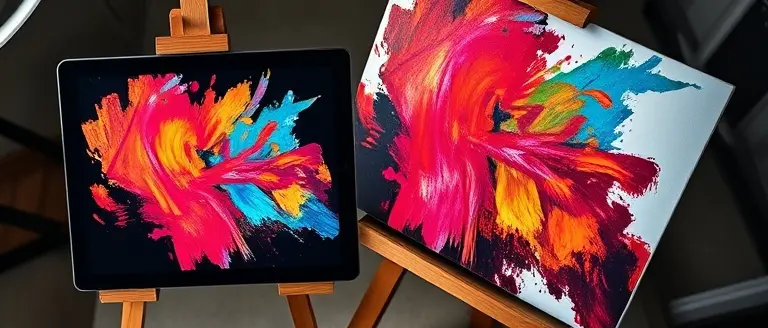
- Digital Painting: Long before it was fashionable for established masters, Hockney embraced the iPad as his canvas. He viewed digital technology not as a cold, mechanical tool, but as a dynamic medium that allowed him to capture light and color with unparalleled speed and vibrancy.
- Video Installations: His late-career experiments with multi-camera perspective challenged how we experience moving images, proving that his vision remained sharp even as he navigated his 80s.
This transition from physical pigments to pixels cemented Hockney’s status as a digital visionary. By refusing to stagnate, he bridged the gap between traditional craftsmanship and the future of art. His willingness to experiment with the iPad proved that innovation is not the exclusive domain of the youth, but rather a lifelong commitment to observing the world through an ever-evolving lens. Even at the end of his life, his work remained a testament to the idea that technology, when guided by the hand of a master, can reach new heights of human expression.
Technology in the Twilight Years: The iPad Revolution
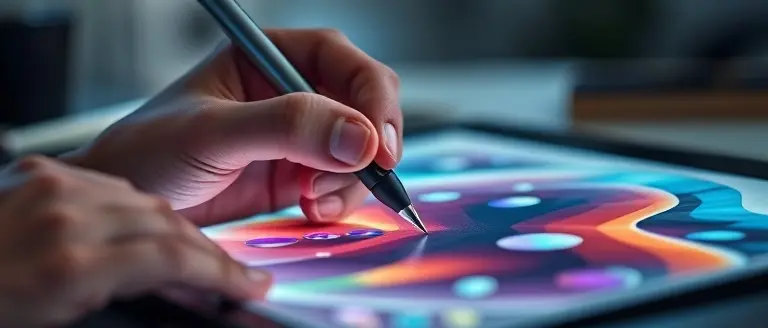
While many artists in their sunset years retreat into established styles, David Hockney famously sprinted toward the digital frontier. In his 80s, Hockney defied traditional boundaries by embracing the iPad as his primary canvas, a move that stunned the contemporary art world and solidified his status as a relentless innovator. Beginning with the Brushes app, Hockney discovered that the digital medium offered a level of spontaneity and luminosity that traditional oils simply could not replicate in real-time. By utilizing the tablet’s touch interface, he could manipulate layers of vibrant color and light with a simple stroke of his stylus, allowing him to capture the ephemeral beauty of Yorkshire landscapes and intricate floral studies with unprecedented speed.
The Artistic Impact of Digital Tools
Hockney’s transition to digital media was not merely a gimmick; it was a profound evolution in his creative process. The iPad allowed him to work without the clutter of solvents or the drying times of acrylics, providing an immediacy that mirrored his youthful energy. Key elements of his late-career digital process included:
- Luminous Color Palettes: The backlit nature of the screen allowed Hockney to experiment with intensity and saturation, pushing his signature use of color into new, ethereal realms.
- Layering Efficiency: By utilizing digital layers, he could isolate complex textures—such as the interplay of light on petals or the jagged edges of a mountain range—without risking the structural integrity of his composition.
- Global Accessibility: Hockney frequently shared his digital sketches immediately upon completion, bridging the gap between the studio and the public in a way that traditional gallery-based art rarely achieves.
This embrace of technology serves as a testament to Hockney’s enduring curiosity. His work in the digital space challenged the snobbery surrounding “high art,” proving that the tool is secondary to the artist’s eye. By integrating digital vision into his portfolio, he ensured his legacy would not be defined by his past successes, but by his perpetual capacity for reinvention. Even in his final years, the artist remained a student of light, using silicon and software to capture the world with the same infectious joy that defined his early California pool paintings.
Embracing the Craft of Creation
David Hockney’s legacy is not merely found in the vibrancy of his canvases or the pixels of his digital explorations, but in his relentless, lifelong commitment to the mechanics of making. He viewed every medium—whether paint, photography, or the iPad—as a structural challenge to be mastered. This obsession with process, perspective, and the technical precision of composition allowed him to redefine our visual reality for over six decades.
Hockney’s ability to reinvent his artistic process through new tools is a profound lesson for every creator. Just as he refused to be confined by traditional expectations, we too can find immense fulfillment by mastering new, tactile crafts at home. If you have been inspired by his dedication to precision, you can translate that same creative drive into your own physical projects, ensuring every piece you build stands as a testament to your own structural ingenuity.
Ted’s Woodworking serves as an essential studio toolkit for those who want to emulate Hockney’s meticulous dedication to the creative process. By providing the exact structural blueprints needed to turn inspiration into physical reality, this collection allows you to command the workshop with absolute technical certainty. It is time to treat your own craft with the same respect Hockney demanded of his art.
 Channel your inner creator and begin your next masterpiece with the same technical precision Hockney demanded of his own work; explore the complete library of woodworking projects here.Start My Masterpiece Today!